Boasting function and form, cedar siding and fence make an attractive exterior material for your home. Cedar offers a timeless, welcoming appeal and is less likely to rot, warp, and crack than other softwoods. But mold, dirt, and pollutants can accumulate to create dingy dark streaks that ruin its natural beauty.
Fortunately, you can restore the beauty of your cedar siding or cedar fence. Here is what I recommend based on years of restoring cedar on Long Island and Hamptons properties.
Why Is My Cedar Turning Black?
Tannin Bleeding vs. Mold: How to Tell the Difference
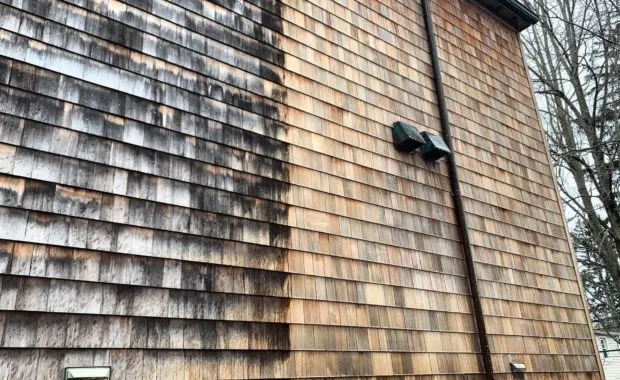
Tannin staining appears as irregular reddish-brown streaks that follow the wood grain. Mold and mildew produce dark black or green patches that spread across the surface regardless of grain direction. The distinction matters because tannin stains require a chemical brightener while mold needs a biocide. A professional inspection identifies the right treatment the first time.
In addition to dirt and pollutants, your cedar siding can turn black or brown because of tannin staining. Tannins are natural biomolecules found in tree bark that migrate to the surface when the wood gets wet. This extractive bleeding creates reddish-brown discoloration on the exterior face of the cedar.
When tannins mix with iron from nails or flashing, a chemical reaction produces black stains. Mold and mildew can also cause discoloration. On coastal Long Island properties, the combination of humidity, salt air, and direct sun accelerates all of these processes. A cedar fence in Bay Shore will look completely different from one in a drier inland climate after just two years of exposure.
Can I Pressure Wash My Cedar Siding and Fence?
Pressure washing on cedar causes more harm than good. High-pressure water can force moisture under the siding and into the wall cavities. Once trapped, that moisture becomes a breeding ground for mold and can damage wiring and insulation. The pressure also erodes the soft cedar surface, leaving it rough and more prone to future staining.
Soft Washing Cedar: Why Low Pressure Matters
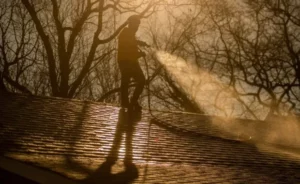
Soft washing uses low pressure — well under 500 PSI — with a biodegradable cleaning solution. The chemicals do the work, not the water pressure. This method safely removes tannin staining, algae, and mold without damaging the cedar fibers. For Long Island’s coastal climate, soft washing is the only restoration method that preserves the wood’s integrity. The soft wash approach also reaches deeper into the wood grain than a pressure washer, extracting embedded tannins that would otherwise bleed back through a fresh coat of stain within months.
The Cedar Restoration Process: Step by Step
Why Drying Time Matters on Long Island
Cedar is a porous wood that absorbs moisture readily. On Long Island’s humid summer days, the drying process between washing and sealing takes 24-48 hours. Sealing wet cedar traps moisture inside, causing the stain to peel within months. Spring and early fall offer the best drying windows — moderate temperatures and lower humidity allow the wood to reach the ideal moisture content for stain adhesion.
Here is the process I follow for every cedar restoration. Step one: soft wash the entire surface with a cedar-safe cleaning solution to kill mold and lift tannin stains. Step two: apply a brightening treatment to restore the wood’s natural color. Step three: neutralize the surface and let it dry completely. The drying phase is critical — on humid Long Island summer days, cedar needs a full 24 to 48 hours before sealing. Step four: apply a high-quality stain or sealer to protect against future moisture damage and UV fading. A penetrating oil-based stain works best for coastal properties because it soaks into the wood rather than sitting on top of it.
How Long Does Cedar Restoration Last?
A properly restored and sealed cedar surface lasts 3-5 years before needing maintenance cleaning. In coastal Hamptons areas with high salt exposure, expect 2-3 years. Annual soft wash maintenance between full restorations extends the life of the stain and keeps the cedar looking fresh. The key to longevity is using the right sealer for the exposure level — a marine-grade sealer for waterfront properties, a standard UV-blocking sealer for inland homes.
Long Island Cedar Care: Seasonal Tips
Spring is the best time for cedar restoration in Long Island — mild temperatures and low humidity allow the stain to cure properly. Fall maintenance cleaning removes the summer’s accumulated grime before winter moisture sets in. If your cedar faces south or west, it will fade faster from UV exposure and may need more frequent sealing. Cedar on the south shore of Nassau County gets hammered by both sun and salt — these homes benefit from an annual maintenance soft wash and a fresh top coat every two years.
Cost-Effective Alternative to Replacement
When Replacement Actually Makes Sense
If more than 30% of the cedar is rotted, cracked through, or warped, replacement may be the better option. But if the wood is structurally sound and just discolored, restoration is the smarter choice — better appearance, lower cost, less waste ending up in a Suffolk County landfill.
Restoring existing cedar costs a fraction of full replacement. Many homeowners assume stained cedar needs to be torn off and replaced, but soft wash restoration brings it back to life at 30-50% of the replacement cost. For waterfront Hamptons properties where cedar replacement is especially expensive, restoration is the smart financial move. A typical cedar siding restoration runs $1,500 to $3,500 depending on the square footage, while full residing can exceed $15,000.
Call me at (631) 557-5484 to schedule a cedar inspection and get your siding or fence looking like new again.