Seasonal Gutter Cleaning Tips: How to Prepare Your Home for Rain and Snow
Seasonal gutter cleaning means scheduled inspection and debris removal timed to local weather cycles so gutters channel rain and melting snow away from the roof and foundation. Proper seasonal maintenance prevents water damage, ice dams, and accelerated wear to fascia, downspouts, and gutter hangers while improving curb appeal and storm readiness. This guide explains when to clean gutters across fall, winter, spring, and summer, offers practical how-to steps and safety notes, and outlines when to consider professional soft washing or gutter brightening.
Homeowners will learn baseline frequencies, region-specific risks for Long Island properties, quick decision checks for DIY versus pro work, and simple preventative measures to reduce repair costs. The article is organized into four main sections covering timing, fall preparation, winter ice-dam avoidance, and spring/summer storm readiness, with checklists, comparison tables, and actionable lists optimized for quick answers. Throughout, related concepts like soft washing, gutter brightening, downspouts, and foundation protection are integrated to help you protect your home before the next heavy rain or snow.
When Is the Best Time for Seasonal Gutter Cleaning?
Seasonal timing for gutter cleaning targets periods when debris accumulation or weather transitions create the highest risk of clogs and overflow. Clean gutters in late fall after most leaves have dropped to prevent winter freeze problems, and again in late spring to remove winter debris and salt spray common near coastal Long Island areas. Event-driven cleanings after heavy storms or prolonged leaf fall are essential because clogs created by a single storm can cause immediate overflow and water intrusion. Adjust timing for property-specific factors such as mature trees, steep roof pitch, or older gutters that trap more debris.
Gulf2Bay Softwash offers eco-friendly soft washing and gutter brightening that can be scheduled around seasonal timing; homeowners who prefer professional help should consider a pre-freeze appointment and a late-spring tune-up to combine cleaning with visual brightening. Soft washing reduces organic buildup without high-pressure methods that can damage gutter seams and roof shingles, and professional scheduling helps avoid the safety risks of ladder work for many homeowners. Requesting a quote before predictable seasonal windows ensures availability ahead of heavy storms and freeze cycles.
Smart Rainwater Downpipe: Addressing Gutter Blockages and Clogging
Rainwater downpipe acts as a collector from the roof to the building and diverts the water away from the building. However, there are issues that arise from the gutters and rainwater downpipe. These issues include water accumulation in the gutter that prevents water from flowing smoothly which then leads to blockage and clogging. Gutters become source of breeding ground for Aedes habitat.
| Season | Recommended Timing | Suggested Action |
|---|---|---|
| Fall | Late October–Early December (after most leaves fall) | Remove leaves, flush downspouts, inspect hangers |
| Winter | Before first hard freeze; monitor after storms | Clear gutters of runoff pathways; avoid icy ladder work |
| Spring | Late March–May (after thaw) | Flush lines, check for winter damage, treat staining |
| Summer | Mid-June pre-storm season | Check fasteners, clear new debris, test downspout flow |
This timing table helps plan at-a-glance maintenance that suits Long Island’s coastal and freeze-thaw patterns.
How Often Should You Clean Your Gutters for Optimal Maintenance?
Clean gutters at least twice a year as a baseline—typically late spring and late fall—to prevent organic buildup and to ensure clear drainage during peak precipitation. Properties with overhanging trees, frequent storms, bird activity, or nearby construction should increase frequency to three or four times annually; heavy coastal debris or salt spray also shortens intervals. Inspect gutters visually after every major storm; if water spills over the fascia during rainfall, schedule an immediate cleaning. These frequency rules capture the most common modifiers and give homeowners a quick decision rule for DIY versus calling a pro.
What Are the Key Seasonal Challenges for Gutters in Long Island?
Long Island gutters face distinct seasonal challenges: dense fall leaf fall from oaks and maples, coastal salt and wind-blown debris, and freeze-thaw cycles that worsen small leaks into larger problems. Salt and organic deposits encourage algae and staining, while winter freezes can cause standing water to refreeze at eaves and initiate ice dams. These regional risks mean homeowners should tailor schedules to local microclimates and prioritize gutter brightening and soft washing for aesthetic and functional upkeep. Recognizing these Long Island-specific factors helps prevent foundation runoff and long-term corrosion.
What Are Essential Fall Gutter Cleaning Tips to Prevent Damage?
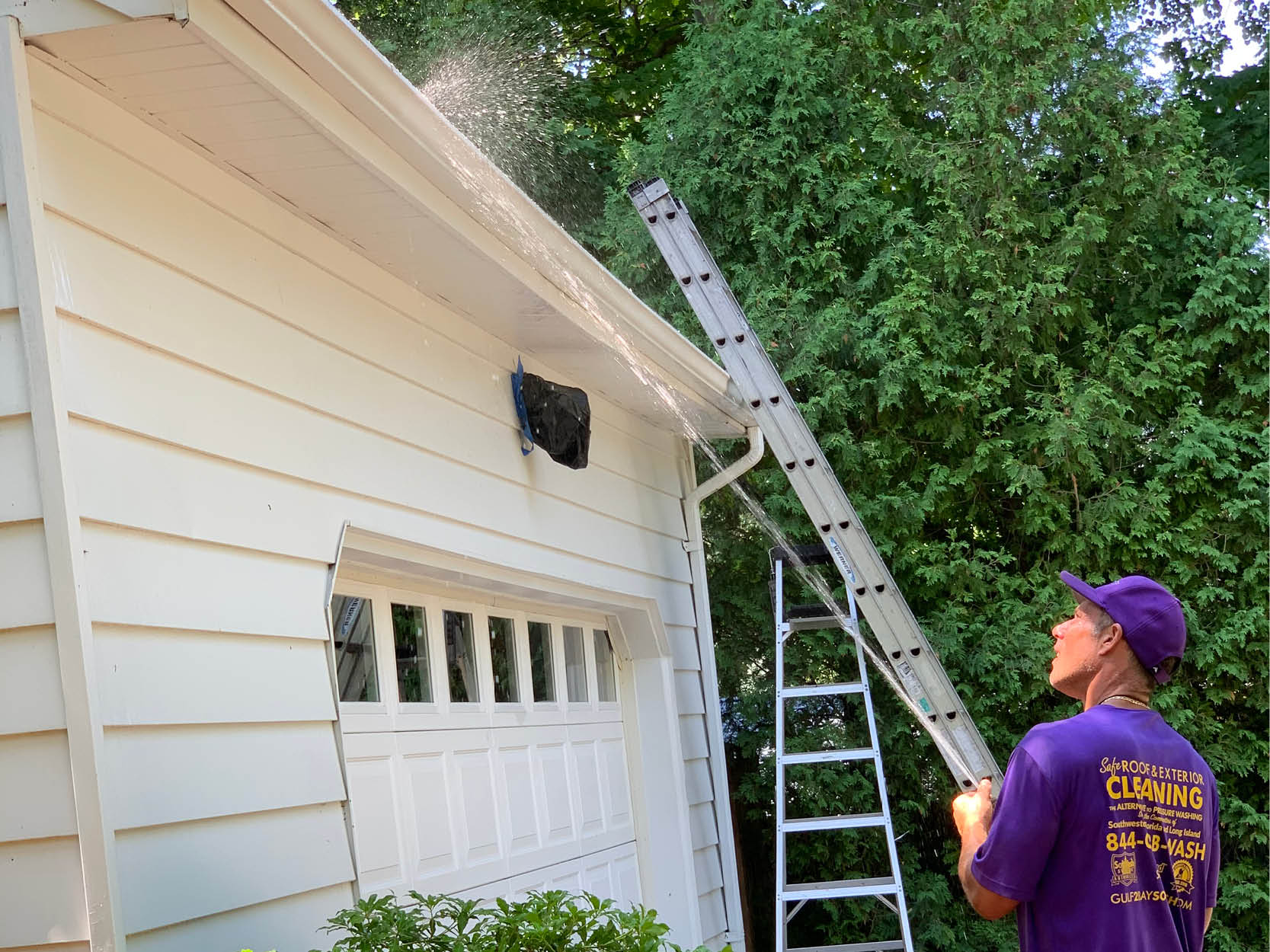
Fall preparation centers on removing leaves, checking downspouts, and repairing loose hangers so melting snow and autumn rains flow unobstructed. Begin by clearing gutters and scooping debris, then flush the system with a garden hose to confirm downspout flow and identify hidden clogs. Inspect for sagging sections, corroded seams, and stains that signal trapped organic material; consider gutter brightening to remove stains before winter sets in. Proper fall maintenance reduces the chance that trapped debris will freeze and expand, which can bend hangers and strain gutter seams.
Professional fall services such as gutter cleaning and brightening combined with eco-friendly soft washing are effective for removing organic staining and mildew without pressure damage. Gulf2Bay Softwash applies soft washing to rooflines and gutters where appropriate, helping remove algae and mold while preserving finish and seams; scheduling fall service can bundle cleaning and brightening before winter. Choosing a professional can also save time and reduce fall safety risks associated with ladder work on wet leaves.
Before the practical steps below is a short checklist to guide safe fall cleaning.
- Inspect gutters from ground level for visible blockages or stains.
- Use gloves, a scooping tool, and a bucket to remove bulk debris.
- Flush gutters and downspouts with a hose to confirm clear flow.
- Check hangers, end caps, and seams for visible damage or sagging.
These steps form a compact fall routine that prevents overflow and reduces winter freeze damage risk.
Rainwater Catchment Systems for Hawaii: Maintenance and Seasonal Considerations
The drier your area, and the more subject it is to seasonal dry spells, the more likely you are to need a rainwater catchment system. Gutters or downspouts, decide if you are willing to clean the gutters regularly. If you are not, then you may want to consider a system that does not require as much maintenance.
Rainwater Catchment Systems for Hawaii
| Task | Frequency / Priority | Recommendation |
|---|---|---|
| Leaf and debris removal | High (late fall) | DIY for light buildup; pro for heavy accumulation |
| Downspout flushing | High (after removal) | Flush until water exits freely |
| Hanger and seam inspection | Medium (annually) | Repair loose hangers promptly |
| Gutter brightening | Low–Medium (as needed) | Consider professional soft washing for stains |
How to Manage Leaves and Debris for Effective Fall Gutter Maintenance?
Manage leaves using hand tools and controlled flushing rather than high-pressure washing that can harm seams. Start from close to the roofline and work toward the downspouts, removing debris in sections and placing it in a bucket or tarp to avoid yard mess. If gutter guards are present, remove and clean them periodically; clogged guards can create hidden dams that mimic clear gutters but still block flow. For heavy buildup or if you are uncomfortable on a ladder, hire a professional to avoid injury and ensure a thorough job.
Why Is Fall Gutter Cleaning Critical for Water Damage Prevention?
Cleared fall gutters prevent water from overflowing at the roofline, which otherwise causes saturated fascia, rotted siding, and redirected runoff toward foundations. When gutters are clogged, rainwater can pool and find its way under shingles or through attic vents, increasing mold and structural risk. Fall cleaning reduces the chance that trapped wet debris will freeze and expand, which commonly leads to fastener failure and subsequent leaks. Addressing these issues proactively protects interior spaces and reduces costly foundation or roof repairs.
How Do You Care for Gutters During Winter to Avoid Ice Dams?
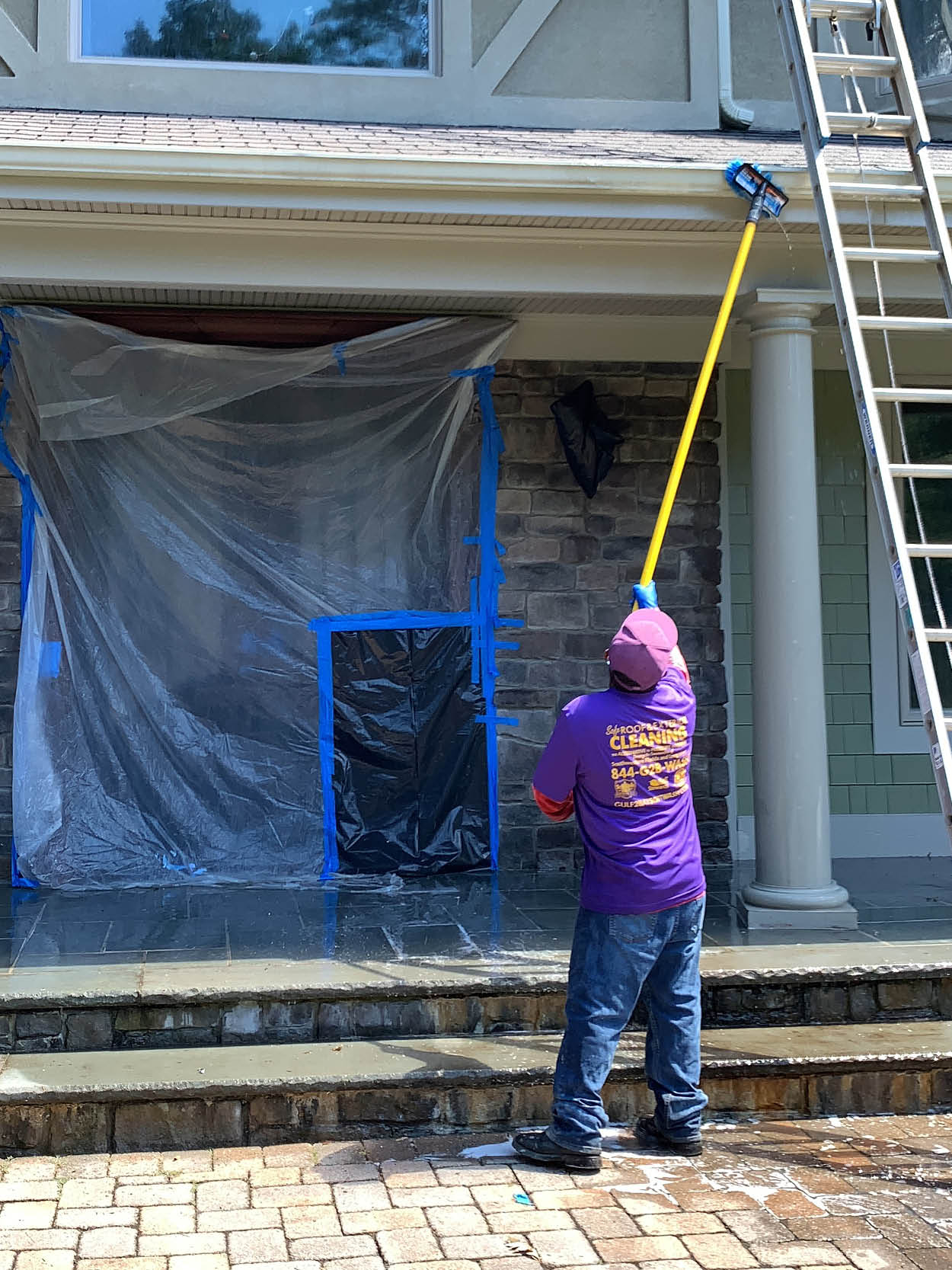
Winter gutter care focuses on preventing ice dams by keeping drainage clear and reducing attic heat loss, which can cause uneven snowmelt. An ice dam forms when heat escaping the attic melts roof snow, the water runs to a cold eave and refreezes, and the resulting ice blocks further meltwater. Clean gutters and good attic insulation/ventilation interrupt this cycle. Regular monitoring after heavy snow and avoiding climbing on icy ladders are critical safety measures for homeowners. When gutters are free of debris, melting snow can drain properly rather than refreeze at the eaves.
Professional inspection and treatment can reduce ice-dam risk through safe de-icing recommendations and targeted gutter inspection; soft washing is applied where safe and appropriate to remove organic buildup without introducing damage. Gulf2Bay Softwash can inspect rooflines and gutters to advise on de-icing options and to apply eco-friendly cleaning where staining and algae buildup may trap extra snow and ice. Scheduling a professional post-storm inspection helps identify weak fasteners or seams before the spring thaw.
The formation of ice dams is a complex issue influenced by attic insulation, ventilation, and the condition of the gutters themselves.
Roof Snow Behavior and Ice Dam Prevention: The Role of Gutters
Ice-filled rain gutters may contribute to concentrated overloads at the eaves. Massive amounts of snow and ice on the roof can cause structural damage. Continuous removal of attic air to maintain the roof deck at atmospheric air temperatures requires adequate ventilation.
Roof-snow behavior and ice-dam prevention in residential housing, 1976
| Strategy | Safety / Risk | Effectiveness / Cost |
|---|---|---|
| DIY monitoring & roof raking | Moderate risk (ladders, ice) | Low–Medium effectiveness; low cost |
| Heat cables installation | Moderate safety (electric) | High effectiveness; moderate cost |
| Professional inspection & de-icing | Low homeowner risk | High effectiveness; higher cost |
| Soft washing for buildup removal | Low physical risk | Moderate effectiveness for staining prevention |
This comparison helps homeowners weigh safety concerns against effectiveness and cost for winter interventions.
What Are Ice Dams and How Can Gutter Cleaning Prevent Them?
Ice dams are ridges of ice that form at roof edges and prevent melting snow from draining, often causing water to back up under shingles. They occur when attic heat melts snow that flows to cold eaves and refreezes, and clogged gutters exacerbate the problem by preventing drainage of meltwater. Regularly cleaning gutters removes the channels where meltwater would otherwise collect and freeze, reducing the formation of ice dams. Combining gutter cleaning with attic insulation and ventilation measures offers a layered defense against winter roof damage.
Which Winter Gutter Maintenance Practices Protect Your Home?
Winter practices include regular visual checks from the ground, using roof rakes to remove deep snow safely, and avoiding ladder work in icy conditions. Consider installing or repairing heat tapes only with professional guidance, and prioritize professional inspections after heavy snowfall to identify potential ice-dam formation early. If in doubt, call a professional for safe de-icing and repairs; professionals can assess insulation and ventilation links that influence ice dams. The combined approach of cleaning, careful snow removal, and professional assessment yields the best protection.
What Are Spring and Summer Gutter Cleaning Tips for Storm Readiness?
Spring and summer maintenance prepares gutters for seasonal storms and inspects winter damage to prevent mid-year failures. After winter, flush gutters and downspouts to remove accumulated sand, salt, and remaining debris, and check for leaks, detached hangers, and rusted seams that may have worsened. Address algae or mold growth with appropriate cleaning—soft washing is preferred over high-pressure washing to preserve gutter coating and nearby roofing materials. Secure loose fasteners, ensure downspouts discharge water away from the foundation, and inspect splash blocks or drainage paths to prevent concentrated runoff.
For homeowners seeking bundled seasonal care, combining gutter cleaning with gutter brightening and roof or house washing saves time and ensures consistent exterior maintenance. Gulf2Bay Softwash provides eco-friendly soft washing and can bundle gutter cleaning with brightening and house washing to restore curb appeal and improve function, especially for Long Island homes impacted by coastal spray and organic buildup. Bundling services also streamlines scheduling ahead of summer storm seasons.
Follow this storm-readiness checklist to verify gutters are ready for heavy rain.
- Flush all gutters and downspouts to confirm clear drainage paths.
- Inspect and tighten hangers and fasteners to prevent sagging during storms.
- Check downspout discharge and grading to ensure water flows away from foundation.
- Address algae and stains with soft washing rather than high-pressure washing.
These steps create a concise, actionable plan that prepares your home for summer storms and reduces the chance of water damage.
How to Inspect and Clean Gutters After Winter for Spring Maintenance?
Begin spring inspection by looking for detached hangers, joint separations, and areas where winter ice may have caused deformation. Flush lines with a hose to observe flow and to reveal hidden leaks or blockages; small repairs can be made with sealant or tightened fasteners. For visible staining or biological growth, soft washing removes mold and algae without risking gutter finishes or nearby roof shingles. If structural damage appears or if you are uncomfortable performing repairs, schedule a professional inspection.
What Summer Gutter Maintenance Steps Help During Rainy Seasons?
A mid-summer check keeps gutters ready for sudden heavy downpours: clear any new debris, secure loose sections, and test downspout flow before the wet season. Trim branches that overhang gutters to reduce intermittent leaf influx, and inspect gutter guards to ensure they are functioning rather than trapping debris. For severe soiling or damage detected during the summer check, consider a professional tune-up to restore flow capacity and prevent overflow during storms. Regular simple maintenance in summer reduces emergency repairs and preserves foundation protection throughout the rainy season.