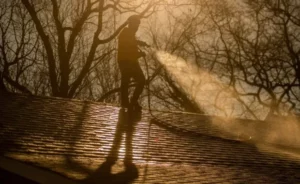
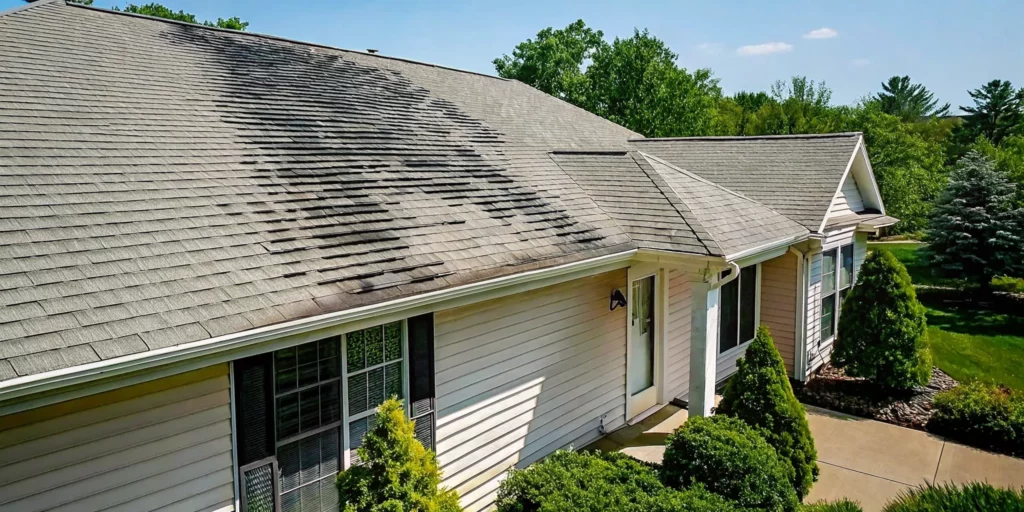
Black roof streaks are living growth, not harmless dirt waiting for the next rain. Across Long Island, damp shade can give that growth time to spread over shingles and turn a curb-appeal concern into a maintenance warning.
Black streaks on roof Long Island homeowners notice are typically Gloeocapsa magma, a cyanobacteria that feeds on limestone in asphalt shingles. They warrant professional soft washing when streaks keep spreading, growth returns after surface cleaning, moss appears, or reaching the affected roof safely is difficult. Trained technicians can assess the growth, protect nearby surfaces, and apply biodegradable solutions at no more than 90 PSI rather than harsh pressure. That low-pressure treatment addresses the bacteria at its source while reducing the risk of stripping protective shingle granules or forcing water beneath shingles. Prompt care also matters because moisture problems can weaken building materials and reduce useful life, according to the National Academies’ review of damp buildings.
Knowing when a streak shifts from a cosmetic concern to a reason for service starts with identifying what is growing and how far it has spread. What black streaks on roof Long Island homes may indicate covers the warning signs that should guide your next step. The path begins with:
What black streaks on roof Long Island homes may indicate
Black streaks on a roof are a visible symptom, not a firm diagnosis. They often suggest organic growth mixed with moisture, shade, airborne dirt, or roof debris. On Long Island, the pattern may change as trees, weather, and drainage affect each part of the roof.
The streaks may look like surface dirt from the ground. Yet dark marks can also show where growth has spread along wet paths. A close assessment can separate loose debris from a condition that calls for careful cleaning.
Clues in the streak pattern
Start by looking at the marks from a safe place on the ground. Their location, shape, and spread can offer useful clues. Do not walk onto a stained roof, since wet growth and loose debris may make the surface slick.
- Long lines below shingle tabs may follow the path of runoff.
- Dark areas under nearby trees may point to shade and slower drying.
- Thick, raised patches may suggest growth beyond a flat surface stain.
- Leaves near valleys or gutters may hold moisture against nearby roofing.
These signs do not prove which organism or material caused the stain. They show where a trained cleaner should look more closely. The goal is to assess the surface before choosing a cleaning method.
Why moisture and shade matter
Shaded roof areas often stay damp longer after rain or morning dew. Debris can also slow drying by holding water near the shingles. This setting may support organic growth and make dark streaks easier to see over time.
Moisture deserves attention because dampness can shorten the useful life of building materials. The National Academies review of damp buildings links dampness with decay, corrosion, and weaker materials. That broad guidance supports checking ongoing moisture signs instead of treating streaks as a cosmetic issue alone.
When to request an assessment
Ask for an assessment when streaks keep spreading, return after basic upkeep, or appear near heavy moss and debris. Also seek help if the roof has damaged shingles, leaks, soft areas, or blocked drainage. Those signs may need a roofer’s review before cleaning.
An assessment should identify the roof material, stain pattern, drainage, and nearby plants. It should also explain why the proposed method fits the surface. For stained shingles, professional roof soft washing avoids the harsh force that can come with high-pressure roof cleaning.
Why do dark roof streaks appear on Long Island homes?
Dark roof streaks often show where moisture and slow drying overlap. On Long Island, humid coastal weather can keep roof surfaces damp after rain, fog, or heavy dew. That damp period gives surface growth more time to build up and become visible.
Coastal moisture and slow drying
A roof may look dry from the ground while shaded areas still hold moisture. Cool mornings and humid air can slow drying, especially when little wind reaches the shingles. Repeated damp cycles can make faint marks grow darker over time.
The effect can change from day to day. A warm afternoon may dry an open roof slope fast, while a sheltered slope stays damp. Over many wet mornings, that difference may help create uneven streaks across the same home.
The wider setting matters as much as the roof itself. A National Academies review of building dampness notes that moisture problems depend on design, care, climate, and topography. For a Long Island home, that means roof conditions should be judged in their local setting.
Shade, trees, and roof direction
Tree cover can block sun and limit airflow across part of a roof. Branches may also drop leaves and small debris that hold moisture against shingles. Dense growth near the house can make these effects more noticeable.
Roof direction also helps explain why one slope may streak before another. Sections that get less direct sun tend to dry more slowly than bright, open sections. Valleys, dormers, and areas behind chimneys may stay damp longer as well.
- North-facing or shaded slopes may show marks first.
- Roof valleys can collect moisture and loose debris.
- Overhanging trees may reduce sun and airflow.
- Open, sunny sections may dry sooner after wet weather.
Why the streak pattern varies
Black streaks on a roof in Long Island do not always have one clear cause. The pattern may reflect several factors working together, including shade, roof shape, nearby trees, and weather exposure. Color alone cannot confirm the type of growth or the roof’s condition.
A close inspection can separate surface staining from issues that need repair. It can also show whether debris, damaged shingles, or drainage trouble is present. Homeowners considering professional roof soft washing should first have the roof assessed rather than assume every dark mark needs the same response.
Is it staining or a sign the roof needs repair?
Black streaks can look serious, but color alone does not prove that shingles have failed. Research links roof discoloration across the United States and Canada with Gloeocapsa magma, as noted in this published roof discoloration study. A closer look at the roof’s shape and condition helps separate surface growth from damage.
Signs that point to surface staining
Black streaks on a Long Island roof often appear as dark lines running down from the upper slope. If the shingles still lie flat and the roof is dry inside, cleaning may be the right next step. Even staining that looks widespread can remain a surface issue.
Do not test a stained area with a pressure washer or by scraping it. Those methods can disturb the shingle surface. Instead, ask for an assessment before scheduling professional roof soft washing.
| What you see | Likely concern | Next step |
|---|---|---|
| Dark streaks on flat shingles | Surface growth or staining | Arrange a cleaning assessment |
| Loose, cracked, curling, or missing shingles | Possible roof damage | Call a roofer for inspection |
| Active leak or indoor water mark | Possible water entry | Seek prompt roof inspection |
| Sagging roof area | Possible structural issue | Keep clear and call a roofer |
| Heavy moss lifting shingle edges | Growth with possible damage | Get the roof inspected first |
Warning signs that need a roofer
Loose, cracked, curling, or missing shingles call for a roof inspection, not a cleaning appointment alone. The same is true for an active leak, a sagging area, or water marks inside the home. These signs suggest the roof may need repair before any stain treatment begins.
Heavy moss also needs extra care, especially when growth appears to lift shingle edges. Avoid pulling it off because you may loosen already weak material. A roofer can check the shingles and decide whether repairs should come first.
Cleaning and repair serve different jobs
Cleaning treats organic growth and improves the roof’s appearance. Repair addresses damaged roofing parts and water entry. One service cannot replace the other, so the first visit should match the condition you can see.
If the roof is sound but stained, soft washing may be suitable. If damage is visible, start with a roofer and discuss cleaning after repairs. Homeowners comparing the next step can also review how to prevent roof damage with cleaning once the roof is stable.
Why high-pressure cleaning can be the wrong approach
Black roof marks call for the right treatment, not the strongest spray. Research has linked Gloeocapsa magma with roof discoloration across the United States and Canada. That growth sits on a surface built to shed rain, not take a close, forceful jet. Cleaning should target the growth while keeping the roofing system intact.
Force on sensitive shingles
Asphalt shingles have a textured granule layer that can be disturbed by concentrated pressure. A strong stream may strip away loose granules or lift shingle edges. It can also leave uneven clean lines that make the roof look patchy. More force does not mean a better result.
The condition of the roof matters too. Older, worn, curled, or repaired areas may react differently from newer sections. A cleaner should assess those changes before selecting a method. This helps avoid treating every part of the roof as if it were equally durable.
Water intrusion and overspray
A roof is designed for water moving down its slope. High-pressure spray can push water sideways or upward around shingle edges, flashing, vents, and other openings. That raises the risk of moisture reaching places rain normally would not. The problem may stay hidden after the surface dries.
- Granules can loosen under concentrated force.
- Shingle edges can lift or shift.
- Water can reach gaps around roof details.
- Overspray can land on siding, windows, and landscaping.
Overspray also makes control harder. A forceful stream can carry loosened material and cleaning solution beyond the target area. That matters on Long Island homes with close property lines, nearby plants, patios, or parked vehicles. A controlled application keeps the work focused on the affected roof surface.
Matching the method to the roof
The right approach starts with the surface condition and the type of growth present. Black streaks on a roof in Long Island are not a reason to use maximum pressure. They are a reason to choose a process that addresses organic growth without relying on force. Gulf2Bay uses low pressure for its professional roof soft washing service.
A sound assessment also accounts for roof age, shingle wear, moss buildup, access, drainage, and nearby property. These details shape how the roof should be treated and protected. Homeowners comparing methods can also review how proper cleaning may prevent roof damage with cleaning before deciding on the next step.
When does professional soft washing make sense?
Professional soft washing makes sense when roof stains need a careful diagnosis, not a quick blast of water. Published research documents roof discoloration caused by algae across the United States and Canada. On Long Island, a trained assessment can separate likely organic growth from damage that cleaning cannot fix.
The roof assessment
A professional first looks at the roof from safe viewing points and asks when the streaks appeared. The staining pattern, roof material, age, repairs, loose shingles, and areas of heavy growth all shape the decision. A sound asphalt-shingle roof with organic staining may suit soft washing, while damaged roofing may need repair first.
- Confirm the roof condition. The assessor checks for missing, curled, cracked, or loose materials before recommending any cleaning.
- Read the staining pattern. Dark runs below shingle tabs suggest a different issue than isolated marks near flashing or gutters.
- Match the plan to the material. Asphalt shingles, cedar, tile, and metal have different limits and cleaning needs.
- Plan property protection. The crew maps runoff paths and notes gutters, siding, plants, patios, vehicles, and nearby outdoor features.
- Set realistic expectations. The assessment explains what should clear, what may fade over time, and which marks may remain.
Low pressure and controlled runoff
If the roof is a good fit, the application should rely on a suitable cleaning mix and low pressure. The goal is to treat growth without using force that can disturb roofing materials. This is why professional roof soft washing starts with an on-site plan instead of one setting for every property.
Runoff control is part of that plan. Crews should account for the roof pitch, downspouts, nearby landscaping, and surfaces below each work area. They can then choose safe access points and protect the property before applying the treatment.
Results and next decisions
Homeowners searching for help with black streaks on roof Long Island properties should expect an honest explanation before work starts. Some organic staining may respond during treatment, while heavier growth can take time to release. Existing wear, fading, rust, or shingle defects will not become new roofing after cleaning.
A professional should also explain how the roof will be reviewed after treatment and when another check may help. Clear expectations matter because appearance is only one part of the decision. Roof condition, safe application, and property protection should guide whether soft washing makes sense.
What should you check before scheduling an assessment?
Before scheduling an assessment, collect a clear record of what you can safely see. Stay on the ground, and never climb onto the roof or mix cleaning chemicals.
A ground-level photo record
Start by taking wide photos from each side of the home. Photograph the black streaks from several safe ground-level angles. Include nearby trees, gutters, chimneys, and roof sections that stay shaded. These details help show where moisture and organic growth may collect.
- Note which roof slopes have visible streaks.
- Mark whether the affected areas face north, south, east, or west.
- Record any moss, lifted shingles, missing shingles, or clogged gutters you can see.
- Take one close view with a camera zoom, but remain on firm ground.
- Note whether streaking appears below a tree, vent, chimney, or upper roof section.
If possible, compare current photos with older property photos to track changes. Look for areas where the streaks have spread or become darker. Do not scrape, brush, or spray a test patch before the assessment.
Attic signs and roof history
Check the attic from a safe access point during daylight. Note damp insulation, water marks, musty odors, or light passing through the roof deck. These signs do not prove the streaks caused damage. They should still be shared because they may affect the assessment.
Write down the roof’s age, shingle type, and any past repairs or cleaning. Include known leaks, storm damage, replaced sections, and the date streaks first appeared. If records are available, gather invoices, warranties, and photos from prior roof work.
Questions for a roof-specific assessment
Tell the assessor where you see black streaks on roof areas around your Long Island home. Algae-related roof discoloration has been documented across the United States and Canada in research indexed by PubMed. Ask the assessor to identify the growth and check the roof material before suggesting treatment.
- Will the assessment cover every affected slope and nearby growth?
- Will the team check access limits, runoff paths, gutters, and landscaping?
- What roof material and condition will guide the cleaning plan?
- How will plants, siding, windows, and outdoor fixtures be protected?
- Will the written scope separate cleaning needs from repair concerns?
Request a roof-specific visit rather than a general exterior estimate. A clear record helps the provider plan safe access and suitable treatment. Review the company’s professional roof soft washing process before the visit, then bring your photos and roof history.
Frequently Asked Questions
Are black streaks on a roof harmful?
Black streaks are more than surface dirt. They usually indicate Gloeocapsa magma, a cyanobacterium that feeds on limestone in asphalt shingles. Over time, untreated growth may contribute to shingle wear and create conditions where moss can take hold. A roof professional can check whether the issue needs cleaning or whether damaged shingles require repair.
Why do shingles develop streak lines when the roof is only five years old?
A young roof can develop streaks when airborne Gloeocapsa magma settles on damp asphalt shingles. Shade, nearby trees, limited airflow, and moisture can help the growth spread. The roof’s age alone does not prevent it. The dark pattern becomes more visible as colonies grow and move downward with rainwater across the shingle surface.
Is soft washing safe for Long Island roofs?
Soft washing can be safe for suitable roofing when trained professionals use the correct solution, pressure, and application method. Unlike high-pressure washing, it treats organic growth without blasting shingle granules. Gulf2Bay describes its process as using no more than 90 PSI and biodegradable cleaning solutions. A technician should inspect the roof before treatment.
When should I call a professional about black roof streaks?
Call a professional when streaks are spreading, moss or lichen is present, the roof is steep, or safe access is difficult. Professional assessment also helps when shingles look loose, curled, or damaged. Cleaning will not repair worn roofing, so an inspection can separate a treatable growth problem from a condition that needs a roofer.
What affects the cost of professional roof soft washing?
Roof size is one factor, but the final cost also depends on roof pitch, design complexity, access, landscaping protection, and the amount of streaking or moss. A steep roof or heavy growth may require more equipment and treatment time. Because conditions vary between Long Island homes, an on-site assessment provides a more reliable quote than a flat estimate.
Ready to Stop Black Roof Streaks Before They Spread?
Waiting gives black streaks more time to spread across your shingles, making the roof look neglected and allowing unwanted growth to remain. Starting now helps you address the problem before another Long Island season adds more moisture, stains, and avoidable concern about your roof. A professional assessment can identify the right next step and help you plan soft washing on a timeline that works for your home.
Ready to protect your roof without harsh pressure? Request a roof cleaning assessment today to get clear guidance and schedule the right care before the streaks become harder to ignore. Contact Gulf2Bay Softwash through the form, share what you see, and choose a convenient time for an on-site review.