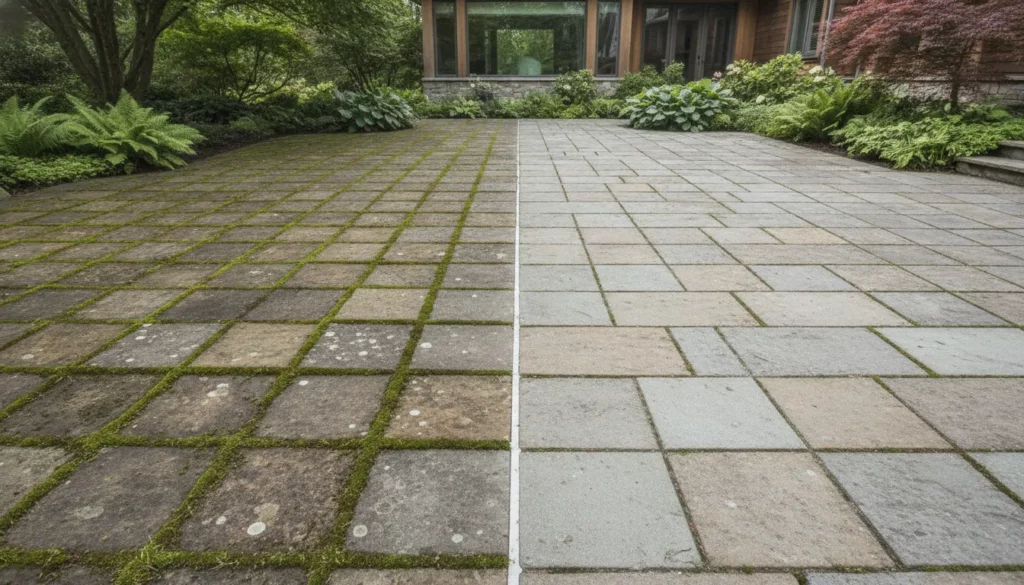
. Shaded Long Island patios often suffer from thick moss growth that turns beautiful pavers into slippery green hazards. This growth thrives in damp corners where sunlight rarely hits the stone. Removing it requires a careful touch.
How to remove moss from pavers begins with dry brushing or careful scraping after testing a hidden area. Rinse loosened debris with a low-pressure garden hose so you do not blast out the joint sand. Do not apply a homemade chemical mixture without confirming that it is safe for your paver material, nearby plants, and existing sealer. Long-term success also depends on improving drainage, airflow, and drying conditions. Regular inspections, surface cleaning, and timely joint maintenance can reduce recurring growth.
You must use the right tools to avoid cracks or loss of joint sand. This guide walks you through the best DIY methods for How to remove moss from pavers safely. The path to a clean and safe patio begins with these simple steps.
How to remove moss from pavers safely
Removing moss from your walkway or patio helps keep your home looking its best. Moss is an opportunistic plant that grows where other life is weak, often thriving in damp or shaded spots in Long Island landscapes. While it may look soft, it can trap moisture against your stone and lead to long-term wear. Taking a slow and steady path is the best way to clear your pavers without causing new problems.
Check and test your pavers
Before you start, look closely at the stones and the joints between them. You should always test your cleaning method on a small, hidden area first. Give this test area at least a week to make sure the process is safe for your specific stone type before you do the whole job. This step helps you avoid staining or etching the surface of your expensive patio.
Safe steps for moss removal
- Inspect the area for loose sand and cracks to see how much work your joints need.
- Use a dry brush or a small hand tool to scrape away thick clumps of moss from the joints.
- Rinse the surface with a low-pressure hose to wash away the loose debris you just cleared.
- Check the stone for any remaining green stains and decide if you need a gentle soap or soft wash.
- Fill any gaps in the joints with fresh sand to prevent the moss from coming back quickly.
Avoid using high pressure, as it can etch the stone and blast out the sand that holds your patio together. If the moss is deep or widespread, you may need professional paver cleaning services to get the job done right. Expert teams use the right tools to clean deeply while keeping your paver sanding and sealing intact. This care ensures your outdoor space stays safe and strong for many years.
Why does moss keep returning on Long Island pavers?
Moss is a hardy plant that loves the local environment on Long Island. It often shows up in spots where other plants struggle to grow. Since it spreads by wind-blown spores, new plants can start in tiny gaps between your stones quite easily. To stop it from coming back, you must first know why it chose your patio or path in the first place.
Shade and trapped moisture
Persistent moisture and deep shade are the main things that help moss spread in your yard. In many New York landscapes, large trees or fences block the sun. This keeps your pavers from drying out after a rain. When stones stay damp, they become the perfect home for moss to settle and grow. Dealing with these root causes is the only way to get effective moss control over the long term.
Poor drainage is another big factor. If water pools on your patio, the joints between stones stay wet for too long. Moss is a plant that grows well in these moist areas where grass or other plants cannot survive. Improving your yard’s drainage can help keep your stones dry and less inviting to these green invaders.
Joint gaps and organic debris
The spaces between your stones often collect dirt, leaf litter, and other organic matter. This debris holds onto water and gives moss a place to root. Over time, the sand in your joints can wash away, leaving open spots for spores to land. Once it starts, moss does not crowd out other plants, but it does stop new plants from spreading into those areas once it is there.
Regularly maintaining paver cleanliness helps remove the food source that moss needs. Sweeping away leaves and soil prevents the buildup that moss loves. If your joints are empty or filled with dirt, you may need a pro fix to seal those gaps and keep the surface clean.
Lack of protective sealing
Unsealed pavers are more porous and hold onto water much longer than sealed ones. This extra dampness makes it much easier for moss to return year after year. Without a shield, your stones and joints are open to the weather. Professional paver sanding and sealing fills the joints with stable sand and covers the surface with a protective layer.
This service makes it much harder for moss to find a place to grow. It also helps the surface dry faster after it rains or when you use your hoses. By keeping the area dry and the joints full, you remove the things that moss needs to thrive. This care is a key part of professional paver cleaning services that keep your home looking its best.
DIY removal versus professional paver restoration
Most owners start by looking for how to remove moss from pavers with tools they have in the shed. While a stiff brush and some water can help for a few days, these simple tools do not fix the root cause. Moss is a tough plant that thrives in the damp gaps between your stones. Removing it for good requires more than a quick rinse or a scrub.
Limits of DIY moss control
Many people use a mix of water and vinegar to kill moss patches. This DIY solution can work for a short time, but it often leaves the moss spores behind. If the spores stay in the joints, the green growth will return as soon as it rains. Scrubbing too hard with a metal brush can also scratch the surface of your pavers. These marks can hold dirt and make your patio look old.
Another common choice is a standard home power washer. Using too much pressure can dislodge the sand that holds your patio together. If the joint material washes away, your pavers may shift or sink over time. This can create a tripping hazard in your walkway. As Penn State Extension notes, moss control rarely works unless you change the damp site where it grows. Simple cleaning does not stop the cycle of regrowth on its own. You must address the shade and water issues to see real results.
| Task | DIY Method | Pro Restoration |
|---|---|---|
| Moss removal. | Surface scrub or rinse. | Professional surface cleaning. |
| Joint care. | Easy to overlook. | Inspect and refill sand. |
| Protection. | Routine upkeep. | Assess cleaning and sealing. |
| Durability. | Depends on site conditions. | Improves when causes are corrected. |
The steps for pro restoration
A pro team does more than just blast away the green. They use a method called soft washing to kill moss at the root. This process uses low pressure and safe cleaners to protect the stone. After the surface is clean, a pro will check the joints for damage or lost sand. This check ensures the base of your patio stays strong.
Once the pavers are dry, the pro adds new sand to lock the stones in place. This step is vital for paver sanding and sealing. The new sand fills the gaps so moss has no room to start growing again. A high-quality sealer then coats the surface to keep water out. This layer makes it much harder for spores to find a home in the future. It also helps the colors of the stone look bright and new.
What to expect for long-term care
It is good to know that sealing is not a magic fix for every issue. While a pro can help with professional paver cleaning services, they cannot change how your yard sits. If your patio has poor drainage, water will still pool in the low spots. Moss loves wet areas and will try to grow back if the ground stays damp. You might need to regrade the soil near your patio to help water flow away.
Heavy shade also plays a big role in how well your pavers stay clean. If tall trees or walls block the sun, the stones will not dry fast after a storm. You may need to trim back some limbs to let in more light. Sealing helps slow down the growth, but it is not a cure for a dark or swampy yard. Regular care and good sunlight are the best ways to keep your outdoor space looking new for years.
What should you do after the moss is gone?
Taking out moss is just the first step in caring for your patio or walkway. Once you know how to remove moss from pavers, you must look at what is left behind. Moss often leaves the area messy and may hide small problems with your stone work. Taking the right steps now will help your pavers stay clean and safe for a long time.
Check the joints and sand
Moss grows best in the gaps between your pavers. As it grows, it can push out the sand that holds the stones in place. You must check these joints once the moss is out. If you see deep holes or empty spaces, you need to add new sand. This helps keep the pavers from shifting or cracking when you walk on them. Loose pavers can also become a trip hazard for your family and guests. Checking the sand depth is a vital part of your post-moss clean up.
Many homeowners choose polymeric sand for this job. This special sand turns into a hard, glue-like bond when it gets wet. It fills the gaps and makes it much harder for new moss to take root. Good prep is key to making this sand work well. You should always use paver sanding and sealing to keep your hardscape strong and looking new.
Stop the water and shade
To keep moss from coming back, you must change why it grew in the first place. Moss loves damp and dark spots. Check your yard for poor drainage after a rain storm. If water stays on your pavers for too long, moss will find its way back quickly. You might need to adjust your lawn or fix a pipe to keep the area dry. Proper slope is also key to move water away from your home’s base. Keeping the surface dry is your best defense against new growth.
Shade is another big factor for moss growth. Large trees or bushes can block the sun and keep the ground wet. Trimming these plants can help the sun reach your pavers and dry them out. As experts at Penn State Extension say, you must fix the root causes like shade and water to get long-term control. Without these changes, your moss problem will likely return next season.
Seal your pavers for protection
The best way to stop moss is to make the surface a hard place for it to live. Using a sealer creates a shield over the stone and sand. This shield keeps water and dirt from soaking in. It also makes the colors of your stone look bright and fresh. Sealing your pavers is a smart way to protect your home value and curb appeal.
A good sealer also keeps the joint sand in place so it does not wash away. This is very helpful for areas that get a lot of rain. You can learn more about professional paver cleaning services to see how a pro can help you. Doing this work now saves you time and money on repairs later. It keeps your outdoor space ready for friends and family to enjoy all year.
How can you prevent moss from growing back?
Removing moss is only the first step. If you do not change the area, the green clumps will return soon. You must deal with the root causes like shade and wetness. This keeps your patio or walk looking new for a long time. Careful planning is the best way to save time and money on future repairs.
Manage light and water flow
Moss loves dark and wet spots. It thrives when stone stays damp for hours. You can help by trimming low branches to let in more sun. This helps the stone surfaces dry fast after a rain storm. Sunlight is a natural way to stop new growth before it starts.
Good water flow is also a big help. Check your roof gutters and pipes. Make sure they do not dump water right onto your stones. If water stays in certain spots, you may need to fix the slope of your soil. Finding the reasons why it began to grow is the only way to stop it for good.
Moss spreads through tiny spores that travel in the wind. These spores land in damp spots and start to grow. If you keep the area dry, the spores cannot take root. This simple change makes your home less inviting to these plants.
Use paver sanding and sealing
The gaps between your stones are where moss takes root. These joints often collect dirt and old leaves. Filling these gaps with fresh sand blocks moss from finding a home. It also helps keep the stones from moving over time. Most homeowners find that fresh sand makes their walk look much better too.
After you learn how to remove moss from pavers, you should seal the surface. An expert paver sanding and sealing job creates a tough shield. This seal makes it much harder for water and spores to get into the joints. It also makes the stone much easier to wash in the future.
Sealing also protects the color of your pavers. In the New York climate, rain and sun can fade stone fast. A good seal keeps your home looking sharp. It also stops salt from damaging the surface in the winter months.
Keep the surface clear
Small bits of trash can lead to big problems. Leaves and grass hold water against the stones. This creates a perfect spot for new moss. You should sweep your pavers at least once a week. This simple task removes the dirt that moss needs to survive. It only takes a few minutes but saves a lot of work later.
Regular checks are helpful. Look for any new green spots every few weeks. Catching the problem early makes it easier to fix. You should also follow these steps:
- Rinse off loose dirt with a garden hose.
- Pull any small weeds that pop up in the cracks.
- Check for shifting stones that might trap water.
- Watch for leaks from outdoor taps or hoses.
Expert help can make a huge difference for your home. Scheduling a yearly soft wash keeps your property in top shape. It removes hidden spores before they can spread. This protects your curb appeal and helps keep your property value high for years to come.
When should you call a paver cleaning professional?
DIY methods can help with small patches, but some moss problems need an expert hand. Many homeowners in New York find that moss returns quickly even after a hard scrub. If you see thick growth across large areas, it is time to seek professional paver cleaning services. Experts use tools that go deep into the joints where moss spores hide.
Signs you need expert help
Moss is a plant that thrives in shade and wet spots. If your patio stays damp, moss will likely come back within weeks of a DIY wash. Persistent growth is a sign that the root cause, like poor drainage or heavy shade, needs a professional look. Professionals can also find if your pavers have sunk or shifted, which creates more gaps for moss to grow.
You should also call a pro if you have delicate stone. Some pavers can crack under high pressure or stain if you use the wrong soap. A team like Gulf2Bay Softwash uses soft washing technology to kill moss without hurting the stone. This method uses low pressure and safe cleaners to clear out growth and spores.
Questions to ask a contractor
Before you hire a team, ask about their cleaning methods. It is important to know if they use high pressure or a gentle soft wash. High pressure can wash away the sand between your stones, which makes the surface weak. Ask if they offer paver sanding and sealing after the wash. This step fills the gaps and helps stop new moss from taking root.
Check if the company has experience with the specific type of moss on your property. Some mosses spread via spores that can be wind-blown to other areas, according to research from Penn State Extension. A good pro will treat the whole area to stop this spread. Also, ask about their insurance and if they have worked on similar stone in your local area.
When to stop DIY
Stop your DIY work if the moss forms a slippery mat, covers a large area, or returns soon after careful brushing and rinsing. These signs may point to drainage, shade, joint, or surface-condition problems that basic upkeep cannot correct. A professional can identify the paver material, inspect the joints, and choose a cleaning approach suited to the site.
Frequently Asked Questions
Does white vinegar kill moss on pavers?
Vinegar may damage or discolor some pavers, nearby plants, and existing sealer. Do not assume a household recipe is safe for every hardscape. Start with dry brushing and careful rinsing, then ask the paver manufacturer or a qualified professional about a compatible treatment if growth remains.
Can I use a pressure washer to remove moss from pavers?
You can use a pressure washer to clear moss, but you must be careful with the spray. High pressure can chip the surface of your stone or blast away the sand between the joints. According to the Gulf2Bay Softwash experts, using too much force can cause long-term damage to your patio. It is often safer to use a low-pressure wash with safe soaps to kill the moss without harming the stone joints.
Does baking soda work for moss removal on stone?
Baking soda is not automatically safe for every paver, joint, sealer, or planting bed. Residue can also be difficult to remove from textured surfaces. Confirm material compatibility before applying any treatment. For a small patch, begin with careful scraping, brushing, and a controlled low-pressure rinse.
How long does it take for treated moss to die?
Most moss treatments show results fairly fast once you apply them the right way. According to research from Homedit, treated moss usually turns dark and shrivels within one day. You will notice the green color fading to a deep brown or black as the plant dries out. Once it is brittle and dead, you can gently brush or wash the debris away from the joints to leave your patio looking clean again.
Ready to stop moss from ruining your pavers?
Moss holds water against your stone for a long time. This wet layer leads to cracks as the seasons change from hot to cold. If you wait to act, the roots will spread deep into the sand joints and lift the stones. You may have to pay for costly repairs later if the damage to the base gets worse. Cleaning your pavers now keeps your patio safe, dry, and clean for the whole year. Your family can enjoy the outdoor space while our safe methods keep the moss away. We give you a yard that looks new and stays that way for your Long Island home. Our team is here to help you keep your home in top shape.
Ready to protect your home? Call (631) 894-6751 to request a paver cleaning assessment.