How Moss Damages Your Roof From the Inside Out
Moss looks harmless from the ground. Soft, green, almost pretty. But underneath that fuzzy surface, it is at war with your roof.
How Moss Attacks Your Shingles
Moss roots , called rhizoids , grow under the edges of your asphalt shingle tabs. You cannot see them from the ground, but they are there. These roots push up against the factory-applied adhesive seal that keeps each shingle flat against the roof. Once that seal breaks, your shingles are loose.
A loose shingle catches wind like a sail. Every gust lifts it higher. Water seeps underneath. The cycle accelerates with every storm.
According to roofing research, a roof with heavy untreated moss has a 30 to 50 percent shorter lifespan than a moss-free roof. A 30-year asphalt shingle with untreated moss in a damp climate like Long Island lasts only 12 to 15 years. That is half the life you paid for.
Moisture: The Hidden Destroyer
Moss acts like a sponge. It holds moisture against your shingles long after the rain stops. Instead of drying out in the sun, your shingles stay wet for days. This trapped moisture leads to rot, algae growth, and granule loss.
Granules are the small mineral particles embedded in asphalt shingles. They reflect UV rays and protect the underlying asphalt from sun damage. Once moss holds enough moisture to loosen these granules, your shingles lose their primary defense. The asphalt cracks, curls, and deteriorates.
The Asphalt Roofing Manufacturers Association warns that moisture trapped by moss can also damage the underlayment and decking beneath your shingles. What starts as a small patch of moss can end as a rotting roof structure.
Freeze-Thaw: The Winter Amplifier
Long Island winters add another layer of destruction. Water trapped in moss roots freezes and expands. Each freeze-thaw cycle pushes the moss roots deeper under your shingles and lifts the shingles higher. Spring arrives with looser shingles, bigger gaps, and a roof that is more vulnerable to wind and rain than it was the year before.
This is why moss that looked small in October can cause a leak by March.
What Happens When You Try DIY Roof Moss Removal
The hidden cost of pressure washing
You might think a high-pressure blast is the best way to clear moss from your roof. But using a pressure washer on asphalt shingles is a big mistake. These tools run at 1,500 to 3,000 PSI, which is far too strong for your home. While expert roof cleaning uses low pressure, a DIY blast will strip the granules right off your shingles. These small rocks protect your roof from the sun and keep it from drying out.
When you lose these granules, your shingles fail much faster. Most folks do not know that using high pressure can also void their roof warranty. Major brands like GAF, Owens Corning, and CertainTeed all have strict rules against it. If you use a pressure washer, you lose your right to a claim if the roof leaks later. This risk can cost you thousands of dollars in repairs that you have to pay for yourself.
Risks of using household bleach
Many homeowners try to kill moss with standard bleach from the store. This often does more harm than good to your home. Store-bought bleach is not as strong as the soaps I use. It can run off your roof and kill your grass, bushes, and flowers. It also flows into storm drains and hurts the water supply on Long Island. I use soaps that meet strict rules from the Environmental Protection Agency to keep your yard safe.
A DIY mix also fails to kill the moss at the root. The moss might look gone for a few weeks, but it will grow back fast. Pro soft wash uses special cleaners that target the roots and spores. This keeps your roof clean for a much longer time. Buying the right care now means roof cleaning saves thousands of dollars in costs over the next few years. You get a deep clean that protects your home and the land around it.
The danger of ladder falls
The biggest risk of doing this job yourself is not to your roof, but to you. Climbing onto a wet, slippery roof to scrub moss is very dangerous. Every year, more than 500 people die from ladder falls in the United States. According to CDC safety data, these falls also lead to over 120,000 people getting hurt. It is not worth the risk to your life just to save a few dollars on a home chore.
I have the right tools and training to work on steep roofs safely. I stay on the ladder or the ground most of the time. My low-pressure system reaches high spots without me needing to walk on your shingles. This keeps the shingles from cracking and keeps me safe too.
The Real Cost of a DIY Mistake
Many people on Long Island try to save money by cleaning their own roofs. You might think a rented pressure washer or a stiff brush is all you need for roof moss removal. But what looks like a quick fix can lead to a bill for thousands of dollars in repairs. If you damage your shingles, you risk more than just your curb appeal.
Pressure Washing and Shingle Loss
Pressure washers are too strong for asphalt shingles. Most units run at high power, which is enough to strip away the small stones on your roof. Once these stones are gone, the sun ruins the shingles fast. Some people have caused over $15,000 in damage in just one afternoon. Even a simple brush can pull up shingle tabs and break factory seals. This type of damage can make your roof leak or fail much sooner than it should. Without these stones, your roof has no shield against the harsh sun. This leads to thin shingles that crack and curl in the wind.
Safety Risks and ER Bills
Cleaning a roof is risky work that goes beyond home damage. Each year, over 500 people die from ladder falls in the US. The CDC reports that more than 120,000 people go to the hospital for ladder hurts. A single trip to the ER can cost more than ten years of expert roof care. Using an expert keeps you safe on the ground while guarding your home cost. Choosing roof cleaning saves thousands over the long run by skipping these risks. People often miss how slick a roof becomes once you start spraying water and soap. One slip can lead to life-long health woes and big med bills.
Comparison of DIY and Expert Costs
Expert care is a smart move for your home’s life. On Long Island, expert service costs much less than a new roof. It stops moss from eating through your shingles and keeps your warranty safe. The table below shows the true gap between a safe clean and a DIY error. Most pros use low pressure and safe soaps to get the job done right. This method, called soft washing, kills the moss at the root so it does not come back next month. You save money by doing it right the first time rather than paying for repairs later.
| Service or Repair | Typical Cost | Risk or Result |
|---|---|---|
| Professional Soft Wash | $300 – $800 | Kills moss safely with no damage. |
| DIY Pressure Washing | $75 – $150 | Strips granules and voids warranty. |
| Small Shingle Repair | $500 – $1,500 | Fixes small leaks from moss. |
| Water Damage Cleanup | $2,000 – $8,000 | Needed if moss causes attic leaks. |
| Full Roof Replacement | $12,000 – $25,000+ | The final cost of major DIY failure. |
Professional Soft Wash: The Safer and More Effective Alternative
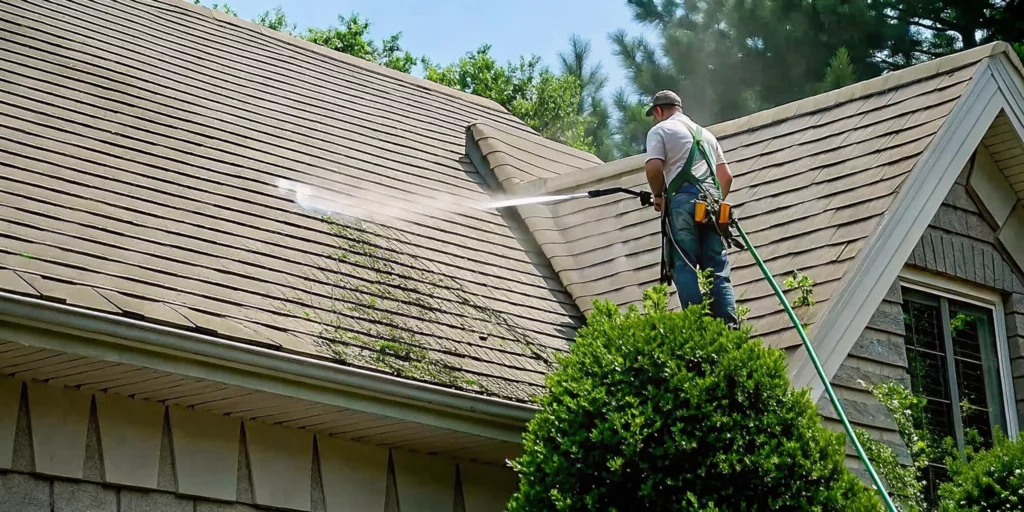
Soft washing is not the same as power washing. It uses low pressure and biodegradable cleaning solutions to clear moss and algae without damaging your shingles. Here is how a professional roof cleaning service approaches the job on Long Island homes.
Step 1: Free roof evaluation
Every job starts with a free roof assessment. A specialist checks for granule loss, shingle cupping or curling, and the depth of moss growth. This evaluation determines whether the roof is safe to clean and which treatment approach will work best. Gulf2Bay recommends a roof assessment every three to five years to catch problems early.
Step 2: Hand removal of debris
Large moss clumps and debris are removed by hand. No scraping. Scraping damages shingles and accelerates granule loss. The goal is to expose the moss roots so the cleaning solution can reach them directly.
Step 3: Professional-grade biocide application
A SoftWash Systems biocide is applied to the roof at low pressure. This professional-grade solution kills moss, algae, and lichen at the root. Unlike household bleach, these products are EPA and VOC-compliant and safe for your landscaping. SoftWash Systems products are used by theme parks, government buildings, and universities across the country.
Step 4: Low-pressure rinse
After the biocide has soaked in, the roof is rinsed with low-pressure water at 300 to 500 PSI. For comparison, a pressure washer operates at 1,500 to 3,000 PSI. The soft wash rinse is gentle enough to use on all shingle types and removes only the dead organic material, not your shingle granules.
Step 5: Follow-up and warranty
For heavy moss, a second application may be needed four to six weeks later. Every roof cleaning comes with a five-year transferable warranty, one of the strongest in the industry. That is protection that follows the home, not the homeowner.
What You Can Do Yourself Between Professional Cleanings
Gutter care tips
Dirty gutters help moss grow. When gutters are full of leaves, they trap water near the roof edge. Moss loves this wet spot. Check your gutters twice a year to make sure water flows well. Regular gutter maintenance keeps the roof edge dry and stops moss from creeping into your shingles.
Trim overhanging branches
Moss thrives in shade. If you have big trees near your home, their limbs might block the light. Trim any branches that hang over your roof. More sunlight means your shingles dry out faster after rain. Sunlight is a natural moss deterrent.
Zinc strips for moss prevention
You can install zinc or copper strips along the roof ridge under the top row of shingles. When it rains, water flows over the metal and carries microscopic particles down the roof. These metal particles prevent moss from growing. The EPA lists zinc and copper as safe and effective moss inhibitors. This is a one-time installation that helps for years.
What to never do
- Never use a pressure washer on your roof.
- Never use a broom or scraper on shingles.
- Never apply store-bought bleach to kill moss.
- Never walk on a wet or mossy roof.
- Never climb a ladder to scrub moss yourself.
Frequently Asked Questions
When is the best time of year for roof moss removal?
The best time for roof moss removal is during late spring or early fall. The weather is cool and damp during these months, which keeps the cleaning solution active longer. Summer heat causes cleaning solutions to dry too fast, reducing effectiveness. Treating moss before winter prevents ice from trapping moisture in the growth.
How often should you have your roof cleaned of moss?
Most homes need professional roof cleaning every three to five years. Homes with heavy tree cover or northern exposure may need it more often. If you see small green patches starting to form on your shingles, it is time for a treatment. Catching moss early prevents it from lifting shingles and causing leaks.
Does moss damage asphalt roof shingles?
Yes. Moss roots grow under the edges of asphalt shingle tabs and break the factory seals. Moss holds moisture against the shingles, causing rot, granule loss, and deterioration. In winter, trapped water freezes and expands, cracking shingles and lifting them further. A roof with heavy untreated moss can lose 30 to 50 percent of its expected lifespan.
What is the average cost for professional roof moss removal on Long Island?
Professional roof moss removal typically costs between $300 and $800 for a standard Long Island home. The exact price depends on roof size, pitch, material type, and the extent of moss growth. This investment includes a professional assessment, safe biodegradable cleaning, and a five-year transferable warranty.
Can I just spray moss killer from the ground?
Zinc sulfate granules can be applied from the ground for very light moss spotting. These are small pellets you toss onto the roof. Rain melts and spreads them across the surface. This works only for minor growth. For any significant moss coverage, professional treatment is required to kill the roots and prevent regrowth.
Ready to protect your roof from moss damage?
Moss roots dig deep into your shingles and hold water against the wood deck. Waiting to address the growth risks thousands of dollars in roof replacement costs. A quick inspection today prevents a leaking roof next month. Professional soft washing keeps your shingles in good shape for years to come. Do not let a small moss patch turn into a big repair bill. Avoid the danger of a fall or a damaged roof.
Call (631) 557-5484 to schedule a free roof inspection today.