Paver sealing is not a permanent fix or an automatic upgrade. It earns its cost when sound pavers need protection from joint weeds, staining, fading, and repeated moisture exposure, especially on high-traffic patios and driveways near the coast.
So, is paver sealing worth the cost? Usually, yes, when the pavers are structurally sound, the joints are properly cleaned and stabilized, and the sealer matches the surface. It is usually not worth sealing over crumbling pavers, a shifting base, or unresolved drainage problems.
Request a paver cleaning and sealing assessment
The practical question is what you are protecting and how much maintenance you are willing to plan for. Sealing does not stop every problem, but the right preparation and product can reduce several of the most expensive forms of paver wear. Start with what sealing actually protects against.
What Paver Sealing Actually Protects Against
Weeds that loosen the joints
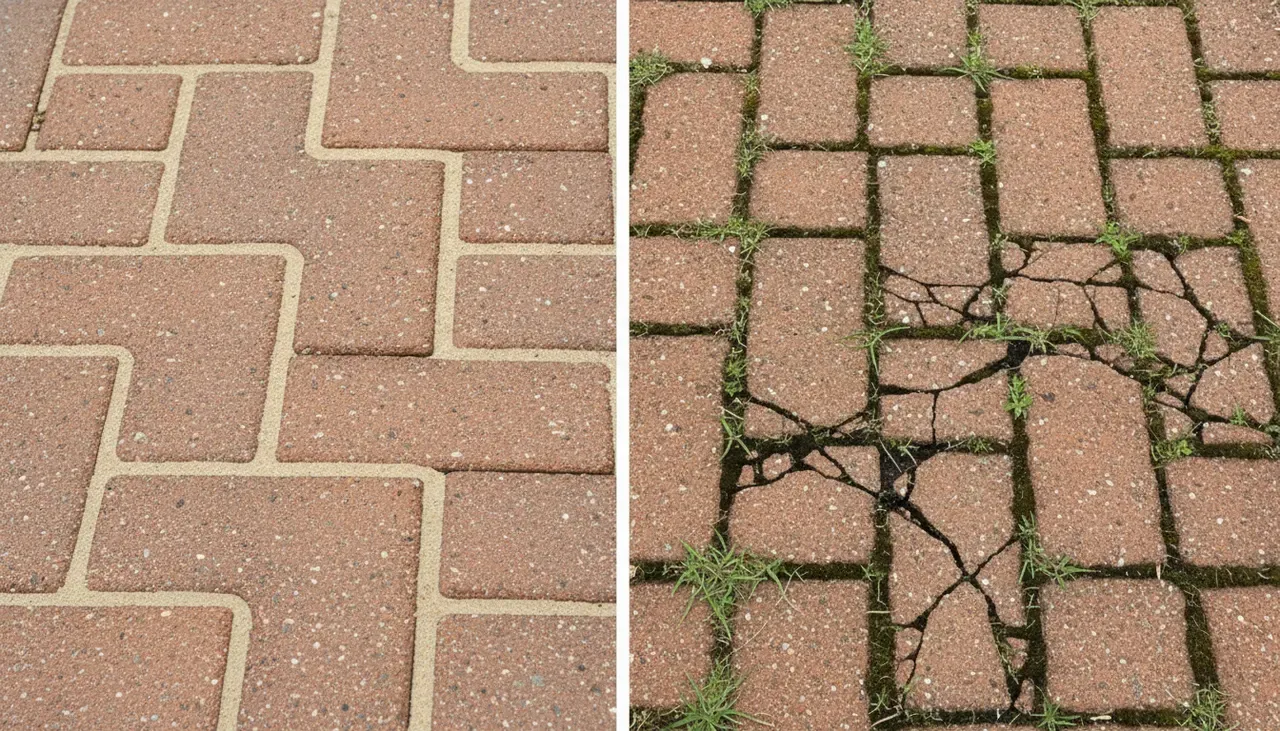
Weeds do more than make a patio look neglected. Soil collects in open joints and depressions, giving weeds a place to grow. Their roots can destabilize joints, expand existing cracks, make the surface uneven or slippery, and shorten the life of the paving. Cornell University identifies filling paver joints, including with properly activated polymeric sand, as a preventive weed-control measure. Prevention is usually more effective and less costly than removing established growth later.
Sealing supports that joint system by helping hold the sand in place and reducing the gaps where organic debris and moisture collect. It does not make a neglected patio maintenance-free. If the joints are already empty or the weeds are established, the surface needs thorough cleaning and joint repair before the coating is applied.
Learn about paver sealing benefits, including how joint maintenance fits into the larger care plan.
Fading, staining, and moisture exposure
Pavers absorb spills and weathering at different rates depending on their material and porosity. A suitable sealer creates a more resistant surface, helping limit the absorption of oil, grease, food, and other staining liquids. It can also help preserve the appearance of colored pavers against routine exposure to sun, rain, and dirt. The right finish may be matte or slightly enhanced, but appearance should be selected for the specific paver rather than assumed from a product label.
Joint sand washout
Rain, runoff, routine cleaning, and foot traffic can gradually move unprotected joint sand. Once joints become low, pavers can shift more easily and weeds have another opening. Sealing can help stabilize properly installed joint sand and reduce washout, but it cannot correct a failing base, widespread settling, or loose pavers. Think of sealing as a proactive coating applied after the surface and joints are sound, not as a repair for structural movement.
That distinction is central when deciding whether paver sealing is worth the cost. Clean, stable pavers with sound joints can benefit from protection. A surface with base failure should be repaired first.
How Much Does Professional Paver Sealing Cost on Long Island?
Professional paver sealing on Long Island commonly runs about $0.50 to $2.50 per square foot. That range is a planning figure, not a guaranteed quote. The final price depends on the total area, the condition and porosity of the pavers. The amount of joint sand work required, and how much cleaning the surface needs before sealer can be applied.
Typical project cost by patio or driveway size
For a small patio of up to 200 square feet, a reasonable professional range is about $100 to $400. A medium patio between 200 and 500 square feet often falls between $400 and $1,000. Larger patios and driveways of 500 square feet or more commonly land between $1,000 and $2,500.
Those tiers are useful for budgeting, but square footage alone does not determine the price. A compact patio with heavy organic buildup, failed joint sand, or multiple old coating layers may require more preparation than a larger, well-maintained driveway.
What the price should account for
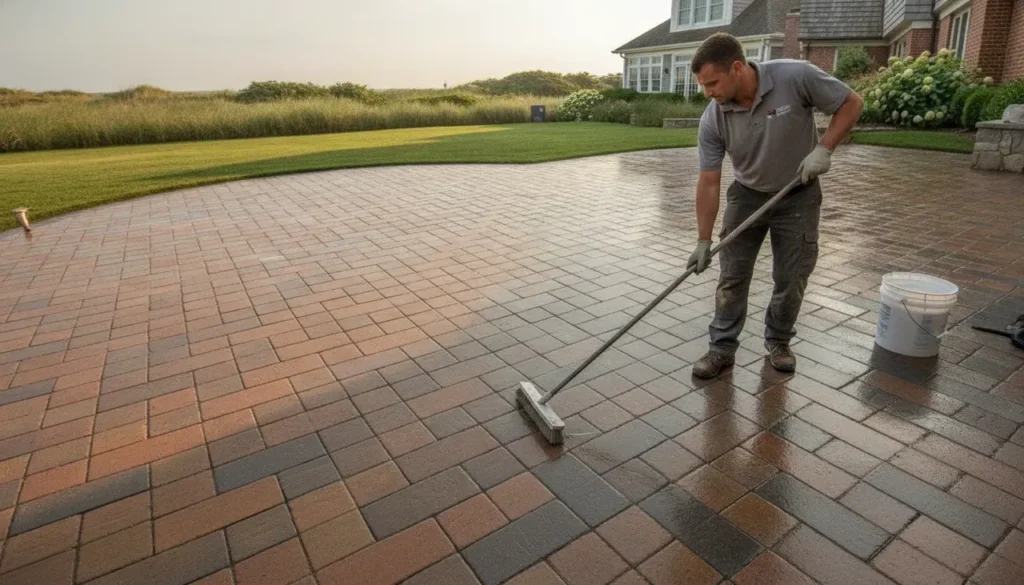
Sealing is only one part of the job. Professional preparation may include surface cleaning, treatment of organic growth, removal of residue, joint inspection, and sanding where the joints need to be stabilized. The pavers must also be dry and ready for the selected sealer. Applying product over dirt, moisture, or unstable joints can leave you paying for a finish that fails early.
Labor typically represents about 50% to 70% of the total project price. That reflects the time involved in preparing the surface, protecting surrounding areas, applying the product evenly, and managing drying conditions. The sealer itself matters, but rushed preparation is often the more expensive mistake.
Why Long Island pricing can sit toward the higher end
Labor in the Hamptons and other premium Long Island markets may sit toward the higher end of the range. Particularly for large properties, difficult access, detailed stonework, or surfaces exposed to coastal weather. Driveways with vehicle traffic and patios surrounded by landscaping may also take more time to protect and finish properly.
When comparing estimates, ask what is included rather than choosing the lowest number. A clear scope should identify cleaning, joint-sand work, sealer type, coats, preparation, and return instructions. Gulf2Bay provides professional paver cleaning and sealing for homeowners who want the surface assessed before deciding whether the work is worthwhile. No responsible contractor should promise an exact price without seeing the pavers and measuring the area.
When Is Paver Sealing Worth the Cost?
For a sound patio or driveway, the answer is often yes. Sealing is most valuable when the pavers are structurally stable, the joints need protection, and the surface is important to the appearance of the property. It is not a substitute for repairing a failing base or replacing badly damaged pavers.
Compare maintenance cost with replacement work
A professional sealing project in the $1,500 to $2,000 range is a manageable maintenance expense for a large, high-value patio or driveway. It is also a much smaller intervention than removing and re-laying an entire paved surface. The more labor and material invested in the original installation, the more sense it makes to protect that work before small maintenance problems become reconstruction problems.
Sealing can help stabilize sand joints so they are less likely to shift or wash away. Cornell University notes that weeds establish easily in paver joints and cracks, where they can destabilize joints, expand cracks, and shorten the life of a hard surface. Its guidance also identifies filling paver joints as a preventive measure that can save the time and money required to control established weeds: Cornell’s hard-surface weed guidance.
That protection matters on Long Island, where an exposed driveway or Hamptons patio has to absorb traffic, weather, spills, and seasonal maintenance. A sealed surface is easier to keep clean when oils, grease, and other liquids would otherwise soak into porous pavers. It can also help preserve color and reduce the faded, neglected appearance that makes an expensive outdoor area look older than it is.
The lifespan benefit is conditional
One industry source reports that sealing may extend a patio or driveway’s lifespan by up to 50% compared with an unsealed surface. Treat that figure as an upper-end possibility, not a guarantee. Results depend on the paver material, joint condition, drainage, traffic, preparation, and the sealer selected. A coating applied over dirt, weeds, unstable joints, or moisture problems will not fix the cause of the damage.
Sealing also is not permanent. Many surfaces need reapplication about every two to three years, depending on exposure and use. The investment makes the strongest economic sense when the pavers are worth preserving, the surface can be properly cleaned and prepared. And the owner plans to maintain it rather than seal it once and forget it. For a closer look at the functional paver sealing benefits, focus on joint stability, stain resistance, and reduced maintenance, not just a temporary shine.
When Paver Sealing Is NOT Worth It
Sealing is a maintenance coating, not a repair for failing hardscape. It can help sound pavers resist staining, fading, moisture, and weed growth in the joints. It cannot stabilize a patio that is sinking, stop a paver from crumbling, or fix a base that is shifting underneath it.
Check the hardscape before choosing the coating
Walk the entire surface and look closely at the pavers, joints, and edges. A few loose units or isolated weeds may be manageable during a proper cleaning and preparation. Widespread movement, rocking pavers, low spots that collect water, or a visibly uneven edge point to a base or installation problem. Coating over those conditions only makes the finished surface look better temporarily while the underlying failure continues.
Do not seal pavers that are severely cracked, spalled, hollow-sounding, or breaking apart. A sealer is not structural reinforcement. The damaged units or the supporting base may need replacement and rebuilding first. The same caution applies when joint sand has washed out across the installation. Weeds are often a symptom of failed or missing joint material. Re-sanding or replacing the joints comes before sealing, because the coating needs a stable, properly prepared surface to perform.
| Condition | When sealing pays off | When to skip it |
|---|---|---|
| Paver condition | Pavers are structurally sound, stable, and worth preserving. | Pavers are crumbling, severely damaged, hollow-sounding, or moving because the base is unstable. |
| Joint sand | Joints are intact or can be cleaned and properly re-sanded before coating. | Joint sand is broadly missing or weeds are signaling a failed joint system that needs replacement first. |
| Budget | You can budget for preparation and periodic maintenance. | The project only works if you can apply a cheap product and never maintain it. |
| Expected reapplication | You accept that a quality coating typically needs refreshing every 2 to 3 years. | You expect one application to remain effective permanently. |
Do not confuse a low price with long-term value
Inexpensive sealers can break down quickly on patios and driveways. That is especially true where the surface is exposed to sun, rain, freeze-thaw cycles, and regular foot or vehicle traffic. A rushed application can also trap dirt, highlight uneven color, or leave an unwanted sheen. If the budget does not allow thorough cleaning, joint preparation, the right product, and future reapplication, waiting may be the more practical decision.
The honest answer to whether paver sealing is worth the cost depends on the condition of the installation and your maintenance expectations. Seal sound pavers when you want to preserve a good surface and are prepared to maintain it. Skip the coating when repairs, re-sanding, or rebuilding should come first.
How Often Should Pavers Be Resealed?
Plan on resealing pavers every two to three years as a starting point. That is not a hard expiration date. A shaded patio with light foot traffic may hold its finish longer, while a sunny driveway, pool deck, or heavily used entertaining area may need attention sooner.
Exposure matters as much as the calendar. Long Island sun, freeze-thaw cycles, salt air, tracked-in grit, vehicle fluids, and repeated cleaning can gradually wear down the protective film. The right schedule is the one that responds to the surface rather than treating every property the same.
Use the surface to set the schedule
Look for changes in water behavior, color, and joint condition. When a few drops of water darken the paver and absorb quickly instead of beading briefly, the sealer may be losing effectiveness. Fading color, new oil or food stains, and more frequent weed growth in the joints are also practical warning signs.
Check several areas, not just the most visible section. A driveway entrance may wear faster than a sheltered walkway. Test an inconspicuous paver if you are unsure, because a surface can look acceptable while protection is already declining.
A practical resealing cadence
- At installation: Wait generally 30 to 60 days before sealing new pavers. This gives natural efflorescence time to appear and clear instead of trapping the pale mineral residue beneath a new coating.
- Each spring: Inspect after winter for fading, joint wear, stains, and rapid water absorption. Spring is a useful window for a spring paver reseal before patios and pool areas see heavier summer use.
- Every two to three years: Schedule resealing when the surface shows declining protection, especially on high-traffic or fully exposed areas. Do not apply a new coat over dirt, failed sealer, or unstable joint material.
- Before deciding: Confirm that the pavers and joints are sound. Cleaning, weed removal, joint-sand correction, and adequate drying are part of the decision. Resealing a crumbling or shifting surface only covers the underlying problem temporarily.
More frequent sealing is not automatically better. Excess product can leave a cloudy or slippery finish, and repeated applications without proper preparation can create buildup. If the existing coating is peeling, blotchy, or failing unevenly, the surface may need corrective cleaning or sealer removal before another application.
The goal is controlled maintenance, not a permanent coating. A two-to-three-year review keeps the decision tied to actual wear, exposure, and the value of protecting the pavers you already have.
Get a paver sealing assessment for your Long Island patio.
Frequently Asked Questions
Is paver sealing really worth the investment?
It can be, especially for clean, stable pavers that receive regular foot or vehicle traffic. Sealing helps resist stains, color fading, moisture, and weed growth in the joints. It is less worthwhile when the surface is crumbling, the base is moving, or the pavers need repairs before protection is applied.
Is DIY paver sealing cheaper than hiring a professional?
DIY may cost less upfront, but the result depends on thorough cleaning, joint preparation, product selection, and even application. A professional process is useful when the pavers have embedded stains, uneven color, heavy joint growth, or a large surface that must cure consistently.
What are the main benefits of sealing paver driveways?
Sealing improves resistance to oil, dirt, weathering, and moisture while helping the surface retain a more consistent appearance. It can also help stabilize properly prepared joint sand. Sealing does not correct a failing base or eliminate every maintenance need.
Should new pavers be sealed right away?
No. New installations should generally be allowed to settle and release efflorescence before sealing. Follow the installer or sealer manufacturer’s timing guidance, and confirm the surface is clean, dry, and free of visible residue before applying any product.
Get Started With a Paver Sealing Quote
A surface-specific quote helps you compare the cost of cleaning and sealing with the condition, use, and appearance of your patio or driveway. Keep the decision practical: seal when the pavers are sound and the protection fits your maintenance plans.
Contact Gulf2Bay for a paver cleaning and sealing quote. You can also call 844-422-9274 with questions about your pavers, timing, or next steps.