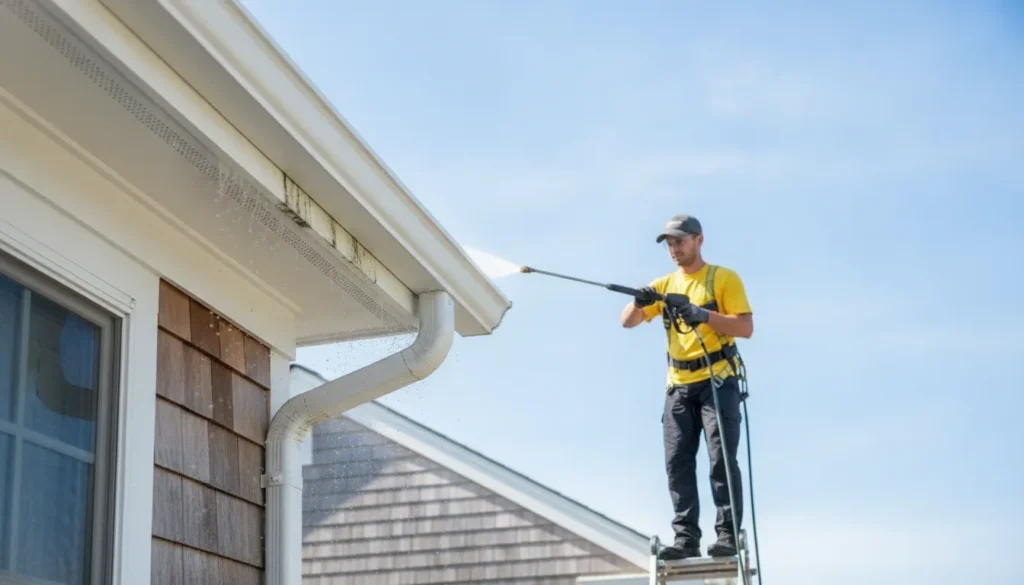
To learn how to remove tiger stripes from gutters, first determine whether the dark marks are loose soil, bonded residue, or oxidation. The right treatment removes buildup without stripping the painted aluminum finish.
Request a gutter brightening assessment from Gulf2Bay Softwash.
How to remove tiger stripes from gutters safely: identify the gutter material, protect siding and landscaping. Test a compatible brightener, apply it at low pressure, follow the product label, and rinse thoroughly from top to bottom. High pressure and aggressive scrubbing can damage a weathered finish or its sealants.
What Causes Tiger Stripes on Aluminum Gutters?
Tiger stripes are dark vertical runoff tracks that form when pollutants collect on an oxidized, chalky aluminum finish. Roof runoff follows the same path down the gutter face, concentrating residue along the lower edge. The best treatment addresses both bonded grime and the condition of the finish.
Tiger stripes are the dark lines that run down the front face of an aluminum gutter. They are usually most visible along the lower edge, where water repeatedly leaves the roof and travels over the same part of the coating. This pattern is different from a light layer of dust that a normal rinse can remove.
Oxidation changes the surface
Painted aluminum gradually weathers through exposure to sunlight, moisture, and air. As the coating oxidizes, it can become dull, chalky, and less smooth. That altered surface holds atmospheric pollutants, road grime, and roof runoff more readily than a sound finish.
Chalking is one visible sign of this change. A dry finger may pick up pale powder from a heavily weathered gutter. That powder does not mean every dark mark will wipe away. The finish may already be porous, and some pollutants may be bonded to it.
Roof runoff concentrates the stain
Water from asphalt shingles can carry organic material and fine debris toward the gutter. The runoff then follows the gutter lip and front face in repeated tracks. On Long Island, strong sun, humidity, and coastal exposure can add to the stress on painted aluminum.
A garden hose or household detergent may lighten loose grime, but tiger stripes often remain because the residue is attached to the oxidized surface. Look for repeated vertical lines, a dull finish, and darker buildup along the lower edge. Those clues point to a brightening problem rather than a simple rinse.
Gulf2Bay’s gutter-cleaning guidance treats the material and finish as part of the diagnosis. The exact result depends on the age, coating condition, and severity of the oxidation.
Before You Clean, Check the Gutter Finish and Surroundings
Before cleaning, identify whether the gutter is painted aluminum or another material. Inspect for chalking or flaking, test a small hidden area, and protect everything below the work zone. A sound test patch supports a controlled brightening attempt. A failing finish calls for conservative expectations or professional assessment.
Identify the material and finish
Do not use one method for every gutter. Aluminum and vinyl respond differently to cleaners, friction, and pressure. Painted aluminum may show oxidation, corrosion, faded color, or weakened sealants. Vinyl does not oxidize in the same way, but the wrong product can still discolor, scratch, or soften it.
Inspect the gutter face in good light. A powdery feel, unusual dullness, flaking paint, pinholes, or failed joints indicates that the surface needs more than a cosmetic scrub. If the coating is already failing, a cleaning attempt may expose uneven color or remove material that was barely attached.
Test a hidden section
Choose a small, inconspicuous section and apply the intended product exactly as directed. Rinse it at the labeled interval, then check the color, gloss, and feel after the surface dries. A test patch cannot guarantee that every section will respond identically, but it can reveal an obvious compatibility problem before the entire gutter is treated.
Do not mix cleaners or improvise ratios. Use the product label as the authority for compatible materials, protective equipment, dwell time, and rinsing. Do not use an acid or abrasive product unless the label specifically approves it for the gutter finish.
Protect property below the gutter
Pre-wet nearby siding, windows, trim, soil, plants, and hardscape. Move outdoor furniture and cover delicate fixtures. Keep runoff controlled. A brightener can travel beyond the gutter face, especially on a two-story home or around a steep roofline.
Gulf2Bay’s broader exterior maintenance services follow a surface-specific approach because aluminum gutters may sit above cedar, stone, pavers, or planted beds. The surrounding property matters as much as the stain.
Keep pressure off the aluminum face
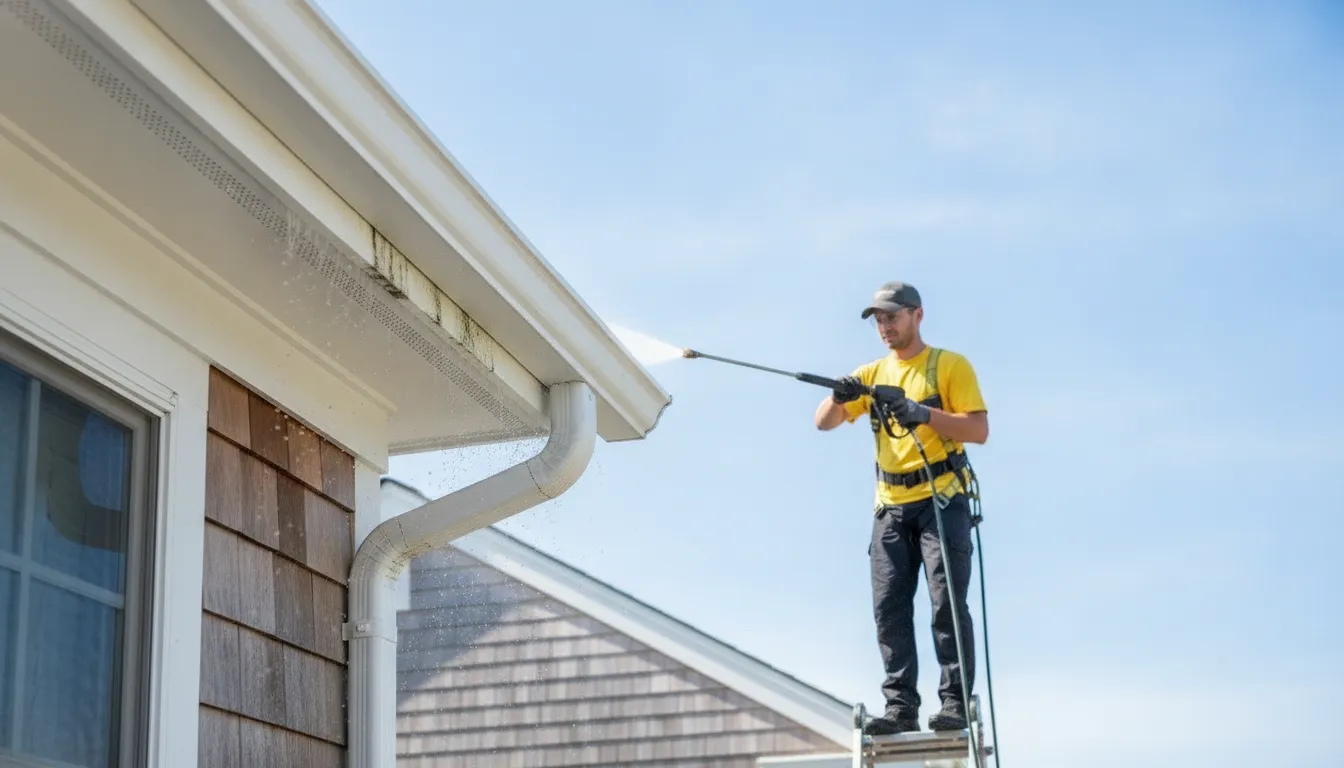
High pressure is not a shortcut for oxidation. It can strip paint, expose aluminum, damage sealants, and leave the surface more vulnerable to future weathering. Ask any provider how the gutter face will be treated, what pressure will be used, and how nearby surfaces will be protected.
How to Remove Tiger Stripes from Gutters Safely
To remove tiger stripes from gutters safely, protect surrounding surfaces, test a compatible brightener, apply it at low pressure, follow the labeled dwell time, and rinse thoroughly. Stop if the finish changes unexpectedly or the oxidation is too advanced for a uniform result.
Gutter brightening is a controlled chemical-cleaning process, not a contest to see how much force the surface can withstand. The goal is to loosen oxidation and bonded grime while preserving the painted aluminum finish.
Use this cautious brightening sequence
- Protect and pre-wet the area. Move or cover vulnerable items. Wet siding, windows, plants, soil, stone, and other nearby surfaces with clean water before applying the cleaner. Keep those surfaces wet as the work continues.
- Confirm product compatibility. Select a product made for the gutter material and finish. Read the full label before mixing or applying it. Never combine products, guess at chemical ratios, or substitute an unapproved acid.
- Test a small patch. Apply the product as directed to a hidden section. Observe the surface after dwell and rinse. Look for color change, chalk transfer, dulling, streaking, or other finish damage.
- Apply at low pressure. Work in manageable sections and coat the gutter face evenly. Low pressure keeps the solution in control and reduces the risk of stripping the finish or forcing water behind joints.
- Follow the dwell time. Keep the surface wet and follow the label. Never let cleaner dry on the gutter, glass, siding, plants, or other adjacent materials. Re-wet rather than extending the dwell by guesswork.
- Agitate only if approved. If the label permits it and the test patch looks sound, use light agitation with a suitable soft brush or pad. Do not scrub aggressively. Friction can create uneven wear on weathered aluminum.
- Rinse from top to bottom. Use a gentle, thorough rinse to carry loosened residue away from the gutter face. Remaining cleaner or soil can leave haze and dull the finish.
- Inspect before repeating. Let the result become clear, then inspect the section from normal viewing distance. Repeat only if the label allows it and the finish shows no adverse reaction. Stop when oxidation is too advanced for a safe, uniform result.
A professional assessment is the safer choice for tall homes, difficult access, heavily chalked gutters, steep rooflines, or valuable landscaping below the work area. A qualified crew should explain the test area, protection plan, product compatibility, low-pressure method, and realistic result before beginning.
Why Pressure Washing and Household Scrubbing Fail
Pressure washing and abrasive scrubbing often fail because tiger stripes are bonded to an oxidized, chalky finish rather than sitting as loose dirt. Force can strip the coating or damage sealants without correcting the oxidation. Low-pressure brightening uses compatible chemistry and controlled rinsing instead of relying on force.
Match the method to the gutter finish
| Method | What it can do | Main limitation or risk |
|---|---|---|
| High-pressure washing | Rinse loose debris from some surfaces quickly. | Pressure does not neutralize bonded oxidation. It can strip the finish or damage sealants. |
| Abrasive scrubbing | Remove some deposits through friction. | It can abrade the coating and leave uneven wear or dull patches. |
| Generic detergent | Loosen ordinary dust and light surface grime. | It may not address oxidation, so dark vertical streaks can remain. |
| Low-pressure brightening | Use a compatible cleaner to help lift oxidation and residue, followed by a controlled rinse. | It requires surface testing, correct dwell time, protection, and realistic expectations. |
The practical difference is chemical action versus force. A pressure washer can move water and loose material, but it cannot reliably undo the oxidation that gives grime a stronger bond. Scrubbing adds direct friction against the coating, which is a poor trade when the finish is already chalky.
A specialized brightener is applied at low pressure, allowed to work for the labeled dwell period, and rinsed gently. That is a surface-specific process, not traditional power washing. Keep the solution from drying, protect adjacent materials, and stop if the test area reacts poorly.
Some oxidation is too advanced for complete stain removal. A professional should not promise a uniform result without seeing the gutter condition. The goal is to improve the appearance while leaving the coating and sealants intact.
DIY or Professional Gutter Brightening, Which Fits Your Home?
DIY gutter brightening is best limited to low, reachable gutters with an intact finish and light surface dirt. Professional service is safer for tall Long Island homes, heavily chalked aluminum, steep rooflines, delicate landscaping, or difficult access. The decision depends on surface condition and working height.
When a careful DIY attempt is reasonable
A limited DIY attempt may be reasonable when the gutter is low, easy to reach, soundly finished, and marked by light surface dirt. Confirm the material first. Test the product on a hidden section. Protect nearby plants and surfaces. Use the label, not guesswork, for application and rinsing.
Do not treat persistent chalky streaks as ordinary dirt. Tiger stripes are not always permanent, but pollutants bonded to an oxidized finish become harder to remove over time. If the coating is dull, powdery, thin, or flaking, the risk of an uneven result increases.
When professional brightening is safer
Bring in a professional when the gutter faces are high, access requires a tall ladder, the finish is heavily chalked, or runoff could reach valuable landscaping. A trained crew can combine surface testing with low-pressure application and property protection.
That is especially important around premium Long Island homes with cedar details, stone, pavers, planted beds, or narrow side access. Water pressure is not a substitute for brightening chemistry, and ladder work adds a separate fall risk.
Before scheduling, ask:
- Will you identify whether the gutters are aluminum or vinyl?
- What product and application method will you use on oxidized gutter faces?
- Will you test an inconspicuous area before treating the full run?
- How will you protect landscaping, siding, windows, and nearby stone?
- What finish condition would limit the expected result?
Clear answers help distinguish routine cleaning from oxidation treatment and help set realistic expectations before work begins.
How to Remove Tiger Stripes from Gutters Before They Return
To help prevent tiger stripes from returning, inspect gutter faces during spring and fall maintenance. Remove channel debris and address fresh runoff staining before it bonds to an oxidized finish. Coastal exposure, mature trees, and heavy roof runoff may require closer checks.
Build brightening into maintenance
Tiger stripes return when runoff, dust, and pollutants remain on an already weathered gutter finish. Cleaning the channels twice a year is a practical guideline for limiting heavy buildup, but it does not guarantee that streaks will never reappear.
Schedule one inspection in spring and another in fall. Remove leaves and debris from the channels, then check the front faces and lower edges for fresh dark staining. Early treatment is generally easier than waiting until pollutants bond more firmly to a chalky surface.
Homes beneath mature trees, near the coast, beside busy roads, or below roofs with heavy runoff may need closer observation. Note where the streaks recur and whether the finish is becoming powdery. That information helps separate routine soil from an oxidation problem.
Coordinate related exterior cleaning
Ask for the gutter faces to be evaluated when the roof, siding, windows, or other exterior surfaces are maintained. Seasonal gutter maintenance can serve as a reminder to inspect both the channels and the visible faces.
If staining returns quickly, note the runoff pattern and the condition of the gutter coating. A surface-specific evaluation can determine whether the next step is routine cleaning, brightening, or conservative restoration guidance.
Talk with Gulf2Bay Softwash about safe gutter brightening on Long Island.
Frequently Asked Questions
What causes tiger stripes on gutters?
Tiger stripes form when the aluminum finish oxidizes and becomes chalky or porous. Airborne pollution, road grime, and roof runoff collect on that surface. Coastal weather and UV exposure can accelerate weathering, so the marks often stand out along the lower edge and front face.
Can I use pressure washing to remove tiger stripes?
High pressure is not the preferred method. It can strip the gutter finish, damage sealants, and leave aluminum more exposed to future weathering. Low-pressure brightening is safer because compatible chemistry does the lifting and a controlled rinse removes the residue.
How do professionals remove tiger stripes from gutters?
The process typically starts with identifying the material, protecting nearby property, and testing a compatible brightener on a small area. The cleaner is applied at low pressure, given the labeled dwell time, and rinsed from top to bottom. Severe oxidation may limit the final color match.
Are gutter tiger stripes permanent?
Not always. Freshly bonded pollutants may respond to a suitable brightening process, while older streaks are harder to remove from an oxidized finish. A test patch helps show whether the marks can be improved without damaging the coating.
How often should I clean my gutters to help prevent tiger stripes?
Twice-yearly inspection and channel cleaning is a practical starting point for many homes. Inspect more often when the property is near the coast, under mature trees, beside a busy road, or exposed to heavy roof runoff. Treat fresh staining before it becomes firmly bonded.
Get Gutter Brightening Help on Long Island
Tiger stripes can need more than a routine rinse, especially when oxidation and chalking have bonded grime to the aluminum finish. Gulf2Bay Softwash can assess the gutter condition, surrounding surfaces, and access requirements before recommending a surface-specific approach for a Long Island home.