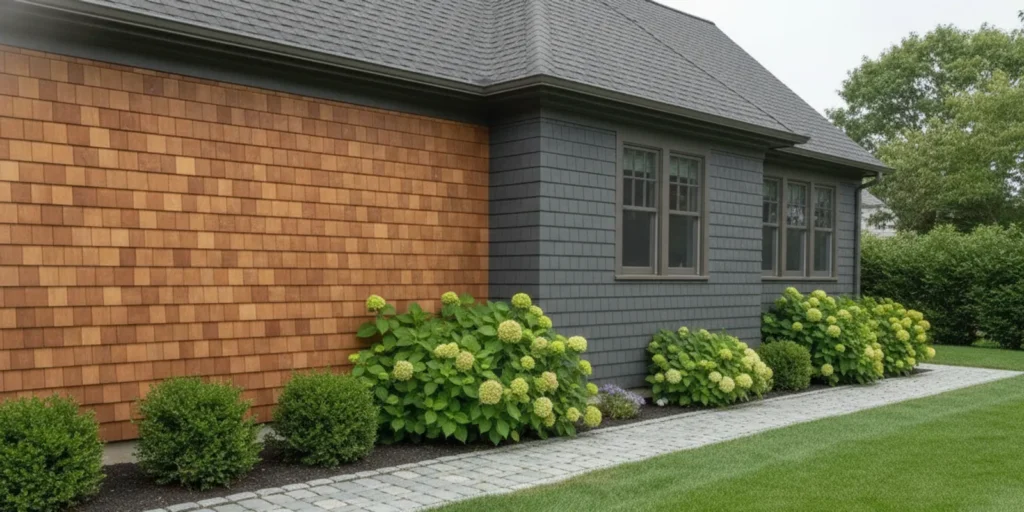
For cedar siding stain vs paint, the right choice depends on the look you want, the condition of the wood, and how much surface preparation the home needs. Stain keeps more of the cedar’s grain visible; paint creates a more uniform, opaque surface. On a Long Island home exposed to sun, wind, and salt air, neither finish is a shortcut around sound preparation and moisture management.
Request a cedar siding assessment
Cedar siding stain vs paint: what changes between the finishes?
Stain can preserve more of cedar’s character
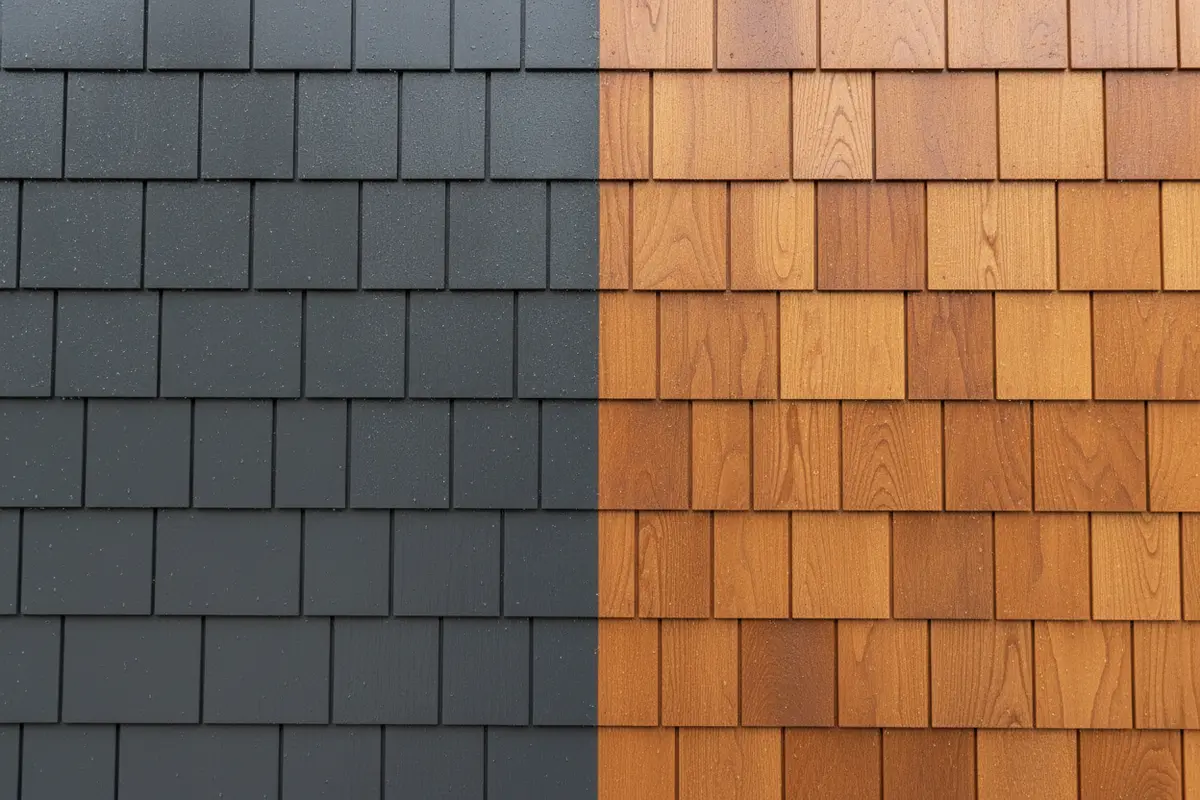
Stain comes in different opacities. A transparent or semi-transparent product lets more grain and variation show through, while a solid-color stain gives a more consistent color but still reads as a stain finish. The more transparent the finish, the more the wood’s existing color and condition affect the final appearance. That natural variation is part of the appeal, but it also means the result is less uniform than paint.
Some stains penetrate the wood; others form more of a surface film. Product labels matter. Do not assume that every product called “stain” behaves the same way or that one type can be applied over every old coating. Purdue Extension notes that water-repellent finishes are not effective when applied over solid-color stain or old paint, so identify what is already on the siding before choosing a new treatment. Read Purdue Extension’s guidance on finishes for wood.
Paint makes a more uniform color layer
Paint covers the wood more fully, which can be useful when the siding has uneven color or when a consistent, opaque appearance is the goal. That coverage does not remove the need to prepare the surface correctly. Loose or failing coatings, damp wood, and unresolved areas of deterioration can undermine a new finish. Paint can also hide some of the cedar’s natural grain, which is a real design trade-off rather than a defect.
The Forest Products Laboratory’s research on paint performance on wood siding discusses the role of primer in coating performance. The practical takeaway is to follow a finish system suited to the siding and its condition, rather than treating a fresh topcoat as a fix for every surface problem. Review the Forest Products Laboratory research on paint performance.
How should you compare cedar siding stain vs paint?
Use the finish to set expectations, not just color
Compare the visual result, the starting condition, and the maintenance approach together. A small sample on the actual siding can help you see how the finish looks in the home’s light and against the existing trim. Test an inconspicuous area and allow the coating to dry as directed before judging the color.
| Consideration | Stain | Paint |
|---|---|---|
| Appearance | Transparent and semi-transparent types show more grain; solid-color stain is more opaque. | Creates a more uniform, opaque color and conceals more of the grain. |
| What the result depends on | Opacity, product type, cedar color, and the condition of the existing surface. | Surface condition, preparation, primer and coating compatibility, and application. |
| Before recoating | Identify the existing finish; confirm the new product is suitable for that surface. | Check adhesion and condition; remove or address failing coating and use a compatible system. |
| Useful homeowner question | Do I want visible wood character, and will the existing surface accept this product? | Do I want a consistent color, and is the siding sound enough for a paint system? |
This is a comparison of finish characteristics, not a guarantee of service life. Exposure, product, application, existing coating, and maintenance all affect how a finish performs. A coastal-facing wall can weather differently from a sheltered elevation on the same house.
When reviewing samples, check them on the actual siding rather than judging them only indoors. The same stain can look quite different on weathered cedar than on a new sample board. View a test patch in both sun and shade, and compare it with trim, roofing, and neighboring materials. Confirm with the finish manufacturer how large the test should be, how long it needs to dry, and whether the patch can be safely recoated or removed if you decide against it.
Also ask whether the proposed work is a maintenance coat or a change in finish system. Those are different scopes. A maintenance coat may rely on the existing finish being sound and compatible, while changing from a film-forming coating to a penetrating treatment can require extensive preparation. Agree on how edges, corners, and less visible elevations will be handled so the finished home has a considered, consistent appearance.
What does Long Island coastal exposure mean for cedar?
Inspect each elevation instead of assuming all siding is alike
Long Island homes face changing combinations of sun, wind-driven rain, shade, tree cover, and salt carried in coastal air. A south- or west-facing wall may show fading sooner than a protected elevation. Shaded areas may stay damp longer. Windward sides can collect more weather exposure. These conditions are reasons to inspect the whole exterior, not reasons to pick a finish by location alone.
Walk the perimeter and note where the coating is peeling, chalking, blistering, or visibly worn. Look for soft or damaged wood, open joints, and places where water may be getting behind the siding. Take photos of each elevation so you can compare changes over time. A finish choice should wait if the underlying wood or water-management details need attention first.
Moisture and the existing coating can change the plan
Do not seal in a moisture problem with a new coat. Check for leaks, failed flashing, blocked drainage, or persistent wet areas and have the cause addressed before refinishing. The siding should meet the coating maker’s requirements for dryness and preparation. If the old finish is unknown, look for clues on an inconspicuous area and ask a qualified restoration professional to identify the safest next step.
Different layers can behave differently. For example, a penetrating finish may not be an appropriate choice over a film-forming old coating. Likewise, coating over loose paint does not make the loose layer sound. When the coating history is unclear, a small test and a careful assessment are safer than applying a product across the entire facade.
How do you choose between stain and paint?
Start with the appearance you want to live with
Choose stain when you want to retain visible wood grain and accept natural variation in color. Choose paint when a more even, opaque color is the priority and you are comfortable with a painted appearance. If you like both looks, compare samples next to the home’s trim, roof, and surrounding materials rather than looking at a color card alone.
- Favor a grain-forward look: investigate a transparent or semi-transparent stain only after confirming the existing coating and product compatibility.
- Favor a consistent color: evaluate paint or solid-color stain, recognizing that they have different product characteristics and should not be treated as interchangeable.
- Uncertain about the old finish: pause before buying materials. Identify the coating and test a small area.
- Seeing peeling or damaged wood: address the condition first. A new color cannot correct a failing substrate.
Consider the upkeep before you commit
Every exterior finish needs periodic inspection. How soon it needs attention depends on exposure, surface preparation, product, and how it was applied. Rather than relying on a universal repainting or restaining interval, check the siding routinely and respond to early signs of wear. Catching a localized failure early can help you understand whether it is limited to one elevation or part of a larger moisture issue.
Ask what maintenance the specific product calls for and whether future recoating will require removal of an existing layer. Ask for the product name, the recommended preparation, and any restrictions on applying it over the finish already on the home. Keep that information with your property records so future maintenance starts with facts, not guesswork.
Make a simple elevation-by-elevation record before settling on a plan. Photograph each wall from the same general distance, then take close-ups of peeling, fading, exposed wood, or areas that remain damp. Mark which sides face the strongest sun and weather, and note nearby trees or overhangs that create shade. This record does not diagnose the cause, but it helps you describe what you see and compare the assessment with the actual house.
When two proposals recommend different finishes, compare the preparation and assumptions before comparing the color alone. Ask each provider to explain how the old coating will be handled, whether repairs are included, and what conditions would change the scope. A proposal that explains its limits is more useful than one that promises a uniform result without identifying the starting condition. Do not approve a coating plan until you understand what will happen if the test area shows poor adhesion or an unexpected color.
What should happen before cedar siding is refinished?
Make the assessment specific to the wood and coating
A careful assessment distinguishes surface dirt from coating failure and wood deterioration. Cleaning may be part of the work, but cleaning alone does not restore a failed coating or repair damaged siding. Cedar needs a surface-appropriate approach: aggressive pressure can scar wood and force water where it should not go. The cleaning method should match the siding condition and the next finish planned.
Gulf2Bay Softwash focuses on exterior restoration and surface-specific care, including cedar siding restoration on Long Island. Its cedar restoration service is the relevant place to start when the wood needs evaluation beyond routine exterior cleaning. For homeowners weighing the broader scope of exterior work, the residential exterior services page outlines available service areas. Do not assume cleaning by itself includes stripping, repairs, or a particular coating; clarify the scope before work begins.
Ask practical questions before approving a finish
Get clear answers to these questions before committing to a stain or paint system:
- What finish is on the siding now, and how was that identified?
- Which areas need cleaning, scraping, repairs, or other preparation?
- Is the wood sound and dry enough for the proposed treatment?
- What product and opacity are proposed, and are they compatible with the existing surface?
- Will a test patch be used to confirm appearance and adhesion?
- How will nearby landscaping, windows, and adjacent surfaces be protected?
- What should be monitored after the work, and what maintenance does the product maker recommend?
These questions make the proposal easier to compare. A specific scope should identify the surfaces involved, preparation, finish system, and any exclusions. For coastal homes in the Hamptons, Nassau County, and the North Shore, that detail matters because one facade can include both exposed and sheltered sections with different conditions.
When is cleaning enough, and when is restoration needed?
Separate a cleaning concern from a coating concern
Start by asking what has changed: Is the cedar dirty, is the finish losing color, or is the coating lifting from the wood? Those observations point to different needs. A wash can address surface grime and certain types of biological growth when performed appropriately. It will not replenish a weathered stain, remove all failed paint, or correct a leak. Keep the proposed remedy tied to the actual condition rather than selecting a service by appearance alone.
Record the problem areas before work begins. Note the elevation, approximate size, and whether the issue appears near a roof edge, window, deck, or downspout. If one section repeatedly becomes wet or discolored, investigate the source instead of treating the visible mark as a finish defect. Photos also make it easier to compare the condition later and to agree on which areas are included in a proposal.
Cleaning removes contamination, not every finish problem
If the cedar is sound and the coating remains intact, removing surface dirt or organic growth may improve its appearance. But washing cannot replace worn stain, bond peeling paint, or correct damaged wood. A proper evaluation separates what cleaning can accomplish from what requires preparation, repair, or refinishing.
Use a gentle, surface-aware approach and avoid treating cedar like concrete. For a general explanation of low-pressure exterior cleaning, see how soft washing differs from high-pressure cleaning. That overview does not replace a cedar-specific evaluation, especially when the siding already has a coating or areas of damage.
Use visible changes as a cue to inspect
Inspect the home after winter and after periods of severe weather, then revisit any walls that show a change. Look for coating cracks, exposed wood, persistent staining, and openings around trim. Do not diagnose every dark patch as mildew or every peeling area as a paint problem without examining the surface and moisture conditions.
Homeowners in Gulf2Bay’s Long Island service area can discuss a property-specific assessment. For more on the company’s approach and background, visit the about page. A useful consultation should connect the visible condition to a defined scope, not push a finish before the siding has been assessed.
Schedule a cedar siding consultation
Frequently asked questions
Can you apply stain over painted cedar?
Do not assume you can. A penetrating stain generally needs access to the wood, and a paint film can prevent that. Check the product instructions and identify the existing coating first. Purdue Extension’s guidance notes that water-repellent finishes are not effective over old paint or solid-color stain. A test area or professional assessment can help establish a suitable path.
Does paint protect cedar better than stain?
There is no single answer that applies to every house. Performance depends on product type, preparation, compatibility, application, exposure, and maintenance. Paint’s opaque film and stain’s varying degrees of penetration create different conditions; neither makes neglected or damp siding sound.
Can cedar be cleaned before it is stained or painted?
Often cleaning is one part of preparation, but the method and drying requirements depend on the surface and coating system. Avoid harsh pressure that can damage wood. Confirm that the siding is clean, sound, and dry as specified by the finish manufacturer before coating.
Should all sides of the house use the same finish?
Usually homeowners select a consistent finish for the exterior’s intended appearance, but exposure and condition can vary by elevation. Inspect all sides before planning work, and get professional advice before using different systems on adjoining areas. Product compatibility and a uniform result both matter.
Choose the finish after you know what is on the siding, what condition the cedar is in, and what appearance you want to maintain. A careful assessment is the first step toward a finish that fits the house and its coastal exposure.