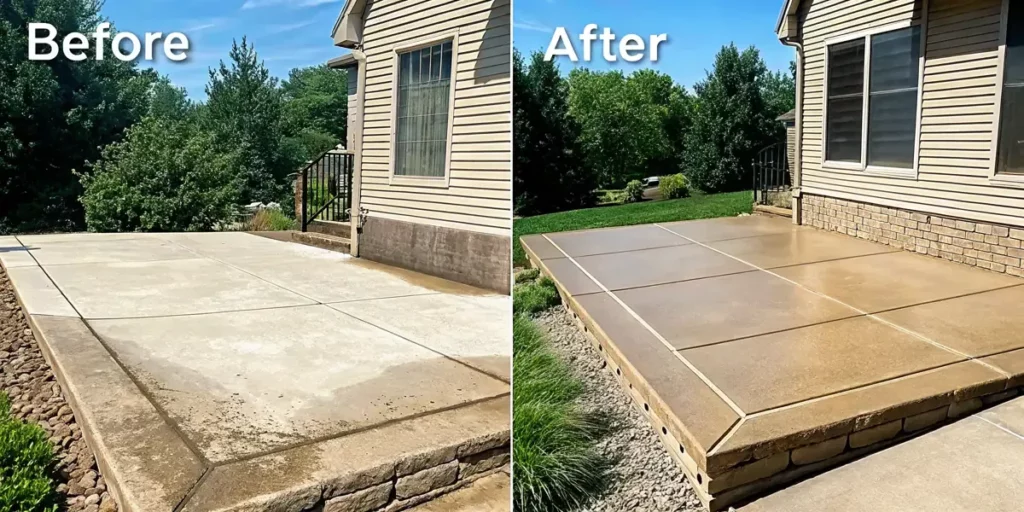
Green film and dark leaf marks can turn a clean concrete patio into an eyesore. On Long Island, shade, moisture, and seasonal debris let organic buildup return faster than many homeowners expect.
Request a free concrete patio cleaning estimate from Gulf2Bay Softwash.
Concrete patio cleaning Long Island homeowners can rely on removes algae, grime, organic buildup, and leaf stains without treating every mark the same way. A thorough process identifies the stain, applies a suitable cleaning solution, loosens embedded growth, and rinses the surface evenly while protecting nearby landscaping. This matters because blasting concrete with excessive pressure can etch the surface, yet water alone may leave living contaminants behind. Regular care also limits repeat buildup and supports a cleaner, more usable outdoor space, especially on shaded patios near trees where moisture lingers after rain. The EPA notes that green algal growth on cleaned masonry can return within only a few months, so lasting results depend on proper treatment and maintenance.
Choosing the right cleaning method starts with understanding what feeds the stains and why they keep coming back outside after each season. Long Island’s moisture, shade, and seasonal debris explain the local conditions behind algae, leaf marks, and grime.
Concrete Patio Cleaning Long Island: Why Long Island concrete patios develop stubborn stains
Long Island patios develop stubborn stains when moisture combines with shade and seasonal organic debris. Porous poured concrete holds that mixture in small surface pits, where algae, leaf tannins, and grime can settle.
A poured concrete patio may look solid and smooth from the kitchen door. Up close, its surface has small pits and low spots that catch moisture and debris. Around a Long Island entertaining area, those traps fill with pollen, soil, food crumbs, and leaves. Foot traffic then presses the mix against the concrete.
Moisture, shade, and green growth
Green or dark growth often starts where the patio stays damp after rain. Look along shaded edges, beneath outdoor furniture, and near planters or downspouts. These areas dry more slowly than the open center. A slick feel underfoot can appear before the color change becomes easy to see.
Surface rinsing may improve the patio for a short time without dealing with the growth itself. The EPA fact ledger notes that green algal growth can return within a few months on recently cleaned masonry. Persistent green patches, especially after repeated rinsing, point to buildup that needs a more complete cleaning plan.
Leaf tannins and seasonal debris
Leaves can leave brown, amber, or rusty-looking marks after they sit on wet concrete. The marks often trace a leaf edge or collect in piles near steps and seating. Acorns, twigs, flower petals, and mulch can add more organic residue. Autumn makes the problem obvious, but shaded spring debris can also linger.
Homeowners often notice these stains when setting out chairs, grills, or serving tables. A quick sweep removes loose material, yet the outline may remain. Guidance on how to remove leaf stains from a patio also helps explain why prompt cleanup matters. Concrete and pavers differ, so each surface still needs the right cleaning method.
Grime patterns around entertaining areas
Everyday use creates a different stain map. Grease may darken the space near a grill, while drink spills leave sticky spots that hold soil. Planters can form rings, and metal furniture may leave rust-colored marks. Dirt also gathers along expansion joints and at the patio edge.
These visible patterns help show what caused the stain and how long it may have been building. Watch for these common signs before concrete patio cleaning on Long Island:
- Green film in shaded or damp corners
- Brown leaf outlines that remain after sweeping
- Dark traffic lanes between the door, grill, and seating
- Black grime along joints, edges, and drainage paths
- Uneven color beneath rugs, planters, and furniture
One patio can show several of these signs at once. Treating every mark as plain dirt can leave organic growth or deep discoloration behind. The stain location, color, and texture offer useful clues. They also help separate a cleaning issue from cracking, worn concrete, or another repair need.
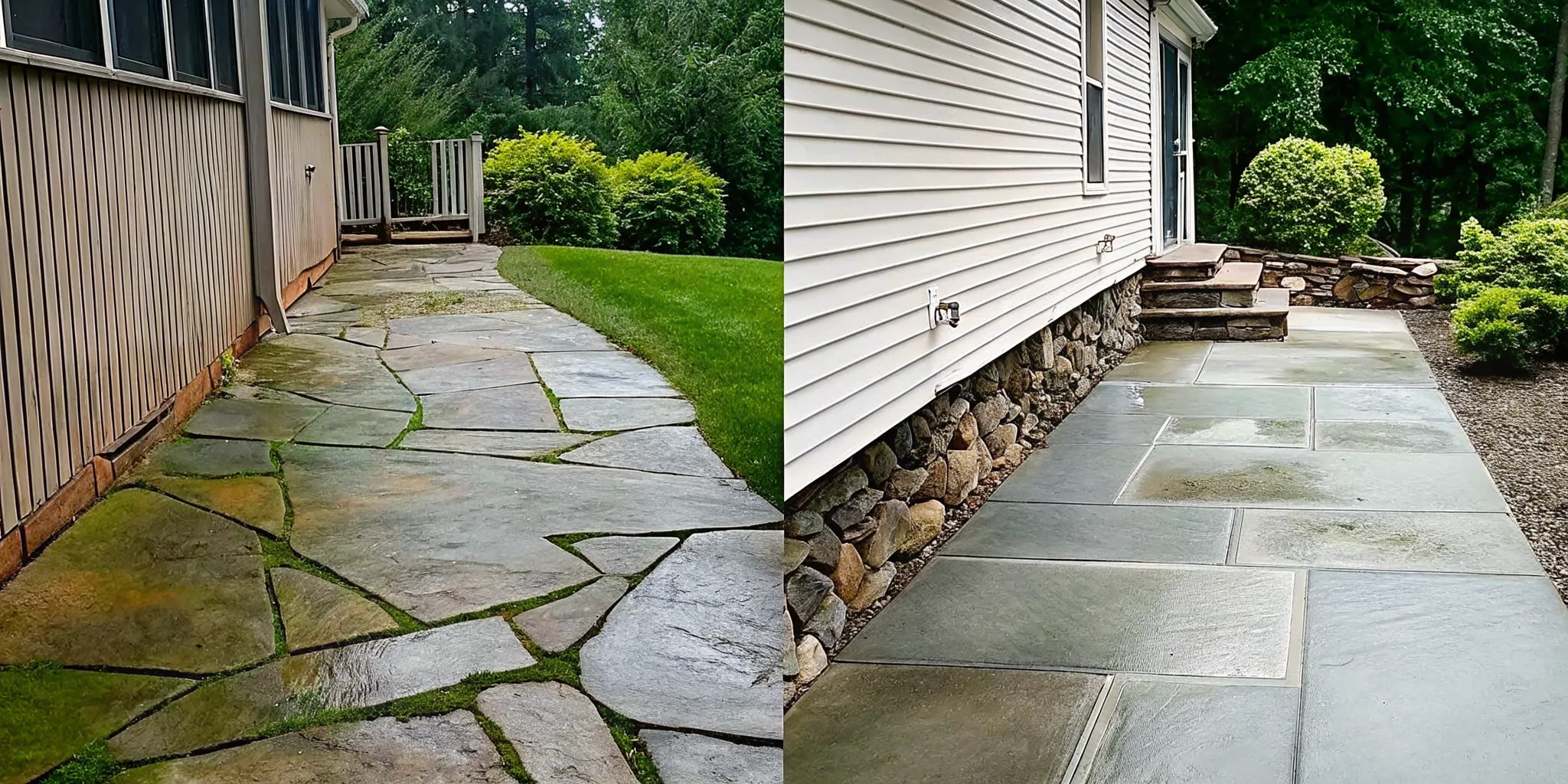
What is staining your concrete patio?
A clear diagnosis should come before any concrete patio cleaning on Long Island. Color, texture, location, and changes after rain can reveal the likely cause. These clues also help separate a surface stain from damage within the slab.
Surface clues at a glance
Start by checking the whole patio in daylight. Look under furniture, near planters, along shaded edges, and beside metal fixtures. Then compare what you see with the common patterns below.
| Likely cause | What it looks like | Where it appears | Simple clue |
|---|---|---|---|
| Algae or organic growth | Green, dark brown, or black film | Shaded, damp, or slow-drying areas | May feel slick when wet |
| Leaf tannins | Brown outlines, blotches, or leaf shapes | Below trees or leaf piles | Matches fallen plant material |
| Ground-in dirt | Dull gray or brown coating | Paths, steps, and busy seating areas | Often lightens with gentle rinsing |
| Rust-like discoloration | Orange, red, or brown marks | Near metal legs, tools, or irrigation | Often starts at a metal contact point |
| Surface wear | Pale patches or rough exposed grains | Busy areas or past cleaning paths | Texture differs from nearby concrete |
| Deeper damage | Cracks, pits, flakes, or sinking areas | Joints, edges, and drainage trouble spots | Shape or depth changes over time |
Organic growth, leaf stains, and dirt
Green or black growth often gathers where the patio stays damp and shaded. It may form a thin film or collect inside small pits. The U.S. Environmental Protection Agency notes that green algal growth can return within months after masonry cleaning. It also reports that some phosphate-rich cleaning residues can speed algal growth.
Leaf tannins tend to leave brown marks with clear edges or overlapping shapes. Old leaf piles can create darker patches that remain after loose debris is gone. A guide to removing leaf stains from a patio can help homeowners compare staining with faded surfaces.
Dirt usually looks more even than algae or tannins. It builds along footpaths, beneath grills, and where runoff crosses the slab. A gentle water rinse may lighten loose dirt, but it will not repair a rough or worn surface.
Rust-like marks or deeper damage?
Orange or reddish marks often point toward contact with metal, fertilizer granules, or irrigation water. Check nearby chair legs, planters, tools, and sprinkler paths before choosing a cleaner. The source matters because a general wash may leave the colored mark behind.
Damage looks and feels different from staining. Run a hand across pale areas and check for rough grains, pits, flakes, or raised edges. Cleaning can remove soil from these spots, but it cannot replace missing concrete.
Watch cracks and low areas after rain. Standing water, widening gaps, loose pieces, or movement can signal a problem below the surface. Mark the edge with chalk and take a photo, then compare it after later weather changes.
Can pressure washing damage a concrete patio?
Yes, a pressure washer can damage a concrete patio when the force, nozzle, distance, or technique does not suit the surface. Concrete looks tough, but its top layer can wear unevenly. A strong, narrow spray may etch the finish, expose aggregate, or leave pale lines that stay visible after drying.
How pressure marks happen
Most DIY damage starts when someone uses a tight spray tip or holds the wand too close. Pausing over one spot removes more surface material than the areas around it. Sweeping at an uneven pace can also create stripes, arcs, and clean-looking lines that are hard to blend.
Age and condition matter too. Older concrete, weak patches, cracks, and prior repairs may react differently across the same patio. That makes a small test area essential before cleaning the full slab. For concrete patio cleaning on Long Island, freeze-thaw wear and damp, shaded areas also deserve a close look.
Why force alone may not solve the problem
A pressure washer can lift loose dirt, but visible grime may include algae, moss, or other organic growth. Blasting the surface does not always address what remains inside pores and joints. Green growth can return within months after masonry cleaning, according to research listed by the U.S. Environmental Protection Agency.
Cleaning products also need care. Some residues can feed new algae growth instead of slowing it. The right treatment should match the stain, protect nearby plants, and be rinsed as directed. More force is not a safe substitute for choosing the right cleaning method.
A surface-safe decision guide
Start by checking whether the patio is poured concrete, stamped concrete, coated concrete, or pavers. Each surface has different weak points and may need a different approach. A sealed or decorative finish needs extra caution because aggressive spray can strip color or coating.
- Use a low-impact rinse for loose soil, pollen, and light surface dirt.
- Choose a suitable treatment when algae, moss, or dark organic stains keep returning.
- Test a hidden area, then let it dry before judging the result.
- Stop if the surface becomes rough, lightens unevenly, or sheds small particles.
- Ask a professional to assess cracks, coatings, repairs, or widespread organic growth.
Controlled cleaning aims for an even result without changing the concrete’s texture. It also treats the cause instead of chasing every dark patch with more pressure. Homeowners comparing methods can review this guide to professional concrete patio cleaning for related care tips.
A careful provider should inspect the patio, identify the buildup, and adjust the method before cleaning begins. That process lowers the risk of permanent lines and needless wear. It also helps protect joints, nearby landscaping, and the finish around outdoor living areas.
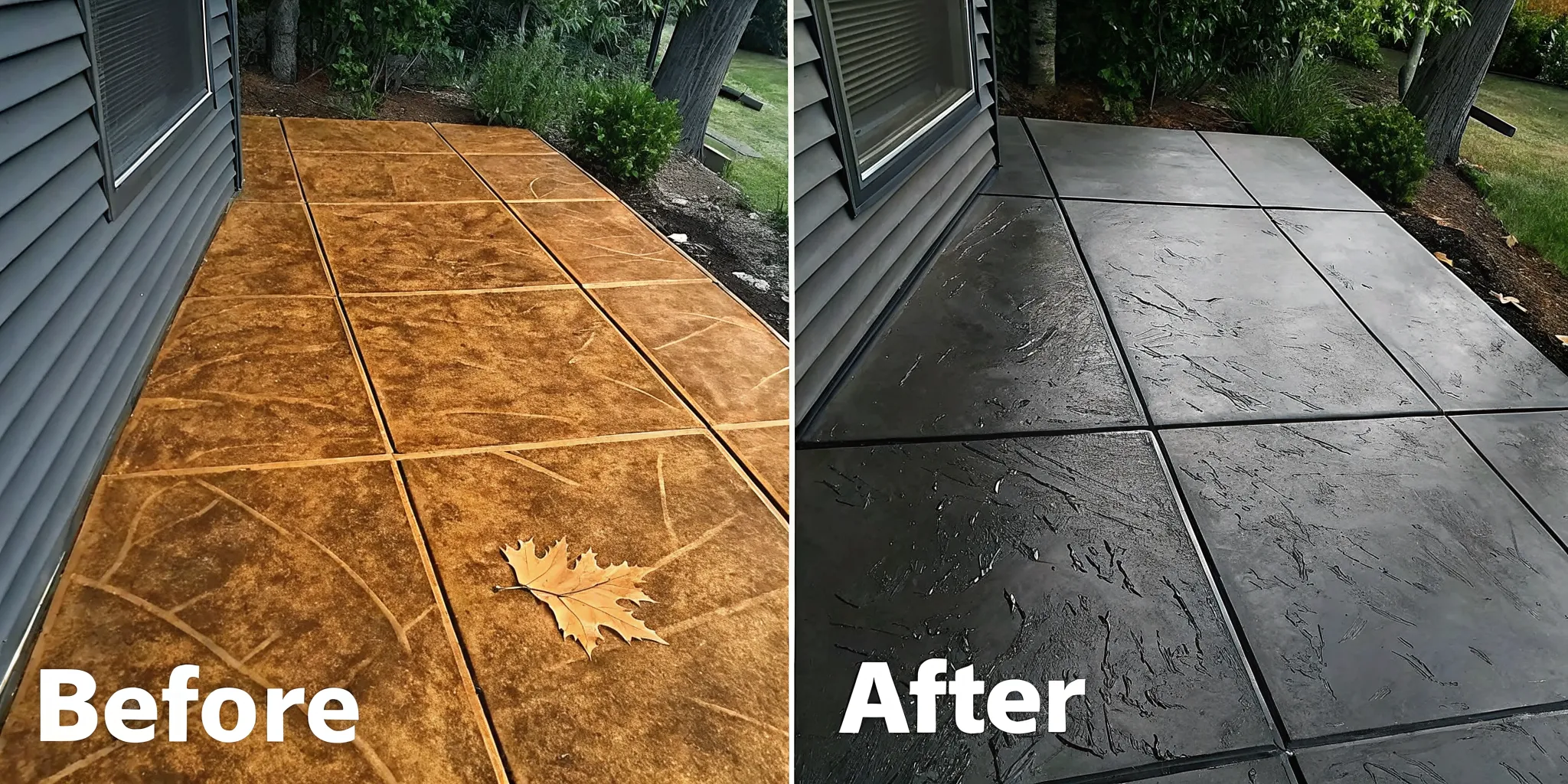
How should a stained concrete patio be cleaned?
Concrete patio cleaning on Long Island should start with a close look, not the strongest cleaner available. A careful process helps protect the slab, nearby plants, and drainage areas. It also keeps one stain from being treated like another.
Preparing the patio
Before water or treatment reaches the patio, clear the whole work area. Move furniture, planters, grills, rugs, toys, and loose decor away from the slab. Keep pets and people out until the surface is clean and dry.
-
Clear and sweep the surface. Remove every movable item, then sweep away leaves, dirt, and loose grit. This makes cracks and stains easier to see.
-
Check drainage and nearby plants. Find where rinse water will travel before cleaning starts. Cover or move sensitive items, and keep runoff away from beds and drains when needed.
-
Inspect cracks and surface wear. Mark open cracks, loose patches, flaking areas, and old repairs. These spots may need repair or a gentler cleaning method.
-
Sort the stains by type. Separate green growth, leaf marks, rust, grease, and general soil. Test any chosen treatment in a small, hidden area before treating the full stain.
-
Clean, rinse, and review. Use a surface-safe treatment and controlled pressure, then rinse the slab evenly. Let it dry before checking for missed stains, new damage, or poor drainage.
Matching treatment to the stain
There is no single cleaner for every stained patio. Organic growth, oil, rust, and leaf tannins react to different treatments. Some phosphate-rich stone cleaners can leave residues that speed algae growth on porous surfaces, according to an EPA-listed study.
A professional assessment can help when the slab has deep stains, old repairs, or an unknown coating. The cleaner should match both the stain and the surface condition. Homeowners can also review this guide to professional concrete patio cleaning when comparing care for concrete and pavers.
Final checks after drying
Wet concrete can hide stains, so the final review should happen after the patio dries. Check color, edges, cracks, and the path taken by rinse water. If stains remain, reassess their type before trying another treatment.
Also check whether water pools near the home or returns toward the slab. Standing moisture can make future buildup harder to manage. Note any cracks or drainage problems that need repair before routine patio use resumes.
When is the best time to clean a patio on Long Island?
For most Long Island homes, spring is the most useful time for a full patio cleaning. It clears winter grime before outdoor meals, warm weekends, and summer gatherings begin. Still, the right schedule depends more on patio conditions than a fixed month.
Spring cleanup before outdoor season
Plan spring cleaning after freezing weather has eased and before you arrange patio furniture. This timing makes it easier to inspect the bare surface for stains, algae, cracks, and worn joints. It also gives the patio time to dry before regular use.
A spring visit works well when winter moisture has left dark patches in shaded areas. If nearby trees keep the concrete damp, check those spots first. Prompt cleaning can keep slick growth from becoming a safety concern during busy outdoor months.
Clean before a party or family gathering when appearance matters, but leave enough time for the surface to dry. Move planters, grills, rugs, and furniture first. For a deeper seasonal reset, professional concrete patio cleaning can address organic buildup without turning event day into a rushed project.
Fall cleaning after leaf drop
Late fall is another useful cleaning window, especially beneath mature trees. Wait until most leaves have fallen, then clear piles before they trap moisture against the patio. Removing wet leaves also makes it easier to spot tannin stains and green growth.
Do not wait for a calendar date if the surface feels slick. Algae can return within months on some recently cleaned masonry surfaces. An EPA-listed study on masonry cleaning describes this type of fast return. Treat visible growth as a condition to address, not just a cosmetic issue.
Before winter, keep the patio clear of leaf mats, dirt, and loose debris. This simple check helps you see drainage trouble around low spots. It also reduces the amount of organic material left sitting on the surface through cold, wet weather.
How often should the patio be cleaned?
Cleaning frequency changes from one property to the next. A sunny, open patio may stay clean longer than concrete beside trees or a shaded fence. Heavy foot traffic, poor drainage, and regular outdoor dining can also shorten the time between cleanings.
- Clean sooner when green growth or a slick film appears.
- Check shaded edges and damp low spots after long wet periods.
- Schedule around major gatherings so the patio can dry first.
- Inspect again after fall leaf drop and spring thaw.
Choose concrete patio cleaning on Long Island based on what the surface shows. Spring and late fall are practical checkpoints, while slick algae calls for faster action. A quick visual check each month can help you catch buildup before it spreads.
When should you call a concrete cleaning professional?
Routine dirt may respond to careful home cleaning, but some patio problems need a trained eye. Call a professional when you cannot identify the stain, control repeat growth, or clean the full slab evenly. An assessment can also prevent a small surface flaw from becoming a larger repair.
Growth that keeps coming back
Broad green or dark growth across a patio often points to more than loose surface dirt. Shade, trapped moisture, and porous concrete can let algae return after a quick rinse. The EPA notes that green algal growth can reappear within months on cleaned masonry surfaces.
Repeat growth is a strong reason to seek help with concrete patio cleaning on Long Island. A professional can inspect drainage, nearby trees, and the spread of the growth before choosing a method. This approach treats the patio as a whole instead of chasing one green patch at a time.
Unknown stains and damaged concrete
Do not guess when a stain has an unknown source. Oil, rust, leaf tannins, paint, and organic growth need different treatment plans. The wrong cleaner may fail, bleach the surface, or leave a pale spot that stands out after drying.
Cracks, flaking, pits, and spalling also call for caution. Strong pressure can loosen weak material and make existing damage more visible. A professional should assess the concrete first, then decide whether cleaning can proceed safely or repairs should come before service.
Professional help also makes sense when the patio borders painted wood, older masonry, garden beds, or a pool area. These nearby surfaces may react differently to water, pressure, and cleaning products. Gulf2Bay’s concrete cleaning service gives homeowners a clear place to review the right approach for the surface.
Even results across the full patio
Large patios are hard to clean evenly with small home tools. Stop-and-start passes may leave stripes, bright rings, or clean spots beside darker sections. Older slabs can also have repairs, patches, and wear that need careful handling.
A professional assessment is useful when appearance matters across the full outdoor living area. The cleaner can test a small area, choose a suitable process, and plan consistent passes. This is often safer than increasing pressure after the first pass looks uneven.
- Call when algae covers broad areas or returns after cleaning.
- Call when stains cannot be identified with confidence.
- Call when the slab has cracks, pits, flaking, or spalling.
- Call when delicate surfaces or landscaping sit beside the patio.
- Call when you want a uniform finish across a large area.
If several of these signs apply, pause the DIY work before testing more chemicals or pressure. You can request a professional assessment to learn what the patio needs and whether damaged areas require separate care.
How to keep a concrete patio cleaner between services
Routine care can slow the return of dirt, stains, and slippery growth after a professional cleaning. It also helps you spot small drainage or plant issues before they affect a wider area. A simple weekly check is often enough during dry weather, while damp or leafy seasons may call for more attention.
Leaves, furniture, and everyday debris
Remove fallen leaves, seed pods, grass clippings, and soil before they stay wet against the concrete. A soft outdoor broom or leaf blower works well for loose debris. After storms, clear the patio once standing water has drained and the surface is safe to walk on.
- Sweep beneath chairs, tables, planters, grills, and storage boxes.
- Move furniture now and then so trapped moisture can dry.
- Use plant stands or pot feet to leave space below planters.
- Wipe up food, drink, grease, and soil spills soon after they happen.
Leaves can hold moisture against a patio and leave marks as they break down. Prompt removal makes those marks less likely to set into the surface. If discoloration remains, review ways to remove leaf stains from patio surfaces before trying a harsh cleaner.
Drainage, shade, and nearby plants
Watch where rainwater travels across the patio and where it collects after a storm. Keep nearby drains, channels, and patio edges free of leaves and mulch. If one area stays damp long after the rest dries, note it for closer inspection.
Trim back plants that touch the concrete or block air and sunlight from the surface. This step will not stop all organic growth, but it can help wet areas dry sooner. Avoid choosing a cleaner only because it seems strong.
Some stone-cleaning products can leave residues that feed new algae growth, according to research listed by the U.S. Environmental Protection Agency. Follow each product label, test a small hidden area, and keep runoff away from plants. Do not mix household cleaning products.
- Check downspouts and hose outlets for water flowing toward the patio.
- Pull mulch and soil back when they wash onto the concrete edge.
- Trim low branches and dense growth that keep sections damp.
Recurring slick areas and service timing
Pay attention to spots that become green, dark, or slick after rain. Marking their location can reveal a pattern tied to shade, runoff, or nearby plants. Limit foot traffic on a slick patch until it is dry and safe.
Take a photo when the issue appears, then compare it after dry weather. This record can help a cleaner choose a suitable method without guessing. It also shows whether the affected area is spreading between visits.
Schedule professional concrete patio cleaning when routine sweeping no longer controls buildup or slippery growth keeps returning. A professional can assess the surface, nearby landscaping, and drainage before choosing a cleaning method. Between services, steady light care is safer than letting debris and moisture collect for long periods.
Frequently Asked Questions
How much does it cost to get a concrete patio cleaned on Long Island?
Concrete patio cleaning costs on Long Island vary with patio size, stain severity, access, drainage, and whether sealing or repairs are included. A contractor should inspect the surface before giving a firm price, because algae treatment and deep leaf stains can require extra work. Ask for a written quote that lists preparation, cleaning, plant protection, and any optional services.
What is the best thing to clean a concrete patio?
The best approach depends on whether the patio has algae, leaf stains, grease, or ordinary dirt. Start by sweeping away debris, then use a concrete-safe cleaner and the lowest effective pressure. Test any solution in a small area first. Professional cleaners adjust pressure and methods for the material, which helps prevent etching and protects nearby landscaping.
Will Dawn clean a concrete patio?
Dawn dish soap can help lift light surface dirt and some oily residue from concrete when diluted and rinsed well. It is not designed to kill algae or remove deeply absorbed leaf stains. Avoid letting soapy runoff enter planting beds or storm drains. For widespread green growth or stubborn organic staining, use a product labeled for that purpose or hire a patio-cleaning professional.
Will Simple Green remove moss from concrete?
Some Simple Green products may loosen dirt around moss, but an all-purpose cleaner may not kill established moss on porous concrete. Check the exact product label before use, and test a small spot. The EPA identifies potassium salts of fatty acids as an effective biodegradable active ingredient for killing moss and algae. After treatment, rinse carefully and address shade or moisture that encourages regrowth.
Ready to Restore Your Long Island Concrete Patio?
Waiting gives algae, organic buildup, and leaf stains more time to settle into the patio, making routine cleanup more difficult. A stained patio can also make an otherwise cared-for outdoor space feel neglected when family and guests spend time outside. Starting now gives you time to address the buildup before your next gathering and enjoy a cleaner, more welcoming patio sooner.
Do not let another season of moisture, shade, and fallen leaves leave your concrete patio looking dull and overdue for care. Gulf2Bay Softwash can review the surface, discuss the trouble spots you see, and recommend a cleaning plan suited to your property. Ready to plan your patio cleanup? Request a free estimate to choose a convenient next step for your Long Island home.