For a typical residential deck, restoration may take one to several workdays on site, but the full deck restoration timeline on Long Island can stretch longer when wood needs extra drying time or weather interrupts the finish work. Deck size, wood species, existing coating, and the forecast all matter.
Request a deck restoration assessment
Plan around the process, not a promised finish date. A careful job includes inspection, surface-specific cleaning, enough time for the wood to dry, and application of an appropriate finish. Rushing a step can undermine the result.
Deck restoration timeline Long Island: what should homeowners plan for?
Restoration is a sequence, not one appointment
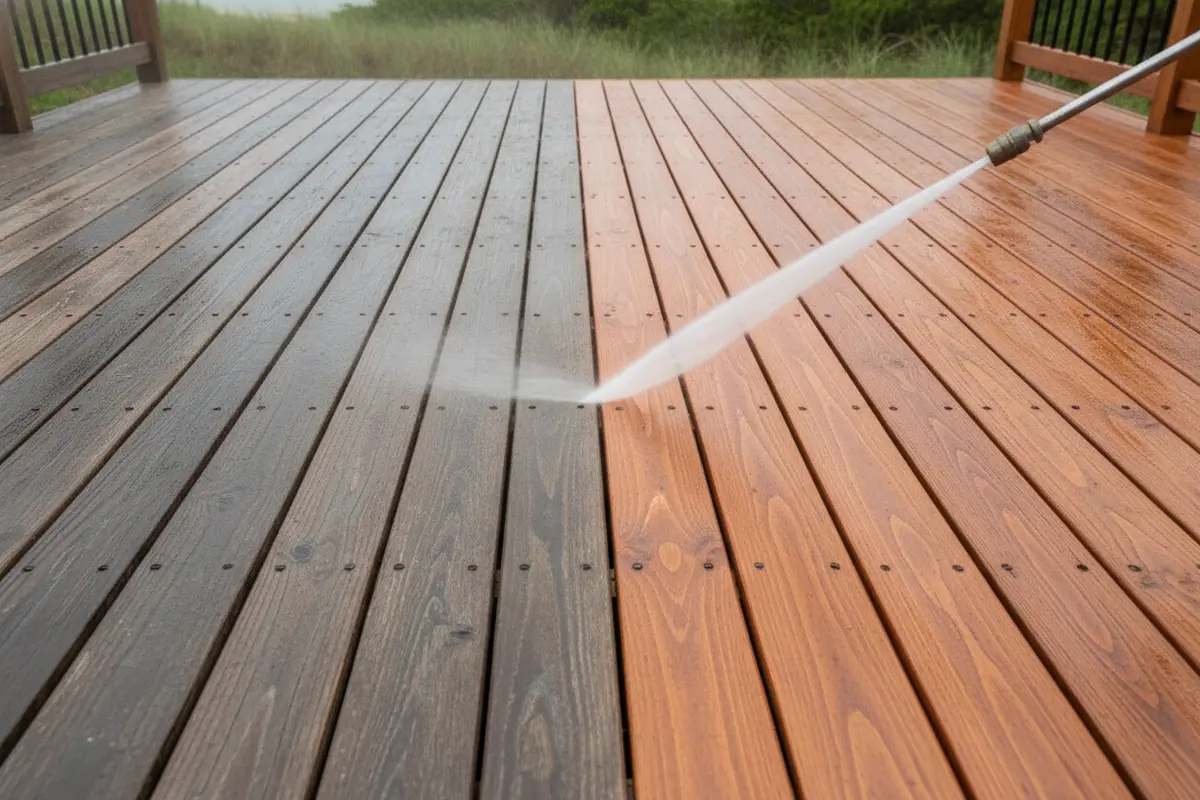
Deck restoration is more than washing the surface. A professional has to assess the material and its condition, clean it using a method appropriate for that wood, allow the surface to dry as needed, and apply the selected treatment. The work may fit into a short stretch of good weather, but steps cannot always be compressed into a single day.
Gulf2Bay restores existing decks; this is not deck construction. For Brazilian hardwood such as Ipe, its approach uses low-pressure chemical cleaning followed by Brazilian Rosewood Oil application, rather than pressure washing. The schedule should reflect the wood and the planned treatment.
Separate active work from elapsed calendar time
Active crew time is the time spent on inspection, preparation, cleaning, and applying the finish. Calendar time also includes pauses while the surface dries or while the weather is unsuitable. A project can require only a few visits or work periods and still span more days than the crew is on site.
That distinction is useful when planning furniture, guests, or access to the yard. Ask which steps happen on each visit, what conditions need to be met before the next step, and when the deck can be used again. The finish and the conditions affect that last answer, so do not assume the deck is ready as soon as the crew leaves.
Deck restoration timeline Long Island: which factors affect it?
Deck size, layout, and access
A compact, open deck generally takes less time to prepare and treat than a large layout with stairs, railings, built-in benches, or several levels. Tight spaces and detailed edges add careful hand work. Access can matter too: the crew needs room to work around the deck and to protect nearby surfaces.
Give the estimator an accurate sense of the deck’s footprint and features. Photos of stairs, rails, transitions, and areas beneath furniture help identify complexity before the visit, but an in-person assessment is the better way to evaluate surface condition.
Wood species and existing finish
Different woods do not respond to the same treatment in the same way. Cedar and Brazilian hardwood are not interchangeable surfaces. Previous stain, sealer, oil, or an unknown coating can also change what preparation is needed. Tell the contractor what products have been applied, if you know, and when the deck was last treated.
For a specialist overview of existing wood surfaces, see Gulf2Bay’s deck restoration service and cedar restoration information. Do not assume a process described for one species or finish is appropriate for another.
Condition and repairs that surface during inspection
Gray weathering, embedded dirt, uneven color, and old finish residue can call for different preparation. A deck with loose boards or other damage may need repair before restoration work makes sense. Cleaning and applying a finish do not fix structural concerns. For structural repairs, TxDOT’s bridge repair manual emphasizes that preparation, application, and curing are vital to long-term repair success; its guidance is for bridges, not residential wood decks.
Ask the provider to distinguish surface restoration from repair work. If a board moves, feels soft, or has a damaged fastener, point it out during the assessment. That may change the scope and schedule, and it is better to identify the issue before setting a restoration date.
Weather and drying windows
Long Island weather adds uncertainty. Rain, high humidity, heavy dew, direct sun, and changing temperatures can affect when cleaning or finishing should happen. Conditions at the surface matter, not just whether the day looks pleasant from indoors.
Coastal exposure can also mean salt and wind leave the deck in a different condition from a sheltered inland surface. Build some flexibility into the schedule, particularly during a season when the forecast shifts quickly. A responsible schedule may pause rather than apply a finish to wood that is not ready.
Shade and airflow can create different drying conditions on one deck. For example, boards against a house or beneath a covered section may remain damp after the more exposed boards look dry. Ask how the contractor will judge readiness across the entire surface instead of relying only on the look of a few boards. This is especially useful for a multi-level deck, where sun and wind exposure may vary between levels.
How long can each stage take?
Use these ranges for planning, not as a guarantee
The table gives a practical framework for a residential project. These are planning estimates, not a fixed promise or a quote. A contractor’s inspection and the product-specific instructions determine the actual sequence and return-to-use guidance.
| Stage | What happens | Typical planning allowance | What can add time |
|---|---|---|---|
| Assessment and scope | Review wood, layout, coating, and visible concerns | One assessment appointment | Large or complex decks; unclear prior treatments |
| Preparation and cleaning | Protect surrounding areas and clean with a method suited to the wood | Part of one workday for many straightforward decks | Size, stairs and rails, heavy buildup, access |
| Drying interval | Allow conditions to meet the requirements for the next step | Variable; may extend the calendar schedule | Humidity, rain, shade, wood condition |
| Finish application | Apply the selected treatment to prepared wood | Part of a workday, depending on area and details | Multiple levels, edges, and weather window |
| Ready-to-use period | Wait as directed before placing furniture or using the deck | Confirm with the contractor and product guidance | Finish type and environmental conditions |
What can a realistic sequence look like?
Think of the stages as checkpoints rather than a fixed calendar promise. An assessment identifies the wood, existing coating, access needs, and visible concerns. Cleaning and preparation follow when the work area and weather are suitable. Then the deck needs to meet the conditions for the finish step. After application, the surface has its own use restrictions.
For a straightforward open deck, the active work might be grouped into one or more work periods, with a drying pause between cleaning and finishing. A larger deck with stairs and rails may need more preparation time and careful detailing. If rain arrives during the pause, the planned finish visit may have to move. This is why a firm estimate of on-site hours is not the same as a guaranteed date when the deck will be ready for use.
When reviewing a schedule, ask what could change it and what signal will confirm the next stage can begin. A clear answer might refer to surface readiness and product directions rather than an arbitrary number of hours. That keeps the plan tied to the actual deck.
Why a one-day estimate may not tell the whole story
A crew may complete the active cleaning portion in a day, but drying can mean the next step happens later. Conversely, a small, accessible deck with suitable conditions may move through the work efficiently. A good schedule accounts for both the work and the necessary wait between steps.
Ask for the expected working days and the likely calendar window as separate answers. Also confirm what would cause a weather delay and how the crew will communicate a schedule change. That gives you a realistic plan without pressuring anyone to work in poor conditions.
How should you prepare the deck and property?
Build a schedule around the whole job
Start with the date you need the deck back in service, then work backward with a buffer. Leave room for the assessment, the planned work periods, any required drying interval, and a weather-related change. Do not treat the first available crew day as a guaranteed completion date. If you have a family gathering, rental turnover, or a planned arrival at a second home, tell the provider before confirming the appointment.
Ask for a simple sequence: what happens on the first visit, what conditions must be met before the next step, and what determines the final handoff. The answer should account for the actual deck rather than a generic duration. A large elevated deck with rails and stairs has more surface and detail work than a small ground-level platform, even if both use the same wood species.
Keep a little flexibility at the end of the schedule, too. The deck may look dry while a finish still needs additional time before furniture or normal use. Confirm the specific restrictions for your project and avoid setting heavy furniture on the surface early. These precautions help prevent avoidable marks and let the treatment perform as intended.
For example, if a second-home visit or a gathering is set for a Saturday, do not schedule the first work period so close that any rain or extra drying time leaves no room to adjust. Share the date, then ask the contractor to identify the latest sensible start and a backup plan if conditions change. If the deadline is fixed, consider whether the deck can remain out of use briefly rather than counting on a narrow weather window.
Keep access arrangements in the same calendar. Confirm who will be home or provide access, whether gates need to be unlocked, and whether furniture must be moved before the crew arrives. These details do not change how the wood dries, but they can prevent a lost work period caused by an avoidable access problem.
Before the assessment
Clear the deck enough for its boards, rails, stairs, and corners to be inspected. Move portable furniture, planters, grills, and decorations if you can do so safely. Take note of areas that stay wet, receive heavy shade, or show wear first.
- Share the approximate deck dimensions and number of levels.
- Identify the wood species if known, along with past stain, sealer, or oil applications.
- Point out loose boards, damaged areas, and water drainage concerns.
- Explain when the deck must be ready for a gathering or other use.
For care around adjacent exterior surfaces, Gulf2Bay also provides house washing and fence cleaning. If you are coordinating more than one project, mention it when discussing timing so the work can be considered together.
Before work begins
Confirm who is moving heavy furniture and whether access to a hose, gate, or outdoor outlet is needed. Keep pets and children away from the active work area. Remove delicate items from nearby surfaces and discuss any plants, lighting, or furnishings that need special protection.
Do not apply a fresh coat of store-bought product while waiting for an appointment unless the contractor has advised you to. A new layer can change the preparation required and may affect the proposed treatment. If you have a leftover product container or a record of past work, keep that information available.
When is the best time to schedule deck restoration on Long Island?
Choose a weather window with flexibility
Schedule when you can allow room for weather shifts and drying. If the deck must be ready by a particular date, share that deadline before accepting a schedule. A contractor can then say whether the requested timing is realistic given the scope and forecast, rather than guessing after work has started.
Do not plan the project immediately before a major event if there is no backup plan. A rain delay or longer drying period can move the finish date. For Hamptons and other coastal homes, include travel, second-home access, and property-management coordination in the calendar as well.
Coordinate related exterior work carefully
Multiple exterior services can be coordinated, but order matters. Cleaning a nearby surface after a deck has been finished may create avoidable splashes or require added protection. Share your plans for windows, siding, pavers, or other outdoor projects so the provider can discuss a sensible sequence.
Review Gulf2Bay’s residential exterior cleaning services if you are planning broader exterior maintenance. For Long Island service-area details, consult the locations page. Keep the deck’s material and finish requirements central when arranging any combined work.
What should you confirm before booking?
Get clarity on process and use restrictions
A useful proposal should describe the surface being treated, the preparation and cleaning approach, the planned finish, and what is not included. It should also identify how weather affects timing and when the deck can be used after the final step. Ask for those details in plain language.
- Which wood species and existing coating did the assessment identify?
- What preparation and cleaning method is planned for that surface?
- How many work periods are expected, and what can change the calendar schedule?
- What must be moved or protected before the crew arrives?
- What instructions apply to furniture placement and foot traffic afterward?
For a coastal deck, ask how the proposed process accounts for its material and exposure. A qualified provider should be able to explain why the selected method fits the existing surface, rather than offering the same treatment for every deck.
Discuss your deck and request an assessment
Frequently asked questions
Can deck restoration be completed in one day?
Sometimes the active work on a small, straightforward deck may fit into one workday. The full timeline can still be longer if the surface needs to dry before finishing or the weather changes. Ask whether a quoted timeline means crew hours, calendar days, or both.
How long after restoration can I use the deck?
Use the contractor’s instructions for the specific finish and conditions. Drying and curing are not the same for every product or weather situation. Confirm when foot traffic and furniture are appropriate before the crew leaves.
Does Ipe take longer to restore than cedar?
Not automatically. The wood species, deck size, prior treatment, condition, layout, and drying conditions all contribute. Ipe and cedar need surface-specific care, so a timeline for one should not be used as a guarantee for the other.
Will rain delay the project?
It can. Rain and damp conditions may affect cleaning, drying, or finish application. The right decision depends on surface conditions and product instructions, so leave room in your calendar and ask how weather-related changes are handled.
A realistic deck restoration schedule balances careful preparation with the time the wood and weather require. Share your deck’s material, condition, and deadline during the assessment, then plan around the process rather than rushing the finish.