
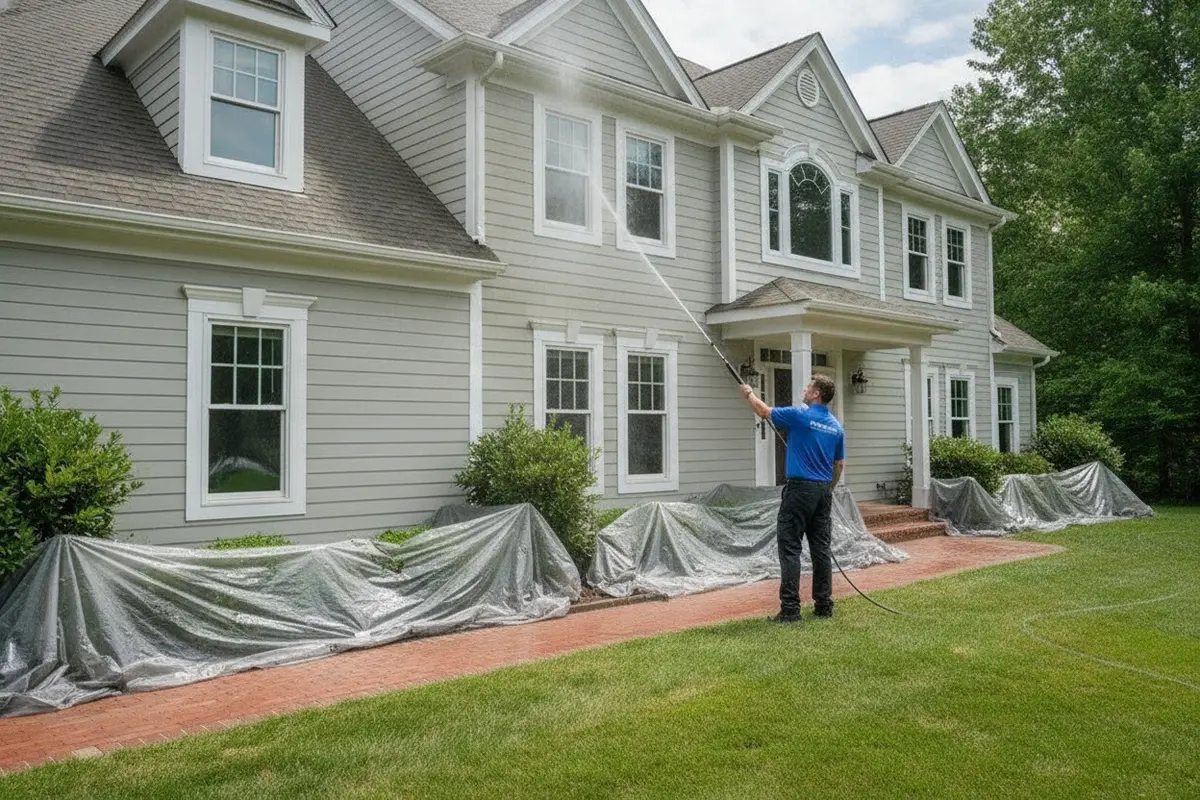
House washing before selling a Long Island home can make the exterior look cared for before buyers arrive and before the photographer frames the first shot. The key is to clean the materials that need it, use a method suited to each surface, and finish early enough to inspect the result before listing day.
Request an exterior assessment before your listing goes live
Why wash the exterior before listing a home?
What buyers see before they step inside
Buyers begin forming an impression at the curb. Dirt on siding, dark roof staining, algae on a shaded wall, and grimy gutters can make an otherwise maintained home appear neglected. A careful exterior cleaning can remove surface buildup so the home’s actual condition is easier to see.
Cleaning is not a substitute for repair. A wash will not correct peeling paint, failed caulk, loose shingles, cracked masonry, or rotted wood. It can, however, help distinguish a removable stain from a condition that needs a contractor’s attention.
Why a pre-listing clean should be planned, not rushed
Coordinate exterior cleaning with your real-estate agent, painter, landscaper, and photographer. Washing too late can leave wet surfaces or splash marks in the image schedule. Washing before a repair can mean cleaning the same area twice. Ask your agent when the photographer is scheduled, then leave a reasonable buffer for the work, drying, and a final walk-around.
For a home with specialty siding, cedar, stone, or an established deck, choose a provider who can explain the process for each material. A generic high-pressure approach can be inappropriate for delicate finishes and water-sensitive details. Gulf2Bay’s house washing service uses a surface-conscious soft-washing approach rather than treating every exterior like concrete.
Think of the work as a sequence, not a single wash day. For example, if trim needs repair, have that assessed first; if siding is being painted, the painter should set the cleaning sequence; and if no repairs are planned, schedule the wash before final landscaping and photography. This helps avoid rework and gives the photographer a clean, dry exterior.
Which exterior areas should you prioritize?
Start with the front elevation and entry
Walk from the street to the front door as if you were arriving for a showing. Look at the siding around the entrance, porch ceiling, trim, front steps, and visible foundation. These surfaces sit in the buyer’s natural line of sight. Clean the obvious grime, but do not try to erase normal wear by using a more aggressive method.
Then look at both sides of the house and the backyard. Shaded walls and north-facing elevations often show organic growth sooner than sunny walls. Focus on visible buildup, not an arbitrary goal of making every surface look new.
Use a simple priority test: is the area visible from the street, prominent in the listing images, or part of the route a buyer will walk? If yes, note it for the scope. A small patch of dirt behind a storage area may not need the same attention as a dark front entry or the patio shown in the listing. This keeps the plan focused without overlooking the spaces buyers will actually see.
Check gutters, roof, and windows as separate tasks
Gutter cleaning removes leaves and debris from inside the channels; gutter brightening addresses exterior streaks that may remain after the channels are clear. They are different jobs. If the gutters look striped from the curb, ask whether the marks are removable before assuming a general siding wash will fix them. See gutter cleaning options and what gutter brightening addresses.
Dark roof staining may be conspicuous in listing photos, especially on a front-facing roof plane. Roof cleaning needs a method intended for roofing materials; do not aim a pressure washer at shingles. Read about soft-wash roof cleaning and have the contractor assess roof condition separately from appearance.
Windows deserve their own finishing pass. Exterior glass can show pollen, salt spray, and wash runoff. Schedule window cleaning after nearby exterior work when practical, and confirm which windows and screens are included. Coastal homes may also benefit from a targeted rinse and cleaning plan; see this guide to removing salt spray from windows.
Make the scope explicit for each of these areas. A house wash does not automatically mean the roof, gutter interiors, exterior gutter faces, or every window is included. Ask the provider to name what will be cleaned, what requires separate access or equipment, and what marks may remain. This prevents a mismatch between the curbside improvement you expect and the service actually scheduled.
Do not overlook walks, pavers, and fences
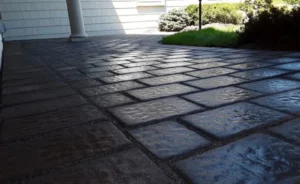
A clean entrance can lose its effect if the walk is dark with grime or a patio is covered in visible growth. Decide whether hardscape cleaning belongs in the pre-listing scope based on what buyers can see and use. Pavers, concrete, and masonry do not all call for the same process. A surface assessment can help avoid washing joint sand out of a paver installation or using an unsuitable setting on a delicate finish.
For patios and walkways, review the home’s needs against paver cleaning and sealing or concrete and driveway cleaning. Do not add sealing to the scope automatically; the surface condition and timing matter.
Fences and side gates can also frame a yard or entry in photographs. Look for visible growth on the portion nearest the house and along the approach to outdoor living areas. Decide whether the fence is simply dirty or whether boards are weathered, loose, or failing. Cleaning may improve the appearance of buildup, but it will not restore a damaged board or replace a failed finish. Keep the scope focused on the sections that contribute to the home’s presentation.
What should be cleaned, repaired, or left alone?
Use a pre-listing scope that separates appearance from condition
Before requesting an estimate, make a short list by area. Note what is visibly dirty, what looks damaged, and what is simply weathered. If you are unsure whether a mark is mildew, oxidation, rust, or failing paint, ask for an assessment rather than trying a strong cleaner on a prominent spot.
| Area | Pre-listing action | Important distinction |
|---|---|---|
| Siding and trim | Assess for a compatible soft wash where buildup is present | Cleaning does not repair paint failure, loose trim, or damaged caulk |
| Roof | Request an assessment if dark staining is visible from the street | Use a roof-appropriate cleaning method; do not treat shingles like a driveway |
| Gutters | Clear debris; consider exterior brightening for visible streaks | Interior debris removal and exterior stain treatment are separate |
| Windows | Schedule exterior glass cleaning after nearby washing when possible | Confirm screens, access, and included windows in advance |
| Pavers and concrete | Clean high-visibility paths, steps, and gathering areas as appropriate | Surface, joints, and finish affect the suitable method; sealing is a separate choice |
| Cedar or hardwood deck | Assess weathering and visible buildup before deciding on restoration | Wood restoration is not the same as blasting the surface with high pressure |
Keep specialty materials on their own plan
Cedar siding and Brazilian hardwood need more than a one-setting-fits-all cleaning. Cedar can be vulnerable to damage from excessive pressure, while an Ipe or other Brazilian hardwood deck may need a restoration plan rather than a quick rinse. For existing decks, ask whether low-pressure chemical cleaning and an appropriate finish are suitable for the wood’s condition. Gulf2Bay focuses on restoring, cleaning, staining, and sealing existing decks; it does not build decks.
If cedar is a prominent feature of the home, review the company’s cedar restoration approach. For an existing wood deck, see deck restoration services. Do not schedule stain or oil application until the wood and weather conditions have been assessed.
A useful example is a cedar-sided home with a weathered Ipe porch. The siding may need a cleaning assessment, while the deck may call for a separate restoration conversation about its condition and finish. Treating both as ordinary siding or concrete risks an unsuitable process. Ask for a material-by-material explanation, including which parts are outside the cleaning scope and whether any finish work needs additional drying time.
For masonry, paint, and older finishes, avoid a small DIY test in a conspicuous place unless the surface and cleaner are understood. A test can leave a lightened patch or expose a coating issue. Photograph the concern and describe where it occurs, then ask whether the goal is removal of surface buildup or repair by another trade.
How should you time cleaning around the sale?
Build the schedule backward from photography
Start with the date your home will be photographed or shown, then work backward. Allow time to discuss the scope, complete the cleaning, let surfaces dry, and check the results in daylight. Exact timing depends on the work, weather, access, and the home’s condition, so ask the service provider for a schedule rather than relying on a universal number of days.
- Walk the property. Identify the visible areas buyers will see from the street, entry, yard, and main outdoor living spaces.
- Separate cleaning from repairs. Flag loose materials, failed paint, damaged wood, and roof concerns for the appropriate trade or inspection.
- Request a surface-specific assessment. Share photos and describe siding, roof, deck, and hardscape materials. Ask what is included and what is not.
- Coordinate other vendors. Set the order with painters, landscapers, window cleaners, and the photographer to reduce repeat work.
- Inspect before photos. Check the front elevation, entry, gutters, glass, walks, and outdoor living areas in daylight. Report missed spots while there is time to address them.
Long Island conditions can affect the plan
Salt air, pollen, tree cover, and coastal weather can influence which areas look dirty and how quickly conditions change. A waterfront home in the Hamptons may have different visible buildup from a shaded property in Nassau County or a home near Bay Shore. Avoid promising a result based only on the property’s address; the substrate, exposure, and current condition matter.
For surfaces with visible salt residue or delicate finishes, a careful assessment is more useful than a blanket instruction to pressure wash everything. Learn more about how soft washing differs from high-pressure cleaning before selecting a method.
On the day of service, move vehicles away from work areas, secure items near the house, and make sure the crew can reach the surfaces included in the written scope. Ask whether outdoor furniture, planters, or screens should be moved in advance. Protecting access and clarifying preparation reduces delays; do not assume a crew will move delicate belongings or handle repairs as part of a wash.
After cleaning, inspect from the same viewpoints used to make the original list. Check the front approach first, then the side elevations and backyard features that will appear in photos. Look in daylight and after surfaces have dried; runoff or moisture can temporarily change how a finish appears. If a concern remains, describe the exact area and compare it with the agreed scope before scheduling additional work.
How do you choose a pre-listing cleaning provider?
Ask specific questions about process and scope
Do not compare estimates on the total alone. One proposal may cover only siding while another includes gutters, entry details, or a roof assessment. Ask for the areas and methods in writing, including what requires a separate service.
- What method is proposed for each material on the home?
- How will landscaping, electrical fixtures, and openings be handled during the work?
- Are gutter interiors, gutter exteriors, windows, roof, and hardscape included or excluded?
- What conditions may not improve through cleaning, such as oxidation, failed coatings, or permanent staining?
- What access, water, or preparation is needed from the homeowner?
- When should cleaning happen relative to painting, landscaping, and listing photography?
A provider should be able to explain why a method fits a surface and where cleaning stops. That matters more than a broad promise to make the entire exterior look new.
Compare proposals line by line. If one says “exterior wash” and another names siding, soffits, gutters, windows, and hardscape separately, ask the first provider to clarify rather than assuming the scopes match. Also ask how the crew will handle plants, water-sensitive openings, and areas with existing damage. Clear answers help you choose based on process and fit, not just a headline price.
Ask about products and environmental information
If product use is a concern, ask the contractor what products are used, how they are applied, and what precautions are appropriate for the home and landscape. For general background on environmental programs and product information, consult the U.S. Environmental Protection Agency; ask the service provider for details specific to the planned work.
Request a clear explanation of what the crew will do before, during, and after application. You can ask what needs to be protected, whether water should be available, and what the homeowner should keep away from the work area. The answer should be specific to the surfaces and surroundings at your property rather than a generic assurance.
What is a practical final walk-through checklist?
Review the property from the buyer’s approach
After the work is complete and surfaces are dry, stand at the street and walk the same route a buyer will take. Check the result without getting on a ladder or roof. Use this list to catch gaps before photographs or showings:
- Does the front elevation look consistently clean, including the entry and visible trim?
- Are gutters free of obvious debris, and are visible exterior streaks addressed if included?
- Are the front steps, walk, and driveway presentable without damage to joints or finishes?
- Is exterior glass clear of obvious wash residue?
- Do the deck and fence look clean without splintering, raised grain, or uneven finish concerns?
- Are remaining marks or defects documented for your agent or repair contractor rather than hidden or misrepresented?
Keep a short punch list instead of trying to solve every issue during the walk-through. Note the location, what you see, and whether the item was included in the agreed work. A streak on an exterior gutter, for example, may call for a different treatment from debris inside the channel. A chipped trim board needs repair, not another wash. This distinction gives you a practical next step for each remaining concern.
A realistic scope improves presentation while keeping the home’s condition clear. Clean what is suitable to clean, repair what is broken, and disclose known issues through the normal sale process.
Review residential exterior cleaning services for your Long Island home
Frequently asked questions
Should I wash the house before listing photos?
Usually, visible exterior buildup is best addressed before photography, provided the method is appropriate for the surface. Coordinate the schedule with your agent and allow time for the work to dry and for a final inspection.
Can house washing fix peeling paint or damaged siding?
No. Washing may remove surface dirt, but it does not repair peeling paint, failed caulk, loose siding, rot, or other material damage. Have those conditions assessed and repaired by the appropriate professional.
Is pressure washing the right choice for every part of the property?
No. Different materials require different care. Siding, cedar, roofing, pavers, and concrete should not automatically receive the same pressure or process. Ask how the provider will treat each surface.
Should I include the roof, gutters, and windows with a house wash?
They may be useful parts of a pre-listing plan, but they are distinct tasks and may not be included in a house wash. Ask for a written scope that identifies each service and its limits.
How far in advance should I schedule the cleaning?
Schedule early enough to coordinate repairs and other vendors, then leave time for drying and a final walk-through before photos or showings. The right lead time depends on the scope, weather, and property condition, so confirm timing when you request an assessment.
For a Long Island sale, a well-planned exterior clean is a focused preparation step: choose the right method for the home’s materials, coordinate the schedule, and keep cleaning separate from repairs.