.
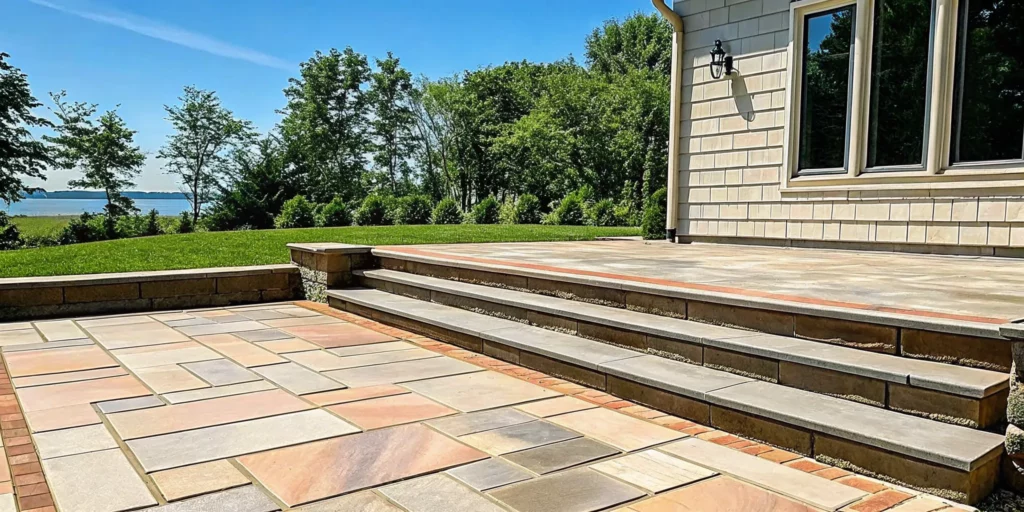
Maintaining a pristine outdoor living space on Long Island requires specialized care, especially when it comes to your hardscape. If you own a luxury property in the Hamptons, the Gold Coast of Nassau County, or Suffolk County. You know how quickly coastal humidity, shifting temperatures, and heavy rains can degrade your beautiful stone patio or driveway. One of the most effective solutions to protect your investment is applying a premium paver joint stabilizing sealer. This 2-in-1 product protects the paver surface while simultaneously hardening the joint sand to create a durable, flexible barrier against the elements.
Ready to protect your hardscape investment? Schedule your professional paver cleaning and sealing estimate with Gulf2Bay Softwash today.
At Gulf2Bay Softwash, we understand that a high-end property deserves high-end treatment. In this comprehensive guide, we will break down what joint stabilizing sealers are, how they work. The technical differences between options, and the exact process required to achieve flawless, long-lasting results for your home.
What is a Paver Joint Stabilizing Sealer?
A paver joint stabilizing sealer is a specialized liquid treatment designed to lock sand in place between interlocking concrete pavers. Clay brick, or natural stone while protecting the surrounding masonry surface. Unlike traditional sealers that only protect the stone surface, a stabilizing sealer penetrates deep into the joint sand, binding the individual grains together. According to hardscape manufacturing standards, this binding action creates a resilient. Cohesive joint that resists erosion while maintaining enough flexibility to withstand the natural expansion and contraction of freeze-thaw cycles.
This product acts as a vital guard for your hardscape. By solidifying the joint sand, it prevents sand washout during torrential Long Island rainstorms. Stops invasive weed seeds from nesting in the joints, and keeps burrowing insects from excavating the foundation of your patio.
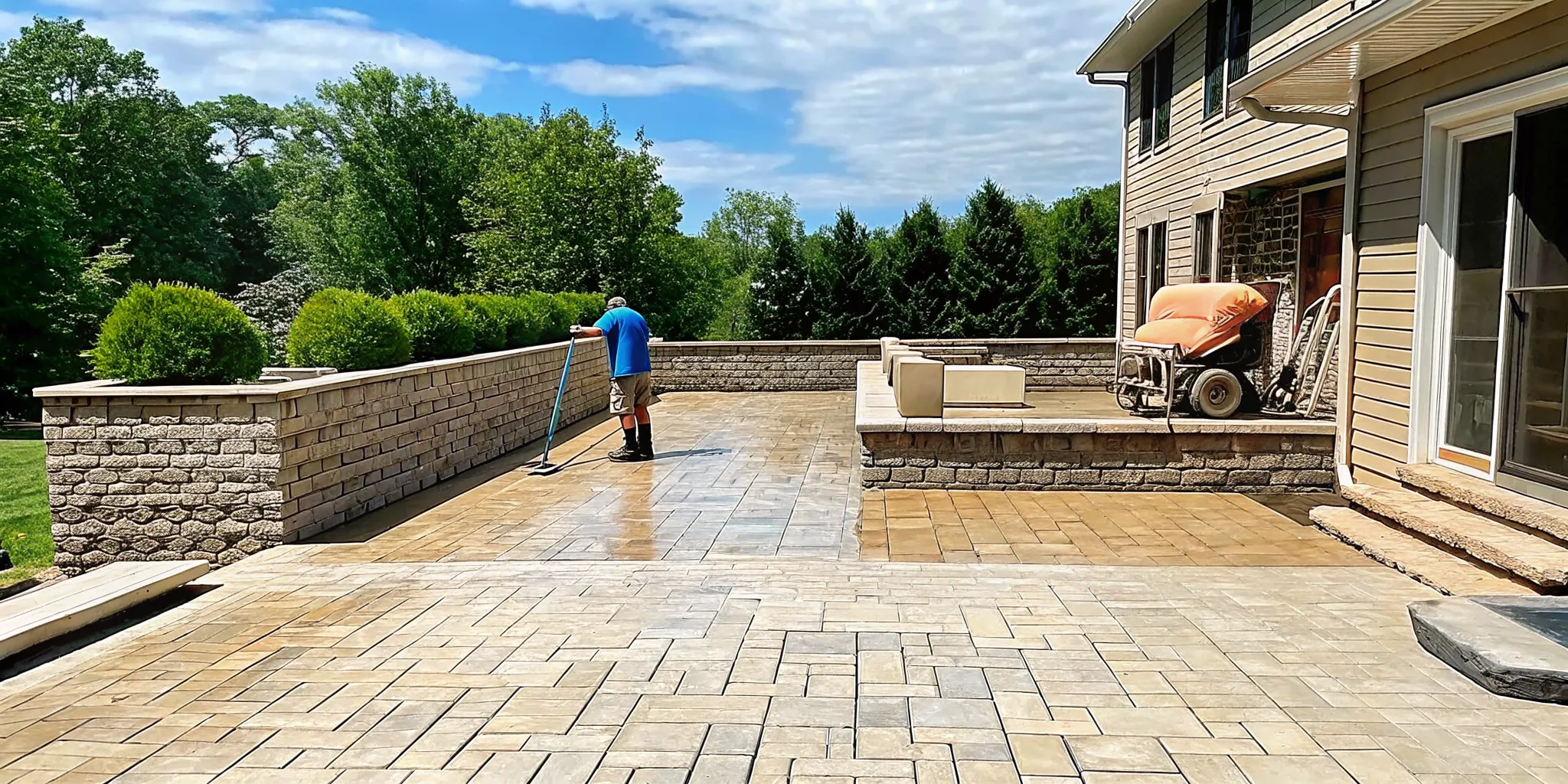
At a molecular level, these advanced formulas rely on high-solids polymer technology. When flood-coated over the joints, the liquid sealer surrounds each individual grain of joint sand, coating it with a robust adhesive film. As the carrier (either water or a specialized solvent) evaporates, these polymers cross-link, binding the loose aggregate into a cohesive, flexible matrix. This engineered bonding prevents shifting and erosion while remaining sufficiently elastic to absorb the constant expansion and contraction of Long Island’s freeze-thaw cycles without cracking or peeling.
Why Use a Joint Stabilizing Sealer on Pavers?
Applying a paver joint stabilizing sealer protects your hardscape by binding jointing sand, stopping wind and water erosion, preventing weed growth, and repelling deep organic stains. This professional-grade treatment secures the interlocking system of your patio or driveway, ensuring long-term structural integrity, preventing trip hazards, and significantly reducing routine property maintenance.
- Complete Erosion Prevention: Wind, heavy rain, and routine washing slowly sweep away loose joint sand. Over time, this loss of sand destabilizes the interlocking system, causing individual pavers to shift, sink, or become uneven. A stabilizing sealer locks the sand firmly in place.
- Weed and Pest Mitigation: Solidified joint sand removes the soft, moist environment that weed seeds need to take root. It also blocks ants and other pests from digging tunnels and pulling sand up onto the surface of your clean patio.
- Surface Stain Resistance: Premium sealers repel water, oil, grease, food spills, and organic stains. Because the sealant forms a defensive barrier on the stone, spills sit on the surface rather than soaking into the porous masonry, making cleanup fast and simple.
- Enhanced Curb Appeal: Depending on the finish you select, these sealers can enrich the natural tones of your pavers, providing a clean, vibrant aesthetic that elevates your entire outdoor living area.
To keep your property looking its best, we highly recommend integrating this treatment into your regular maintenance routine. You can learn more about our comprehensive approach by visiting our dedicated page on paver cleaning and sealing.
Film-Forming vs. Penetrating Sealers: Which is Right for You?
When selecting a paver joint stabilizing sealer, you will generally choose between two primary formulations: film-forming (acrylic) and non-film-forming (penetrating) sealers. Each option offers distinct performance characteristics, lifespans, and aesthetic finishes.
| Feature / Metric | Film-Forming Sealers (Acrylic) | Penetrating Sealers (Silane/Siloxane) |
|---|---|---|
| Aesthetic Finish | Enhances color. Available in Satin, Semi-Gloss, or high-gloss “Wet Look” finishes. | Invisible, natural finish. Preserves the original, unaltered look of the stone. |
| Joint Stabilization Strength | Very High. Creates a solid polymer bond across the entire joint sand surface. | Moderate. Consolidates sand internally but does not form a surface film. |
| Expected Lifespan | 2 to 4 years. Requires reapplication to maintain gloss and protection. | 5 to 10 years. Protects against moisture and salt deep within the stone. |
| Breathability | Moderate. Must be engineered to allow moisture vapor to escape. | Excellent. Highly breathable and will not trap subsurface moisture. |
| Best Suited For | Concrete pavers, clay brick, and wet-cast stones where color enhancement is desired. | Flagstone, slate, travertine, and premium natural stone where gloss is unwanted. |
The Bottom Line: If you want to enrich the deep red and earthy gray tones of your concrete pavers with a luxurious sheen, a film-forming acrylic sealer is your best choice. If you prefer to protect your natural stone pool deck without altering its slip-resistant, matte appearance, a penetrating sealer is the ideal option. For maximum protection, we specialize in deploying professional joint stabilizing sealer options tailored precisely to your hardscape material.
Our Premium Product Standard: Trident Sealers and Fungal Guard
At Gulf2Bay Softwash, we do not cut corners by using cheap, big-box store products that peel or yellow under the sun. Instead, we use commercial-grade Trident joint stabilizing sealer products. Trident is an industry-leading manufacturer known for producing high-solids, breathable sealers that offer superior durability and exceptional UV resistance.
One of the key technical advantages of the Trident system is the integration of **Fungal Guard** technology. Coastal Long Island properties face constant exposure to high humidity, ocean air, and shade from mature trees, creating the perfect breeding ground for mold, mildew, moss, and algae. Fungal Guard is an advanced antifungal additive embedded directly within the sealer’s molecular structure. Rather than just resisting surface dirt, this active fungicide continuously inhibits micro-organic growth on the sealer film and deep within the sand joints. This ensures your patio remains clean, bright, and free of green or black organic staining long after the application is complete.
This antifungal defense is especially critical on the North and South Shores of Long Island, where coastal dampness, maritime fog, and mature tree canopies create persistent shade. Without an active fungicide like Fungal Guard, ordinary sealers can actually trap organic spores beneath their surface film. Resulting in dark, unsightly patches that are nearly impossible to clean without stripping the entire sealant layer. By utilizing Trident’s advanced chemistry, Gulf2Bay Softwash ensures your hardscape remains dynamically protected from both physical wear and biological colonization.
The Professional 3-Step Restoration Process
Achieving a flawless seal that lasts for years requires meticulous preparation and precise application. If a sealer is applied over dirty pavers or wet sand, it will trap moisture and debris, leading to a cloudy white haze and premature failure. At Gulf2Bay Softwash, we follow a strict, professional three-step restoration process to ensure perfect results on every project.
To ensure perfect, long-lasting results, we execute a rigorous, standardized protocol. Our professional hardscape restoration sequence is divided into three essential, highly controlled phases.
- Soft Wash Cleaning: We sanitize the pavers under 100 PSI using eco-friendly, biodegradable solutions to kill mold, moss, and algae at the root.
- Sanding and Joint Prep: Once dry, we sweep premium, dry jointing sand into the gaps, settling it precisely one-eighth of an inch below the paver bevel.
- Sealer Application: We flood-coat the surface with premium Trident polymers, saturating the sand joints to create a solid, protective bond.
Step 1: Soft Wash Cleaning
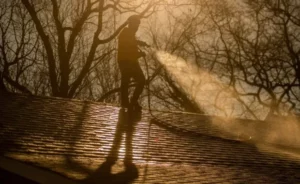
The entire surface must be thoroughly cleaned to remove dirt, grease, efflorescence, weed roots, and existing mold. We use specialized, eco-friendly, biodegradable cleaning solutions that break down organic contaminants without harming your lawn, flowerbeds, or local waterways. Crucially, we clean your pavers using low-pressure soft washing techniques (operating under 100 PSI). High-pressure washing can scar concrete surfaces, destroy paver edges, and wash out the structural sub-base. Soft washing gently sanitizes and cleans the stone, prepping it perfectly for the next step.
Step 2: Sanding and Joint Prep
Once the pavers are completely dry, we install clean, dry joint sand. We sweep premium jointing sand into the gaps, ensuring the sand level is perfectly adjusted. To prevent future issues, the sand level must sit exactly one-eighth of an inch below the bevel or chamfer edge of the paver. If the sand is too high, it will wash out over the surface; if it is too low, the interlocking stability is compromised. We use mechanical compaction or light misting to settle the sand, ensuring there are no hidden air pockets.
Step 3: Sealer Application
We apply the joint stabilizing sealer using a professional flood-coat and squeegee method, or a dedicated commercial sprayer. The flood-coat method is essential for sand joint stabilization because it saturates the sand joints fully. Allowing the active polymers to coat every sand grain down to a depth of several inches. We then squeegee off any excess sealer from the stone face to prevent pooling. This double-action process ensures a uniform protective layer on the paver surface and a solid, stabilized joint. To keep your hardscape in peak condition and extend the life of your pavers, this entire sequence must be performed under dry, warm weather conditions.
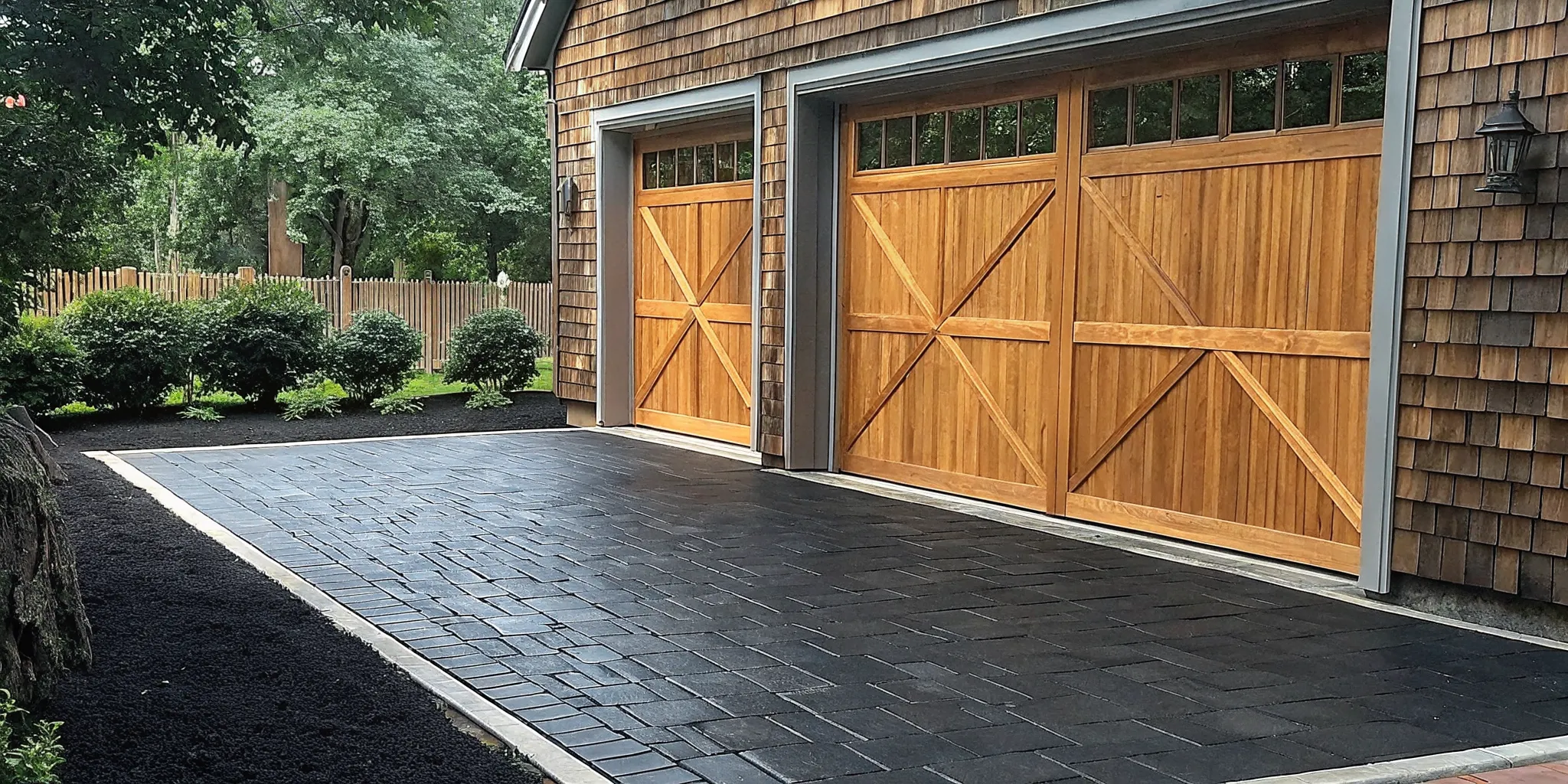
After application, the sealer requires a dedicated curing window of 24 to 48 hours before resuming regular traffic. During this critical phase, the polymers complete their cross-linking process and achieve full tensile strength. Keeping vehicles and heavy foot traffic off the newly treated surface ensures that the protective barrier and the hardened joint sand cure in their optimal state. Guaranteeing years of trouble-free beauty and structural stability for your home.
How Much Does Professional Paver Sealing Cost?
Professional paver cleaning, sanding, and stabilizing sealer application typically costs between $0.50 and $2.00 per square foot. The final cost of your hardscape restoration project is determined by the physical condition of the pavers. The size and depth of the sand joints, and the total square footage of the treatment area.
- Paver Condition: Older, neglected patios with heavy weed growth, oil stains, or failing old sealers require extensive restoration and stripping before sealing, which increases prep labor.
- Joint Size and Depth: Wide-joint pavers or natural flagstone patios require significantly more sand and sealer volume per square foot than tight-joint interlocking concrete pavers.
- Total Square Footage: Larger areas, such as expansive driveways or multi-tiered pool decks, benefit from economies of scale, lowering the per-square-foot rate.
We recommend contacting a professional for an on-site assessment to get an accurate, itemized quote tailored to your property’s specific needs.
Frequently Asked Questions
What is a paver joint stabilizing sealer?
A paver joint stabilizing sealer is a premium liquid coating designed to protect hardscape surfaces while hardening the sand aggregate inside the joints. By binding the sand grains together, it prevents erosion, stops weed growth, and seals the porous stone from stains and water damage in a single application.
Why use a joint stabilizing sealer on pavers?
Using a stabilizing sealer preserves the structural integrity of your pavers by preventing sand loss, which can cause pavers to shift and sink. It also reduces routine maintenance by blocking weeds, resisting oil and grease stains, and enhancing the overall color and beauty of your patio or driveway.
Does paver joint stabilizing sealer prevent weeds?
Yes. By solidifying the joint sand into a durable, mortar-like barrier, the sealer prevents organic debris and windblown seeds from taking root in the joints. It also stops ants from digging up the sand, eliminating the primary causes of paver weeds.
How do you apply paver joint stabilizing sealer?
A joint stabilizing sealer is applied after the pavers have been soft washed, cleaned of organic growth, and re-sanded. The sealer is flood-coated across the surface using a low-pressure sprayer. And a foam squeegee is used to push the excess liquid into the joints, ensuring the sand is fully saturated for maximum stabilization.
Can you use joint stabilizing sealer on natural stone or flagstone?
Yes. Specialized breathable penetrating or low-gloss joint stabilizing sealers are highly effective on natural stone, flagstone, slate, and travertine. They stabilize the wide sand joints typical of natural stone installations without trapping moisture or creating an artificial glossy shine.
What is the difference between wet look and natural finish sealers?
Wet-look sealers are acrylic-based, film-forming coatings that deepen the stone’s color and leave a protective sheen. Natural-finish sealers are penetrating formulas that protect the masonry and sand joints from within, leaving the surface appearance and slip resistance completely unaltered.
Is joint stabilizing sealer breathable?
Yes, premium commercial-grade joint stabilizing sealers (such as Trident) are engineered to be breathable. This allows subsurface moisture vapor to escape through the stone and joints, preventing the white, cloudy discoloration caused by trapped moisture under the sealer film.
How often should I reapply joint stabilizing sealer?
Film-forming acrylic sealers should be reapplied every 2 to 4 years to maintain their protective gloss and color enhancement. Penetrating, non-film-forming sealers can last between 5 and 10 years, though the joint sand itself may need light touch-ups or resealing sooner depending on heavy weather exposure.
Get Your Free On-Site Estimate Today
Your pavers represent a beautiful, functional centerpiece of your Long Island home. Do not let shifting sand, weeds, and algae wash away their value. Protect your property with the elite exterior care it deserves.
Gulf2Bay Softwash is fully licensed, insured, and certified in professional soft washing and advanced hardscape restoration. We stand behind our work and offer comprehensive, high-end care to homeowners across the Hamptons, Suffolk County, and Nassau County.
Contact us today at 631-557-5484 or toll-free at 844-422-9274 to schedule your professional, free on-site assessment and estimate. Let us give your home the superior clean and lasting protection it deserves.