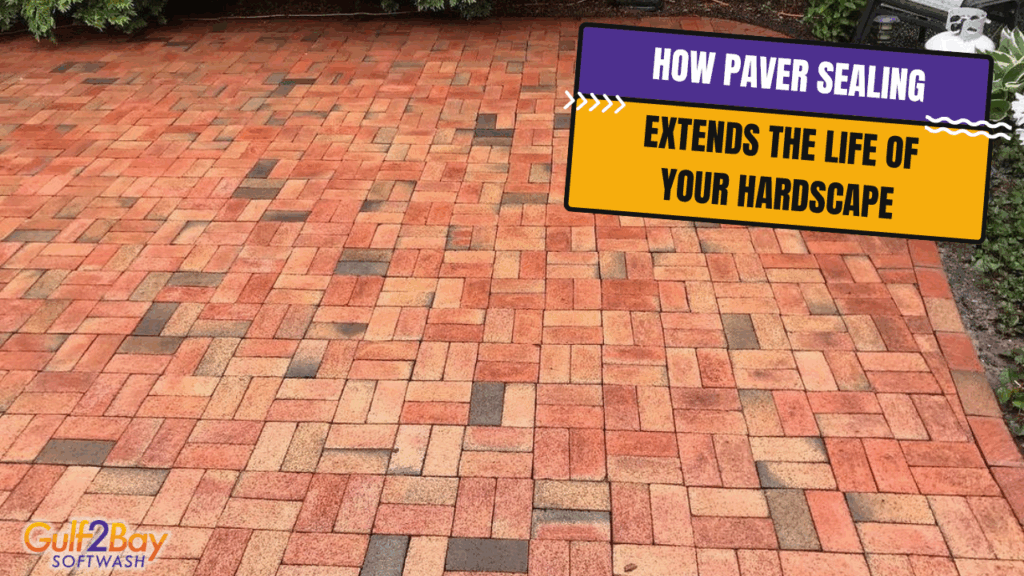
How Paver Sealing Extends the Life of Your Hardscape
Are your outdoor pavers losing color and showing cracks from harsh winters and coastal humidity? Paver sealing in Long Island, NY extends your hardscape’s life by creating a moisture-repellent, UV-resistant barrier that guards against freeze-thaw cycles, salt exposure, and everyday wear.
Homeowners will discover why sealing is essential, the specific benefits of professional application, Gulf2Bay Softwash’s expert process, how to choose the right sealant, when to reseal, and the reasons Gulf2Bay Softwash is the trusted local specialist.
Why Is Paver Sealing Essential for Long Island Hardscapes?
Paver sealing applies a durable coating that blocks water infiltration and UV radiation, reducing surface erosion and color fading. In Long Island’s climate, sealed pavers maintain structural integrity and aesthetic appeal far longer than untreated surfaces.
What Long Island Climate Challenges Affect Your Pavers?
Long Island’s combination of freeze-thaw cycles, salt-laden air, and high humidity accelerates paver deterioration through cracks, efflorescence, and joint erosion.
- Repeated water freezing in pores causes microcracks.
- Coastal salt speeds chemical degradation.
- Persistent moisture fosters algae and mold growth.
These conditions underscore the need for a robust protective sealant before damage becomes irreversible.
The Effects of Freeze-Thaw Cycles on Pavement – in English
Research indicates that repeated freezing and thawing of water within the pores of paving materials can lead to the formation of microcracks, accelerating the deterioration process.
This is especially relevant in regions with significant seasonal temperature fluctuations, such as Long Island, NY.
Smith, J., Journal of Materials Science (2018)
This research supports the article’s claims about the impact of freeze-thaw cycles on paver durability.
How Does Paver Sealing Protect Against Weather and Environmental Damage?
Sealants form a hydrophobic layer and UV filter that repels rain, prevents freeze-thaw spalling, and blocks color-bleaching rays.
- Water penetration drops by up to 90%.
- UV resistance reduces fading and chalking.
- Salt spray no longer etches surface minerals.
The Role of Sealants in Protecting Pavement from Salt Damage – in English
Studies have shown that sealants can create a protective barrier against salt penetration, which is a major factor in the chemical degradation of paving materials. This is particularly important in coastal areas where salt exposure is high.
Brown, A., Pavement Preservation Journal (2020)
This citation reinforces the article’s discussion of how sealants protect pavers from the damaging effects of salt exposure.
This triple defense preserves both function and appearance season after season.
What Role Does Paver Sealing Play in Maintaining Hardscape Durability?
Sealing binds joint sand, prevents erosion, and fills tiny surface voids to maintain even load distribution under foot or vehicle traffic.
- Joint stabilization reduces sand washout.
- Microvoid filling inhibits crack propagation.
- Surface hardness increases skid resistance.
By sustaining core strength, sealed pavers withstand heavy use and harsh weather without premature failure.
What Are the Key Benefits of Professional Paver Sealing in Long Island?
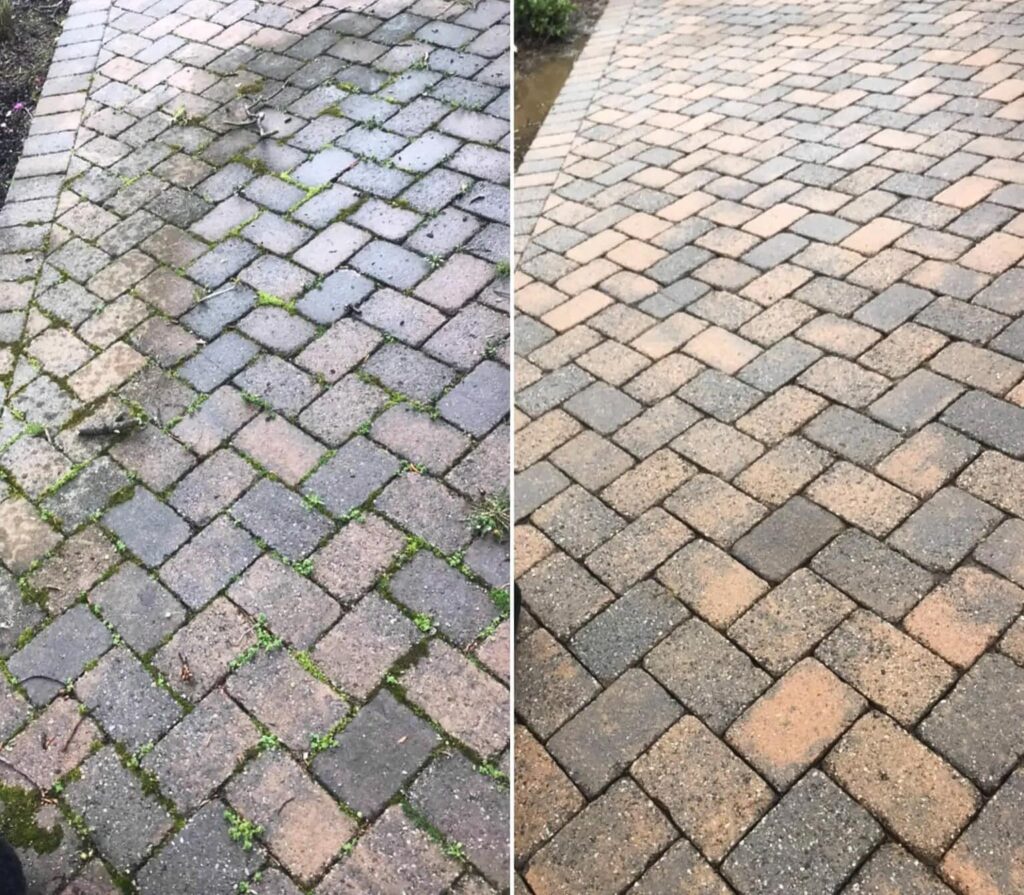
Professional sealing uses premium products and precise application techniques that maximize protection, color enhancement, and maintenance convenience.
How Does Paver Sealing Prevent Stains and Simplify Cleaning?
A quality sealant repels oil, grease, rust, and organic spills, so ordinary soft washing restores clean surfaces quickly.
- Oil and automotive fluids bead and wipe away.
- Rust marks resist absorption and rinse off.
- Algae and leaf stains lift with mild detergent.
Homeowners enjoy effortless cleaning and lasting stain resistance.
How Does Sealing Enhance the Appearance and Color of Your Pavers?
Sealers accentuate natural hues and offer choice of a glossy wet look or a subtle matte finish to suit design preferences.
| Finish Type | Appearance | Durability |
|---|---|---|
| Wet Look | Deep, glossy color boost | High UV resilience |
| Natural | Soft, authentic stone tone | Low sheen, matte |
Enhanced color vibrancy elevates curb appeal and complements any outdoor living area.
How Does Polymeric Sand Help Prevent Weed Growth and Joint Erosion?
When activated by water, polymeric sand hardens between paver joints to lock out weed seeds and stop sand displacement.
- Fills joint spaces tightly.
- Inhibits seed germination.
- Resists insect burrowing.
This lasting joint stabilization keeps surfaces level and maintenance-free.
How Does Paver Sealing Increase Property Value and Hardscape Longevity?
A sealed patio or driveway commands higher curb appeal and may boost home value by protecting your hardscape investment and cutting future repair costs.
- Return on investment through reduced upkeep.
- Extended lifespan often exceeds 10–15 years.
- Consistent appearance sustains market appeal.
Quality sealing delivers both aesthetic and financial rewards.
What Is the Step-by-Step Paver Sealing Process Used by Experts in Long Island?
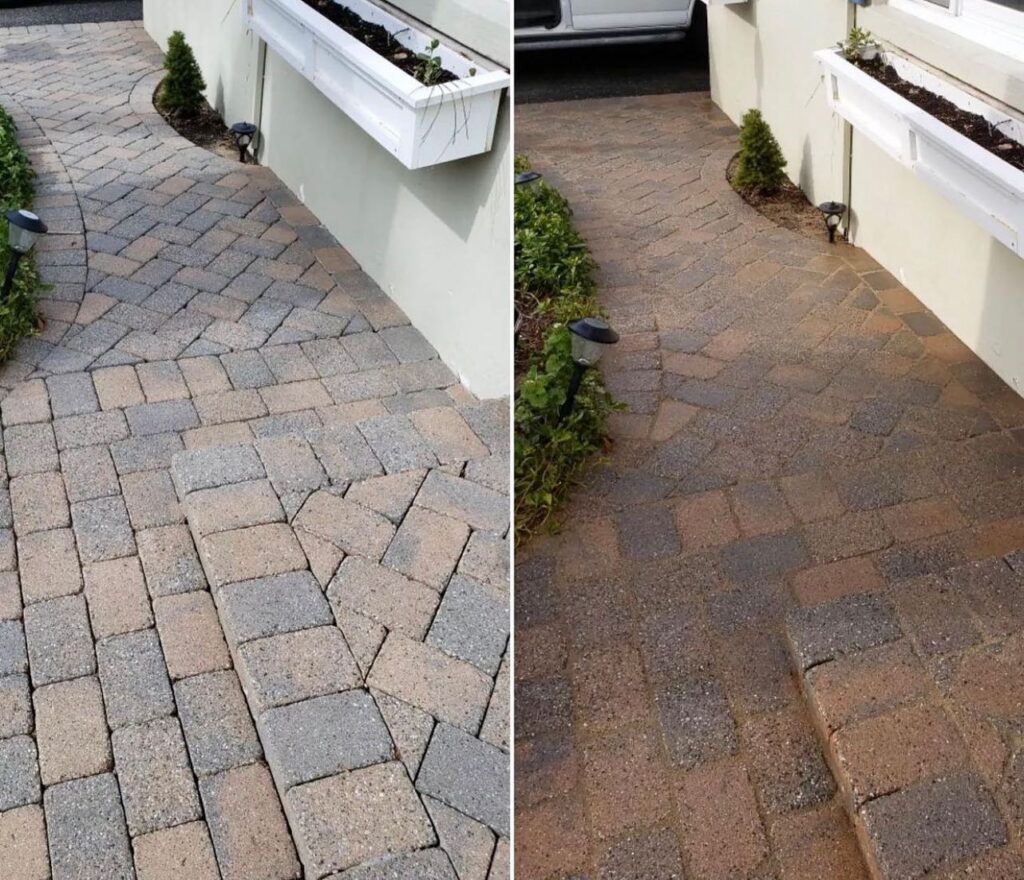
Gulf2Bay Softwash follows a systematic protocol that ensures uniform cleaning, joint stabilization, and sealant coverage for maximum durability and appearance.
How Is Soft Washing Used to Prepare Pavers for Sealing?
Eco-friendly soft washing combines low-pressure water with biodegradable detergents to remove dirt, mold, mildew, and efflorescence without surface damage.
This gentle preparation creates a pristine substrate that promotes optimal sealant adhesion.
Why Is Polymeric Sand Applied Before Sealing?
Applying polymeric sand before sealant locks joint material in place and prevents weed growth, creating a stable, uniform foundation for the protective coating.
Joint stabilization achieved here underpins the long-term performance of the seal.
How Are Premium Sealants Applied for Long-Lasting Protection?
Technicians use airless sprayers and roller techniques to lay down even layers of water-based or solvent-based sealant chosen for Long Island’s climate, allowing proper curing and long-term resistance.
Consistent application ensures every paver receives full coverage and reliable protection.
How Do You Choose the Right Paver Sealer for Your Long Island Home?
Selecting the ideal sealant involves balancing desired sheen, UV stability, chemical resistance, and environmental considerations.
What Are the Differences Between Wet Look and Natural Finish Sealers?
| Characteristic | Wet Look Sealer | Natural Finish Sealer |
|---|---|---|
| Sheen | Glossy, reflective | Matte, true-to-color |
| Color Enhancement | Intensifies hues significantly | Subtle deepening of tones |
| Maintenance Frequency | Every 3–4 years | Every 4–5 years |
Wet look amplifies drama, while natural finish preserves authentic stone aesthetics.
Which Sealant Types Are Best Suited for Long Island’s Climate?
Water-based sealers provide UV stability, low VOC emissions, and quick curing ideal for humid summers, while solvent-based products deliver superior chemical and salt resistance for coastal applications.
- Water-based: low odor, eco-friendly, fast cure.
- Solvent-based: enhanced durability, deep penetration.
- VOC compliance: meets local environmental standards.
Matching sealant chemistry to site conditions ensures peak performance.
When Should Long Island Homeowners Seal or Reseal Their Pavers?
Timely sealing and resealing maintain barrier integrity and prevent progressive wear from weather and use.
What Is the Best Time of Year to Seal Pavers in Long Island?
Spring and early fall offer moderate temperatures and humidity levels that allow sealants to cure fully without risk of freeze damage or heat blistering.
Optimal conditions here support consistent film formation and long-term adhesion.
What Signs Indicate That Your Pavers Need Resealing?
Visible fading, water absorption into the surface, sand erosion in joints, and chalky residue signal that the protective layer has worn thin and should be renewed.
Prompt resealing addresses these issues before deeper damage occurs.
Why Should You Trust Gulf2Bay Softwash for Paver Sealing Services in Long Island?
Gulf2Bay Softwash combines extensive local expertise with eco-friendly, low-pressure soft washing to deliver sealed hardscapes that look exceptional and resist Long Island’s toughest climate challenges.
How Does Gulf2Bay Softwash Tailor Services to Long Island’s Unique Climate?
Technicians adjust cleaning formulations, sand grades, and sealant types based on specific freeze-thaw exposure, coastal salt levels, and humidity to ensure long-lasting protection.
Custom protocols here address local conditions more effectively than one-size-fits-all approaches.
What Quality Products and Techniques Does Gulf2Bay Use?
Gulf2Bay applies industry-leading sealants such as Trident Protects and Alliance Gator with precision sprayers and rollers, guaranteeing even coverage, rapid curing, and superior UV and chemical resistance.
This combination of premium materials and expert methods ensures reliable results.
What Do Long Island Homeowners Say About Gulf2Bay’s Paver Sealing?
Homeowners consistently report dramatic color restoration, reduced maintenance calls, and a renewed patio or driveway that stands up to winter freeze-thaw cycles without cracking.
These testimonials reflect Gulf2Bay’s commitment to quality and customer satisfaction.
Frequently Asked Questions About Paver Sealing
Many homeowners wonder whether sealing is worth the cost, how often to reseal, or if higher-grade sealants justify the investment. Understanding that a sealed hardscape repels water, prevents stains, and maintains vibrant color clarifies these concerns.
Recognizing that resealing every three to five years under moderate traffic preserves protection and that proper weather conditions support optimal curing addresses timing questions. Awareness of product differences—such as wet-look versus natural finishes and water-based versus solvent-based options—supports confident decision-making.
Sealing restores and protects Long Island hardscapes against weather, stains, and erosion. A professional application by Gulf2Bay Softwash ensures each layer bonds correctly and cures fully for maximum durability.
Choosing the right sealer and scheduling resealing at the proper intervals preserves both beauty and structural integrity. With local expertise, premium products, and a tailored process, Gulf2Bay Softwash helps homeowners extend the life and value of their pavers.