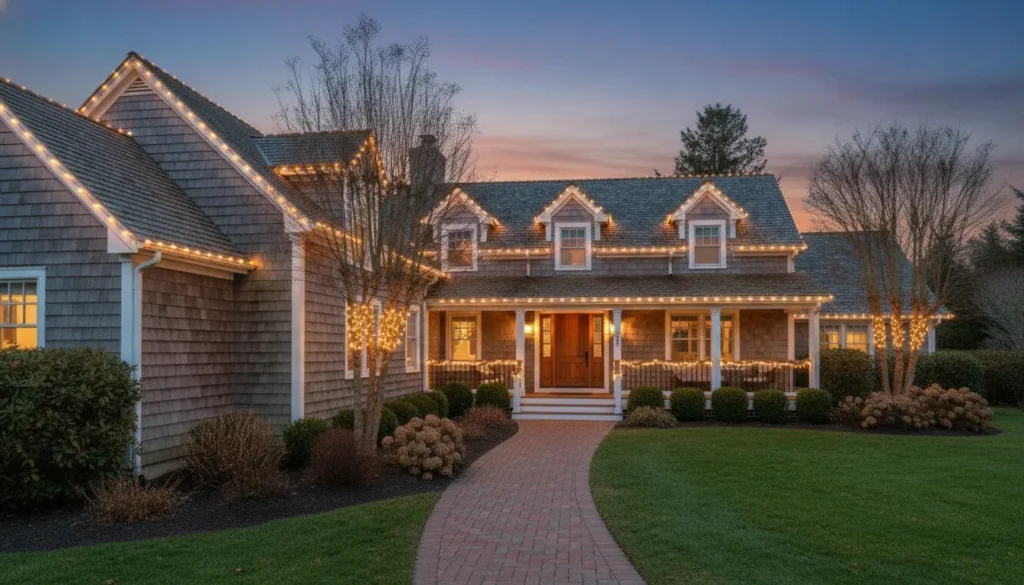
For Long Island homeowners comparing permanent vs temporary holiday lights, the best choice depends on roof access, the home’s architecture, seasonal occupancy, and how much annual coordination the property requires. A second home in the Hamptons may need a different plan from a year-round house in Suffolk County.
Permanent holiday lights prioritize a consistent look and less repeated installation work. Temporary holiday lights prioritize seasonal flexibility, removal, and storage. Compare the roofline, desired appearance, access conditions, and service schedule before choosing.
Request a free estimate to discuss the rooflines, access points, and holiday-lighting service plan for your property.
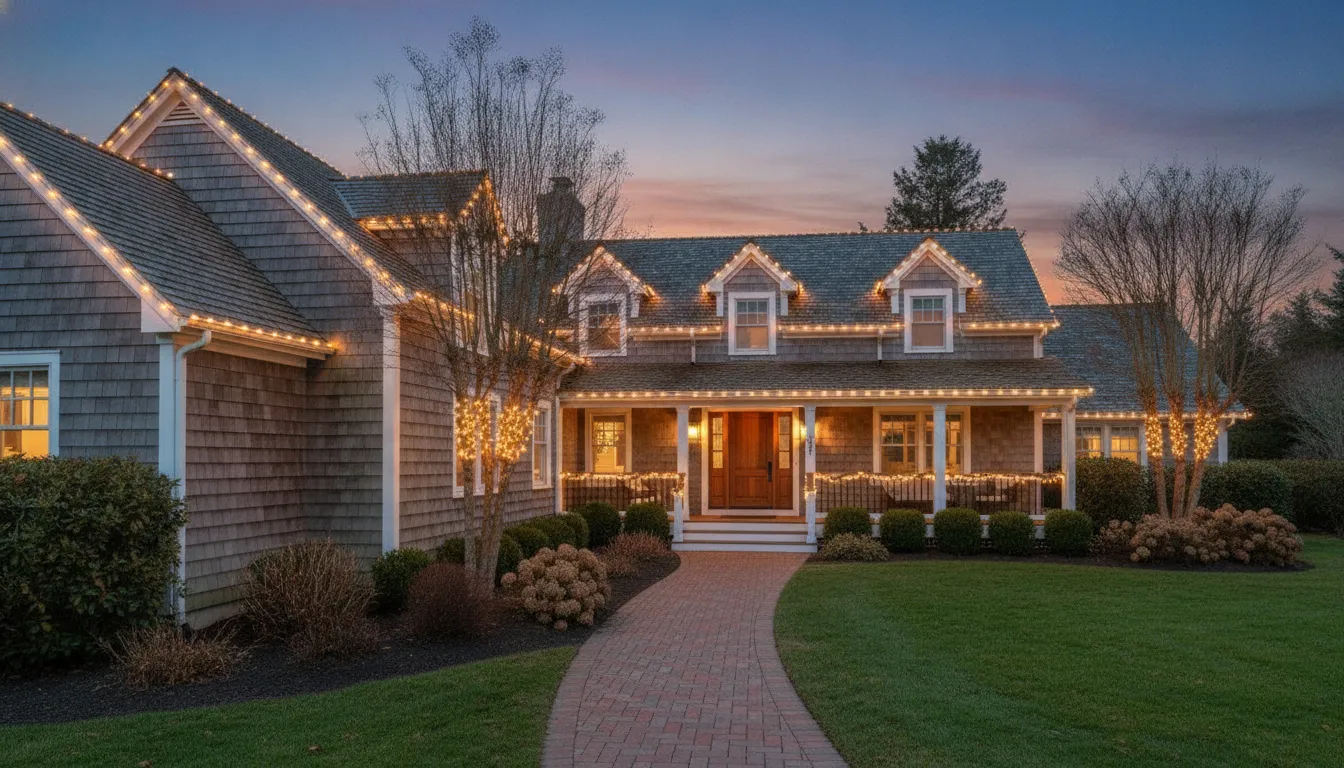
The right comparison starts with how each system works on a real Long Island home, not with a one-size-fits-all recommendation.
Permanent vs Temporary Holiday Lights for Long Island Homes
Permanent and temporary holiday lighting solve different problems. A permanent system is planned as part of the home’s exterior, with lighting positioned for repeat seasonal use. Temporary lighting is installed for the holiday season, then removed and stored for the next year.
What permanent holiday lighting involves
A permanent system typically uses commercial-grade, UL-rated lights installed on a discrete mounting track or similar low-profile system. The track is planned around fascia, trim, rooflines, and other architectural details. When the lights are off, the goal is a clean appearance. When they are on, the display follows the home’s structure with consistent spacing.
Permanent lighting requires more planning and a larger initial commitment than a seasonal display. Placement, power access, controls, service access, and the appearance of the mounting system should be discussed before installation. A permanent system is not maintenance-free, but it can reduce the need to repeat the same high-access installation process every year.
What temporary holiday lighting involves
Temporary lighting follows a seasonal service cycle. Lights are installed before the holiday period, removed afterward, and stored for the next season. The display can change from year to year, with options for roof edges, entryways, trees, shrubs, railings, and other landscape features.
This model suits homeowners who want a different look each season or who prefer not to make a longer-term exterior commitment. It also works well when the desired display is limited to a particular holiday or when the homeowner wants installation, removal, and off-season storage handled as a recurring annual service.
A practical decision rule for Long Island homeowners
Choose a permanent approach when consistent presentation, reduced annual ladder work, and long-term convenience matter most. Choose temporary lighting when seasonal flexibility, changing designs, and removal or storage support matter more.
Neither option eliminates planning. Lighting should complement the architecture, account for roofline access, and fit the way the property is maintained throughout the year. A site assessment can clarify which model fits the home’s structure and the homeowner’s priorities.
How Permanent vs Temporary Holiday Lights Affect Long Island Roof Access
A holiday-lighting plan should account for the work required above ground, not just how the display looks from the street. Long Island homes may have steep pitches, multiple rooflines, dormers, tall gables, and landscaping that makes ladder placement difficult. Coastal weather adds another reason to plan access carefully before the first light is installed.
Review the roofline before choosing the system
Temporary lights usually require seasonal access for installation and removal. That may be manageable on a simple, low roof, but the work becomes more involved when a display reaches upper eaves, peaks, or sections that are difficult to reach from stable ground. Walkways, plantings, decks, and uneven grades can also limit setup.
Permanent lighting can reduce the need to repeat the same high-access work each season, but it is not a substitute for thoughtful planning. The system still needs to be placed, checked, and serviced in a way that fits the home’s roofline and exterior. The permanent choice should be evaluated as a longer-term property-maintenance decision, not simply as a way to avoid one ladder day.
Second homes need a different convenience calculation
For a full-time homeowner, temporary lighting may fit a hands-on seasonal routine. For a second-home owner in the Hamptons, travel, weather, and holiday schedules can make installation, removal, and storage difficult to coordinate. A recurring service arrangement may be more practical when the homeowner wants the property prepared without making a separate trip for each stage of the season.
That does not make permanent lighting automatically right for every second home. Some owners prefer the flexibility of changing the design each year or limiting the display to a short seasonal window. Others value a consistent look and fewer recurring access decisions. The comparison should account for how often the home is occupied, how complex the roofline is, and who will manage seasonal maintenance.
Plan for weather and future service
Wind, salt air, rain, and winter conditions can affect any exterior display. Ask how the lighting will be inspected after installation, how access will be handled if a section needs attention, and what removal or off-season storage responsibilities apply to a temporary setup.
For Long Island homeowners comparing permanent vs temporary holiday lights, safety is a planning factor, not a guarantee. A professional evaluation should consider roofline, grade, access, coastal exposure, attachment points, and the desired service schedule.
Which Option Looks Better on a Long Island Home?
Appearance is often the deciding factor for a Hamptons or Long Island homeowner. Both permanent and temporary holiday lights can look polished when they are designed around the home’s architecture. They create different visual effects during the season and throughout the rest of the year.
Clean architectural lines or a classic holiday display?
Permanent roofline lighting is designed to stay in place. A low-profile track can be planned around fascia and trim so the hardware is less noticeable in daylight. When illuminated, the result is usually even and architectural, which suits homes with long, defined rooflines and carefully maintained exterior details.
Temporary lighting gives homeowners more seasonal freedom. A professional crew can outline roof edges, wrap trees and shrubs, accent entryways, or change the display from one year to the next. Traditional decorative lighting can create a warmer, more varied presentation than a fixed roofline system. Clips, cords, and other installation elements may be more visible while the display is up, depending on the design.
| Visual consideration | Permanent lighting | Temporary lighting |
|---|---|---|
| Daytime appearance | Designed to blend with the roofline and remain in place. | Removed after the season, leaving no holiday hardware in warmer months. |
| Nighttime consistency | Creates a repeatable, even roofline effect. | Can be tailored each season and expanded to landscape features. |
| Seasonal flexibility | May support more than one color or lighting scene when the system allows it. | Offers a fresh design opportunity each holiday season. |
| Best visual fit | Modern, orderly, and architectural home presentation. | Classic, decorative, or changing displays built around the property. |
For a premium home, consistency matters as much as brightness. Permanent lighting may suit a homeowner who wants the roofline to look intentional year after year. Temporary lighting may be the better match for someone who enjoys a distinct seasonal presentation, wants to emphasize landscaping, or plans to change the design regularly.
Installation, Removal, and Storage Responsibilities
The work involved depends on whether the lighting is installed for one season or planned as a recurring system. Temporary displays require a clear annual schedule. Permanent lighting requires more attention to placement, access, and long-term service before the first installation is complete.
Map the work before the season starts
- Review the home and lighting plan. Identify rooflines, eaves, entry points, trees, railings, and other areas to illuminate. Note tall roof sections, steep access points, coastal exposure, and areas that are difficult to reach.
- Schedule installation around access and weather. A temporary display needs to be installed before the desired holiday period, with enough time to correct placement or replace a failed component. Confirm who supplies the lights and how the property will be accessed.
- Set the removal date and method. Confirm who removes temporary lighting, how attachment points and exterior surfaces will be handled, and whether the crew documents damaged or missing pieces for the next season.
- Confirm storage responsibilities. Ask where lights, clips, cords, and related materials will be stored between seasons. Do not assume storage is included until it appears in the written service plan.
- Evaluate permanent-system maintenance. Confirm how future repairs, seasonal checks, adjustments, and service access will be handled. Permanent does not mean maintenance-free.
A recurring professional service can evaluate the property, coordinate seasonal installation and removal, and organize the maintenance calendar. Gulf2Bay’s holiday-lighting service is designed around residential properties, so the exact scope, storage arrangement, and any permanent-system work should be confirmed in the specific proposal.
What Should Long Island Homeowners Choose?
Match the system to how you use the property
There is no single right answer for every Long Island home. The better choice depends on how often you decorate, who manages the property, and how much seasonal work you want on the calendar.
Temporary lighting is usually the more flexible approach. It lets you change the roofline, color scheme, and coverage from one season to the next. That can suit a primary residence where holiday decorating is part of the annual routine, or a homeowner who is still deciding what look fits the property.
A permanent system makes more sense when the same lighting design will be used year after year. It requires more upfront planning, but it can reduce repeated installation decisions. Placement should be evaluated around the architecture, roofline, access points, and the appearance of the home when the lights are not in use.
Consider access, convenience, and service needs
Roof height and access matter on many Long Island properties, especially homes with steep rooflines, multiple stories, or complicated architectural details. If seasonal setup would require repeated ladder work in difficult areas, reducing that annual access requirement may carry real value.
Second-home owners often place a higher value on convenience. A seasonal service plan that covers installation, removal, and storage can keep the property ready without requiring the owner to be present for every visit. Homeowners who prefer control over the design may lean toward temporary lighting. Those who want a consistent look with less yearly decision-making may prefer a permanent approach.
Planning Holiday Lighting With Gulf2Bay Softwash
A local plan for the whole property
Holiday lighting works best when it is planned around the home, not added as an afterthought. A Long Island property may have tall rooflines, coastal exposure, multiple outdoor surfaces, or a second-home schedule that makes seasonal upkeep difficult to coordinate.
Gulf2Bay Softwash serves residential homeowners across Nassau County, Suffolk County, and the Hamptons. The team evaluates the property and prepares a quote-based plan rather than forcing every home into the same lighting approach. That local service model keeps safety, access, curb appeal, and ongoing maintenance in the same conversation.
Lighting can also be coordinated with broader property care. Before installation, homeowners may want to consider the condition of exterior surfaces, roofline access, gutters, windows, and outdoor entertaining areas. Gulf2Bay’s holiday lighting service can be coordinated with its broader exterior services for seasonal property maintenance.
What the estimate should clarify
A useful estimate should make the service model clear. Ask whether the plan covers seasonal installation and removal, what the homeowner is responsible for between visits, and how storage or future-season scheduling will be handled. For a permanent system, discuss placement and long-term service access. For temporary lighting, confirm the recurring schedule and end-of-season steps.
Local scheduling matters, especially for second-home owners who may not be present for every visit. Review the Long Island and Hamptons service area and share the home’s location, roofline, preferred look, and expected use with the estimator.
Request a free estimate from Gulf2Bay Softwash for residential holiday-lighting planning in Long Island and the Hamptons.
Frequently Asked Questions
Are permanent holiday lights better for every Long Island home?
No. Permanent systems can suit homeowners who want a consistent look and less seasonal installation work. Temporary lighting gives homeowners more flexibility to change the design each year. The right choice depends on the roofline, preferred appearance, home use, and willingness to plan recurring seasonal service.
Which option is safer for a tall or steep Hamptons roofline?
Both options require careful planning around roof access, attachment points, weather exposure, and electrical connections. A permanent system may reduce repeated ladder work, but it still needs proper placement and service planning. Temporary lighting requires a clear installation and removal plan each season.
Who handles removal and storage for temporary holiday lights?
That depends on the service arrangement. A seasonal plan can include installation, removal, and off-season storage, with responsibilities clarified before work begins. Ask whether the provider supplies storage, how the lights will be labeled, and how they will be protected for the next installation.
Can second-home owners schedule holiday lighting without being present?
Often, yes, when the scope, access instructions, timing, and approval process are agreed on in advance. A recurring seasonal relationship can make planning easier for Hamptons homeowners who are not at the property year-round. Confirm how the crew communicates updates and documents completed work.
How should I compare permanent and temporary lighting before requesting an estimate?
Start with four questions: Do you want the same appearance each year? How difficult is roof access? Who will manage removal and storage? How much flexibility do you want for seasonal changes? A property assessment can then account for the home, roofline, access, and preferred service schedule.