Long Island humidity and salt air turn clean shingles into black-streaked messes in just a few seasons. You need a regular schedule to stop this organic growth from destroying your home.
Expert soft wash roof cleaning is suggested every one to three years for Long Island homes. This keeps your curb appeal strong and prevents structural damage. While a standard roof check should happen every few years, factors like heavy shade and coastal humidity often need a more frequent cleaning.
This method uses low-pressure water and safe chemicals to kill algae at the root rather than just rinsing the shingle surface. The Asphalt Roofing Manufacturers Association (ARMA) recommends soft washing as the only safe way to clean asphalt shingles without causing granule loss or voiding warranties. By sticking to this plan, you keep your roof safe from the humid weather of the Hamptons.
Knowing the right timing for your home prevents costly repairs and helps you keep your five-year warranty active. I want to show you why waiting for visible damage is a mistake. The next section explains Why Frequency Matters for Long Island Roofs and how regular soft wash roof cleaning protects your investment. The path begins with understanding the damage that builds up on your roof.
Soft Wash Roof Cleaning: Why Frequency Matters for Long Island Roofs
A clean roof does more than look good. On Long Island, regular care stops damage before it starts. Humidity and salt air make local roofs a prime spot for growth. If you wait too long to clean, small spots can turn into big repair bills. I suggest a professional soft wash roof cleaning every one to three years to keep your home safe.
The danger of black streaks
Those dark streaks on your shingles are not just dirt. They come from a tiny pest called Gloeocapsa magma. This algae eats the stone filler in your roof. Over time, it makes shingles brittle and weak. A quick wash kills the algae and stops it from eating your home. This is why a steady schedule is so vital for Long Island roofs.
Soft washing vs pressure washing
I never use high pressure on a roof. It can blow shingles off or strip away the stone grit. The Asphalt Roofing Manufacturers Association says soft washing is the only safe way to clean. My soft wash roof cleaning uses low pressure and soap. It kills mold and moss at the root so they do not grow back fast. This method gives you results that last four to six times longer than old power washing.
| Feature | Soft Wash | Pressure Wash |
|---|---|---|
| Pressure level | 150-400 PSI | 1,500-4,000 PSI |
| Cleaning method | Chemicals kill at root | Blasts surface only |
| Result duration | 4-6x longer | Short term |
| Shingle safety | ARMA approved | Causes granule loss |
| Water use | 1/3 of pressure wash | High volume |
| Eco impact | Biodegradable soaps | Runoff concerns |
Stop roof rot early
Neglect is the biggest enemy of a Long Island roof. Moss and algae trap water against your shingles. This moisture can rot the wood deck below. Once rot starts, you may need to replace the whole roof. Regular cleaning keeps the surface dry and clean. By washing your roof often, you add years to its life and keep your home value high.
How Often Should You Soft Wash Your Roof?
Most homeowners on Long Island need to soft wash their roof every one to three years. This timeline keeps your shingles clean and prevents damage from pests like algae and moss. While the cleaning happens on a set schedule, you should have a pro check your roof every three to five years to look for new growth or wear.
Standard maintenance schedule
For most local homes, a soft wash roof cleaning every 12 to 36 months is the best way to keep your house looking great. This method uses low pressure to kill spores at the root. Soft washing creates results that last four to six times longer than old power washing ways. Regular care ensures that microbial growth from nearby trees does not take over your roof shingles.
Factors that change your frequency
Your specific cleaning needs depend on your home’s location and surroundings. Homes in shaded areas or under heavy tree cover often need more frequent care. This is because moisture stays on the roof longer. Being near the coast also plays a big role. Salt air and high humidity on Long Island can speed up the growth of mold and mildew. If you see black streaks or green patches, you should call for expert roof cleaning right away.
The benefit of professional assessments
Getting a roof check every few years helps you stay ahead of costly repairs. A pro can spot early signs of algae before it spreads across the whole surface. This fast approach helps you get the most out of your roof’s life. By using safe cleaners that break down fast, you can keep your home clean without harming the local area.
Why Long Island’s Climate Demands More Frequent Roof Cleaning
Living on Long Island means dealing with constant wetness. The Atlantic Ocean and the Long Island Sound keep the air damp all year. This wet air creates a perfect home for roof pests like mold and algae. While a dry climate might keep a roof clean for years, our coastal air speeds up growth on your shingles.
Coastal Wetness and Moisture Traps
The air on Long Island holds more water than inland spots. This wet coastal air leads to a much higher risk of mold and algae on your roof. I serve over 25 towns from Bay Shore to the Hamptons. These towns face unique weather from the Sound and the sea. You likely know how fast green moss can take over. Damp air stays trapped in your roof cracks. This moisture feeds the roots of weeds and moss. You need a soft wash roof cleaning more often to stop this damage.
Salt Air and Shaded Tree Canopy
Trees give great shade, but they also block the sun. In wooded areas like the Nassau Gold Coast, thick tree cover keeps shingles wet for hours after a storm.
Research shows that trees and local weather change the germs that grow on your roof. When leaves fall and rot on your roof, they hold even more water. Salt air from the ocean also adds bits of salt that some algae love. This mix of shade and salt makes moss grow thick and fast. You will see it mostly on the north side of your home where the sun rarely hits.
Living Near the Water
The closer you live to the water, the more care your roof needs. Homes near the Great South Bay or the ocean face heavy fog and salt spray every morning. This extra water never gives the shingles a chance to fully dry out.
Salt spray can also wear down the grit on asphalt shingles over time. I see this damage every day in towns like Oyster Bay and Montauk. If your home is near the coast, check for black streaks every spring. These streaks are a type of algae that eats the lime in your shingles. Frequent cleaning keeps these pests from eating into your shingles and causing leaks.
Factors That Affect Your Roof Cleaning Schedule
Most roofs need a full cleaning every one to three years. But your home may need more care based on its build and site. I suggest a professional roof cleaning check every three to five years to find growth early.
Roof type and material
Different materials hold onto moisture and growth in unique ways. Asphalt shingles are common but can trap heat and help algae grow. Cedar and slate also need care to stop rot and moss. I use soft wash roof cleaning because it is safer for these surfaces than high pressure.
The age of your roof also plays a role in how it reacts to the local air. Research shows that local weather conditions and the age of your roof change how runoff flows. Newer roofs shed water well. But older roofs often have pits where spores can hide and grow.
Shade and tree coverage
Trees give shade that keeps your roof damp for a long time. This wetness is the perfect food for moss. Studies found that the presence of trees has a direct link to the growth of microbes on a roof. If your home has a lot of leaf cover, you will likely need to clean your roof more often.
Sun also changes the growth rate across different roof slopes. North facing roofs stay in the shade and grow moss faster than south facing spots. This uneven growth can lead to leaks if you do not treat the whole roof surface in a timely way.
Coastal moisture and pitch
Living on Long Island means your roof faces high humidity and salt air. These factors speed up the growth of mold and algae. A steep roof pitch helps shed water fast. But low slope roofs can hold onto damp debris. I look at these points when I set a cleaning plan for my clients.
Past work also changes your plan. A roof cleaned with the right soaps will stay clean for a longer time. My soft wash methods use safe soaps that keep your home clean and kill growth at the root. This care ensures your roof stays clear of black streaks and green spots for years.
The Gulf2Bay 5-Year Warranty Advantage
A good soft wash roof cleaning should protect your home for years. Many local shops give a one-year promise that leaves you stuck if algae comes back. At Gulf2Bay Softwash, I back my work with a five-year plan. This deal keeps your roof clean and saves you cash on future upkeep.
The Three-Step Savings Plan
My plan has three stages to give you the best value. The first year has a full 12-month spot-free promise. If any growth returns in that time, I will clean it for free. This first step gives quick help to Hamptons owners who deal with wet sea air and coastal fog.
The savings last through the fourth year. In years two, three, and four, you get 50% off the first price for a new wash. By the fifth year, you still get a 20% cut. This setup makes it easy to fix your home without paying full price when salt air brings back moss or mold.
Extra Home Value with Shared Coverage
A great perk of our 5-year roof cleaning warranty is that it moves to new owners. If you sell your Long Island home, the plan stays with the house. New buyers like to know the roof had expert care. This is a big plus during a home sale or when you set your price.
Local factors like trees and rain drive growth on roofs. Work found at the National Institutes of Health shows these risks change by site. Since your home faces sea spray and shade, a long-term plan is a smart choice. My plan covers these local risks so you do not have to fret over new stains.
Why Short Plans Fail You
Most cleaners only care about how the roof looks today. They use high pressure or weak soaps that only clean the top. When the algae grows back in two years, their one-year plan is dead. You end up paying full price for a new wash much too soon.
A long plan forces a pro to do the job right. I use a low-pressure way to kill the roots of moss and lichen. This safe path is why I can give five years of cover while others stop at one. It keeps your tiles safe and your home looking sharp for the long haul.
Signs It’s Time to Call for a Soft Wash
You do not need to wait for a roof leak to know there is a problem. Most roof damage starts with small, clear signs on your shingles. These marks mean that living things like algae and moss are eating your roof. If you see these signs, you need to act fast to save your home.
Black streaks and dark stains
Many Long Island owners see black streaks on their roofs and think it is just dirt. In fact, it is a type of pest called Gloeocapsa magma. This pest feeds on the limestone filler in asphalt shingles. It leaves behind a dark coating to hide from the sun. These stains often start on the north side of the house where there is more shade.
Local factors like shade and tree cover make these stains grow faster. Research shows that trees and local moisture increase the number of microbes found on roof surfaces. On Long Island, our humid air makes a great home for these pests. If you see these dark lines, the pests are now thinning your shingles.
Green moss and lichen patches
Moss is a big threat to your roof. It grows in thick, green clumps that hold onto water like a sponge. This trapped moisture keeps your shingles wet for days after a rain storm. Constant dampness can cause your shingles to curl or lift. Once they lift, wind can blow them off, or water can seep below.
Lichen is a new sign that you need professional roof cleaning. Lichen looks like crusty, light green or gray spots. These pests grow roots that dig into the shingle surface. Trying to scrape them off will rip the shingle apart. A soft wash kills the lichen at the root without harming the roof.
Granule loss and gutter debris
Look in your gutters after a heavy rain. If you see a lot of dark, sandy grit, your roof is losing its granules. Granules are the small rocks that protect shingles from sun rays and fire. Algae and moss loosen these granules as they grow and feed. When the granules fall off, the shingles become weak and crack.
Large clumps of moss can also roll into your gutters and clog your pipes. This causes water to back up under your shingles or spill over the edge. Extra water can damage your siding and your home’s base. Seeing moss or silt in your gutters is a clear sign that you need a soft wash roof cleaning.
What Happens During a Professional Soft Wash
A professional soft wash roof cleaning service follows a strict process to protect your home. It is not just about spraying water. I use specific steps to kill algae and moss while keeping your roof safe from damage.
Prep and Property Protection
The first step is a free on-site assessment. I look at your roof to find the best plan for your home. Before I start the professional soft wash roof cleaning, I protect your property. My team covers your plants and windows to keep them safe from the cleaning mix.
Chemical Application and Dwell Time
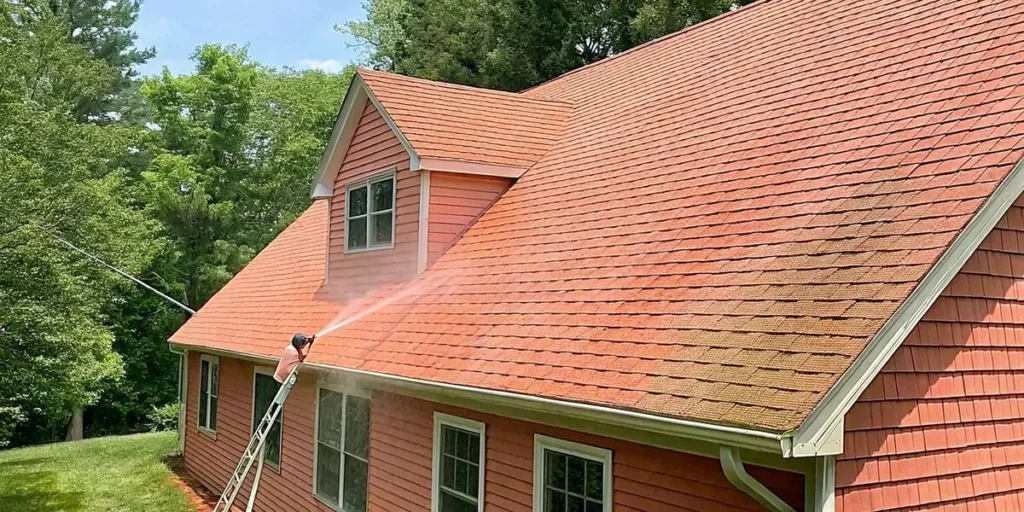
I apply a cleaning mix to your roof using very low pressure. These biodegradable chemicals are 100% safe for the environment and break down within 20 days. The solution sits on your shingles for 10 to 20 minutes to kill moss and algae at the root.
Low Pressure Rinse and Inspection
Once the chemicals work, I use a low-pressure rinse between 150 and 400 PSI. This pressure is gentle enough to protect asphalt shingles and cedar. After the rinse, I do a final check of the whole roof. This careful work is why my 5-year warranty starts the moment I finish the job.
- On-site assessment: I check the roof state and give you a free price quote.
- Property protection: We cover your plants and yard to keep them safe.
- Chemical application: I spray a gentle mix that kills growth at the root.
- Dwell time: The mix sits for 10 to 20 minutes to fully clean the surface.
- Low-pressure rinse: I use 150 to 400 PSI to wash away dirt without damage.
- Final inspection: I check every inch to ensure the roof is clean.
Frequently Asked Questions
Is soft washing safe for asphalt shingles?
Yes, soft washing is the safest way to clean your roof. The Asphalt Roofing Manufacturers Association says this is the only method you should use. It uses very low pressure, which is about the same as a garden hose. This protects the granules on your shingles. High pressure can tear them off and ruin your roof. Soft washing kills moss and algae without causing any damage to the surface.
What causes black streaks to form on my roof?
The dark streaks on your roof are a type of algae called Gloeocapsa magma. This pest eats the limestone in your shingles and grows fast in wet areas. Long Island has high humidity and sea air, which makes the growth worse. As noted by expert roof cleaners, these streaks can hold heat and raise your power bills. Soft washing kills the algae at the root so it does not come back fast.
Are the chemicals used in soft washing safe for my plants?
The cleaners used in a soft wash are safe for your home and yard. The chemicals are 100% biodegradable and break down into water and carbon in about 20 days. According to Gulf2Bay Softwash, this makes sure that your lawn and pets stay safe. Pros also rinse your plants with fresh water before and after the job. This extra step keeps your yard green while your roof gets a deep clean.
How long will my roof stay clean after a soft wash?
An expert soft wash keeps your roof clean for much longer than old methods. These results often last four to six times longer than high-pressure washing. This is because the process kills the spores that cause growth rather than just rinsing the top. Most local homes stay clean for one to three years. Since Gulf2Bay Softwash offers a five-year warranty, you can be sure your roof will look great for a long time.
Why should I hire a pro to clean my roof?
Cleaning a roof can be dangerous for someone without the right tools and training. A pro knows how to use the right mix of cleaners for your specific shingles. They also have the gear to work safely at high heights. Since Gulf2Bay Softwash uses a low-pressure system, you do not have to worry about broken tiles or loose granules. Call me at (631) 557-5484 for a free assessment today.
Ready to book a free roof cleaning checkup?
Letting black algae and green moss sit on your roof for too long leads to deep damage. These pests eat the stone in your shingles and make them weak. This can cause leaks and high repair bills very fast.
Most Long Island homes need a deep clean every few years to stay in top shape. By acting today, you stop this decay and boost your curb appeal. Our soft wash method kills the roots so the mess does not come back. We even include a five year warranty to keep your home safe. Your roof is a major part of your home. It needs the right care today to avoid a new roof later.
Ready to book a free roof cleaning checkup? Call (631) 557-5484 to book your visit.