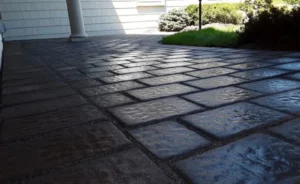
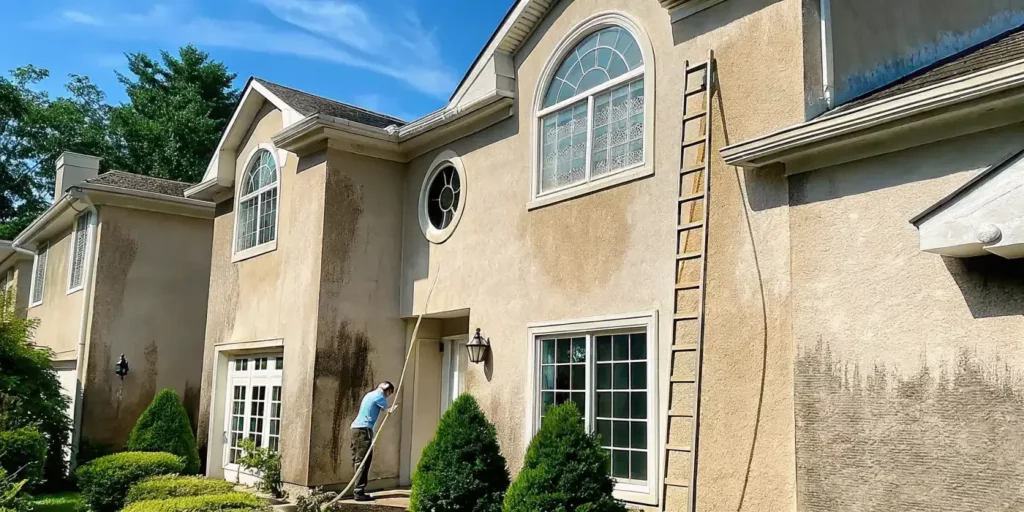
For homeowners researching soft washing stucco Long Island properties, the essential distinction is control: specialized low-pressure cleaning can treat organic staining while respecting the finish, joints, landscaping, and architectural details that give a residence its character. Gulf2Bay Softwash begins with a property-specific assessment because no two stucco elevations weather in precisely the same way.
Book a Gulf2Bay Softwash stucco cleaning assessment.
Stucco rewards a measured restoration strategy. Its textured surface can retain airborne soil, pollen, algae, and runoff residue, yet aggressive cleaning can alter that texture or expose existing defects. This guide explains how an experienced team evaluates stucco, why low pressure matters, and what Long Island homeowners should expect from a professional exterior cleaning plan.
Soft Washing Stucco Long Island: Is soft washing safe for stucco homes on Long Island?
Yes, soft washing is appropriate for sound stucco when the contractor inspects the property first. Selects a treatment for the observed conditions, uses specialized low-pressure equipment, protects adjacent areas, and controls the rinse. Existing cracks, loose finish, failed seals, and vulnerable penetrations must be incorporated into the cleaning plan before work begins.
Safety comes from the complete process, not simply from turning down the pressure. A qualified technician reads the wall as a system. Finish condition, coating type, age, exposure, drainage patterns, windows, doors, fixtures, and landscape all influence how an elevation should be treated. Gulf2Bay Softwash uses that assessment to establish a deliberate plan rather than applying one setting or solution across the entire property.
Stucco is durable, but its finish requires restraint
Stucco performs as an exterior envelope, but its exposed finish is not an appropriate surface for indiscriminate force. Texture can be etched, coatings can be disturbed, and pre-existing hairline cracks can become more consequential when a concentrated water stream is aimed directly at them. On an estate in the Hamptons or a carefully maintained Gold Coast residence, even subtle inconsistency in texture or sheen can be visually disruptive.
Professional house washing for delicate exterior finishes relies on treatment chemistry and dwell time to loosen organic contamination. The rinse is then used to carry released material away, not to cut it from the wall. This distinction helps preserve the appearance of the finish while delivering a more considered result.
A property-specific plan is the safeguard
One facade may be shaded by mature trees, another exposed to coastal air, and a third repeatedly marked by overflow from a gutter. Those elevations should not automatically receive identical treatment. The crew should identify why staining formed, note fragile details, and adjust the working plan as conditions change around the home.
Gulf2Bay Softwash also considers connected surfaces. Windows, roof edges, gutters, masonry, painted trim, lighting, plantings, and outdoor living areas can all sit within the work zone. Coordinating the stucco cleaning with the broader range of exterior cleaning services creates a more coherent restoration plan and prevents one freshly cleaned area from being affected by untreated runoff above it.
Why can high pressure damage a stucco exterior?
High pressure concentrates mechanical force on a textured, potentially porous finish. It may remove visible soil quickly, but it can also etch the surface, disturb coatings, enlarge existing cracks, or direct water into vulnerable joints. Low-pressure treatment is the more controlled choice because it addresses contamination without making force the primary cleaning mechanism.
Surface texture and coatings can change
Stucco’s visual appeal comes from a consistent finish. A narrow, forceful stream can leave wand marks, flatten raised texture, or create sections that reflect light differently from the surrounding wall. Painted stucco adds another variable: an aging or compromised coating may release unevenly under aggressive cleaning. These changes are difficult to disguise once the wall dries.
A restoration-minded operator tests assumptions before expanding the work area. If the surface shows chalking, flaking paint, unusual discoloration, or previous repairs, the technician should pause and adapt. The objective is not simply a brighter wall at the end of the day. It is a clean exterior that still looks intentional from the driveway, terrace, and property line.
Water follows openings and weak points
Cracks, failed caulk, open utility penetrations, compromised trim joints, and loose sections can provide routes for water. Pressure aimed into those locations may move moisture where it does not belong. A careful pre-cleaning survey identifies these details so the crew can avoid direct application, reduce exposure, or recommend repair before proceeding.
Runoff management matters as well. Staining below windows, roof transitions, and gutter lines can indicate recurring water movement rather than a simple cleaning issue. Homeowners may benefit from coordinating stucco work with professional gutter cleaning when blocked or overflowing gutters are contributing to facade marks.
Force does not resolve the source of organic staining
Blasting away the visible layer of algae or mildew may leave residual contamination within a textured surface. A treatment-led approach is designed to address that growth and release it from the finish, allowing a low-pressure rinse to complete the process. Gulf2Bay Softwash emphasizes this controlled sequence to reduce unnecessary stress on the exterior.
What should be inspected before stucco is cleaned?
A thorough inspection should identify the condition of the finish, potential water-entry points, the pattern and likely source of staining, and every adjacent feature that requires protection. This survey determines whether cleaning can proceed as planned, requires testing, or should wait until a repair is completed.
Read the finish before selecting the treatment
The first pass should document hairline and larger cracks, patches, loose or hollow areas, chalking, flaking coatings, rust marks, efflorescence-like deposits, and dark organic growth. Color and texture can vary across previous repairs, so the team should distinguish a condition that can be cleaned from one that is inherent to the material. A contractor who promises uniformity before examining those differences is overlooking an important part of the work.
Stain location provides diagnostic value. Marks concentrated beneath coping, gutters, vents, sills, or roof edges can reveal a drainage or maintenance concern. Growth on shaded northern exposures may reflect slower drying. Soil near the base can point to splashback. The inspection allows Gulf2Bay Softwash to treat the visible condition while explaining factors that may influence its return.
Evaluate seals, penetrations, and drainage
Window and door perimeters, utility penetrations, light fixtures, hose connections, vents, trim transitions, and control joints deserve close attention. Failed or missing sealant can increase the risk of water movement during any exterior cleaning. If a vulnerable detail cannot be protected adequately, it should be repaired before the affected section is washed.
Roof and gutter performance also affect stucco presentation. Debris, overflowing gutters, or roof runoff can create repeated streaking. When several exterior systems need attention, Gulf2Bay Softwash can help homeowners consider a coordinated plan that includes low-pressure roof cleaning where appropriate.
Map the surrounding property
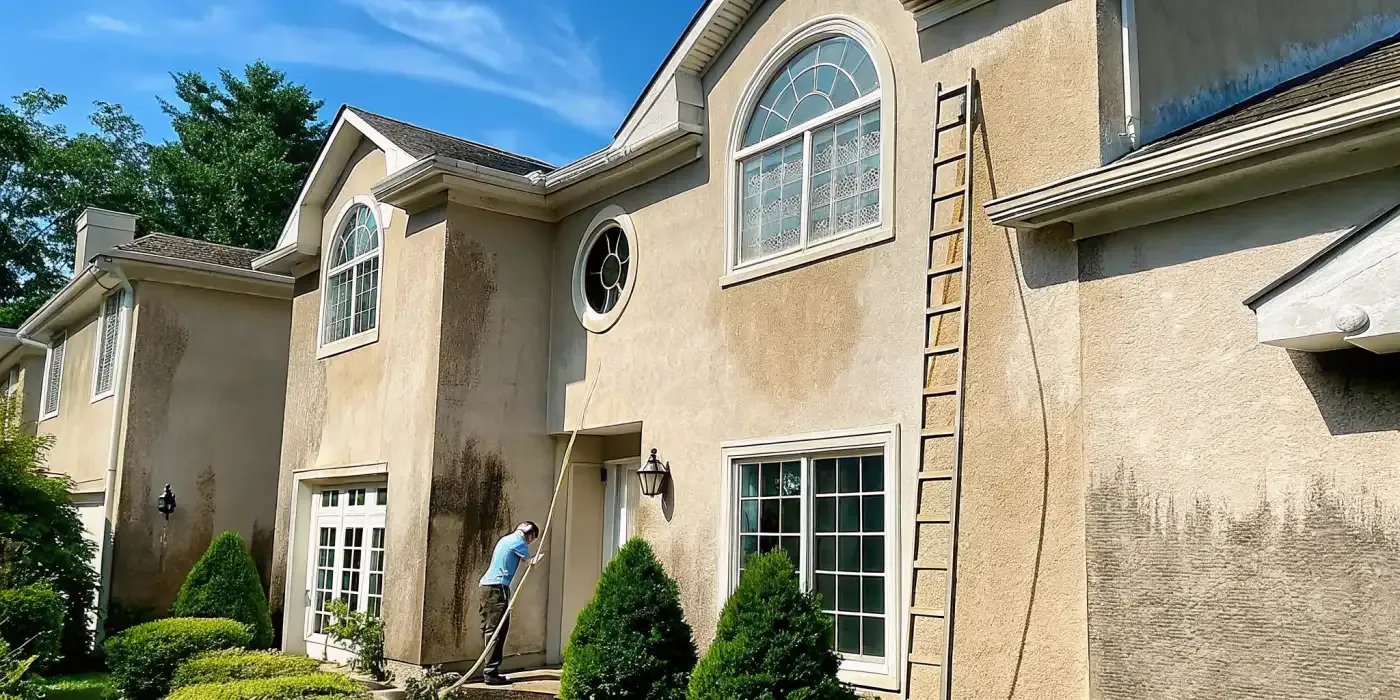
Premium exterior care extends beyond the wall. Mature landscaping, delicate plantings, outdoor kitchens, metal accents, natural stone, furniture, security equipment, and pool areas may all require a specific protection strategy. Access routes and runoff paths should be planned before equipment is staged. This preparation supports a composed worksite and a more predictable result.
Request a property-specific exterior assessment from Gulf2Bay Softwash.
How do professionals soft wash stucco safely?
Professional stucco soft washing follows a disciplined sequence: inspect, protect, test. Apply an appropriate treatment at low pressure, allow controlled dwell time, rinse carefully, and review the finished elevations. Each stage is adjusted to the property rather than performed as a generic wash routine.
1. Establish the scope and protection plan
After the assessment, the crew defines which elevations will be treated, which details need special handling, and which conditions should be excluded or repaired. Plants and sensitive features are identified, movable items are relocated where necessary, and the team plans equipment placement and runoff management. Gulf2Bay Softwash protects surrounding areas as part of the service, not as an afterthought.
2. Test and apply the treatment
A discreet test area can confirm how the finish and any coating respond. The cleaning treatment is then applied with specialized low-pressure equipment. The purpose is to achieve even coverage without driving water at the wall. Appropriate dwell time allows the treatment to act on organic staining, reducing the need for forceful agitation.
3. Complete a controlled rinse
The rinse removes released contamination and residual treatment while respecting joints, penetrations, and fragile details. Technique matters: angle, distance, volume, and direction all influence how water moves across a facade. A professional works methodically from elevation to elevation and remains attentive to runoff throughout the service.
4. Review the property after cleaning
A final walkthrough should evaluate the stucco from multiple viewing angles. Confirm that surrounding areas are orderly, and identify any marks that represent material defects rather than removable soil. Clear communication is important because existing repairs, mineral deposits, rust sources, or coating variation may remain visible even after an effective cleaning.
Windows often become part of the visual equation after facade work. Homeowners seeking a polished overall presentation can pair stucco care with professional window cleaning rather than leaving glass and frames out of the restoration plan.
Soft washing vs. pressure washing for stucco
Soft washing and pressure washing both use water, but they rely on fundamentally different cleaning strategies. Soft washing uses a targeted treatment and controlled low-pressure application. Conventional pressure washing relies more heavily on mechanical force. For stucco, the treatment-led method provides the greater margin of control.
| Decision factor | Soft washing | Conventional pressure washing |
|---|---|---|
| Primary cleaning action | Treatment, dwell time, and controlled rinse | Mechanical force from concentrated water |
| Approach to textured stucco | Designed to reduce unnecessary surface stress | Can etch or alter texture if improperly used |
| Existing cracks and joints | Mapped and accommodated in the work plan | Force may drive water toward vulnerable areas |
| Organic staining | Treatment addresses the contamination before rinsing | May remove only the immediately visible layer |
| Property protection | Assessment and surrounding-area protection are integral | Varies widely by operator and process |
Why equipment alone does not define quality
A low-pressure machine does not replace judgment. The operator still needs to understand surface condition, treatment selection, weather, dwell time, runoff, and adjacent materials. Likewise, not every use of pressure equipment is inherently careless; skilled contractors select methods by substrate. The critical question is whether the chosen process is appropriate for the specific stucco and its current condition.
Choose restoration discipline over speed
Fast removal is not the only measure of success. For a high-value Long Island property, the preferable outcome is even cleaning with the finish, landscaping, and architectural details respected. Gulf2Bay Softwash approaches stucco as part of an integrated exterior, applying restraint where aggressive methods could create avoidable risk.
Schedule a stucco soft washing assessment for your Long Island home.
How often should Long Island stucco be soft washed?
There is no fixed cleaning interval for every stucco home. Exposure, tree cover, moisture, coastal conditions, drainage, finish condition, and the homeowner’s presentation standards determine timing. An annual visual review, followed by cleaning when staining or organic growth becomes evident, is more useful than an inflexible calendar.
Exposure changes from elevation to elevation
A shaded wall may remain damp longer after rain, while a sunny elevation may collect airborne soil but show less organic growth. Mature trees contribute pollen and debris. Coastal exposure can leave residue on surfaces and glass. Gutters and roof edges can direct water down predictable paths. These factors explain why one side of a home may need attention before the others.
Homeowners should look for green or dark organic staining, concentrated runoff marks, dullness, and debris held in textured areas. The purpose of routine observation is not to encourage frequent washing. It is to address visible conditions before they dominate the facade and to notice cracks or seal failures that merit repair.
Maintenance should support the whole exterior
Stucco does not exist in isolation. A stained roof edge, obstructed gutter, dirty window frame, or overgrown shrub can influence the wall below. Coordinating services may improve the final presentation and help address contributing conditions in a logical order. Gulf2Bay Softwash can assess the property as a whole, then recommend only the work suited to the observed surfaces.
Timing depends on condition and expectations
Some homeowners maintain a residence to a meticulous year-round standard, while others schedule service before seasonal occupancy, an event, or property marketing. Either approach can be reasonable. The essential safeguard is to avoid waiting until heavy contamination encourages an unnecessarily aggressive response. Early assessment creates more options for controlled care.
How to choose a stucco cleaning professional
Select a contractor who can explain the inspection, treatment, protection, and rinse plan in specific terms. The right provider should recognize the limits of cleaning, identify conditions that require repair. And demonstrate respect for the entire property rather than focusing only on the visible stain.
Ask process questions, not just price questions
Useful questions include: What will you inspect before cleaning? How will you handle cracks and failed seals? Which nearby materials and plants require protection? How will you test the finish? What does your final review include? Detailed answers reveal whether the contractor uses a repeatable, property-specific process or intends to improvise after arriving.
Ask how the team distinguishes organic growth from rust, mineral deposits, coating failure, or previous repair variation. Not every mark has the same cause, and not every mark can be removed through cleaning. A credible professional sets expectations before work begins and explains when a specialist repair is more appropriate.
Look for control throughout the worksite
Exterior cleaning affects access, landscaping, outdoor rooms, fixtures, and neighboring surfaces. Professionalism is visible in how the crew stages equipment, communicates, protects features, manages water, and leaves the property. On finely finished homes, those operational details are part of the service quality.
Prioritize a team that understands connected services
A comprehensive provider can identify when roof, gutter, window, or general exterior care should be coordinated, while still keeping the stucco scope precise. Gulf2Bay Softwash offers multiple residential exterior cleaning options and conducts property-specific assessments to determine an appropriate approach for each surface.
The most responsible recommendation may include cleaning now, repairing first, treating only selected elevations, or combining services in a deliberate sequence. That level of judgment is more valuable than a universal package that ignores the home’s details.
Frequently asked questions about stucco soft washing
Is soft washing safe for stucco homes on Long Island?
Yes. A property-specific soft washing process uses specialized low-pressure application, appropriate treatment, and a controlled rinse to clean sound stucco without the aggressive force associated with conventional pressure washing. Existing cracks, failed seals, and loose finish should be identified before cleaning.
Can pressure washing damage stucco?
Yes. Excessive pressure can etch texture, loosen finish, open cracks, and drive water toward vulnerable joints or behind damaged stucco. The safer approach is to inspect first and let the treatment do the cleaning rather than relying on force.
How often should stucco be soft washed on Long Island?
There is no universal schedule. Exposure, shade, landscaping, drainage, coastal conditions, and the condition of the finish all affect timing. An annual visual inspection and cleaning when organic growth or runoff staining becomes visible is a practical approach.
What should be inspected before stucco cleaning?
The inspection should identify cracks, loose or hollow areas, failed caulk, open penetrations, damaged trim, drainage issues, oxidation, nearby plants, and other surfaces that require protection. Any condition that could admit water or react poorly to cleaning should be addressed in the plan.
How does Gulf2Bay Softwash protect landscaping and surrounding areas?
Gulf2Bay Softwash conducts a property-specific assessment, identifies sensitive areas, protects surrounding features, manages treatment application carefully, and completes a controlled rinse and final review.
Plan a refined stucco restoration with Gulf2Bay Softwash
Stucco cleaning should preserve the qualities that make the exterior distinctive. That requires a measured process built around inspection, low-pressure treatment, deliberate property protection, and clear expectations. For Long Island, Hamptons, and Gold Coast homeowners, Gulf2Bay Softwash provides the specialized approach needed to care for textured finishes without making unnecessary force part of the plan.
A property-specific assessment is the appropriate starting point. The team can evaluate staining, identify vulnerable details, review connected exterior maintenance needs, and recommend a scope suited to the residence. The result is not a generic wash. It is a considered plan for restoring the presentation of the property while respecting its materials.
Book your Gulf2Bay Softwash assessment today. Or contact Gulf2Bay Softwash to discuss your Long Island stucco exterior.