Long Island siding and roof shingles need a cleaner touch than concrete driveways. Choosing the wrong washing method can leave organic growth behind or put a delicate surface at needless risk.
Soft washing vs pressure washing comes down to the surface, the soil, and how much force the material can safely take. Soft washing pairs low-pressure water with a cleaning solution, making it the preferred choice for siding, shingles, fences, and other delicate home exteriors. Pressure washing relies on much stronger water force and works best on sturdy surfaces, such as sound concrete, selected masonry, and similar hardscape. That force also requires care because the CDC warns that pressure washer spray can cause serious wounds. For most Long Island homes, use soft washing on the house and roof, then reserve controlled pressure washing for durable outdoor surfaces without using needless force.
The right choice depends on more than raw cleaning power; it depends on what you are cleaning and what caused the stain. Soft washing vs pressure washing at a glance puts those tradeoffs side by side before we match each method to common Long Island surfaces. Here’s how.
Soft washing vs pressure washing at a glance
The core difference
The main difference in soft washing vs pressure washing is how each method removes buildup. Soft washing lets a cleaning solution do most of the work, then uses a low-pressure rinse. Pressure washing relies more on the force of water to lift dirt from a hard surface.
Gulf2Bay applies soft washing at under 100 PSI, which helps protect siding, shingles, and other delicate finishes. That makes it a practical choice for many parts of a Long Island home. High pressure still has a place, but the surface must be strong enough for it.
| Comparison point | Soft washing | Pressure washing |
|---|---|---|
| Pressure | Under 100 PSI for Gulf2Bay | High-pressure water spray |
| Cleaning action | Solution treats buildup; low-pressure water rinses it | Water force lifts surface dirt |
| Best surfaces | Siding, roof shingles, and painted finishes | Sound concrete, brick, and other sturdy surfaces |
| Main risks | Wrong solution or poor rinsing can affect surfaces | Too much force may mark surfaces or drive water into gaps |
| Result longevity | Often longer for organic growth | Direct clean; untreated growth may return sooner |
What the comparison means for your home
Soft washing treats the cause of many exterior stains instead of only pushing visible buildup away. The cleaning action comes from the solution, so the rinse does not need intense force. This often gives organic growth less chance to return soon after cleaning.
Pressure washing can clear stubborn dirt from sturdy surfaces, including concrete and some masonry. The CDC warns that a pressure washer’s strong spray can cause serious wounds. This force also calls for care around loose joints, aging finishes, and nearby objects. Surface condition matters as much as material.
Choosing by surface, not habit
Start with the least force that can clean the surface well. For siding, roofs, and painted finishes, low pressure helps reduce the chance of marks or water intrusion. A trained cleaner can also adjust the solution and rinse for the type of buildup.
Hard concrete may suit controlled pressure washing when the goal is removing ground-in dirt. By contrast, soft washing vs pressure washing is not a single-winner question. The right choice depends on the surface, its age, and the stain.
When organic growth is the issue, soft washing can provide longer-lasting results because it treats that growth before rinsing. For compacted dirt on sound concrete, controlled pressure can deliver a direct clean. An inspection should settle which method fits each area.
How does soft washing clean a home?
Low pressure and cleaning solutions
Soft washing cleans a home’s exterior by pairing low water pressure with biodegradable cleaning solutions. The solution loosens surface dirt and treats organic growth, while the low-pressure rinse clears away the remaining residue. This method relies more on the cleaning mix than on the force of the water.
That difference is central to soft washing vs pressure washing. Pressure washing uses a strong spray to clean sturdy surfaces. The CDC warns that a pressure washer’s strong spray can cause serious wounds and throw nearby objects. Low pressure gives a trained crew more control around siding, trim, and other home features.
Treating growth instead of rinsing the surface
Organic growth can cling to siding, roof surfaces, and shaded areas around a home. Soft washing applies the cleaning solution across the affected area so it can treat that growth. A controlled rinse then removes the loosened material without making high pressure the main cleaning tool.
The goal is not simply to move visible grime from one spot to another. It is to treat the source of the buildup before rinsing. Homeowners comparing methods can review the broader benefits of soft washing vs pressure washing for exterior care.
Plant and property precautions
A careful soft-wash setup starts with a walk around the property. The crew can note plants, outdoor furniture, open windows, electrical fixtures, and areas that need added care. Items near the work zone should be moved or covered before the cleaning solution is applied.
Plants and nearby surfaces also need attention during application and rinsing. A controlled process helps keep the cleaning solution on the intended surface. It also lets the crew adjust the approach for siding, trim, roofs, and other materials instead of using one setting everywhere.
This approach suits many Long Island houses because one property may include several exterior materials and planted areas. Low pressure supports a careful, surface-specific plan for those details. Gulf2Bay’s professional house cleaning methods focus on residential exterior care throughout the area.
When is pressure washing the better choice?
Pressure washing is often the better choice when a surface is hard, sound, and able to handle a strong water stream. It can remove packed soil and surface grime from areas where low-pressure cleaning may not provide enough mechanical force.
Durable surfaces that suit pressure washing
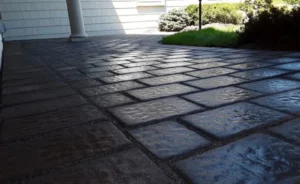
Sound concrete is a common fit, especially on driveways, walkways, and patios with ground-in dirt. Some brick, stone, and other masonry may also be suitable after a careful check. The CDC describes pressure washers as tools for cleaning large, sturdy surfaces.
Surface condition matters as much as surface type. Crumbling mortar, loose joints, deep cracks, and flaking coatings can make an otherwise durable area a poor candidate. A small test area helps show how the material and finish respond before work continues.
Technique matters on hardscapes
Good pressure washing is controlled, not simply powerful. The operator matches the nozzle, working distance, spray angle, and water pressure to the surface. They also keep the wand moving so one spot does not take the full force for too long.
- Inspect the surface for cracks, loose material, and weak joints.
- Start with a wider spray pattern and a lower practical setting.
- Test a hidden area before cleaning the full hardscape.
- Keep people, pets, and movable items clear of the work zone.
Safety also shapes the method. A strong spray can cause serious wounds and throw nearby objects, according to pressure washer safety guidance. Careful setup protects the operator, nearby people, and the property around the cleaning area.
Why high pressure is not the home default
Hardscape cleaning and whole-home washing call for different choices. Siding, roof materials, painted finishes, and weathered wood often need a gentler approach. High pressure is not the default when the surface can loosen, absorb water, or lose its finish.
In a soft washing vs pressure washing decision, the material and its condition should guide the method. Homeowners can review soft washing vs pressure washing before choosing an approach for delicate exterior surfaces. Pressure washing still has a clear role, but it works best on suitable hardscapes with trained, controlled use.
Which Long Island home surfaces need soft washing?
Choosing between soft washing vs pressure washing starts with the surface, not the stain. The CDC describes pressure washers as tools for cleaning large, sturdy surfaces with high-pressure water. That distinction makes controlled, low-pressure washing a sound fit for materials that need a gentler touch.
Long Island homes often combine several materials across one exterior. An operator should inspect each area, test a small spot, and adjust the cleaning mix and rinse method before treating it.
Roof shingles and siding
Asphalt roof shingles form a layered system rather than one solid surface. Soft washing applies the cleaning mix at low pressure, then uses a gentle rinse. This approach avoids relying on water force to strip away visible growth and stains.
Age, loose shingles, flashing, gutters, and nearby plants all affect the plan. Homeowners can review the benefits of roof soft washing before choosing a method for dark streaks or organic buildup.
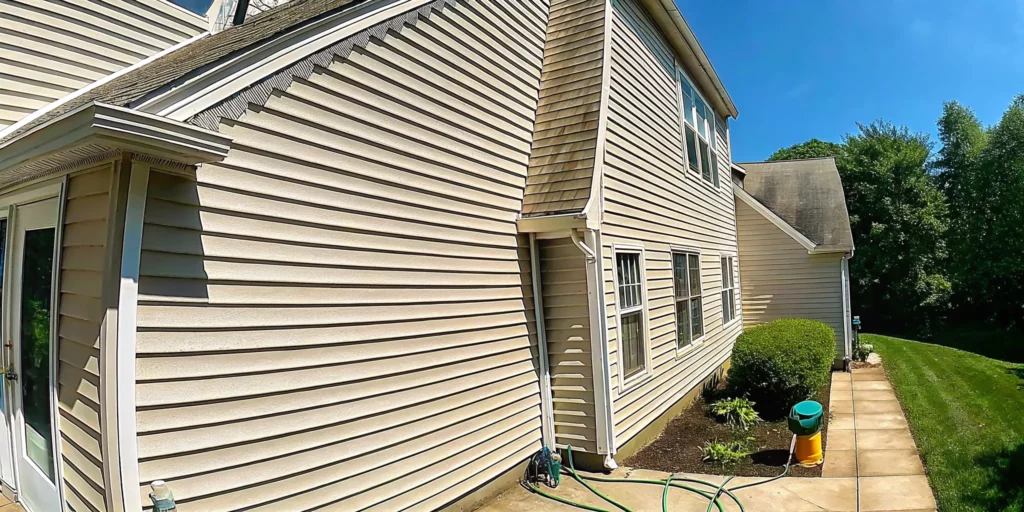
Vinyl siding also suits low-pressure cleaning because it has seams, overlaps, vents, and trim. A strong spray aimed upward can drive water behind panels. Low-pressure application gives the cleaning mix time to work while keeping the rinse controlled.
Stucco, painted finishes, and masonry
Stucco and painted siding can show wear, small cracks, or weak spots that are easy to miss from the ground. Soft washing treats the broad surface without making water force the main cleaning tool. A spot test helps confirm how the finish responds.
Brick, stone, and masonry need a closer look because their condition varies. Sound concrete may suit pressure washing, while aged mortar or porous sections may call for lower pressure. The right choice depends on the surface, joints, coating, and type of buildup.
Exterior walls also include shutters, soffits, fascia, and window trim. These parts may need different settings during one visit. A planned professional house cleaning method accounts for those changes instead of using one pressure level everywhere.
Wood, decks, fences, and delicate details
Wood decks, cedar siding, and fences have grain, fasteners, joints, and weathered areas. Low-pressure washing gives the operator more control around these details. The cleaning plan should match the wood type, its age, and any stain or sealant already present.
Other surfaces that often need a gentle approach include screens, awnings, outdoor furniture, composite boards, and decorative trim. Their frames, fabrics, coatings, or joints may not suit a strong spray. Test first, use low pressure, and rinse with care.
- Choose soft washing for delicate, coated, weathered, or layered surfaces.
- Reserve pressure washing for sound, sturdy materials when the surface condition allows it.
- Use separate settings when one exterior combines several materials.
What can go wrong with too much pressure?
The main risk is not pressure washing itself. Problems start when the force, nozzle, or working distance does not match the surface being cleaned.
The CDC describes pressure washers as tools for large, sturdy surfaces. That same force may not suit delicate materials found across a home’s exterior.
Shingles and siding
A narrow, strong spray can loosen shingle granules or lift shingle edges. It can also push water beneath roofing materials. These risks are why benefits of roof soft washing include a low-pressure approach suited to the roof surface.
Siding can also show the effects of excess force. A close spray may leave lines, etched spots, or uneven marks. Loose panels and aging seals need extra care because water can pass through small gaps.
Wood and finished surfaces
Wood requires a careful balance. Too much pressure can raise the grain, splinter soft areas, or carve visible lines into a deck or fence. The result may look uneven after the surface dries.
Paint, stain, and other coatings can peel or strip when the spray is too strong. A test spot helps show how a finish will respond. Even then, low pressure is often the safer choice for older or worn coatings.
- Use broad spray patterns rather than narrow, cutting streams.
- Keep the nozzle moving to avoid concentrated marks.
- Stop if the surface sheds material or changes texture.
Hidden water intrusion
Water does not need a large opening to move behind exterior materials. High-pressure spray aimed upward can reach lap joints, vents, window seals, and trim gaps. Moisture may then remain hidden after the visible surface dries.
This concern matters most near older caulk, loose siding, and roof edges. Low-pressure professional house cleaning methods reduce force around these areas while still addressing surface buildup.
The practical choice in soft washing vs pressure washing depends on the material and its condition. Pressure washing still fits sound concrete and other sturdy surfaces. Delicate, coated, or aging surfaces call for lower pressure and closer control.
How should homeowners choose the right cleaning method?
The choice between soft washing vs pressure washing starts with the surface, not the machine. Homeowners should also consider the stain, the surface condition, and the risks near the work area. A method that suits sound concrete may be too harsh for an older roof or painted siding.
A step-by-step surface check
Use this sequence before choosing a method. If any answer is unclear, pause and ask a trained exterior cleaner to inspect the area.
-
Name the surface. Note whether you are cleaning roofing, siding, wood, painted material, masonry, or sound concrete. Delicate surfaces often call for low-pressure care.
-
Identify the stain. Look for organic growth, loose dirt, grease, or a deep set mark. The stain type helps determine whether cleaning agents or water force should do the main work.
-
Check the condition. Look for loose shingles, cracked mortar, peeling paint, soft wood, and weak seals. Existing wear raises the chance that cleaning could make a problem worse.
-
Review nearby risks. Mark windows, vents, outlets, plants, pets, and areas where people may pass. The CDC warns that strong pressure-washer spray can cause serious wounds and throw objects toward people nearby.
-
Match force to the job. Choose low-pressure soft washing for delicate materials or growth that needs treatment. Reserve pressure washing for sturdy surfaces that can safely handle more force.
-
Test or seek help. Test a small, hidden area only when the surface and equipment are well understood. Otherwise, request a professional assessment before work starts.
When low pressure makes sense
Roofs, siding, painted areas, and older materials need a cautious approach. Low-pressure soft washing focuses on treating the source of organic buildup without relying on high water force. Homeowners comparing methods for these areas can review the soft washing vs pressure washing factors in more detail.
Surface condition matters as much as surface type. Sound siding and worn siding may need different plans, even when both have the same stain. A professional can adjust the cleaning mix, pressure, dwell time, and rinse method after checking the material.
When pressure may fit the job
Pressure washing can suit large, sturdy surfaces when the material is sound and the operator controls the spray. The CDC lists buildings, farm equipment, and roads as examples of sturdy surfaces cleaned with pressure washers. On a home, sound concrete may fit this method, but cracks and weak joints still need care.
When the surface is mixed, aged, high, or hard to identify, an assessment is the safer next step. A trained cleaner can separate areas by material and choose a method for each one. This avoids treating the whole property as if every surface has the same needs.
Why local conditions matter on Long Island
The soft washing vs pressure washing choice starts with the property, not the machine. Long Island homes can have damp, shaded areas beside dry, sunny walls. A careful inspection shows where buildup sits and which surfaces need a gentler plan.
Moisture, shade, and landscaping
Shade from trees, fences, and nearby homes can affect how long an exterior stays damp after rain. Dense plants may also limit access and hide small sections of siding or masonry. Before cleaning, a professional can note these areas and plan how to protect nearby landscaping.
The right plan may use low pressure and a suitable treatment on siding, trim, or other sensitive finishes. It should also account for runoff, plant beds, outdoor furniture, and open windows. This property-by-property approach is central to professional house cleaning methods.
Salt air and mixed surfaces
Salt residue may be part of the inspection for homes near the water, but exposure differs by location. The cleaner should first check what is on the surface and how firmly it is attached. That step helps avoid treating every stain or patch of buildup the same way.
One home may combine vinyl siding, painted trim, shingles, brick, concrete, wood, and glass. Each material has its own condition, finish, and nearby features. The CDC describes pressure washers as tools for large, sturdy surfaces and warns that their strong spray can cause serious wounds.
A treatment matched to the property
A professional inspection should map the materials, test uncertain areas, and note signs of wear before work starts. It can also separate sturdy surfaces from those that call for low pressure. This makes the cleaning choice more precise than using one method across the whole property.
Lasting results depend on matching the process to the surface and the type of buildup found. A sound plan gives the treatment time to work, then uses a controlled rinse. For roofs and other delicate areas, homeowners can review the benefits of roof soft washing before choosing a method.
Frequently Asked Questions
Can I use my pressure washer as a soft wash system?
A pressure washer can apply a cleaning solution through certain low-pressure tips or injectors, but that does not make it a complete soft wash system. Proper soft washing controls pressure, solution strength, dwell time, and rinsing for each surface. Use extreme care around people and property because the CDC warns that strong pressure washer spray can cause serious wounds.
Is soft washing better than pressure washing for house exteriors?
Soft washing is usually the better choice for delicate house exteriors, including siding, painted surfaces, and roof shingles. Its low pressure reduces stress on those materials while the cleaning solution addresses organic growth. Pressure washing remains useful for sturdy surfaces, such as sound concrete and some masonry. The right method depends on the material, its condition, and the type of buildup.
How much does it cost to soft wash a house?
The cost to soft wash a Long Island house depends on its size, height, siding material, access, and the level of organic growth. Homes with steep grades, difficult access, or extensive buildup generally require more time and preparation. Ask for a written quote that identifies the surfaces included, cleaning method, plant protection steps, and any optional services.
Does soft washing damage roof shingles?
Proper soft washing uses low pressure and a surface-appropriate cleaning solution, so it should not damage sound roof shingles. Problems can occur when an operator uses excessive pressure, an incorrect mixture, or poor rinsing practices. Before cleaning, the roof should be checked for loose, brittle, or already damaged shingles that may need repair or special handling.
What surfaces should be soft washed instead of pressure washed?
Soft washing is generally suited to siding, painted finishes, stucco, roof shingles, wood fencing, and other surfaces that high pressure could mark or loosen. Pressure washing is typically reserved for durable surfaces, such as sound concrete, where controlled force can remove stubborn buildup. Surface age, existing damage, coatings, and manufacturer guidance should always shape the final cleaning method.
Ready to Protect Your Long Island Home’s Exterior?
Waiting to address buildup can leave your siding, roof, and outdoor surfaces looking worn while making the next cleaning job harder. Starting now gives you time to choose the right low-pressure or high-pressure method before seasonal grime becomes a larger concern. A professional assessment also helps you avoid using too much pressure on delicate materials or too little force on durable surfaces.
Ready to plan a safer, more effective exterior cleaning project for your Long Island home? Request a free estimate from Gulf2Bay Softwash to discuss your surfaces, goals, and preferred timeline. Contact the team now so you can schedule the right service before dirt and organic growth become more difficult to manage.