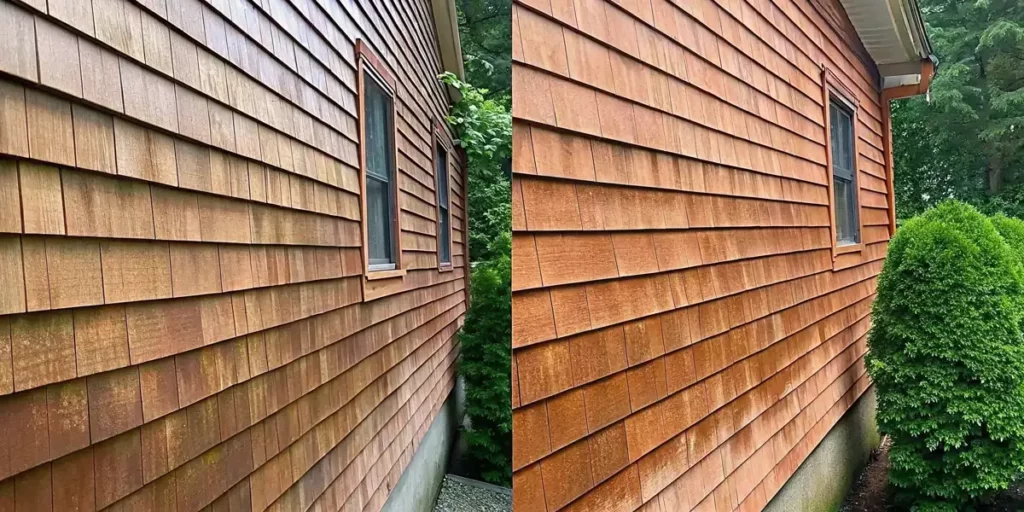
Green moss, dark mildew, and blotchy weathering can change the appearance of a cedar exterior. Removing the growth safely takes more than a forceful rinse. Cedar shingle soft washing Long Island homeowners request should begin with a close evaluation of the wood, the staining, and the conditions that keep the surface damp.
Request a free cedar cleaning estimate from Gulf2Bay Softwash
The short answer: Cedar shingles can often be cleaned with a carefully selected low-pressure treatment that addresses organic growth without relying on high water pressure. Weathering, coatings, damage, and moss can look similar from the ground. Gulf2Bay Softwash inspects and tests the cedar before recommending a full-surface treatment.
The goal is not to force every shingle into one bright color. It is to remove suitable buildup while respecting the natural character and current condition of the cedar. This guide focuses on cedar siding and exterior wall shingles, which keeps it distinct from advice about roof cleaning in the Hamptons.
Why cedar shingle soft washing on Long Island needs a gentle approach
Cedar is a porous natural material, and every wall ages differently. Gulf2Bay Softwash uses an inspection-first approach because the correct cleaning plan depends on the condition of the shingles, the type of growth, past coatings, and nearby property features.
Cedar needs a material-specific plan
A professional evaluation checks for loose shingles, split wood, failed coatings, dark stains, moss, and mildew before work starts. Instead of beginning with force, the cleaner selects a low-pressure process intended to treat growth while limiting avoidable wear.
The evaluation also separates normal weathering from active growth and damage. That distinction shapes the treatment plan. It prevents needless cleaning in weak areas and helps the homeowner understand which marks may remain after responsible cleaning.
A similar condition check helps homeowners choose deck cleaning versus deck restoration for other exterior wood.
This careful approach matters because weathered cedar does not respond like vinyl, brick, or concrete. Some areas may need cleaning alone, while faded or worn sections may need more detailed care. Gulf2Bay Softwash’s guide to restoring weathered cedar shingles explains why the wood’s condition should guide the next step.
Organic growth is more than a surface mark
Moss and mildew often appear where moisture lingers, including shaded faces, joints, and rough grain. The EPA explains that moisture control is key to mold control. Cleaning should address visible growth and the damp conditions that help it return, not simply remove the color.
A gentle treatment gives an appropriate cleaning solution time to work without relying on aggressive spray force. The surface can then be rinsed with control. This measured process helps reduce the risk of torn fibers, uneven marks, or water driven behind shingles.
Is it moss, mildew, or natural cedar weathering?
A dark or gray cedar shingle does not always need the same treatment. Gulf2Bay Softwash evaluates the color, texture, location, drainage, and surrounding shade before recommending cleaning. This step separates removable organic growth from natural weathering, coating wear, and possible wood damage.
Clues on the shingle surface
Moss often forms raised, soft patches with a green or brown color. It may collect along shingle edges, beneath overhangs, or where leaves hold moisture. Algae tends to appear as flatter green or dark streaks rather than a thick layer.
Mildew can look powdery, spotted, or dark on the surface. It often appears where airflow is poor and the wood stays damp. Nearby drainage, shade, and vegetation can therefore matter as much as the visible stain.
Natural gray versus unwanted growth
Cedar naturally changes color as sun, rain, and air reach its surface. This weathering often creates a more even silver-gray tone across exposed shingles. Old coating wear can also cause dull color, but it does not usually form a soft or raised layer.
Look at how the color follows the building. A uniform gray face may point to weathering. Blotchy areas near trees, gutters, or shaded walls may suggest organic growth. A safe review also checks for loose shingles, split wood, soft areas, and signs of trapped moisture.
A small test area can show how the surface responds before broader work continues. It helps separate removable growth from lasting weathering or stains and sets realistic expectations for the finished appearance.
Soft washing versus high-pressure cleaning for cedar
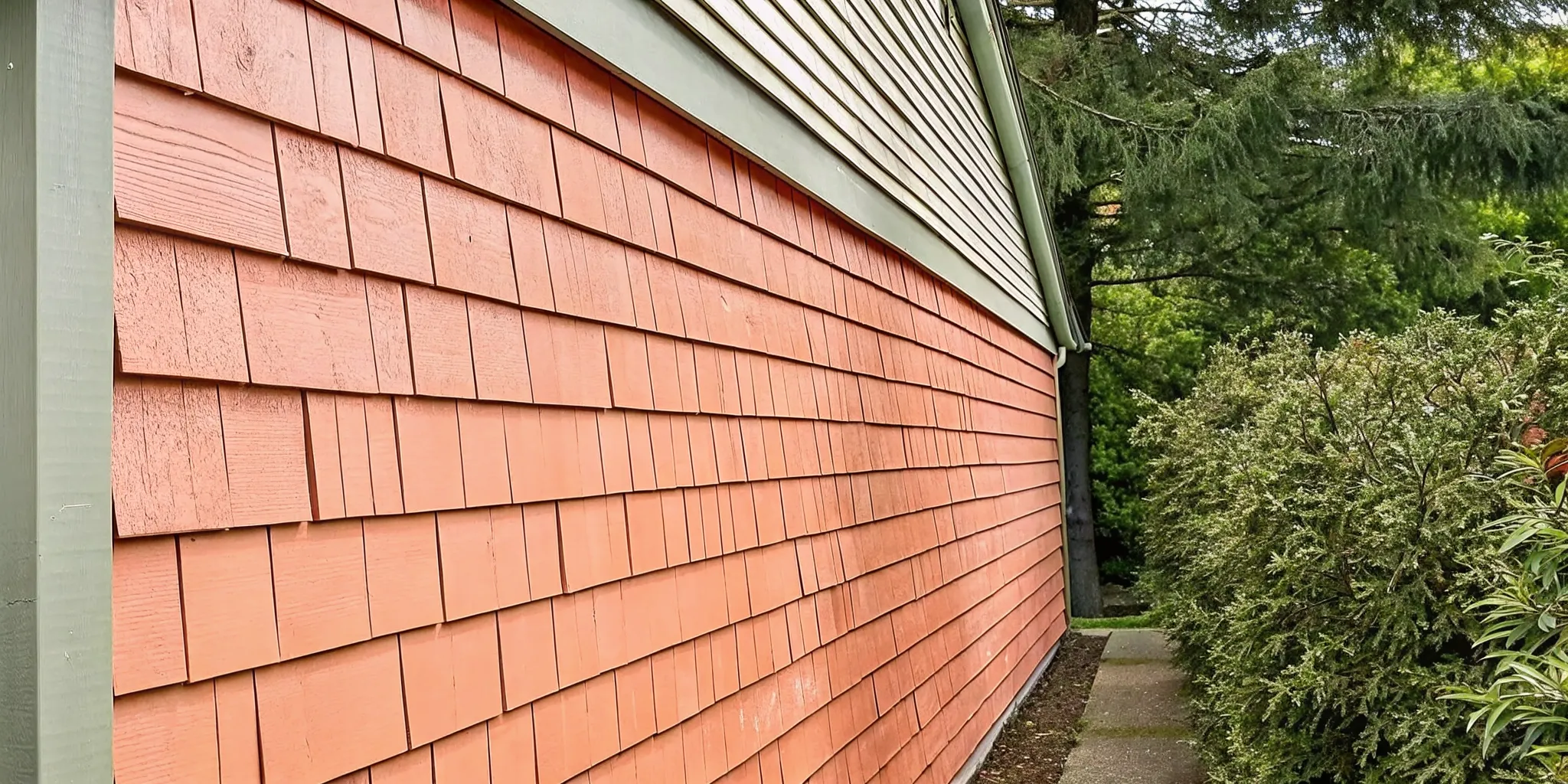
Cedar needs a measured cleaning plan because its surface changes as it ages. High pressure may remove visible growth quickly, but it can also raise fibers or leave uneven marks. Soft washing relies on low-pressure application and a cleaning solution selected for the condition of the wood.
| Cleaning factor | Soft washing | High-pressure cleaning |
|---|---|---|
| Main cleaning action. | Solution and controlled rinse. | Water force. |
| Planning for aged cedar. | Adjusted after inspection and testing. | Depends heavily on nozzle handling. |
| Surface risk. | Lower force limits mechanical wear. | May raise fibers or leave lines. |
| Organic buildup. | Treats growth before rinsing. | May remove visible material first. |
Why aggressive DIY cleaning can go wrong
A consumer pressure washer can seem easy to control on a driveway, yet cedar responds differently. Weathered shingles may have softer spots, loose edges, or past repairs. Pressure that looks harmless on one area may leave another area rough or streaked.
Strong household mixes also create risk when they are guessed rather than tested. Product choice, dilution, dwell time, runoff control, and rinsing all matter. Any cleaning product should be used according to its label, and nearby landscaping should be considered before application.
Professional care should balance visible improvement with the wood’s current condition. That may mean accepting some deep discoloration instead of forcing a brighter result. A responsible evaluation explains those tradeoffs before work begins.
What happens during professional cedar shingle cleaning?
Professional cedar cleaning follows a planned sequence rather than a one-setting spray routine. For cedar shingle soft washing on Long Island, Gulf2Bay Softwash first studies the wood, nearby plants, runoff paths, and access points. Every later step responds to what that review reveals.
- Inspect the cedar. Check for loose pieces, splits, decay, heavy growth, old coatings, and uneven weathering. This separates surface staining from damage cleaning cannot fix.
- Treat a test area. Work on a small, less visible section to see how the cedar responds and set realistic expectations.
- Protect plants and property. Move or cover sensitive items, manage nearby landscaping, and shield fixtures from unwanted contact.
- Prepare controlled work zones. Plan where treatment and rinse water will travel, then work in manageable sections.
- Apply a gentle treatment. Coat the cedar evenly without using force that could disturb soft wood fibers or loosen shingles.
- Rinse with control. Remove loosened soil and treatment residue while managing spray direction around seams and windows.
- Review after cleaning. Check the result and identify areas that may need more drying time, repair, or a separate restoration step.
Some damp shingles may look darker until they dry. A sound post-clean evaluation does not promise to erase deep weathering or damage through increasingly aggressive cleaning. It identifies what cleaning accomplished and whether any separate restoration work should be considered.
Ask Gulf2Bay Softwash to evaluate your cedar before choosing a cleaning method
When cleaning may lead to a cedar restoration discussion
Cleaning and restoration are related, but they are not identical. Cleaning focuses on suitable buildup and organic growth. Restoration may include additional preparation and finishing steps based on the wood’s condition and the homeowner’s goals.
Signs that cleaning alone may not address
Peeling coatings, blue-black tannin stains, widespread fading, damaged shingles, and deep discoloration may call for more than a wash. Cleaning also cannot repair split, loose, or decayed cedar. Those conditions should be identified rather than hidden behind unrealistic promises.
Gulf2Bay Softwash offers a multi-step cedar restoration service for cedar siding, decks, and fences. The service page explains how inspection and cleaning can be followed by preparation, priming, sealing, or staining when appropriate.
Setting realistic expectations protects the cedar
Cedar exteriors have natural variation. Sun exposure, rain, shade, repairs, and previous finishes can cause neighboring shingles to respond differently. A test area helps demonstrate the likely result before a homeowner commits to a larger project.
The best result is not always the brightest possible result. The best result is an informed plan that removes suitable buildup without trading short-term color change for unnecessary wear. Gulf2Bay Softwash can explain whether cleaning, restoration, repair, or a combination makes sense for the visible conditions.
How can Long Island homeowners care for cedar after cleaning?
After cleaning, homeowners can help cedar stay drier by improving airflow and correcting repeated wetting. Gulf2Bay Softwash recommends watching the conditions around each wall, especially shaded areas, nearby vegetation, sprinklers, and drainage paths that can encourage organic regrowth.
Reduce the conditions that help growth return
The best maintenance plan is based on conditions around the house rather than a rigid calendar. Long Island homes can face humid summers, shaded elevations, nearby trees, salt air in coastal areas, and repeated wetting from sprinklers or poor drainage.
- Trim back vegetation that touches the siding or limits airflow.
- Redirect sprinklers so they do not repeatedly wet cedar shingles.
- Keep gutters and downspouts working so runoff does not spill across the exterior.
- Watch shaded walls and areas beneath dense trees for early regrowth.
- Check loose, split, or damaged shingles and arrange repairs when needed.
Know when to request another evaluation
Look for patchy green growth, dark spotting, loose or damaged shingles, and areas that stay damp longer than the rest of the wall. A gray tone by itself does not necessarily mean the surface is dirty. If you are unsure whether you are seeing normal weathering or biological growth, request an evaluation before trying a cleaner or pressure washer.
Homeowners considering broader exterior maintenance can also review Gulf2Bay Softwash’s house washing service. Different exterior materials require different methods, which is why a material-specific plan matters.
How should homeowners prepare for a cedar evaluation?
A useful cedar evaluation begins with clear access and a short history of the surface. Gulf2Bay Softwash can make a more informed recommendation when homeowners identify recurring damp areas, past coatings, previous cleaning attempts, repairs, and the appearance they hope to achieve.
Share what you know about the exterior
If possible, note when the cedar was installed, stained, painted, repaired, or last cleaned. Point out areas that stay wet after rain or irrigation. Mention any products previously used on the surface, even if the results were limited.
Photos taken at different times can also help. Morning and afternoon light may reveal texture or color differences that are hard to see during one visit. Images captured after rain can show which walls or shingle courses dry slowly.
Make the work area easier to inspect
Move lightweight furniture and decorations away from the wall when practical. Make sure gates are accessible and identify delicate plants, outdoor electrical fixtures, or areas with known leaks. The crew can then plan protection and access around actual site conditions.
An evaluation is also the right time to ask what improvement is realistic. Homeowners should understand which marks are likely to respond to cleaning and which may reflect weathering, coating wear, or wood damage. Clear expectations support a better decision.
Frequently asked questions about cedar shingle soft washing
Can cedar shingles be soft washed?
Yes, cedar shingles can often be cleaned with a carefully selected low-pressure approach. The cedar should be inspected first because its age, condition, existing finish, and type of staining can change the appropriate method.
Will soft washing remove moss and mildew from cedar?
A professional soft washing treatment may address moss, mildew, algae, and other organic growth on cedar. Results depend on what is growing, how long it has been present, and the condition of the wood. A test area helps set realistic expectations.
Is gray cedar a sign that it needs cleaning?
Not always. Cedar commonly develops a gray, weathered appearance as it ages. Uneven dark spots, green growth, or consistently damp areas may point to a different issue that deserves evaluation.
Why should I avoid high pressure on cedar siding?
Excessive pressure can affect the wood surface, drive water where it does not belong, or create an uneven appearance. Cedar cleaning should be matched to the material and its condition rather than treated like cleaning concrete.
Does cleaning restore damaged or heavily weathered cedar?
Cleaning can address suitable surface buildup, but it cannot repair damaged shingles or reverse every sign of weathering. An evaluation can determine whether separate repair or restoration work should be discussed.
Get a cedar cleaning evaluation for your Long Island home
Moss, mildew, and weathering do not all call for the same response. Gulf2Bay Softwash can evaluate your cedar siding or shingles, explain the available options, and recommend a gentle approach based on what the surface actually needs.
Request a free estimate for your Long Island cedar exterior.