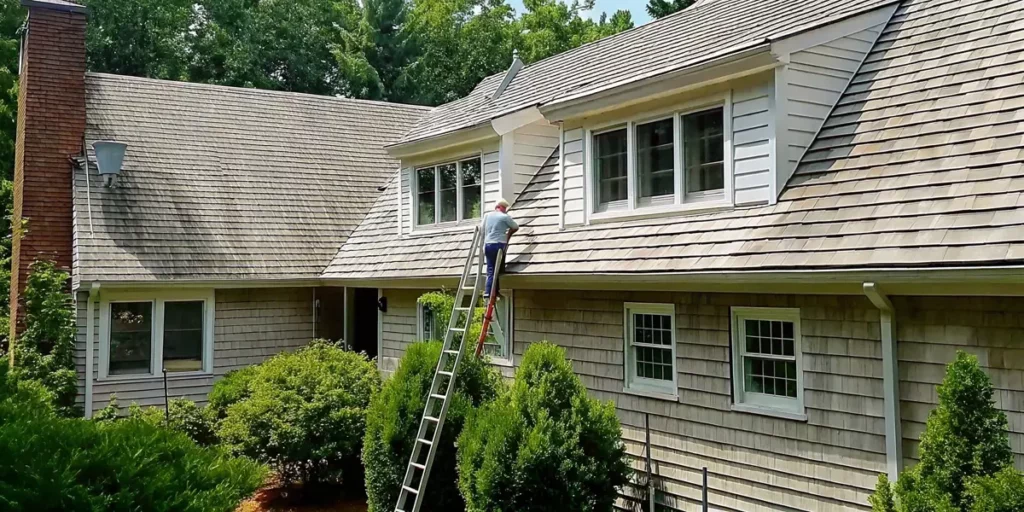
Those dark trails are not just dirt. Black streaks on roof surfaces are usually algae colonies that spread across shingles where moisture lingers. They can make an otherwise well-kept Long Island or Hamptons home look neglected. The good news is that a careful roof soft wash can remove the staining without subjecting shingles to damaging high pressure.
Request your free roof cleaning estimate from Gulf2Bay Softwash.
Before choosing a cleaner or climbing a ladder, it helps to understand what the streaks are, why they appear, and which removal methods are appropriate. This guide explains the safest response and the practical steps that can reduce future growth.
Black Streaks On Roof: What Causes Black Streaks on a Roof?
Black roof streaks are usually colonies of an airborne cyanobacteria called Gloeocapsa magma. The growth is especially noticeable on asphalt shingles, where it forms a dark protective coating. Shade, humidity, slow drying, and organic debris create favorable conditions, so streaks often appear first on north-facing or tree-covered roof sections.
Gloeocapsa magma spores travel through the air. Once they land on a suitable roof, they can multiply and gradually form visible stains. This explains why several homes in the same neighborhood may develop similar streaking even when the owners follow different maintenance routines.
Asphalt shingles commonly contain limestone filler, which can support the growth. The dark color is the organism’s protective outer coating, not simply a layer of road dust or soot. Because the colonies spread over time, a few narrow streaks can eventually become broad dark patches.
Why Long Island roofs are susceptible
Long Island’s humid coastal climate gives roof growth regular access to moisture. A roof does not need to leak for algae to thrive. Morning dew, summer humidity, rain, and limited sunlight can keep parts of the shingle surface damp long enough to support it.
North-facing slopes usually receive less direct sun. Overhanging branches add shade and may drop leaves or needles that trap moisture. Valleys, areas below roof penetrations, and sections with restricted airflow can also dry more slowly than open, sunlit slopes.
Algae, moss, and lichen are different
Dark streaks are most often associated with algae, but roofs may also develop moss or lichen. Moss has a soft, raised appearance and holds water. Lichen forms flatter, crust-like patches that attach firmly to the surface. These growths may require a different treatment plan and more time to release.
A professional inspection helps identify the growth before cleaning begins. It also creates an opportunity to note loose shingles, damaged flashing, or other conditions that cleaning will not repair.
Why Black Roof Streaks Deserve Attention
Black roof streaks deserve attention because they spread, reduce curb appeal, and can hide other roof conditions. Algae staining alone does not prove that a roof needs replacement, but ignoring roof growth allows it to become more established. Early assessment helps homeowners choose appropriate cleaning and identify unrelated damage before it worsens.
A streaked roof can change the appearance of the entire property. On premium homes in the Hamptons and across Long Island, the contrast is particularly noticeable against clean siding, trim, masonry, and landscaping. Cleaning the roof can restore a more consistent exterior without changing its materials.
The streaks can also make a roof harder to evaluate from the ground. Dark, uneven staining may obscure subtle color differences or surface conditions. Cleaning is not a substitute for a roofing inspection, but a clean surface makes ongoing visual maintenance more practical.
Do black streaks mean the roof is failing?
No. Black streaks do not automatically mean the roof is leaking, structurally unsound, or due for replacement. Their presence usually indicates biological growth and favorable moisture conditions. The roof’s age, installation, ventilation, flashing, shingle condition, and leak history are separate factors.
That distinction matters. A homeowner should not replace a serviceable roof solely because it looks stained. Likewise, cleaning should never be presented as a repair for curled shingles, active leaks, rotten decking, or failed flashing. Those conditions need evaluation by a qualified roofing professional.
Why waiting can make cleaning more involved
New streaks may occupy only a small area. As colonies spread and other growth joins them, treatment can become more involved. Moss and lichen may not disappear immediately after treatment because aggressive scraping could damage the roof surface. A patient, material-appropriate approach is safer than trying to force an instant result.
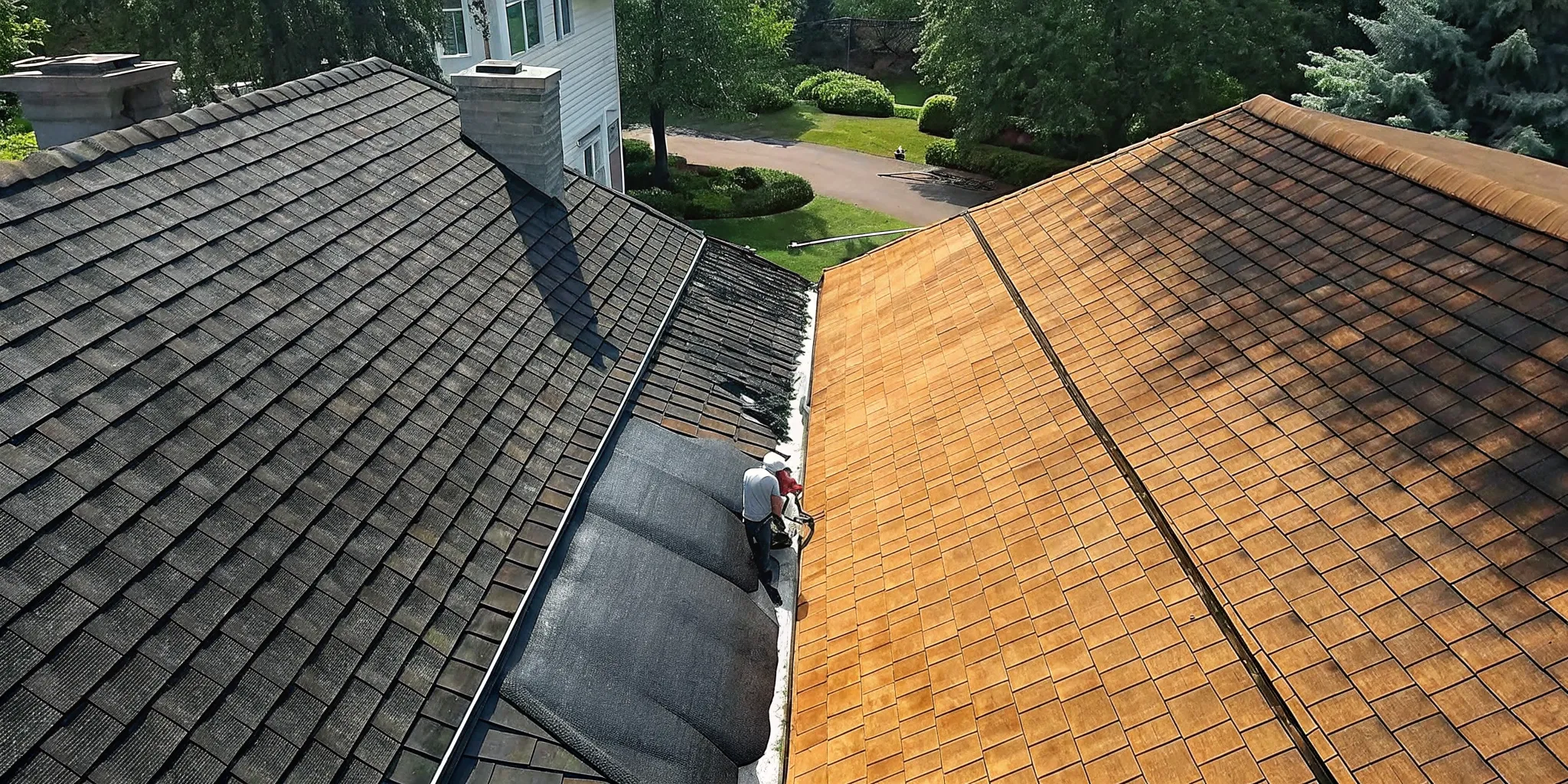
How Professionals Safely Remove Black Roof Streaks
Professionals remove black roof streaks with a soft wash rather than a high-pressure blast. Gulf2Bay Softwash applies biodegradable cleaning solutions at no more than 90 PSI, allowing the treatment to address biological growth while protecting the roof surface. The process also includes property preparation, controlled application, and a final inspection.
Safe roof cleaning begins before any solution reaches the shingles. The crew evaluates the roof material, pitch, access points, visible growth, drainage paths, gutters, landscaping, and nearby exterior features. Any signs of damage that could affect the cleaning plan should be discussed first.
Step 1: Prepare the property
Preparation helps keep the work controlled. Outdoor items may be moved away from the work zone, and sensitive landscaping is identified. Downspouts and runoff paths are considered so the crew knows where water and treatment solution will travel.
Plants near the home may be pre-wet and monitored during the service. Windows, siding, gutters, patios, and other nearby surfaces also receive attention as part of a whole-property approach.
Step 2: Apply the treatment at low pressure
The cleaning solution, not water force, performs the primary cleaning action. Gulf2Bay’s roof soft washing process uses no more than 90 PSI. That is a key difference from conventional pressure washing, which relies on a forceful stream to strip material from a surface.
Biodegradable cleaning solutions are applied evenly to the affected areas. The solution is given time to work on the biological staining. Exact treatment strength and dwell time can vary with the roof material, weather, growth level, and site conditions.
Step 3: Inspect the result
After treatment, the crew reviews the roof and surrounding property. Algae streaks typically respond during cleaning, while established moss or lichen can take longer to weather away after being treated. Forcing attached growth off with aggressive pressure or scraping can do more harm than allowing it to release naturally.
Homeowners looking for a closer overview of the service can review Gulf2Bay’s professional roof cleaning service. Gulf2Bay also provides a 5-year warranty on roof cleanings, giving homeowners a clear service differentiator after the work is complete.
Get a free estimate for low-pressure roof soft washing.
Soft Washing vs. Pressure Washing and DIY Cleaning
Soft washing is the appropriate choice for most algae-stained asphalt shingle roofs because it treats growth with cleaning solution and very low pressure. Pressure washing can dislodge protective granules or drive water beneath shingles. DIY treatment adds chemical-handling, ladder, runoff, and application risks that homeowners should weigh carefully.
The three approaches may sound similar because each involves liquid application, but they work in fundamentally different ways. Soft washing depends on a targeted treatment. Pressure washing depends on mechanical force. DIY cleaning can involve either approach, often without professional equipment, property-protection procedures, or roof access training.
Why high pressure is the wrong tool
Asphalt shingles have a protective granular surface. A concentrated high-pressure stream can loosen those granules, disturb shingle edges, or push water into places it should not enter. Damage may not be obvious from the ground immediately after cleaning.
Pressure settings alone do not tell the whole story. Nozzle choice, distance, spray angle, roof condition, and operator technique all affect impact. Avoiding a conventional pressure washer on shingles removes an unnecessary source of risk.
Why DIY roof cleaning is difficult
Store-bought roof cleaners may be marketed as simple spray-on fixes, but roof work requires more than selecting a bottle. Homeowners must consider the roof material, growth type, dilution, application consistency, runoff, landscaping, weather, and safe access. A wet treated roof can also become extremely slippery.
Mixing products or using stronger-than-directed concentrations can create hazards and damage surrounding materials. Scrubbing or scraping may loosen granules and harm shingles. If a homeowner chooses any DIY maintenance, it should stay within product instructions and roof manufacturer guidance, without walking on unsafe slopes.
A practical comparison
- Confirm the staining is biological growth rather than roof damage.
- Protect plants, siding, and nearby surfaces before treatment.
- Apply the correct cleaning solution at low pressure.
- Inspect the roof and allow the treatment time to finish working.
| Method | Primary action | Main concern |
|---|---|---|
| Professional soft washing | Treats biological growth with solution and low pressure | Requires correct solution, application, and property protection |
| Pressure washing | Uses water force to remove surface material | Can damage shingles or force water beneath them |
| DIY cleaner | Varies by product and application | Fall risk, inconsistent results, runoff, and misuse |
For more context on choosing a provider, see Gulf2Bay’s guide to selecting a Long Island roof cleaning service.
How Roof Material Changes the Cleaning Plan
Roof material changes the cleaning plan because asphalt shingles, cedar, metal, clay, and concrete respond differently to moisture, solutions, foot traffic, and agitation. A responsible cleaner identifies the material and visible condition first, then adjusts access and treatment. No single pressure setting, chemical mix, or timeline is suitable for every roof.
Black streaks are strongly associated with asphalt shingles, but dark organic staining can appear on other roofing materials. The right response depends on more than appearance. Surface coatings, fasteners, seams, age, previous repairs, and manufacturer instructions can all affect the plan.
Asphalt shingles
Asphalt shingles require a low-pressure approach that preserves their granular surface. The cleaner should avoid aggressive brushing and any spray technique that could lift shingle edges or send water beneath them. Fragile, loose, curled, or missing shingles may need roofing attention before cleaning.
Cedar and wood roofing
Wood roofs require specialized judgment. Excessive pressure can erode soft fibers and leave the surface rough or uneven. The cleaner must account for wood condition, coatings, moisture, and any signs of decay. Gulf2Bay’s broader exterior restoration experience includes roof cleaning designed to prevent avoidable repair needs.
Metal, clay, and concrete
Metal roofing can have painted or factory-applied finishes that should not be damaged by an incompatible cleaner or abrasive method. Seams and fasteners also need consideration. Clay and concrete tiles can be brittle, especially when aged, so foot traffic and access planning are critical.
A professional assessment is valuable because two roofs made from the same general material can still require different handling. Existing wear, repairs, coatings, pitch, and access limitations may change what can be cleaned safely.
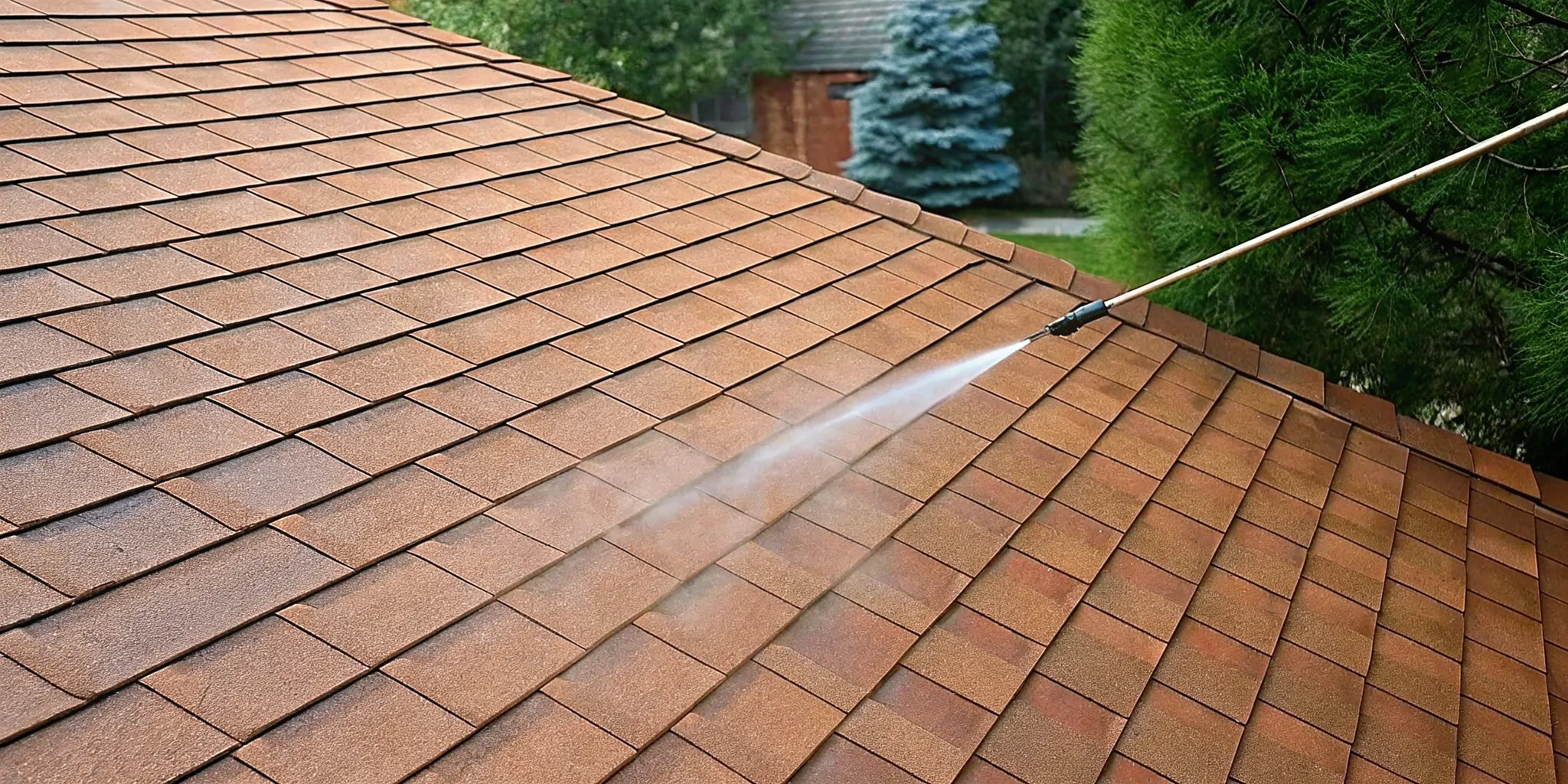
How to Help Prevent Black Streaks From Returning
Homeowners can reduce future black streaks by helping the roof dry efficiently and limiting debris buildup. Trim branches when appropriate, keep gutters flowing, and arrange safe removal of leaves or needles. Inspect the roof from the ground after storms and address drainage or roofing defects promptly. Prevention reduces favorable conditions but cannot block every airborne spore.
No maintenance step can guarantee that algae will never return. Spores are airborne, and Long Island’s humid climate remains favorable to growth. Still, thoughtful exterior maintenance can reduce moisture traps and make it easier to notice early changes.
Manage shade and debris
Branches that touch or closely overhang the roof can add shade, restrict airflow, and drop organic debris. When appropriate, have them trimmed by a qualified professional. Do not remove healthy trees solely because a roof has streaks, but address branches that create maintenance or safety concerns.
Leaves, needles, and twigs collect in valleys and behind roof features. They hold moisture and can interfere with drainage. Because roof access is dangerous, homeowners should use qualified help rather than walking on steep or wet surfaces.
Keep gutters and drainage working
Clear gutters help move rainwater away from roof edges and the foundation. Overflowing or obstructed gutters can keep nearby materials damp and create unrelated water problems. Downspouts should discharge appropriately, and visible drainage issues deserve prompt attention.
Watch for early changes
Look at the roof from a safe location a few times each year and after major storms. Note new dark streaks, raised moss, missing shingles, lifted edges, damaged flashing, or overflowing gutters. Photos taken from the same viewpoint can make gradual changes easier to compare.
A maintenance plan should separate cleaning from repair. Soft washing addresses biological staining. It does not correct leaks, damaged shingles, poor ventilation, or failed drainage components. For additional planning ideas, review the benefits of professional Long Island roof cleaning.
Frequently Asked Questions About Black Roof Streaks
Are black streaks on a roof mold?
Usually, black streaks on asphalt shingles are associated with Gloeocapsa magma, a type of cyanobacteria often described as roof algae. However, a roof may contain more than one kind of biological growth. A professional assessment can distinguish streak-like algae staining from raised moss, crust-like lichen, dirt, or another condition.
Can black roof streaks be removed without pressure washing?
Yes. Soft washing is specifically designed to clean using a treatment solution and low pressure rather than the force of conventional pressure washing. Gulf2Bay Softwash uses no more than 90 PSI for roof soft washing. This approach targets biological staining while avoiding the concentrated force that can harm shingles.
How quickly will the roof look clean?
The timeline depends on the growth and roof condition. Algae streaks often respond during treatment. Established moss or lichen may remain visible for a period after it is treated because it should be allowed to loosen and weather away rather than being aggressively scraped from the surface.
Does Gulf2Bay Softwash warranty roof cleaning?
Yes. Gulf2Bay Softwash offers a 5-year warranty on roof cleanings. The company also provides free estimates. Homeowners should review the service scope and warranty terms for their property before work begins so expectations, access, and any roof-specific concerns are clear.
Restore Your Roof With a Careful Soft Wash
Black roof streaks do not call for the strongest spray. They call for a careful assessment, the correct biodegradable cleaning solution, and controlled low-pressure application. Gulf2Bay Softwash serves Long Island and Hamptons homeowners with premium exterior restoration and roof soft washing at no more than 90 PSI.
A professional cleaning can remove distracting algae staining while respecting the roof material and surrounding property. With free estimates and a 5-year warranty on roof cleanings, Gulf2Bay gives homeowners a clear path from assessment to service.
Book your free roof cleaning estimate with Gulf2Bay Softwash.