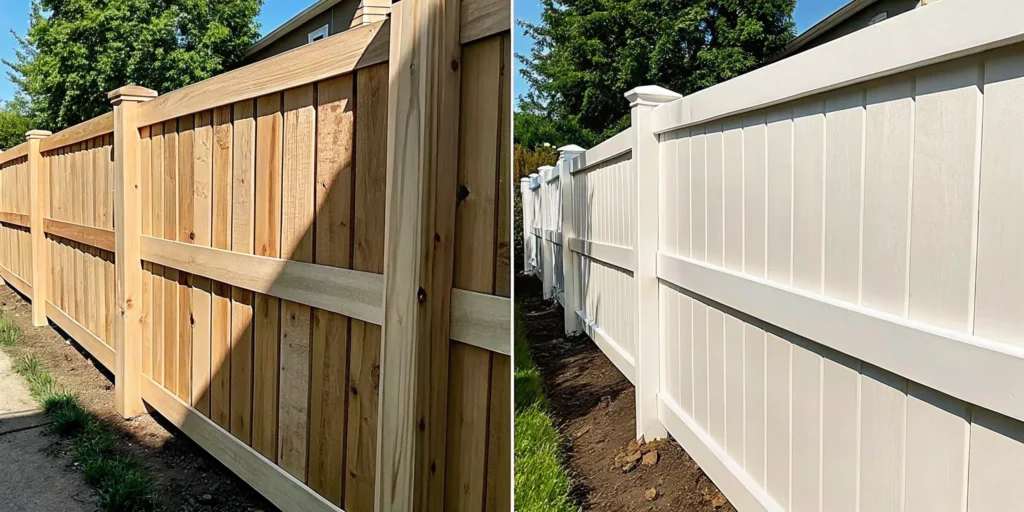
On a refined Long Island property, a fence is part of the architecture, not merely a boundary. One careless pass can raise cedar grain, expose uneven oxidation on vinyl, or disturb a carefully established landscape. Gulf2Bay Softwash approaches cleaning wood vs vinyl fence surfaces as a material-specific restoration decision, beginning with condition, finish, exposure, and the result the homeowner expects.
Request a professional fence cleaning assessment for your Long Island home.
Cleaning wood vs vinyl fence
Wood and vinyl can display similar green growth, gray film, or embedded grime, but they do not respond to cleaning in the same way. Wood is porous, variable, and vulnerable to raised grain. Vinyl is nonporous, yet susceptible to oxidation, scratching, displaced caps, and damage at seams. The most refined result comes from diagnosing the material and condition first, then selecting a measured cleaning process rather than relying on force.
What is the difference between cleaning wood and vinyl fencing?
Wood requires a low-pressure, grain-conscious process because it absorbs moisture and can splinter, fur, or discolor when treated aggressively. Vinyl generally releases surface growth more readily, but strong pressure can crack panels, mark the finish, or force water into joints. Both benefit from inspection, suitable cleaners, controlled dwell time, and a gentle rinse.
The essential distinction is how each fence interacts with water and contamination. On wood, organic growth may sit across the surface and within its porous structure. The species, age, finish, exposure, and previous maintenance all influence how a board responds. A cedar privacy fence with an aging stain should not be approached like unfinished pressure-treated pine. Even adjacent boards can weather differently due to irrigation, shade, or proximity to planting beds.
Vinyl does not absorb water like wood, but that does not make it invulnerable. Algae, pollen, road dust, and atmospheric residue collect on the surface, particularly around textured panels, rails, caps, and shaded sections. Older vinyl may also develop oxidation, which can resemble ordinary chalky dirt. Treating oxidation as simple grime and scrubbing aggressively can create an uneven appearance.
| Consideration | Wood fence | Vinyl fence |
|---|---|---|
| Surface behavior | Porous, variable, and responsive to moisture | Nonporous, with dirt and growth primarily on the surface |
| Common concerns | Algae, mildew, graying, raised grain, failing finish, rot | Algae, pollen, soil splash, oxidation, cracked panels |
| Primary cleaning risk | Furring, splintering, streaking, or excessive saturation | Etching, scratches, broken caps, or water forced into seams |
| Preferred approach | Inspect, test, apply a wood-appropriate treatment, rinse gently | Inspect, test for oxidation, treat surface growth, rinse gently |
| Aftercare | Allow to dry, then assess stain or sealer condition | Inspect joints, caps, lower rails, and any remaining oxidation |
The comparison is not about deciding which material is easier. It is about recognizing that a premium fence deserves a process calibrated to its composition and condition. For a closer look at the local context, read this guide to a cleaner, more polished Long Island backyard.
Why do Long Island and Hamptons conditions matter?
Long Island fences face recurring moisture, shaded growth, pollen, soil splash, and coastal residue. These conditions can make wood remain damp and cause vinyl to appear dull or streaked. A successful cleaning plan considers exposure, landscape design, drainage, irrigation, and proximity to the coast before selecting treatment strength, timing, and rinse technique.
On a carefully landscaped property, the fence often sits close to hedges, perennial borders, irrigation heads, stonework, or pool areas. These design features create microclimates. A sunny panel may remain relatively clear while the same fence turns green behind dense privet. Lower rails can collect soil splash after storms, and sprinkler overspray may leave repeated mineral marks in a narrow band.
Coastal exposure introduces another layer of maintenance. Fine airborne residue can settle on the fence and hold dust, while wind-driven rain reaches joints and sheltered faces that are easy to overlook. In the Hamptons, mature landscapes and long shaded boundaries can keep portions of a fence damp well after the open lawn has dried. That extended moisture encourages visible organic growth and can accelerate deterioration in already compromised wood.
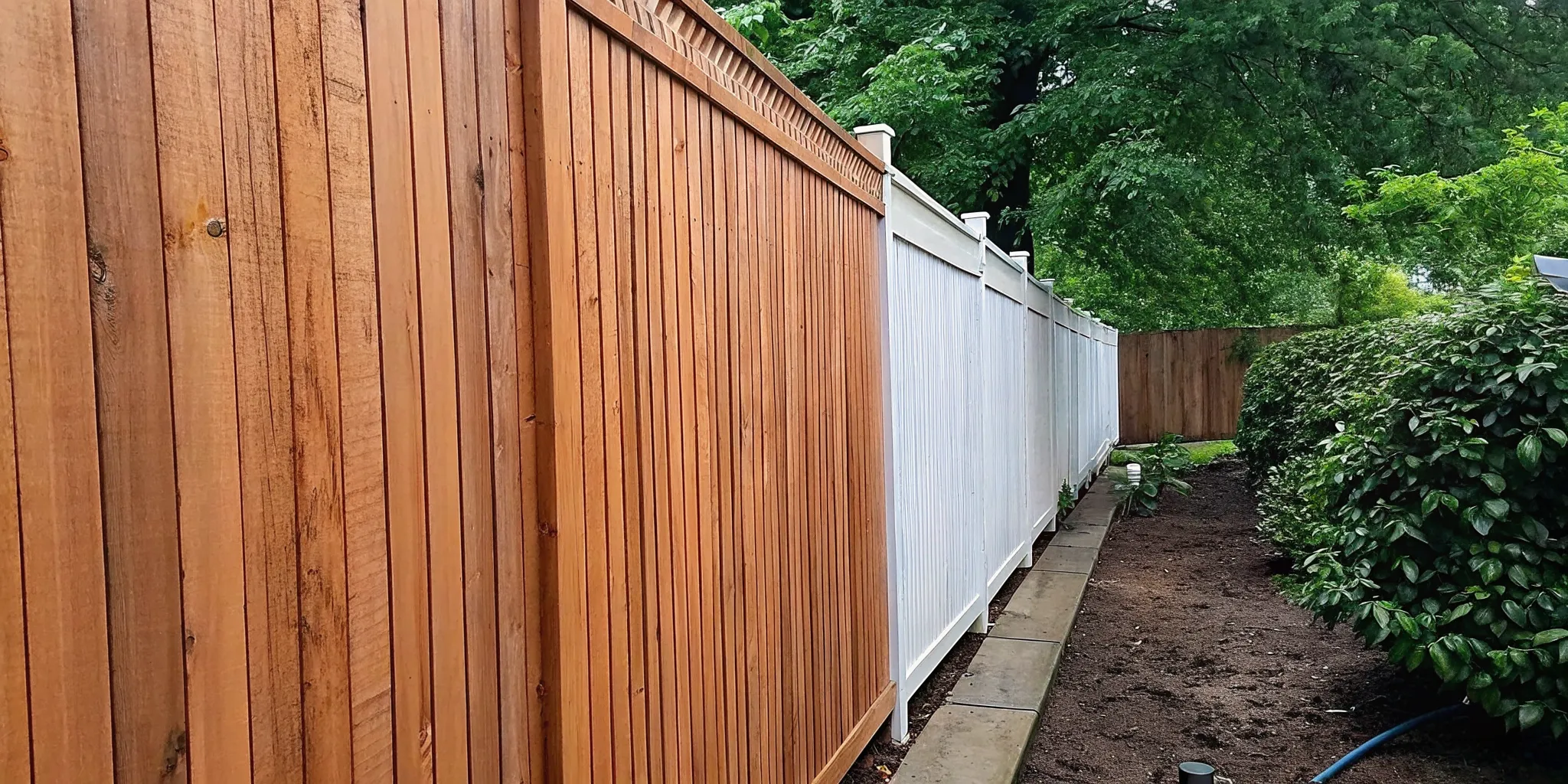
Seasonal timing matters as well. Spring pollen adheres to damp surfaces, summer irrigation contributes moisture, autumn leaf debris gathers along lower rails, and winter conditions can expose weak boards or brittle vinyl. A thoughtful maintenance program responds to what the property actually experiences rather than following an arbitrary schedule.
For high-value residential settings, protection of the surrounding landscape is part of the cleaning standard. Plants, painted surfaces, hardware, outdoor furniture, and nearby stone should be assessed before work begins. The result should be a cleaner fence without disrupting the visual harmony of the grounds.
How should a wood fence be cleaned safely?
Safe wood fence cleaning begins with a close condition assessment and a discreet test area. The process should use a compatible treatment and low-pressure rinse that removes unwanted growth without cutting into the grain. Fragile boards, failing stain, loose fasteners, and signs of decay should be identified before cleaning, not discovered during it.
Wood rewards restraint. High pressure may create a dramatic clean line in seconds, but it can also erode softer fibers and leave a rough, uneven surface. That damage becomes particularly visible once the wood dries or receives a new finish. It may also make future maintenance more difficult because damaged fibers hold debris and weather differently from intact boards.
Assess the boards, finish, and structure
Begin by walking both sides of the fence where access permits. Look for loose boards, unstable posts, protruding fasteners, peeling finish, deep splits, and areas that remain soft after dry weather. Distinguish surface graying from actual deterioration. Cleaning can improve appearance, but it cannot restore structural integrity to decayed wood or correct a failing post.
A discreet test area helps reveal whether the finish is stable and whether the selected treatment produces an even result. It also provides a realistic preview on older or previously refinished wood. This is especially important for custom cedar fencing, decorative gates, and sections near prominent entertaining areas.
Use chemistry and technique, not brute force
A suitable cleaning solution should be selected for the wood, finish, and type of growth present. The objective is controlled removal, followed by a thorough low-pressure rinse. Dwell time should be monitored so the treatment can work without drying on the surface. Nearby landscaping should be considered throughout application and rinsing.
Cleaning direction matters. Working methodically across boards supports an even appearance and makes it easier to monitor how the surface is responding. The operator should avoid lingering over stubborn marks with concentrated pressure. A stain that remains after proper treatment may be permanent discoloration, hardware bleed, or a sign of deterioration rather than removable dirt.
Allow proper drying before evaluating the finish
Wood often looks different when wet, so the final evaluation should wait until it has dried adequately. Only then can a homeowner accurately judge color consistency and the condition of an existing stain or sealer. If refinishing is planned, drying and preparation requirements should follow the finish manufacturer’s instructions.
Professional care is particularly valuable when a fence includes mixed ages of wood, detailed lattice, delicate caps, or an existing finish of uncertain condition. Gulf2Bay Softwash explains its approach to professional fence cleaning on Long Island for homeowners considering expert assistance.
How should a vinyl fence be cleaned safely?
Vinyl fence cleaning should remove surface growth and residue while preserving the panel finish, joints, caps, and hardware. Begin by checking for cracks and oxidation, then use an appropriate treatment and gentle rinse. Avoid aggressive pressure, abrasive scrubbing, and assumptions that every pale or chalky area is removable dirt.
Vinyl’s smooth appearance can make cleaning seem simple, yet premium results require careful diagnosis. Green growth commonly gathers on shaded faces and along the lower portion of panels. Pollen settles into textured finishes and around rails. Soil splash creates localized staining, while irrigation and mineral deposits may require a different response than organic growth.
Identify oxidation before cleaning
A chalky residue that transfers to a clean cloth may indicate oxidation. Because oxidation affects the surface itself, it should not be treated as ordinary dirt. An overly aggressive attempt to remove it can create inconsistent sheen or visible cleaning marks. Testing allows the cleaning plan and homeowner expectations to be aligned before the full fence is treated.
Protect seams, caps, and older panels
High-pressure water can enter joints, loosen caps, or damage brittle components. It can also force debris into areas that are difficult to rinse. A controlled application and gentle rinse provide a more considered alternative. Decorative inserts, gate hardware, and transitions between vinyl and other materials deserve particular attention.
Finish with a detailed visual inspection
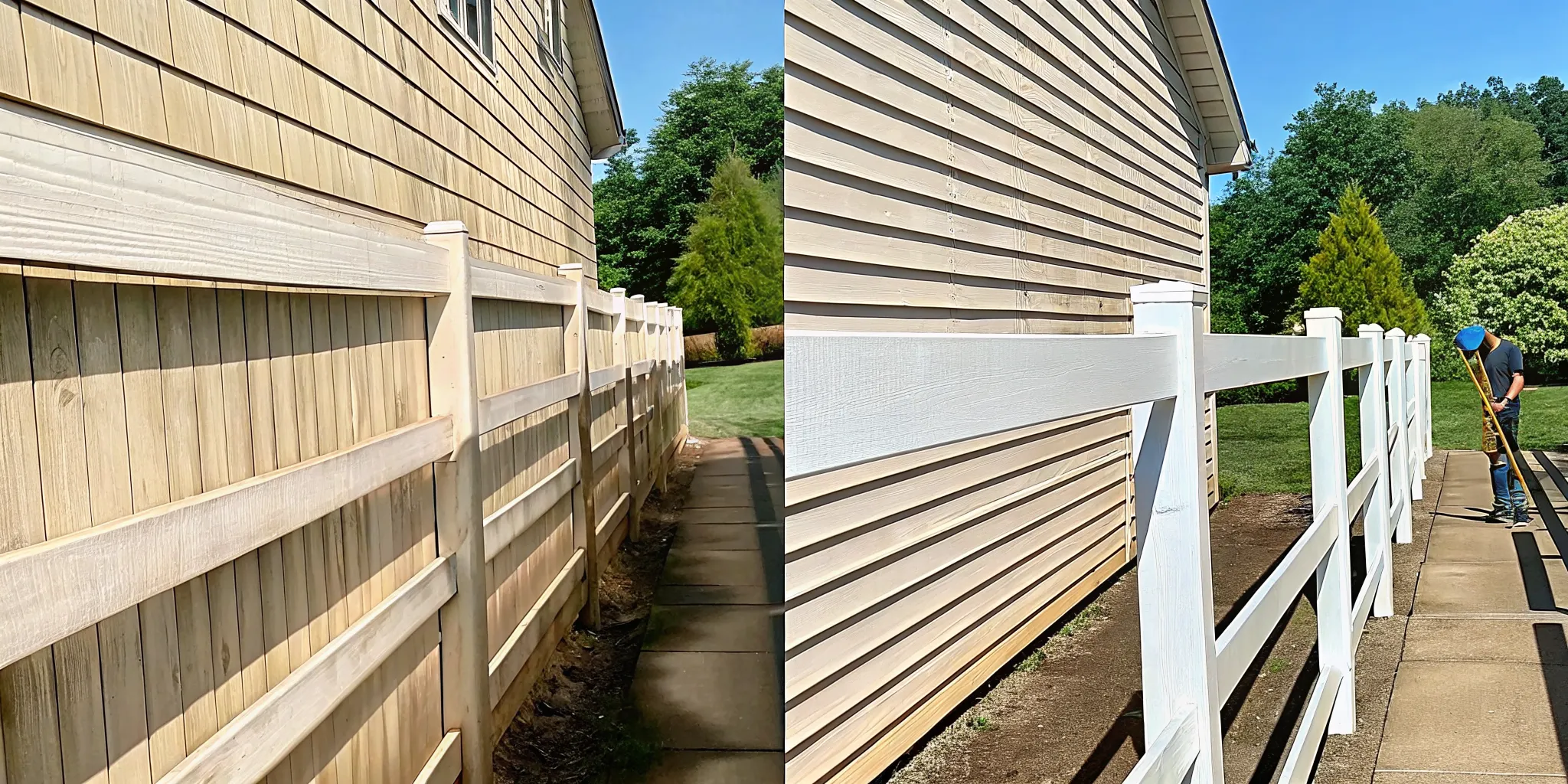
Once rinsed, examine the fence from several angles and under consistent light. Look around post caps, rails, hinges, and the lower edge, where residue can remain. A meticulous inspection matters on expansive white fencing because small inconsistencies become more noticeable across a long, uninterrupted line.
Vinyl maintenance should support the broader property, not become a disruptive project. When handled with measured chemistry and controlled rinsing, cleaning can refresh the fence while respecting adjacent plantings, stone, and outdoor amenities.
What should be checked before any fence cleaning?
Before cleaning, inspect the entire fence line, identify its material and finish, note structural defects, test for oxidation or fragile wood, and protect nearby landscaping and fixtures. A small test area confirms how the surface responds. If boards are decayed, panels are cracked, or posts are unstable, repair should precede washing.
A pre-cleaning inspection is the difference between routine maintenance and avoidable damage. It establishes what can reasonably improve, where extra caution is required, and whether sections need repair first. It also helps distinguish organic staining from oxidation, rust transfer, tannin bleed, failing coatings, and permanent discoloration.
- Material: Confirm whether the fence is wood, vinyl, composite, or a combination, and identify any specialty inserts or finishes.
- Condition: Note soft wood, splits, loose fasteners, leaning posts, cracked vinyl, open seams, and missing caps.
- Contamination: Identify green growth, mildew-like spotting, pollen, soil splash, irrigation marks, rust, and other distinct stains.
- Surroundings: Account for hedges, delicate plantings, lighting, outdoor kitchens, pool equipment, stonework, and neighboring property.
- Test area: Select an inconspicuous section to confirm the safest treatment and realistic result before proceeding.
Access is another important consideration. Dense plantings may prevent even treatment, while gates and narrow side yards can affect equipment placement. Personal items, planters, and furniture should be relocated where appropriate. Irrigation schedules may need adjustment so the fence can dry and the cleaned surface is not immediately exposed to overspray.
Homeowners should also decide whether the goal is a general refresh, preparation for staining, or correction of a specific appearance issue. Each objective changes how the result should be evaluated. If uncertainty remains, a professional assessment can clarify what is cleanable, what is repairable, and what is a permanent characteristic of the material.
What are the essential fence cleaning do’s and don’ts?
Do inspect, test, protect the landscape, use material-appropriate treatments, rinse gently, and evaluate the dry result. Do not rely on maximum pressure, use abrasive tools indiscriminately, ignore damaged sections, or promise that every stain will disappear. The best process prioritizes the fence’s long-term condition as much as its immediate appearance.
A premium maintenance decision is rarely the fastest option. It is the option that respects the material, nearby finishes, and the overall property. These practical guardrails help homeowners avoid the most common mistakes when comparing cleaning wood vs vinyl fence surfaces.
Do
- Inspect first: Walk the complete fence line and document vulnerable areas before applying water or cleaner.
- Test discreetly: Confirm how the surface, finish, and stain respond in an inconspicuous location.
- Use low pressure: Let the chosen treatment and careful technique perform the cleaning.
- Protect surroundings: Consider landscaping, hardware, stone, painted surfaces, and outdoor furnishings.
- Rinse thoroughly: Remove loosened residue and treatment without concentrating force on one area.
- Review after drying: Evaluate wood color and overall consistency only after moisture has dissipated.
Don’t
- Don’t blast the surface: Excessive pressure can fur wood, mark vinyl, loosen caps, and damage joints.
- Don’t scrub blindly: Abrasive tools may change sheen, scratch vinyl, or disturb an existing wood finish.
- Don’t clean unstable sections: Repair decayed boards, cracked panels, and loose posts before washing.
- Don’t treat every mark alike: Organic growth, oxidation, rust, and failing coatings require different expectations.
- Don’t overlook the landscape: A clean fence is not a successful outcome if nearby plantings or finishes suffer.
There is also value in knowing when to stop. A mark that does not respond to the appropriate process should be reassessed rather than attacked with greater pressure. That discipline protects valuable materials and helps preserve a consistent finish across the full boundary.
When is professional fence cleaning the right choice?
Professional cleaning is the prudent choice when the fence is extensive, heavily shaded, older, previously finished, close to delicate landscaping, or affected by multiple stain types. An experienced assessment can match treatment to material, establish realistic expectations, protect surrounding features, and deliver a more consistent result across prominent residential boundaries.
For many Long Island and Hamptons homeowners, the decision is about stewardship rather than convenience. A fence may run beside manicured hedges, frame a pool terrace, or create the backdrop for an outdoor entertaining area. In those settings, uneven cleaning, damaged grain, or marked vinyl detracts from the entire landscape composition.
A professional should begin with questions and observation. What material is present? Is the wood finished? Does the vinyl show oxidation? Which faces remain shaded? Are there repairs that need attention? What surrounds the work area? A clear answer to those questions supports a methodical plan and a more predictable outcome.
Expert service is also useful when cleaning is part of a larger maintenance sequence. Wood intended for refinishing needs appropriate preparation and sufficient drying time. A vinyl fence with suspected oxidation requires expectations distinct from one covered primarily in algae. Gates, custom sections, and mixed materials may need separate treatment within the same project.
Explore Gulf2Bay Softwash’s residential fence cleaning approach.
If you would like to discuss the condition, material, and setting of your fence, contact Gulf2Bay Softwash to request a property-specific assessment. The objective is not merely a brighter fence. It is a careful result that complements the home, grounds, and way the outdoor space is enjoyed.
Frequently asked questions
Wood and vinyl fences can both benefit from thoughtful cleaning, but material condition determines the safest method and likely result. The questions below address pressure, timing, stain removal, and professional care. When a fence is fragile, oxidized, structurally compromised, or surrounded by delicate landscaping, an on-site assessment is the most reliable next step.
Can the same cleaning method be used on wood and vinyl fences?
No single process should be applied without adjustment. Both materials often benefit from low pressure, but wood porosity, finish condition, vinyl oxidation, stain type, and surrounding features determine the appropriate treatment, dwell time, and rinse technique. Inspection and a discreet test area should guide the plan.
Is pressure washing safe for a wood fence?
Excessive pressure can raise the grain, splinter softer fibers, create visible lines, and disturb an existing finish. Safe cleaning emphasizes a compatible treatment, controlled application, and gentle rinsing. Fragile, decayed, or unstable wood should be repaired or evaluated before cleaning begins.
Why does a vinyl fence still look chalky after washing?
A chalky appearance may be oxidation rather than removable dirt. Oxidation affects the surface and can require different expectations and care. Aggressive scrubbing or concentrated pressure may create an uneven sheen, so test the area and identify the condition before continuing.
How often should a residential fence be professionally cleaned?
There is no universal interval. Exposure, shade, irrigation, vegetation, coastal residue, material, and finish all affect how quickly a fence changes. Inspect it periodically and arrange cleaning when visible growth or residue begins to detract from the property, before buildup becomes extensive.