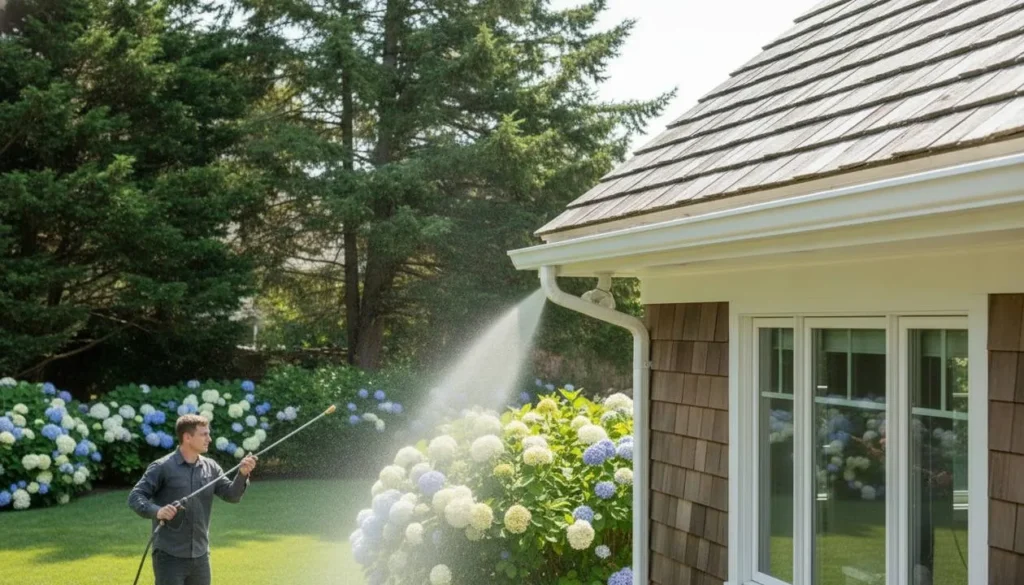
Gutter cleaning and brightening are complementary services: cleaning clears debris from the gutter channels and downspouts so rainwater can drain away from the home, while brightening treats exterior discoloration and organic buildup on the visible gutter surface. Long Island homes near trees, coastal moisture, or damp shade may need both.
Schedule gutter cleaning and brightening on Long Island
Gutters can look clean from the ground while still carrying packed leaves, sediment, and roof-wash runoff. The visible gutter face may also show dark streaks, oxidation, algae, or moss. Those are different maintenance problems, and one step does not automatically solve both.
That distinction matters for more than curb appeal. Overflowing channels can send water toward soffits, siding, and foundations. Aggressive treatment can damage nearby surfaces or finishes.
The right approach starts by identifying what is inside the gutter, what is on its face, and how each condition should be treated.
What Gutter Cleaning and Brightening Actually Do
Two different problems on the same roofline
Gutter cleaning and brightening are related services, but they solve different problems. Cleaning deals with what is inside the gutter system. Brightening deals with what is visible on the outside.
Cleaning removes leaves, twigs, sediment, roof-wash runoff, and other debris from the channels. The downspouts should be checked as well.
A clear channel gives rainwater a path into the downspout and away from the structure. When debris blocks that path, water can overflow beside the foundation or near basement windows. The Delaware Department of Natural Resources and Environmental Control guidance recommends routinely clearing gutter debris to reduce the potential for flood damage.
Brightening is an exterior treatment. It addresses discoloration on the gutter face, including oxidation, tiger-striping-like grime, and organic film such as mold, algae, or moss. Scooping out the channel will not remove those marks.
Scrubbing the face aggressively may spread grime or damage a finish. This is especially true when the gutter is beside siding, cedar, soffits, landscaping, or a roof edge.
| Service | Primary area | What it addresses | What homeowners should expect |
|---|---|---|---|
| Gutter cleaning | Channels and downspouts | Leaves, twigs, sediment, and blockages | Improved water flow and fewer debris-related overflows |
| Gutter brightening | Visible exterior gutter faces | Oxidation, organic film, and runoff staining | A cleaner-looking exterior, with treatment selected for the surface |
Why both steps may be needed
A gutter can be empty inside and still look heavily stained from the ground. It can also look clean from the curb while leaves are packed into the channel. A complete assessment checks both conditions instead of treating appearance as proof that water is moving properly.
The method matters when exterior brightening is needed. Gulf2Bay’s documented approach uses surface inspection, property protection, an appropriate biodegradable solution, controlled dwell time, and a low-pressure rinse. That is different from relying on force alone. The goal is to treat the contamination while limiting risk to aluminum finishes and nearby surfaces. Brightening may improve discoloration, but the result depends on the type, age, and condition of the stain. No cleaning method should promise that every mark will disappear.
For a broader look at the service and its place within residential exterior maintenance, see the exterior cleaning services.
If the channels are blocked, start with cleaning. If the gutter faces are streaked or darkened, ask whether brightening is appropriate. When both conditions are present, addressing them together gives the roofline a more complete maintenance treatment.
Why Long Island Gutters Stain and Grow Organic Buildup
Gutter discoloration is not caused by one substance. On Long Island homes, the visible result often comes from several conditions working together: coastal moisture, pollen, damp shade, leaf debris, roof runoff, and the way water moves across the roofline. That is why a gutter can look stained even when the channel is not fully clogged.
Moisture, shade, and organic material create the buildup
Moisture is the starting point for much of the organic film found around exterior surfaces. The EPA explains that mold cannot grow without water or moisture, and that outdoor mold helps break down dead organic matter such as fallen leaves. Along a shaded roof edge, damp leaves and fine debris can sit against the gutter or fascia instead of drying quickly.
Coastal exposure adds another practical consideration. Homes near the water may stay damp longer after rain, fog, or heavy morning dew.
That does not create a fixed cleaning schedule. It can make recurring discoloration more noticeable when shade, pollen, and poor airflow are present at the same time.
Pollen also settles on the roof and gutter face. Rain then carries that material into the channel, across the outside lip, and down the visible front of the gutter. Leaves and twigs can add organic matter inside the channel, while roof runoff can leave a separate trail on the exterior. These deposits do not all respond to the same treatment.
Roof design matters as well. A steep or textured roof can direct runoff toward specific sections of the gutter, producing uneven streaks. Nearby trees can add leaf litter and shade.
Over time, the combination may appear as dark lines, green film, dull oxidation, or general gray-brown staining.
Debris removal and stain treatment solve different problems
Scooping leaves from the gutter channel improves drainage, but it does not automatically remove the film bonded to the gutter face. Brightening addresses that exterior discoloration and organic buildup with a surface-appropriate, low-pressure approach. The goal is to treat the contamination without forcing water behind edges or damaging adjacent siding, soffits, cedar, landscaping, or roof materials.
Look at the entire roofline before choosing a method. If the stain pattern begins beneath a roof section, runoff may be part of the cause. Understanding that connection helps avoid treating only the symptom. For related roof-surface concerns, see this guide to roof cleaning and organic stain removal.
The practical takeaway is simple: a clean channel and a brighter gutter face are separate maintenance outcomes. Long Island conditions can produce both, so the inspection should identify whether the property needs debris removal, exterior brightening, or a careful combination of the two.
A Safe Soft-Wash Process for Residential Gutters
Gutter cleaning and brightening should protect the drainage system while improving the appearance of the gutter face. That requires more than scooping out leaves and spraying the exterior with force.
A careful technician accounts for the gutter material, roof runoff, siding, cedar, landscaping, and the path that rinse water will take across the property.
Preparation protects the home before cleaning begins
The first step is an inspection from the ground and, where safe, from an appropriate access point. Look for packed debris, overflow marks, loose sections, damaged hangers, blocked downspouts, oxidation, tiger-striping-like grime, and organic buildup. The inspection also identifies nearby cedar, roof materials, painted siding, soffits, windows, shrubs, flower beds, and areas where runoff could collect.
Plant protection is part of the process, not an afterthought. Landscaping can be watered or covered as appropriate, and exposed surfaces are managed so the cleaning solution stays where it belongs. Cedar and other sensitive materials near the gutter line deserve particular care. A roof-cleaning approach should not simply be transferred to every gutter or siding surface.
- Inspect the complete drainage path. Check the gutter channels, seams, end caps, outlets, downspouts, extensions, and discharge points. Note whether water appears to be directed away from the structure. Gutters and downspouts are designed to carry roof runoff away from the home, so a blocked outlet or poorly discharging downspout can undermine the entire system.
- Remove loose debris first. Leaves, twigs, sediment, and roof-wash runoff are cleared from the channels and downspout openings. This keeps debris from becoming slurry during the exterior treatment.
- Assess the exposed gutter. Once loose material is removed, the technician can assess the actual condition of the gutter.
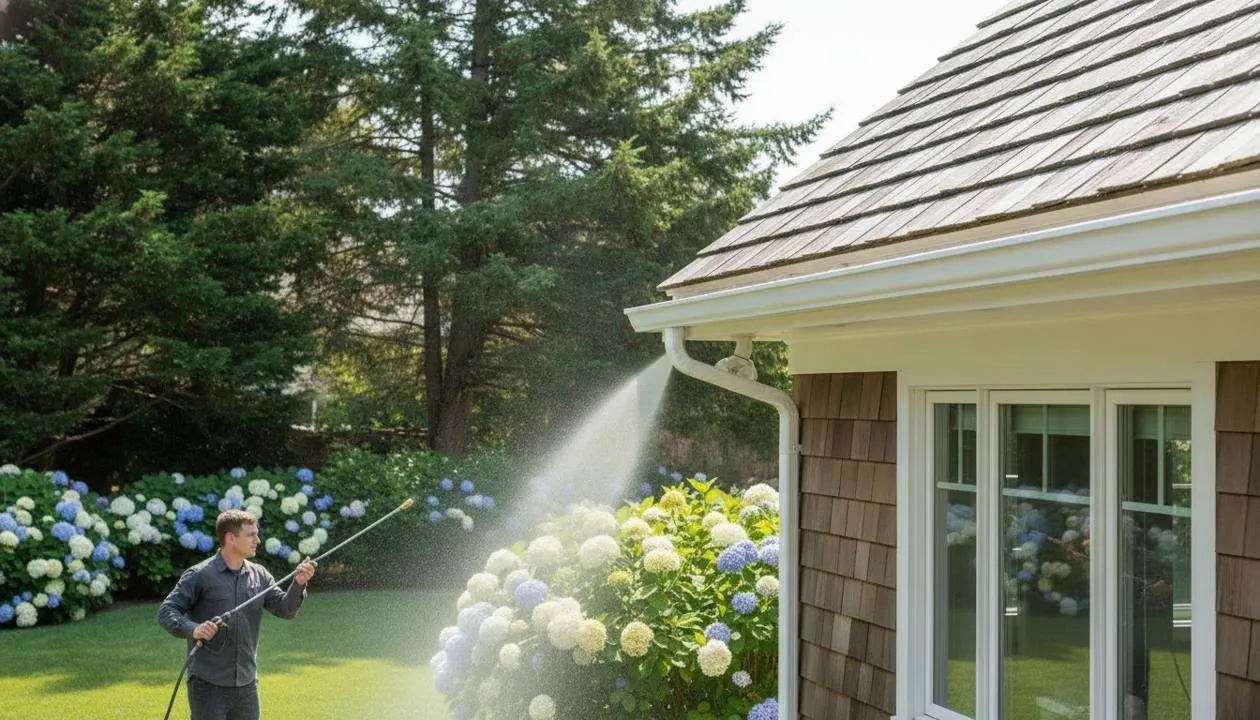
- Protect plants and adjacent surfaces. Wet or shield landscaping as needed, control overspray, and isolate sensitive cedar, roof edges, siding, windows, and painted trim. The goal is controlled application, not a wide spray pattern across the elevation.
- Apply a suitable solution at low pressure. A biodegradable soft-wash solution is applied to the affected exterior areas with controlled coverage. The documented service method keeps pressure generally under 100 PSI.
- Limit force near finishes. Aggressive force can damage finishes, drive water behind edges, or spread grime onto nearby surfaces.
- Allow the solution to dwell. Dwell time gives the solution an opportunity to work on mold, algae, moss, organic film, oxidation-related discoloration, and embedded grime. The surface is monitored during this stage. It should not be allowed to dry unpredictably on a sensitive finish.
- Rinse with controlled, low-pressure water. Rinsing removes loosened contamination without treating the gutter like concrete or another surface intended for high-force blasting. Water is directed away from openings and sensitive materials, with attention to where it flows across the roofline and ground.
- Test the downspouts and inspect the result. Run water through the channels and outlets to confirm that each downspout accepts flow and discharges properly. Recheck the gutter face, seams, roof edge, siding, cedar, soffits, plants, and surrounding ground. Any remaining stain or damaged component should be documented rather than hidden with excessive pressure.
This sequence separates drainage maintenance from exterior brightening while allowing both to be completed as one coordinated service. It also helps protect soffits and foundations from avoidable runoff problems. For homes in the Hamptons, Bay Shore, and elsewhere on Long Island, the right method depends on the actual surfaces and buildup present at the property, not simply on how dark the gutter looks from the driveway.
When Should Homeowners Hire a Professional?
Some gutter work is straightforward when the roofline is low, access is clear, and the problem is limited to a small amount of loose debris. A professional assessment becomes the better choice when the system is difficult to reach, staining extends beyond the gutter channel, or runoff is affecting other parts of the property.
Look at access, buildup, and runoff
Multi-story homes and steep rooflines create an access problem before cleaning even begins. Ladders may need to be positioned near sloped ground, planting beds, stonework, or delicate exterior finishes. Working from a ladder while handling wet debris also makes it harder to control where water and loosened material go. Professional equipment and a planned access method help keep the work focused on the gutter system rather than the surrounding property.
Fragile finishes are another reason to avoid a one-size-fits-all approach. Cedar siding, older aluminum gutters, painted trim, and nearby roof materials can react poorly to aggressive pressure or uncontrolled rinsing. The right method starts with identifying the gutter material and adjacent surfaces. Low-pressure soft washing is designed to use chemical action and controlled rinsing instead of relying on force. Read more about soft washing versus pressure washing on Long Island before choosing a cleaning method.
Pay attention to what happens during rain. Water overflowing from the channel, spilling behind the gutter, or pooling near a basement window is a sign that debris removal alone may not solve the issue. A downspout that discharges against the foundation or into a consistently saturated planting area also deserves inspection. Gutters and downspouts are intended to move roof runoff away from the structure, and clogged systems can send water beside the foundation instead.
Recurring overflow after the gutters have been cleared points to a larger drainage question. The cause may be a blocked downspout, a poor discharge path, inadequate slope, or a section that cannot handle the roof runoff. A professional can document the symptom and identify whether the next step is cleaning, brightening, downspout correction, or a separate drainage evaluation.
Widespread black staining, tiger-striping-like discoloration, algae, moss, or visible organic film is also a good reason to hire someone familiar with brightening. Scooping leaves from the channel will not remove stains on the gutter face. Treatment should account for nearby landscaping, siding, cedar, windows, and runoff paths. Plants and surrounding surfaces need protection before solution is applied, followed by a controlled rinse.
For Long Island homeowners, the practical rule is simple: hire a professional when height, surface sensitivity, recurring drainage symptoms, widespread staining, or nearby landscaping make the job more complex than debris removal. That approach keeps the decision tied to the property’s actual conditions, not to a generic cleaning schedule.
How to Maintain Clean, Brighter Gutters
Use the seasons as inspection points
Gutter maintenance is easier when you connect it to visible changes around the home. After the main leaf fall, look for packed leaves, roof granules, and sediment in the channels. Clear debris before the next period of heavy rain. In spring, check for pollen, damp organic film, and residue left behind by winter weather. Coastal moisture, shade, and nearby trees can make buildup return faster on some Long Island properties. So use the condition of the system rather than a rigid calendar as your guide.
Cleaning the channel does not automatically brighten the gutter face. Debris removal restores the path for rainwater. Brightening addresses visible discoloration, organic film, oxidation, and runoff staining on the exterior. If the channels are clear but the fascia-facing surface still looks dark or streaked, the maintenance need is different. See these exterior cleaning services for the broader surface-care approach.
What to check from the ground
- Watch the next substantial rain from a safe position. Water should enter the gutter, move toward the outlet, and discharge through the downspout instead of spilling over the edge.
- Look for a downspout that drips at a joint, discharges against the foundation, or shows weak flow compared with the other outlets.
- Scan the gutter line for sagging, separated sections, standing water, heavy staining, or damp streaks on the siding and soffits below.
- Check whether leaves are collecting repeatedly beneath nearby trees or at valleys where roof runoff concentrates.
Government guidance notes that debris can block the route from the gutter through the downspout, allowing rainwater to overflow near a foundation or basement window. It also recommends keeping downspouts directed away from the structure. Read the gutter maintenance guidance for the drainage principle.
Inspect after severe weather
After a major storm, check for windblown branches, displaced debris, new overflow marks, and downspout movement. Do not climb onto a roof or lean a ladder against a fragile gutter simply to confirm a blockage. Ground-level observations are enough to identify when the system needs a closer inspection.
Multi-story homes, steep rooflines, fragile surrounding surfaces, and heavy exterior staining call for a professional assessment. A suitable low-pressure treatment can address the gutter face without turning a cosmetic problem into damage to siding, cedar, landscaping, or the gutter finish.
Get a quote for gutter cleaning and brightening
Frequently Asked Questions
Is gutter brightening the same as gutter cleaning?
No. Gutter cleaning removes leaves, twigs, sediment, and other debris from the channels and downspouts. Brightening treats the visible gutter face, including tiger striping, organic film, algae, moss, and runoff discoloration. A gutter can be clear inside and still look stained outside, so the two services address different problems.
When should Long Island homeowners schedule gutter cleaning?
Inspect the system after heavy leaf fall, before wetter and cooler weather, and whenever water overflows or a downspout discharges poorly. As a general maintenance reference, Delaware guidance recommends clearing gutters about twice a year, in spring and early fall, plus any time clogging occurs: Delaware DNREC gutter guidance.
Can I brighten stained gutters with a pressure washer?
A pressure washer is a poor default for gutter brightening. High pressure can damage finishes, force water behind edges, or spread grime onto siding and landscaping. A safer soft-wash approach starts with an inspection, protects nearby surfaces, applies an appropriate solution, allows controlled dwell time, and rinses at low pressure.
When should I hire a professional for gutter cleaning and brightening?
Bring in a professional when the roofline is steep or multi-story, access is difficult, buildup is heavy, stains keep returning, or gutters sit beside cedar, delicate siding, roof materials, or landscaping that could be damaged. A professional assessment can separate a drainage problem from an exterior stain problem and select the method for the materials involved.
Ready to schedule gutter cleaning and brightening?
Schedule a property-specific assessment
A property-specific assessment helps separate blocked channels from exterior staining, organic buildup, and runoff marks. That means the cleaning method can match the gutter material, roofline, nearby siding, and surrounding landscaping. To discuss the condition of your Long Island home and the right next step, contact Gulf2Bay Softwash.