A darkened cedar roof is not automatically a failing roof. On Long Island, sunlight, wind, rain, shade, and coastal moisture can weather the wood and encourage organic staining. Split shakes, soft spots, displaced pieces, and active leaks point to a different problem.
Cedar shake roof restoration repair starts with separating surface condition from roof-system damage. Careful inspection and low-pressure cleaning may address staining, algae, moss, lichen, and weathered appearance. They cannot repair split shakes, rot, leaking areas, damaged underlayment, or an end-of-life roof. Those conditions need evaluation by a qualified roofing specialist.
Request a cedar roof condition assessment
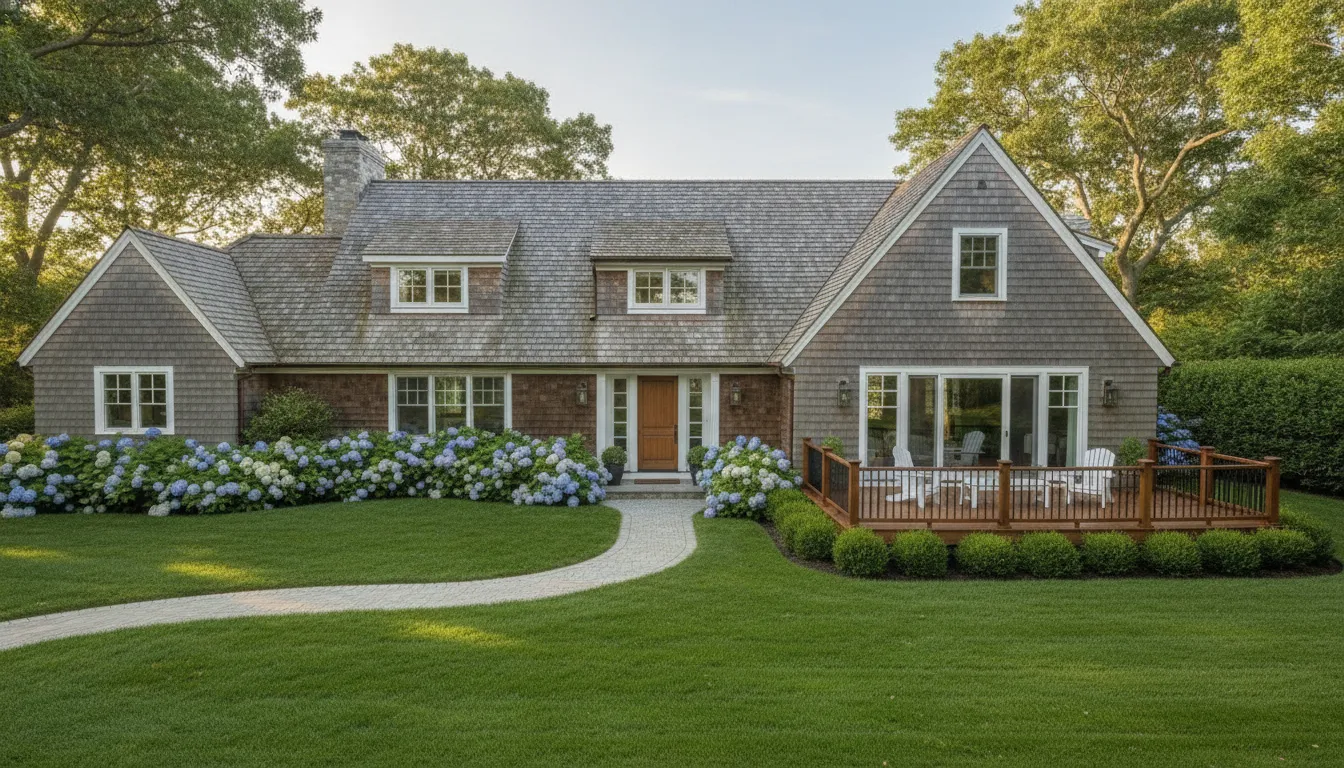
Do not make that decision from a ground-level photo alone. Begin by learning what ordinary cedar weathering looks like on a Hamptons or Long Island home. Then compare it with the visible signs that call for a roofing referral before any cleaning or restoration work begins.
What Cedar Shake Roof Weathering Looks Like on Long Island Homes
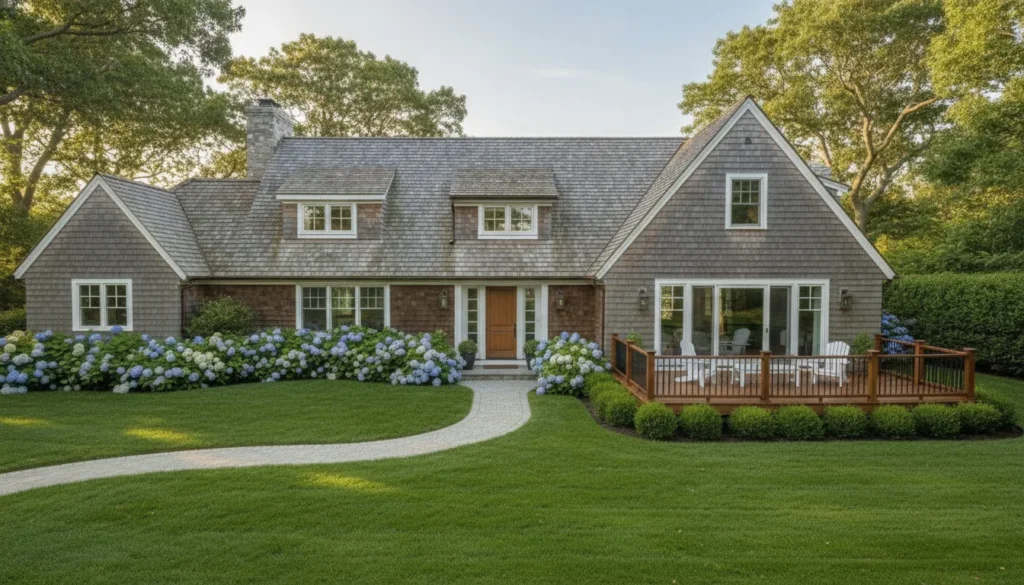
Cedar shake roofs change as they remain exposed to the elements. On Long Island, coastal weather, wind-driven rain, shade, moisture, algae, mold, and lichen can all affect how the roof looks. A gray, silver, or uneven surface does not automatically mean the roof has failed.
Sunlight, rain, and wind work together in the weathering process. Sunlight gradually weakens the exposed wood surface, while repeated wetting and drying can change its color and texture. Cedar heartwood contains compounds that help resist moisture, fungi, and insects, but those properties do not make the material immune to deterioration. Wood roofing eventually degrades, even when it has been properly installed and maintained. Oregon State University’s wood-roofing guide describes these basic weathering forces and cedar characteristics.
Weathering is not the same as failure
Look for the difference between a surface condition and a roofing defect. Fading, gray coloration, mild discoloration, or organic growth may indicate weather exposure or contamination on the surface. Those conditions can sometimes be addressed through careful assessment and appropriate low-pressure restoration. Gulf2Bay’s gentle cedar roof cleaning approach is intended for that type of exterior condition, not for structural roofing work.
By contrast, split, soft, displaced, or visibly deteriorated shakes require a qualified roofing specialist to evaluate the roof system. Active leaks, widespread rot, damaged underlayment, and unsafe roof conditions are not cleaning problems. Discoloration alone cannot confirm or rule out those hidden conditions, especially from a ground-level view or a photograph.
For a Hamptons or Long Island homeowner, the practical next step is to separate appearance from performance. Have the surface and visible materials assessed before choosing a treatment. Cleaning may improve the roof’s appearance and remove organic buildup, but a clean roof is not automatically a sound roof.
How to Inspect a Cedar Shake Roof Without Creating More Damage
Start with a ground-level inspection. Cedar shakes can show dark staining, moss, weathering, splits, or displacement, but a visible symptom does not automatically identify the underlying problem. The goal is to record what you can safely observe and decide whether the next step is gentle restoration or a qualified roofing assessment.
What to check from the ground
- Walk the perimeter. Look from several angles, including the front, rear, and sides of the home. Note dark streaks, green growth, bare-looking areas, curling edges, missing pieces, or shakes that appear out of line. Long Island homes may face coastal weather, shade, moisture, algae, mold, and lichen, so discoloration alone is not proof of rot or a leak. Long Island service areas often include these different exposure conditions.
- Check the roofline and drainage areas. Use binoculars if needed to inspect eaves, valleys, ridges, and places where branches or debris may collect. Look for visible debris, blocked drainage, or water staining on exterior trim. Do not poke, lift, or pull at a shake. Cedar fibers can be damaged by unnecessary handling.
- Inspect the interior without assuming a cause. From the attic or upper-floor ceiling, look for active moisture, staining, or damp materials after rain. These observations can justify an urgent roofing inspection, but they do not identify the failed layer. A photo cannot diagnose rot, an active leak, damaged underlayment, or structural failure.
- Record and compare. Take wide photographs from the ground and note where each concern appears. A professional inspection can document specific areas and create a clearer treatment or repair plan. Keep cleaning and restoration separate from roofing work. Surface staining may be cleanable, while split, soft, displaced, leaking, or structurally compromised shakes require a roofing specialist’s evaluation.
Do not climb a cedar roof. Roofing restoration guidance identifies roof access as dangerous, and walking on shakes can create damage that was not there during the initial inspection. A professional can assess the roof safely. If the roof has active leaks, widespread rot, unsafe conditions, or suspected underlayment damage, contact a qualified roofing specialist before scheduling cleaning. When the concern is organic growth or surface discoloration, a documented pre-service assessment can identify the material and contamination before a low-pressure treatment plan is selected.
When Cedar Shake Roof Restoration Repair Starts With Cleaning
The first decision is not which cleaning product to use. It is whether the roof has a surface contamination problem or a roofing defect. On Long Island homes, cedar shakes may collect algae, moss, lichen, and dark streaking, especially where coastal moisture, shade, and limited sun keep the surface damp. Those conditions can make a roof look neglected without proving that the shakes have failed.
A proper assessment identifies the roof material, maps the visible contamination, and looks for warning signs that cleaning cannot address. If the shakes are generally sound and the concern is organic staining or weathering, gentle restoration may be an appropriate next step. If they are split, soft, displaced, leaking, or structurally compromised, the next call should be to a qualified roofing specialist.
What gentle restoration can address
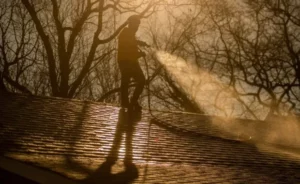
Gulf2Bay’s documented roof-cleaning process begins with an inspection or bacterial assessment. The treatment plan then uses cleaning solutions, dwell time, and a low-pressure rinse rather than mechanical abrasion. The roof-cleaning reference specifies low-pressure water at no more than approximately 90 PSI, combined with biodegradable cleaning solutions. This approach is intended to address organic growth while avoiding the unnecessary damage associated with high-pressure washing on cedar shakes.
That distinction matters. Soft wash roof cleaning is not the same as blasting a roof clean. The solution does the work on algae, moss, lichen, and dark Gloeocapsa magma streaking, while the rinse removes loosened contamination with controlled pressure.
After treatment, a post-service inspection and walkthrough help confirm the result and identify conditions that need another professional. Cedar restoration may also involve surface-specific brightening or sealing when the material and condition support it. But those steps do not repair leaks, underlayment damage, rot, or broken shakes. For properties with cedar shingles in the Hamptons, see this guide to gentle cedar roof cleaning.
Cleaning can improve a roof’s appearance and address certain surface problems. It cannot make an unsound roof sound. Keep that boundary clear before scheduling any restoration work.
What Restoration Cannot Fix: Splits, Rot, Leaks, and Underlayment
Do not confuse a clean roof with a sound roof
A cedar roof can look dramatically better after organic staining and weathering are removed. Appearance is only one part of the assessment. Low-pressure restoration may address cleanable surface contamination. It cannot restore the structural function of a failed shake or repair a defect hidden beneath the visible roof surface. Gulf2Bay distinguishes cleaning and restoration from roofing work for that reason.
Look at the roof from a safe location, but do not treat a photograph as a diagnosis. Splits, soft wood, displaced shakes, and leak evidence each require an on-site evaluation by a qualified roofing specialist. The specialist can inspect the roof assembly, confirm the scope of damage. And determine whether the appropriate response is a localized repair, partial replacement, or a larger roofing decision.
| Condition | What it may indicate | Next step |
|---|---|---|
| Split or cracked shakes | A failed roofing unit. It may allow water entry or worsen with exposure. | Have a qualified roofing specialist evaluate the affected area. Cleaning will not close or replace the split shake. |
| Soft, punky, or visibly rotted wood | Material deterioration that may extend beyond the surface | Stop short of calling it a cleaning issue. Arrange an on-site roofing inspection to determine the repair or replacement scope. |
| Displaced or missing shakes | A loss of roof coverage and possible exposure of underlying layers | Ask a roofing specialist to assess the roof before any restoration work is planned. |
| Active leak or interior water staining | Water may be entering through the shakes, flashing, underlayment, or another roof-system component | Contact a qualified roofing specialist promptly. Soft washing does not repair an active leak. |
| Damaged underlayment, widespread rot, or unsafe access | A concealed, extensive, or hazardous roof-system problem | Do not climb the roof or proceed based on photos. Use a roofing specialist for inspection and replacement-level decisions. |
End-of-life decisions also belong with a roofing specialist. Cedar roofing eventually deteriorates, and a roof that needs replacement should not be presented as a restoration project. When replacement is indicated, matching the existing material’s size, shape, texture, and configuration can matter, especially on a distinctive Hamptons home. A careful handoff protects the roof, the building below it, and the accuracy of the work plan.
For homeowners comparing gentle cedar roof cleaning with roofing repair, the decision is straightforward: cleanable staining may be treated after assessment; roofing defects need a qualified roofing specialist.
Repair, Partial Replacement, or End-of-Life Roofing?
The right next step depends on the pattern and depth of deterioration, not simply the roof’s age or color. A cedar roof with surface weathering and organic staining may be a candidate for careful restoration. A roof with widespread failure, active leaks, soft wood. Or compromised underlying components needs a qualified roofing specialist to determine whether repair, partial replacement, or full replacement is appropriate.
That distinction matters on Long Island, where coastal wind, rain, salt exposure, shade, and moisture can affect different roof planes differently. A responsible assessment separates conditions that cleaning can address from defects that require roofing work. It should document the visible condition, identify areas that need closer evaluation, and avoid promising a repair decision from a ground-level photograph.
Why matching materials matters
Partial replacement is not just a matter of inserting any available piece of cedar. Replacement material should match the existing roof’s size, shape, texture, and configuration. The National Park Service also notes that craftsmanship and the roof’s construction details matter when replacement work is performed. See its preservation guidance for wood shingle roofs.
Matching affects both appearance and performance. A piece that is too thick, too smooth, incorrectly sized. Or installed with unsuitable spacing can stand out visually and behave differently as the wood responds to moisture and warmth. Replacement pieces also need accurate measurements and appropriate clearance for normal expansion. Those details belong with a skilled roofing specialist who understands cedar roof construction, flashing, ventilation, fasteners, and the roof assembly beneath the visible shakes.
When the scope moves beyond restoration
Wood roofing eventually degrades, and periodic maintenance cannot reverse every failure. The National Park Service states that wooden shingle roofs require periodic replacement and that replacement should occur before deterioration spreads to other wooden components. It does not provide a universal deadline for every property, because installation quality, exposure, maintenance, material, and hidden conditions vary.
Restoration can improve the condition and appearance of suitable cedar surfaces, but it does not repair an active leak. Replace damaged underlayment, correct structural movement, or make rotten or displaced shakes sound. If an assessment suggests those conditions, involve a qualified roofing specialist before cleaning or coating proceeds. Gulf2Bay can evaluate the exterior surface and explain whether gentle cleaning or cedar restoration is a reasonable scope, while roofing decisions should remain with the appropriate roofing professional.
A Practical Cedar Roof Maintenance Plan for Hamptons Homes
A cedar roof maintenance plan should protect the surface while keeping roofing defects from going unnoticed. Start with an exterior assessment that identifies the roof material, documents visible contamination, and separates cleanable staining from conditions that need a qualified roofing specialist.
Schedule around coastal exposure
Hamptons and Long Island homes face a mix of coastal weather, moisture, shade, algae, mold, and lichen. Those conditions can vary from one roof slope to another, so a fixed calendar is not a diagnosis. Gulf2Bay’s customer guidance recommends a roof assessment every 3 to 5 years and cleaning every 1 to 3 years. With the interval adjusted for environmental exposure and the roof’s observed condition.
During that assessment, look for surface discoloration, organic growth, lifted or displaced shakes, soft areas, visible splits, and signs of water entry. Do not climb onto the roof to investigate. A roof that appears dirty may be suitable for careful restoration, while a roof with damaged shakes. Active leaks, widespread rot, unsafe access, or underlayment concerns needs a roofing specialist’s evaluation.
For cedar, the cleaning method matters. Avoid high-pressure washing, which can damage the wood surface. A surface-specific, low-pressure process should include a pre-service assessment, appropriate solution application, controlled rinsing, quality checks, and a final walkthrough. Maintenance recommendations should be documented after the work, not guessed from a distance.
For homes that need a more complete care plan, review Hamptons cedar restoration and confirm whether the property falls within Gulf2Bay’s Long Island service areas. Cleaning and restoration can address suitable surface conditions, but they are not substitutes for roofing repair or replacement.
Request an assessment for your cedar roof
Frequently Asked Questions
Can cedar shake roof restoration repair remove dark staining?
It can address some surface staining and organic growth when the shakes are otherwise sound. A careful assessment should identify the cedar, the contamination, and any visible defects before treatment. Low-pressure soft washing is appropriate for cedar; high-pressure washing can damage the shakes. See soft wash roof cleaning for the method distinction.
How can I tell weathering from a roof problem?
Weathering may appear as fading, discoloration, or surface changes from sun, rain, wind, moisture, algae, mold, or lichen. Split, soft, displaced, or visibly deteriorated shakes are different warning signs. Discoloration alone does not confirm rot or a leak, so do not diagnose the roof system from a photograph. A documented inspection can separate a cleanable surface condition from a roofing defect. Gulf2Bay’s roof-cleaning guidance uses this distinction.
Does soft washing repair split shakes, leaks, or rot?
No. Cleaning and restoration can improve a sound cedar surface, but they do not repair split shakes, active leaks, structural rot, damaged underlayment, or an end-of-life roof. Those conditions require evaluation by a qualified roofing specialist before any cleaning plan is approved.
When should a roofing specialist inspect my cedar roof?
Contact a qualified roofing specialist when you see active leaking, widespread rot, unsafe roof conditions, displaced or split shakes, suspected underlayment damage, or deterioration that may require replacement. A specialist can evaluate repair, partial replacement, or end-of-life options. Replacement materials should match the existing roof’s size, shape, texture, and configuration where appropriate, as noted by the National Park Service.
Ready to Assess Your Cedar Roof?
A condition assessment can help separate surface staining and weathering from damage that needs a roofing specialist. The next step is to review what gentle cleaning or restoration can address, then identify any concerns outside that scope. Request a cedar roof condition assessment and discuss the appropriate approach for your Long Island or Hamptons home.