
Black streaks on a Hamptons roof call for treatment, not force. Salt air, shade, and damp coastal weather can make asphalt shingles and cedar look neglected before a homeowner knows what cleaning is safe.
Safe roof cleaning Hamptons homeowners can trust starts with a roof-specific evaluation and low-pressure soft washing, not aggressive spray. Black streaks, algae, and moss are signs to schedule an inspection, because cleaning needs vary between asphalt shingles and cedar surfaces on coastal homes. After checking the material and condition, a technician can recommend a soft washing approach that treats visible buildup while limiting force on delicate roofing. High-pressure cleaning can be too harsh for delicate roof surfaces, so homeowners should avoid force-first methods when stain removal is the goal. Gulf2Bay Softwash serves Long Island homes with soft washing, and can help owners plan an appropriate next evaluation when staining or moss is visible.
Homeowners weighing safe stain removal against the risk of shingle or cedar damage need a process built around roof material and condition. Roof cleaning Hamptons: a safer approach for coastal homes explains the clear, safe starting point. Here is how. For a broader comparison, read our soft washing versus pressure washing guide for Long Island homes.
For weathered cedar on exterior walls, homeowners can also review cedar siding restoration in the Hamptons while keeping roof and siding services distinct.
Roof cleaning Hamptons: a safer approach for coastal homes
When roof staining changes the look of your home, the first step should be a clear evaluation, not a forceful wash. For roof cleaning Hamptons homeowners can request a roof cleaning quote before deciding on a service plan. This gives a technician time to see the roof surface and discuss the right next step.
What an evaluation should cover
Black streaks or patches of moss can be a reason to schedule an inspection. They are not, by themselves, proof that a roof has structural damage. Gulf2Bay explains more about removing stubborn black roof stains for homeowners who want to understand what they see.
Before work begins, ask what the technician saw and what method fits the material. A careful plan should address access, nearby surfaces, runoff control, and any areas the crew will avoid. If a surface looks damaged, cleaning should not be presented as a repair.
Low-pressure care by roof material
Gulf2Bay describes its roof work as soft washing, a low-pressure approach. The goal is to choose a cleaning method for the surface in front of the crew. An asphalt shingle roof and a cedar roof should not be treated as if their condition and care needs are identical.
- Asphalt shingles: Ask how low-pressure application will be used around edges, flashing, valleys, and worn-looking spots.
- Cedar roofing: Ask how the crew will account for the wood surface and any sections that appear aged or fragile.
- Visible growth: Ask whether staining or moss calls for service now and what follow-up review makes sense.
Homeowners can review Gulf2Bay’s professional roof cleaning services when comparing a low-pressure plan with other options. The useful question is not how dramatic the equipment looks. It is whether the proposed method fits the roof material and its current condition.
Why force is not a quality measure
A strong stream can look active from the ground, but force is not a measure of care. A roof cleaning plan should explain the surface, the application method, and what the homeowner should expect to review afterward. Clear answers are more useful than a promise based on pressure alone.
What do black streaks and moss mean for roof cleaning Hamptons homes?
Gulf2Bay Softwash evaluates black streaks, algae, moss, and trapped debris before recommending treatment. Visible growth can signal that a Hamptons roof needs attention, but it does not prove structural damage. Roof material and present condition determine whether low-pressure soft washing is the appropriate next step.
Black streaks and algae
Black streaks often begin as faint shading that runs down a roof slope. From the street, they can look like soot, age, or runoff marks. In many cases, the streaking is linked to algae on the roof surface. Gulf2Bay explains more about removing stubborn black roof stains in its related guide.
The streaks may be easier to spot on light asphalt shingles. Dark staining can also appear on other roof surfaces. On a shaded roof, growth may spread across sections rather than form neat lines. A trained technician can check whether the mark is surface growth, dirt, weathering, or a separate roof concern.
Homeowners may be tempted to scrub a small area or blast away the stain. That approach can create an uneven look and may be too harsh for delicate roofing. For roof cleaning in the Hamptons, soft washing offers a low-pressure approach for evaluated roof surfaces.
Moss and collected debris
Moss is easier to notice because it has a raised, green appearance. It may show up in shaded areas or along lower roof edges. It can also appear where leaves and needles linger. Debris can hold moisture against the surface and hide what is underneath.
A visible moss patch does not show, by itself, whether repair is needed. Do not pull moss from shingles or cedar shakes from a ladder. Moss may be attached to the surface, and footing on a sloped roof is unsafe. Instead, note where growth appears and whether leaves collect nearby.
- Dark lines suggest staining that should be checked for algae.
- Raised green patches suggest moss or similar surface growth.
- Leaves and needles can cover staining and keep areas damp.
- Loose, cracked, or missing roofing calls for separate roof review.
What visible growth means for service
A service visit should start with the roof type and visible condition. It should also note where growth is present. Asphalt shingles and cedar roofs do not call for careless, forceful treatment. A technician can discuss whether low-pressure soft washing is a fit after seeing the roof.
If staining or moss is visible, homeowners can ask about professional roof cleaning services before affected areas become harder to assess. For coastal homes, shade, trees, and roof exposure may shape a sensible care plan. The aim is to identify growth, choose suitable care, and avoid assuming discoloration alone means roof failure.
Cedar vs. asphalt shingles: what changes during cleaning?
Gulf2Bay Softwash first identifies cedar or asphalt shingles. Cedar may include fragile pieces, while asphalt roofing can show broad streaking or shaded moss. A condition-specific, low-pressure plan helps limit avoidable surface stress.
Start with the roof material
A roof cleaning Hamptons plan starts with the roof surface, not the stain alone. Cedar and asphalt shingles can both show moss or dark streaks. Their condition may call for different care before work begins.
Gulf2Bay’s professional roof cleaning services use soft washing as a low-pressure roof cleaning approach. Before making a plan, a technician should note the roof type, growth, stains, wear, and safe access points. Cleaning addresses surface buildup; it does not repair worn roofing.
Cedar and asphalt at a glance
Cedar has a natural, textured surface that can look different across one roof. Before cleaning, a technician can check for loose pieces, heavy moss, split areas, or spots that seem fragile. Those notes guide how the roof is treated and where extra care is needed.
Asphalt shingles need their own careful review. Dark streaks may spread across broad roof planes, while moss may gather in shaded places. Visible staining or growth is a sound reason to seek an evaluation. It is not, by itself, proof that a roof has structural damage.
| Material | Primary concern |
|---|---|
| Cedar | Fragile or weathered pieces. |
| Asphalt | Streaks or worn areas. |
Stains, care, and questions
A stain on cedar may not look the same as a stain on asphalt. Texture, shade, and weather exposure can change what a homeowner sees from the ground. Gulf2Bay’s article on what causes black roof stains offers useful background before a site visit.
Cleaning choices should not begin with forceful spray on either material. A visit should find delicate places and set a fitting low-pressure approach. This matters for cedar that appears weathered. It also matters for asphalt surfaces with worn or uneven areas.
Homeowners can note where stains appear and how long they have been visible. They can also point out shaded slopes, loose pieces, or areas below trees. That short history helps a technician inspect the areas that first raised concern.
Ask how the service plan changes for cedar compared with asphalt shingles. Ask what the technician sees before cleaning begins and what surface changes may follow. For further planning, review Gulf2Bay’s guide to choosing the right roof cleaner.
A careful evaluation keeps expectations clear. Cleaning may address visible surface growth or staining. Missing, loose, split, or aged roofing calls for a separate discussion about roof condition.
Why is high-pressure roof washing risky?
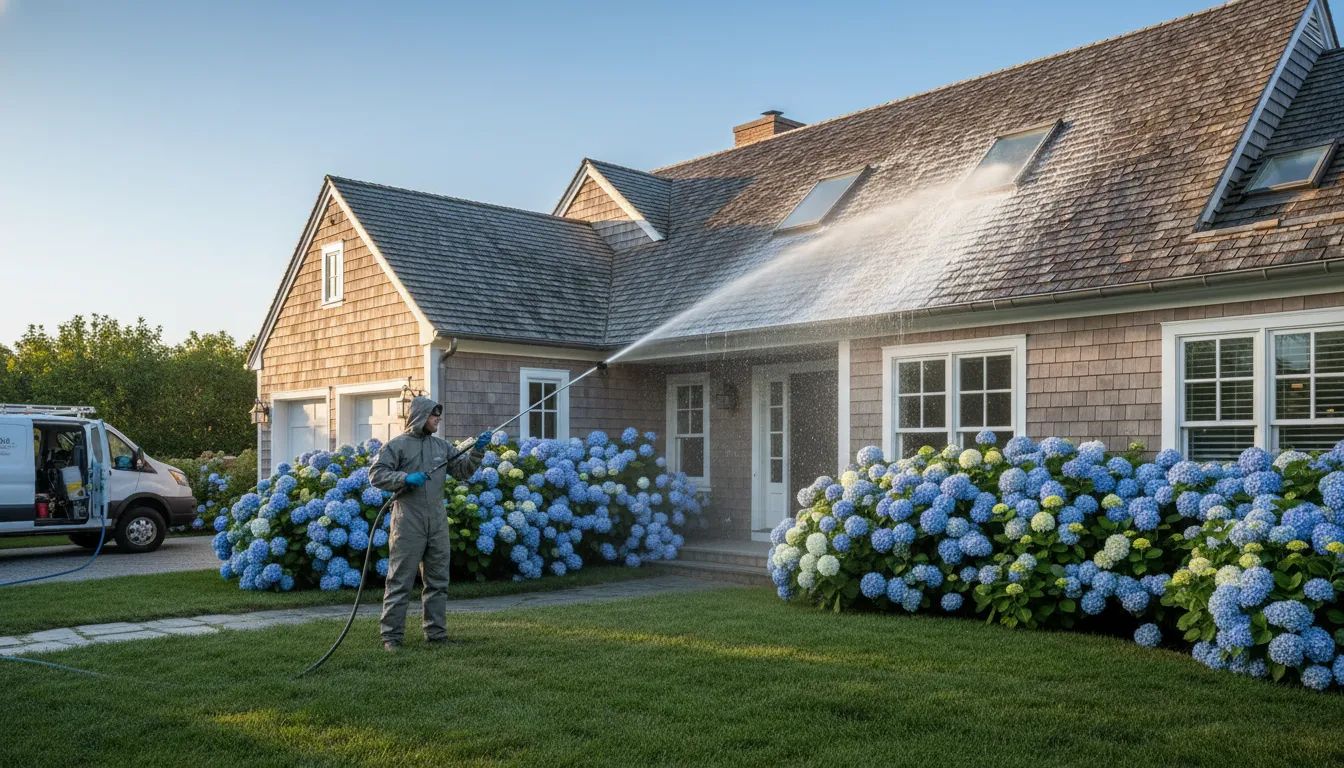
Gulf2Bay Softwash uses low-pressure soft washing because roofing is not hardscape. Strong spray can stress shingle edges or weathered cedar. A professional evaluation should first confirm that the method fits the material and condition.
Force is not a roof-cleaning plan
A roof is not a patio or driveway. Its surface is built to shed weather, not to take a strong spray at close range. For roof cleaning Hamptons homeowners should ask how each crew matches its method to the roof surface before work begins.
A high-pressure stream puts force in a small area. On asphalt shingles, it may disturb the finished surface, catch an edge, or send water beneath overlapping courses. Those risks matter on any roof, even when stains make a fast cleanup tempting.
Cedar calls for care because each shake is a natural wood piece. Age, splits, and existing wear can change how the surface responds to washing. Forceful cleaning may roughen fragile wood or worsen an area that already needs evaluation.
Care for shingles and cedar
A roof evaluation should come before cleaning. A technician can note the material, visible condition, stained areas, and nearby features that need protection. Visible staining or growth is a sound reason to request that evaluation, but it is not proof of hidden damage.
Roof soft washing is not simply a weaker form of surface blasting. It is a low-pressure approach selected for a roof and its condition. Gulf2Bay’s professional roof cleaning services explain this roof-focused method for Long Island homes.
Questions before hiring a roof cleaner
A clear estimate should identify the roof material and proposed cleaning method. Before a crew begins, ask questions that show how the contractor plans to treat your actual roof:
- Will you inspect the roof material and visible condition before cleaning?
- Will you use low-pressure roof soft washing instead of high pressure on the roof?
- How will you handle loose shingles, fragile cedar, splits, or worn areas?
- How will you protect siding, plants, paths, and drainage areas during service?
- What finding would make you pause cleaning and suggest further evaluation?
Good answers should be specific, calm, and tied to the surface in front of the crew. A contractor should not treat cedar shakes like asphalt shingles, or treat either roof like pavement. Homeowners can also review guidance on choosing the right roof cleaner before comparing estimates.
For a Hamptons home, the safest discussion starts with roof type, roof condition, and a suitable method. Clean appearance matters, but careful treatment helps avoid adding preventable stress to a delicate roof surface.
What does a careful Hamptons roof soft washing visit involve?
A Gulf2Bay Softwash visit is built around the specific Hamptons roof. The crew evaluates the surface, prepares nearby areas, applies low-pressure care, checks the treated area, and reviews observations. The process aligns cleaning with cedar or asphalt shingles.
A visit built around the roof
A careful roof visit starts with the home, not with a preset treatment plan. In the Hamptons, roofs may be asphalt shingle or cedar. Each surface calls for a measured review before work begins. Gulf2Bay uses soft washing as a low-pressure approach for roof care.
Homeowners exploring professional roof cleaning services should ask how the crew will care for the roof and nearby property. Visible stains or moss call for an evaluation. They are not proof of roof damage or a reason to expect a set outcome. Browse our full Long Island exterior cleaning services when planning related exterior work.
The five-part soft washing visit
-
Evaluate the roof and access. A technician reviews roof type, visible staining or moss, condition concerns, and workable access. The homeowner can note known problem areas. They can also ask what fits cedar or asphalt shingles.
-
Prepare and protect the property. Before application begins, the crew addresses nearby areas and access points that need care. Roof work may affect how the crew moves around the house. Preparation also gives homeowners time to discuss outdoor living areas or landscaping near the work zone.
-
Apply a low-pressure soft washing approach. The service is planned around soft washing, not forceful cleaning on the roof. The crew selects its approach after the review. It pays attention to staining and visible growth noted during that first check.
-
Control the rinse and check the area. The crew manages this phase with the roof surface and nearby property in mind. Some roof concerns may call for later observation. If so, the homeowner should know what to watch for and when to ask a follow-up question.
-
Review the work with the homeowner. At the end of the visit, the crew can explain what it observed and what it did. The homeowner can raise any remaining concern. They can also ask when a new evaluation may make sense.
Black streaks or moss can lead a homeowner to seek an informed roof review. A delicate-looking surface may prompt the same step. Homeowners can request a roof cleaning quote and describe their roof material before scheduling.
Questions that support careful care
Before work starts, ask how the planned method fits the roof material and visible condition. Ask which nearby areas need protection during the visit. It is also useful to ask how the crew will explain follow-up observations after the work.
These questions keep roof cleaning Hamptons decisions tied to the specific home. Staining alone does not prove the roof has structural damage. It shows why a professional evaluation may be useful. A clear process helps the homeowner choose the next maintenance step with better information.
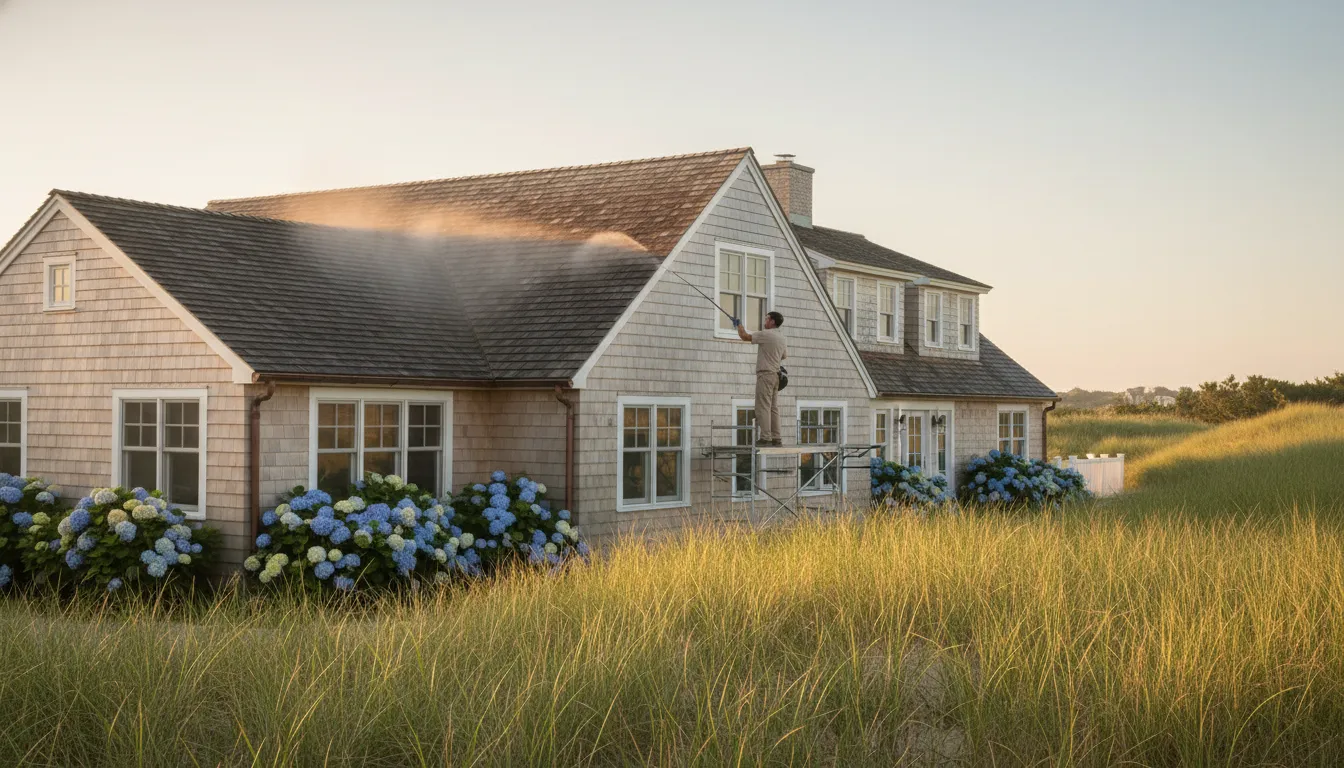
When should a Hamptons homeowner schedule roof cleaning?
Gulf2Bay Softwash recommends an evaluation when black streaks, algae, or moss become visible. Scheduling should reflect material, shade, exposure, and condition. The right interval is based on the individual coastal home, not a universal calendar.
Visible changes that merit an evaluation
Schedule an evaluation when you see black streaks, green growth, moss, or roof patches that no longer look even. These signs do not prove roof damage. They do show that the surface deserves a closer look before more areas become marked.
Do not wait for a stain to become an urgent concern, and do not try to scrub it from a ladder. A trained cleaner can review the surface, roof material, access points, and nearby plantings. This is a sound time to review choosing the right roof cleaner for cedar or asphalt shingles.
A plan based on the roof, not the calendar
There is no single month or fixed interval that suits every Hamptons roof. One house may sit in open sun and dry soon after rain. Another may have tree shade, leaf debris, or damp areas where stains are easy to notice.
For roof cleaning Hamptons homeowners should plan around the roof in front of them. Start with visible conditions, roofing material, nearby trees, and any prior cleaning history. Then ask when another check makes sense, rather than expecting a promise based on a calendar date.
- Asphalt shingles: note new streaking, moss, or shaded sections that stay dark.
- Cedar roofs: request a material-specific review before setting a cleaning plan.
- Seasonal homes: inspect the roof before a busy stay or planned exterior work.
Weather, exposure, and scheduling a visit
Coastal homes face changing exposure through the year. Wind-blown debris, shade, salt air, and damp weather can leave nearby roofs looking different. The visit should let the cleaner review present conditions and select a low-pressure soft washing plan suited to that roof.
Weather also matters on the service day. A crew may need safe access and workable conditions around plantings and outdoor living areas. If you are planning guests or listing photos, schedule the evaluation early. That helps avoid making roof-care choices in a rush.
See staining or moss on your Hamptons roof?
Request a roof cleaning quote for a condition-based review and a soft washing plan.
The right time to call is when a roof change is visible, or when you need a plan for a specific home. This approach keeps the conversation focused on surface material, exposure, and safe care. It also avoids guarantees based on a date alone.
Protect the roof that protects your coastal home
Gulf2Bay Softwash helps Hamptons homeowners choose care based on material and condition. A roof cleaning quote should explain the low-pressure method, protection steps, and follow-up expectations for cedar or asphalt shingles.
Start with the roof material
A roof is not just another surface to wash. On a coastal home, it is a major part of the home’s character and upkeep plan. A careful visit begins with one clear question: what material is on the roof? Asphalt shingles and cedar need a method suited to their condition, age, and visible growth.
Before choosing roof cleaning Hamptons service, ask how the company checks the roof before work starts. A technician should note the material, black staining, moss, loose areas, and nearby features that need care. Gulf2Bay’s guide to choosing the right roof cleaner can help shape those first questions.
A low-pressure plan for a delicate surface
A careful roof plan should not rely on force. Ask the provider to explain its low-pressure approach and why it fits your roof surface. A clear answer matters most for cedar, older shingles, or a roof with visible staining and moss.
Soft washing is the approach Gulf2Bay describes for its roof work. It is planned around treating roof growth with low pressure, rather than blasting the surface. For more detail before a site visit, review its professional roof cleaning services page.
The conversation should also cover what happens around the roof. Ask how the crew plans for landscaping, siding, patios, outdoor furniture, runoff paths, and access points. A valuable home deserves a service plan for the full site, not only the stained area above it.
What a clear quote should cover
A good quote makes the work easy to understand before the appointment. It should list the roof area to be treated, the surface type, and the planned cleaning method. It should also state which nearby areas need protection and whether extra concerns change the scope.
- Ask whether the quote is based on an on-site look at the roof and access.
- Confirm the provider can explain its plan for cedar or asphalt shingles.
- Ask what steps protect planting beds, outdoor finishes, and walking areas.
- Request a clear description of what is included and what is not included.
Homeowners should ask what to watch for after service. They should also ask when another evaluation may make sense. Staining or moss that can be seen is a sound reason to request an expert look. The right interval depends on the roof and its exposure. A careful provider should avoid a one-size-fits-all answer.
For a Hamptons home, peace of mind begins with a plan you can follow. You should know what will be treated and how the surface will be handled. You should also know how the site will be cared for. Clear answers help you select careful roof service for a home exposed to coastal weather.
Frequently Asked Questions
What is the best way to clean a roof in the Hamptons without damaging shingles?
For asphalt shingle roofs, the safer starting point is a professional inspection followed by low-pressure soft washing when cleaning is appropriate. A technician can identify shingle condition, staining, moss, and areas needing extra care before treatment begins. The goal is to address surface growth without blasting the shingle face or lifting material. Gulf2Bay describes its approach as professional roof cleaning services using soft washing. Visible staining should prompt an evaluation, not an assumption that the roof is damaged.
Is pressure washing safe for cedar roof cleaning in the Hamptons?
High-pressure cleaning is not a cautious choice for a cedar roof. Cedar is a wood roof surface with individual shakes that need condition-specific care. Strong force can disturb weathered material and may worsen existing wear. For roof cleaning, Hamptons homeowners should ask for an inspection first and a low-pressure plan suited to cedar. Soft washing refers to the low-pressure approach Gulf2Bay uses for roof work; it should be selected only after a technician examines the roof type and present condition.
When should I clean my Hamptons roof if I see algae or moss?
Arrange an evaluation when black streaks, algae, or moss become visible, rather than waiting for heavier buildup. Hamptons properties vary in shade, tree cover, roof material, moisture exposure, and maintenance history, so one cleaning interval does not fit every home. A technician can confirm whether the condition calls for cleaning and suggest an appropriate maintenance interval for that roof. Staining or growth signals the need for assessment, but it does not by itself prove structural damage.
Can I have my gutters cleaned at the same time as my roof?
Ask about coordinating gutter cleaning during the roof-cleaning estimate, since the scope should be confirmed before work is scheduled. Roof staining, moss, and gutter debris can appear together, especially where trees or seasonal debris affect a property. A technician can inspect access, roof material, visible growth, and gutter conditions, then explain which services are appropriate. Confirm that roof treatment will use a low-pressure method suited to shingles or cedar, and request a written scope for any additional gutter work.
Ready to protect your Hamptons roof with care?
Waiting while roof stains remain can leave a well-kept home looking neglected and turn a planned maintenance choice into a rushed decision later. Starting now gives you time to choose a careful soft washing approach before seasonal plans, guests, or other property work add pressure to your schedule. A timely quote helps you plan roof cleaning for cedar or shingles with clear expectations and without rushing into a harsh method.
Ready to plan a careful next step for your roof? A clear plan today can keep the work on your terms. Request your roof cleaning quote to discuss soft washing for your Hamptons home and choose a service time that fits your maintenance schedule.