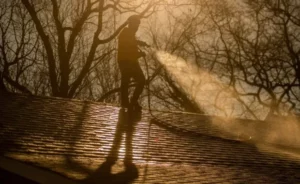
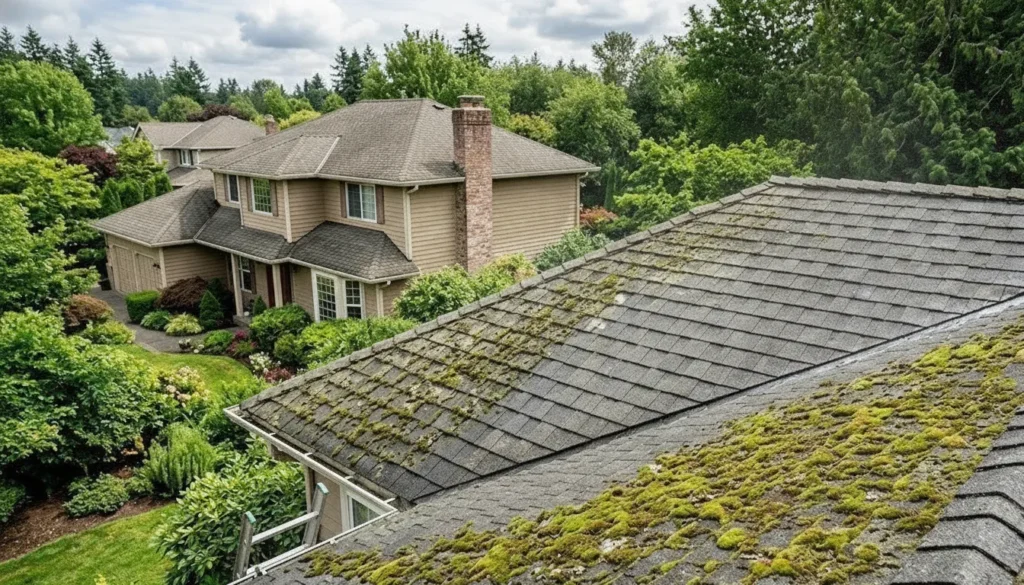
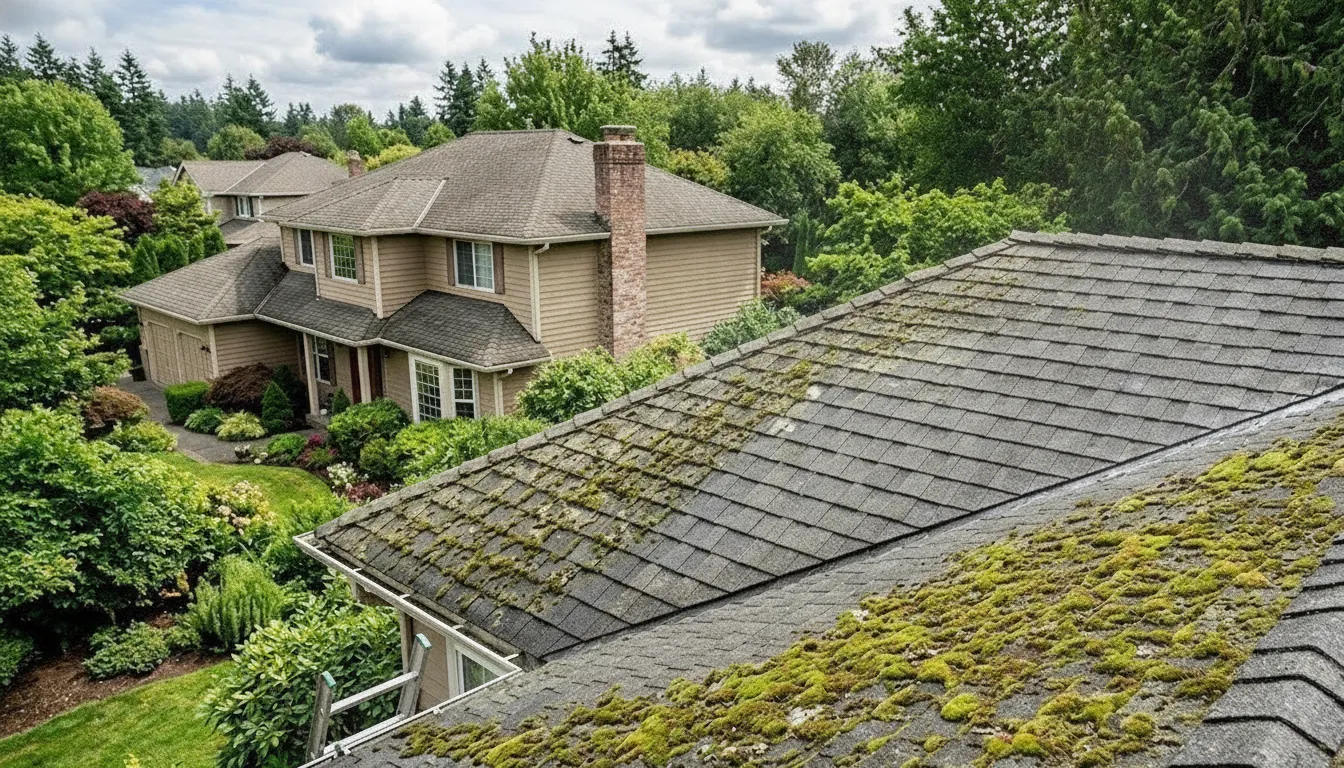
Dark streaks, moss, and lichen can make a Long Island roof look overdue for replacement when the real issue is surface contamination. The cleaning method matters, especially on aging shingles, cedar, slate, and tile.
So, can soft washing damage a roof? It can if the roof is misidentified, the solution or pressure is wrong, or the work ignores existing failures. A proper soft wash starts with an inspection, uses a surface-appropriate treatment, protects surrounding property, and finishes with a controlled low-pressure rinse.
That is why a contractor should explain the roof material, pressure range, solution, dwell time, runoff plan, and final inspection before work begins. The first question is whether the cleaning method matches the roof in front of you.
Request a roof-cleaning assessment
Can Soft Washing Damage a Roof?
The short answer
Properly controlled soft washing is designed to minimize force, but no roof is automatically safe to clean without an inspection. The result depends on identifying the roofing material, checking its condition, selecting an appropriate cleaning solution, and controlling the application from start to finish.
That distinction matters on Long Island, where homes may have asphalt shingles, cedar, metal, EPDM, slate, or tile roofs. A method suitable for one surface may be wrong for another. The first step should be a material and condition assessment, not an assumption that every roof can receive the same treatment.
What makes the process lower risk?
Soft washing relies on a cleaning solution and dwell time to loosen and treat organic growth, including algae, moss, and lichen. The solution is allowed to work before the roof is rinsed with controlled, low pressure. Gulf2Bay’s roof-cleaning guidance lists pressure of no more than 90 PSI for the roof service, while also requiring a surface-specific treatment plan. That is very different from using force to strip contamination from the shingles.
Application control still matters. Plants and furniture should be protected before work begins, and runoff should be managed rather than ignored. A careful crew also performs a post-treatment inspection to identify issues that cleaning cannot fix, such as cracked or curling shingles, exposed underlayment, leaks, or weakened decking.
Cleaning does not repair a failing roof. If the inspection finds a roofing defect, the responsible next step is repair or a roofing evaluation before washing. For the process details behind material identification, chemical dwell time, low-pressure rinsing, and final inspection, see the roof-cleaning service guidance.
What Creates Roof Damage During Cleaning?
The main risk points
Roof cleaning becomes risky when the method ignores the roof’s material, condition, or surrounding property. The first warning sign is excessive pressure. A forceful stream can disturb shingle surfaces, strip granules, drive water beneath roofing components, or worsen weak areas. Gulf2Bay’s roof-cleaning specification calls for no more than 90 PSI. That is a description of its service approach, not a universal rule that makes every roof safe at the same setting.
Aggressive brushing creates a similar problem. Moss and lichen can cling to shingles, but scraping or leaning hard on a broom can lift edges and remove protective granules. Guidance from the City of Eugene warns that too much force with a tool or broom can damage shingles: excessive tool pressure can harm roof surfaces. Organic growth should be treated and rinsed according to the material, not attacked until it comes off mechanically.
Chemical concentration also matters. Too strong a solution can affect roofing, plants, siding, painted surfaces, and outdoor furniture. Too weak a solution may fail to treat the contamination, encouraging unnecessary repeat passes. The product, dilution, dwell time, and rinse method should match the roof and the manufacturer’s directions. A biodegradable product still requires careful application and runoff control.
Material identification is another essential checkpoint. Asphalt shingles, cedar, metal, EPDM, slate, and tile do not respond identically to cleaning. Gulf2Bay’s roof process begins by identifying the surface and evaluating contamination before a treatment plan is selected. Skipping that inspection means the cleaner may use the wrong pressure, solution, or technique.
Foot traffic adds a separate risk. Wet treated roofs become slippery, and walking on brittle, loose, cracked, or steep roofing can cause damage or injury. A safer plan limits access and uses appropriate ladder and fall-protection practices rather than treating the roof like a normal walking surface.
Finally, poor runoff protection can damage landscaping and carry solution where it does not belong. Plants and furniture should be protected, downspouts and drainage considered, and exposed areas rinsed. The final inspection should also look for pre-existing cracks, curling, buckling, granule loss, leaks, or soft decking. Cleaning does not repair failed roofing. If those defects are present, they need to be documented and addressed separately before anyone promises that washing will solve the problem.
How Does a Safe Roof Soft Wash Work?
Inspection before application
A safe roof wash starts before any solution reaches the shingles. The roof material, its condition, and the type of growth all determine what can be cleaned and how. Asphalt shingles, cedar, metal, EPDM, slate, clay tile, and concrete tile are among the materials listed for roof cleaning, but suitability still requires an inspection. Cleaning is not a repair for leaks, missing roofing components, soft decking, or exposed underlayment.
- Inspect the roof material and condition. Look for curling, cracks, buckling, loose areas, granule loss, failed flashing, and other signs that require repair or a roofer’s evaluation first. The material and its condition establish the limits of the cleaning method. Professional roof cleaning should begin with that assessment, not a one-size-fits-all spray.
- Evaluate the contamination. Identify whether the roof has algae, dark streaking, moss, lichen, or another surface issue. Gulf2Bay’s stated process includes a bacterial assessment and a custom treatment plan. Growth on a shaded or damp roof may need a different approach from light surface discoloration.
- Protect plants, fixtures, and drainage areas. Cover plants and vulnerable furniture near the work area. Protect siding, windows, outdoor fixtures, and other surfaces from unnecessary runoff. Any cleaning solution that reaches the ground should be diluted with water, and exposed foliage should be rinsed.
- Apply a suitable cleaning solution. The solution should match the roof material and the contamination. A professional applies it systematically rather than relying on aggressive brushing or force. The stated roof-cleaning process uses specialized solution application followed by chemical dwell time.
- Allow the solution to dwell. Dwell time gives the treatment an opportunity to work on organic growth. The operator should follow the product requirements and monitor runoff, surrounding surfaces, and changing roof conditions instead of rushing to rinse.
- Rinse with controlled low pressure. Soft washing uses low pressure, with the roof-service guidance specifying no more than 90 PSI. The goal is to remove treated contamination without stripping granules, forcing water beneath materials, or abrading the roof surface.
- Inspect the result and walk through the property. A final inspection checks the roof, surrounding areas, runoff, and remaining problem spots. The homeowner should receive a walkthrough and maintenance recommendations, including any roof defects that cleaning could not address.
This sequence is why the answer to “can soft washing damage a roof” depends on the material, pressure, solution, protection, and workmanship. Low pressure alone is not a universal guarantee. Inspection and controlled application are what make the process appropriate for a specific roof.
Soft Washing vs. Pressure Washing on a Roof
Why pressure changes the risk
Roof cleaning is not the same as washing a driveway or patio. A roof has overlapping materials, protective granules, seams, flashing, and areas that may already be weakened by age or moisture. The cleaning method has to account for all of them.
Soft washing relies on a cleaning solution and controlled dwell time to loosen organic growth before a low-pressure rinse. Gulf2Bay’s roof-cleaning process begins by identifying the roofing material and evaluating the contamination, then ends with a post-treatment inspection. Its roof-service guidance specifies pressure of no more than 90 PSI. That is intended to move the solution and residue without treating the roof like a hard concrete surface.
Pressure washing approaches the problem differently. A narrow, forceful stream can disturb shingle granules, lift edges, force water beneath overlapping materials, or worsen an existing weak spot. Oregon State University Extension notes that improper pressure-washing technique can damage shingles. Even a low-pressure nozzle can damage some surfaces when it is held too close, a warning also noted by Young House Love.
That does not make every pressure-washing job identical, and it does not make soft washing an automatic guarantee of safety. The roof material, solution concentration, application distance, runoff control, and condition of the roof all matter. Slate, cedar, metal, membrane, tile, and asphalt shingles should not be treated as interchangeable surfaces.
For a broader explanation of how the methods differ across residential surfaces, see Gulf2Bay’s soft washing vs pressure washing comparison. For a roof, the practical question is narrower: can the contractor explain the material-specific method, pressure setting, plant protection, and final inspection before starting?
When Should a Roof Be Cleaned or Repaired?
Stains are not the same as failures
Dark streaks, algae, moss, and lichen usually point to organic growth on the roof surface. They are a cleaning concern, not automatic proof that the roofing system has failed. The University of Georgia notes that fungal and algae stains do not, by themselves, reduce a roof’s strength or service life. Growth is often heavier on shaded or north-facing areas where dew dries more slowly. Learn more about roof stains and inspection signs.
Cleaning becomes the wrong first step when the roof shows evidence of a structural or weatherproofing problem. Ask for a repair assessment before washing if you see active leaks, missing shingles, exposed underlayment, cracked or broken roofing material, curled or brittle edges, or decking that feels soft. Moss also deserves attention beyond appearance. It can hold moisture and, in some conditions, lift roofing materials enough to let water reach the layers below, according to Oregon State University Extension.
A roof cleaner should not use cleaning to cover up a defect. A soft wash can remove contamination, but it cannot replace missing shingles, seal a failed flashing detail, restore deteriorated decking, or stop water from entering through a damaged roof assembly. If a contractor cannot explain what is being cleaned and what needs a roofer’s assessment, pause the project.
Maintenance timing depends on the roof, surrounding trees, shade, moisture, and the amount of organic growth. Gulf2Bay’s customer guidance recommends an assessment every three to five years and cleaning every one to three years depending on environmental conditions. That is guidance, not a universal schedule. A heavily shaded Hamptons or Long Island roof may need attention sooner than a dry, open roof with little biological growth.
Before treatment, the process should identify the roofing material and evaluate its condition. The roof-cleaning service describes a custom treatment plan, controlled chemical dwell time, a low-pressure rinse, and a post-treatment inspection. That inspection is the point to document remaining stains, damaged areas, and maintenance recommendations rather than assuming a clean-looking surface means every roofing component is sound.
What Should Long Island Homeowners Ask a Roof Cleaner?
A practical screening checklist
A clear quote should explain how the contractor will protect the roof and the property around it. If the answer is only “we spray and rinse,” important decisions are still unanswered. Use these questions before hiring a roof cleaner in Bay Shore, West Babylon, the Hamptons, or elsewhere across Long Island.
| Ask about | A responsible answer should explain | A vague quote leaves unclear |
|---|---|---|
| Roof material | How the roof will be identified and whether its condition makes cleaning appropriate. | Whether the same method is being used on asphalt, cedar, metal, slate, or tile. |
| Pressure and application | What low-pressure method will be used, and how the operator avoids aggressive force or foot traffic. | Whether “soft wash” is simply a label for pressure washing. |
| Solution and dwell time | What surface-appropriate solution is applied, how long it works, and how it will be rinsed. | Whether the solution is appropriate for the roof and surrounding property. |
| Plants and furniture | Which plants, furniture, siding, and other surfaces will be covered or protected first. | Who is responsible if overspray or runoff reaches landscaping. |
| Runoff control | How the crew will manage rinse water and protect areas below the eaves and downspouts. | Where treatment and rinse water will travel. |
| Inspection and limits | Whether the crew will check for cracks, curling, buckling, granule loss, leaks, or failed components, and explain what cleaning cannot repair. | Whether visible stains are being mistaken for a roof defect, or a roof defect is being hidden by a clean surface. |
| Written scope | A written description of preparation, treatment, rinsing, protection, final inspection, and maintenance recommendations. | What work is actually included in the quoted service. |
The contractor should be able to identify the roof material, evaluate the contamination, and describe a treatment plan before applying anything. Gulf2Bay’s documented process includes solution application, chemical dwell time, low-pressure rinsing, and a post-treatment inspection. It also lists roof materials from asphalt and cedar to metal, EPDM, slate, and tile, while requiring inspection first. Review the professional roof cleaning process, and confirm coverage for your area through the Long Island service areas page.
Cleaning is not a repair for leaks, exposed underlayment, soft decking, or failed roofing components. A responsible cleaner will identify those limits and recommend the appropriate next step instead of treating every roof as automatically safe to wash.
Frequently Asked Questions
Can soft washing damage roof shingles?
It can if the roof is treated with excessive pressure, an unsuitable solution, aggressive brushing, or poor runoff control. A careful process starts by identifying the shingle material and evaluating its condition, then uses a surface-appropriate treatment, controlled dwell time, and a low-pressure rinse. Cleaning should not be used to conceal cracked, curling, buckled, or badly worn shingles.
Is soft washing safe for asphalt shingles?
Asphalt shingles can be suitable for soft washing, but no roof should be approved without an inspection. The cleaner should confirm the material, identify weak or exposed areas, protect plants and property below the eaves, and explain the solution and rinse method. Organic stains themselves do not necessarily reduce roof strength or service life, according to the University of Georgia Extension.
What pressure should be used when soft washing a roof?
Ask the contractor to state the pressure range before work begins and explain why it fits the roof. Gulf2Bay’s roof-cleaning offering specifies no more than 90 PSI, with the cleaning solution doing the primary work rather than force. A higher-pressure approach can loosen granules or damage shingles when the technique is wrong.
How do you know if a roof should be cleaned or repaired?
Dark streaks, algae, lichen, or light moss growth may call for a cleaning assessment. Leaks, missing or lifted shingles, exposed underlayment, soft decking, curling, buckling, and significant granule loss require a repair or roofing evaluation. Cleaning removes contamination; it does not restore failed roofing components.
How often should a roof be soft washed?
There is no universal schedule. Shade, tree cover, moisture, roof material, and the return of algae or moss all affect timing. Gulf2Bay’s guidance recommends a roof assessment every three to five years and cleaning every one to three years when environmental conditions call for it.
Ready to Request a Roof-Cleaning Assessment?
A roof assessment helps identify the roofing material, surface condition, and cleaning approach before work begins. It also gives you a chance to ask how pressure, solution, plant protection, runoff, and final inspection will be handled on your Long Island home.