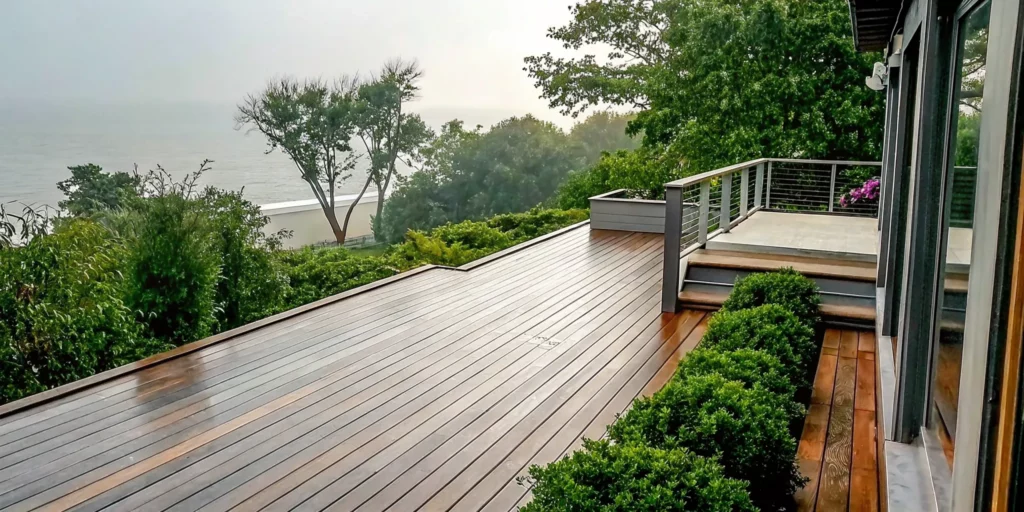
A luxury deck on Long Island must survive salt air and intense coastal moisture. Far too many projects fail because the owner chose the wrong material.
Ready to build a deck that lasts decades on the coast? Call (631) 557-5484 to schedule your free deck consultation today.
Custom deck building on Long Island requires balancing the natural beauty of premium wood with the strength needed for a coastal climate. Luxury homeowners typically choose between high-performance composite boards and exotic hardwoods like Ipe. These woods are prized for extreme density and resistance to rot.
Modern composite decking uses wood flour and plastic to create a stable material that resists decay better than untreated lumber. While composites offer low maintenance, exotic hardwoods like Ipe remain popular in luxury coastal properties for their natural look. The right choice must account for salt air and local weather to ensure your outdoor living space lasts for decades without warping or fading.
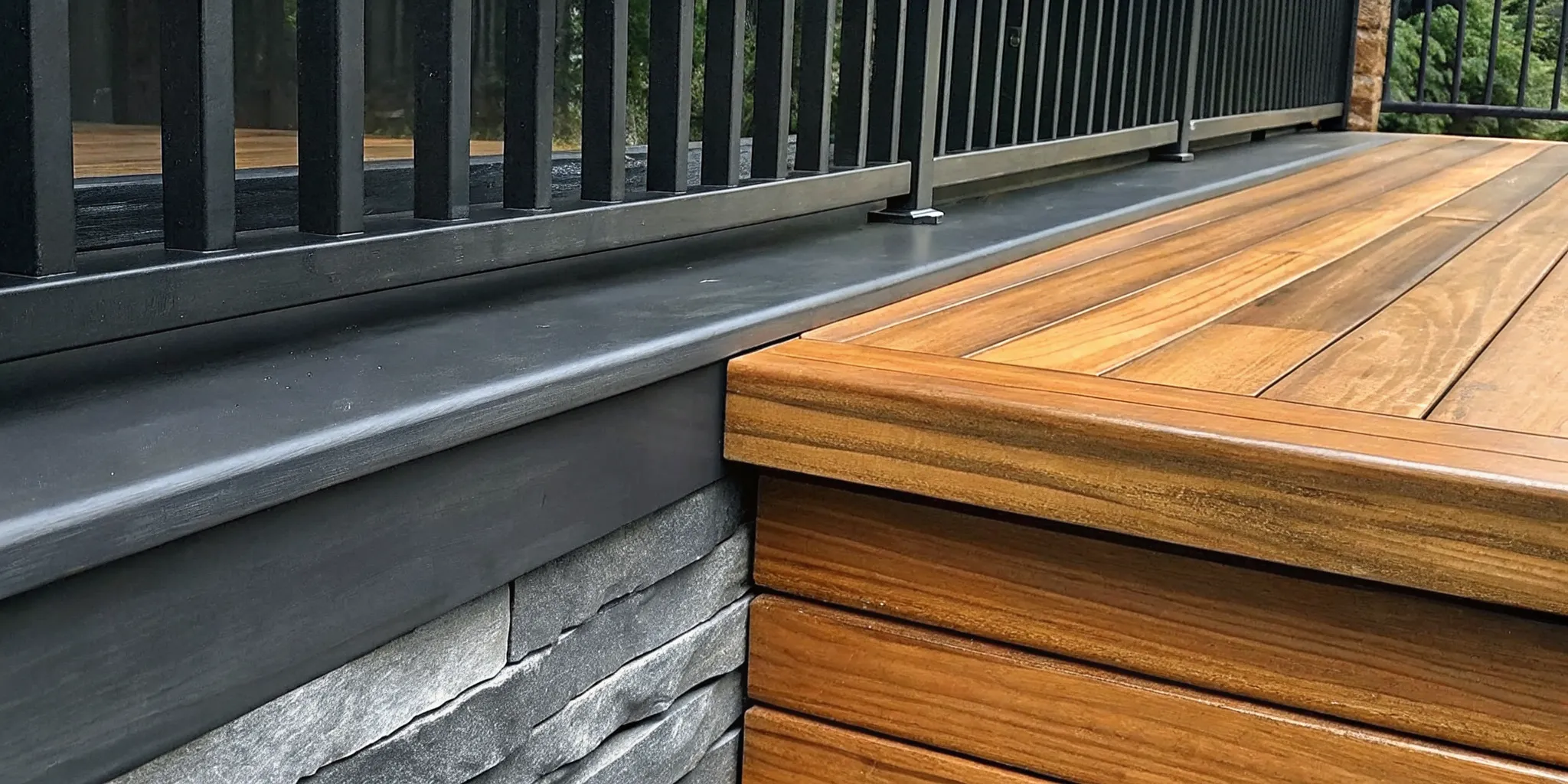
Choosing the right surface for your home is the most important part of the planning process. Understanding how these materials react to salt air and the changing seasons sets the foundation for a build that lasts.
Deck Building Long Island: What Makes Material Choice So Important on a Long Island Deck?
Your deck faces a tough life here on Long Island. Between the salt air from the Atlantic and the high humidity of our summers, the choice of wood or composite is the top factor for success. Many decks fail early because the owner picked wood that could not handle the local coast. When deck building on Long Island, plan for these forces from day one.
Coastal air and wood rot
Salt air is a silent killer for many home surfaces. It draws dampness into the wood and speeds up rot if the right seal is not used. Long Island deck maintenance is much harder when the boards are not meant for the beach. The environmental conditions in a sea-side area can cause fast wood decay if the surface is left bare.
The freeze and thaw cycle
Winters are just as harsh as summers. The constant cycle of freezing and thawing puts stress on every board and screw. Weak wood will crack or warp before the first few years are up. Long-term durability depends on material choice, and high-end options are always recommended for homes in the Hamptons.
Cleaning for the long haul
How you clean your deck is just as vital as what it is made of. Soft washing is the best way to keep a deck in top shape without hurting the boards. This method uses low pressure and safe soaps to kill mold and algae at the root. Soft washing lasts 4-6x longer than old-school power washing.
What Makes Premium Hardwoods Like Ipe and Cedar Ideal for Coastal Decks?
High-end hardwoods look great and last a long time in salt air. Luxury homes in the Hamptons use these woods because they are tough. The right wood makes the whole project. For a deck that stays strong for years, choosing the right species matters.
Durable Ipe for Coastal Homes
Ipe is the king of deck building long island projects. Also called Brazilian Walnut, it is a dense wood that resists fire and bugs better than most. In wet coastal air, Ipe stays steady and does not rot. Ipe decks last over 40 years with proper care.
This wood is prized in luxury coastal areas like the Hamptons. It has a deep brown color that feels high-end. It handles ocean wind and salt with ease. But Ipe is heavy and hard to cut. It needs a pro who knows the wood.
Natural Beauty of Cedar and Mahogany
Cedar is a classic choice for many local homes. It is a light wood that smells great and resists rot. It stays cool on your feet and is easy to work with. Over time, cedar turns a nice silver-gray color if not stained. Many people love this aged look for beach homes.
Mahogany offers a warm, red tone. It is a stable wood that holds stain well. Mahogany decks stay flat and do not warp like cheap woods. It gives your backyard a smooth and clean look. Like Ipe, it is a rare wood that adds value to your home.
Proper Care for Hardwood Surfaces
All high-end woods need the right care. Never use high pressure to clean these decks. High pressure rips the wood grain and ruins the surface. Instead, use low-pressure tools and safe soaps. Environmental factors can wear down wood if left unprotected.
A specific oil is needed to stop the wood from turning gray. Brazilian Rosewood Oil keeps the rich color and stops cracks. This oil goes deep into the wood to block out water. Have this done every year to keep a deck in top shape.
How Does Composite Decking Perform in Long Island’s Coastal Climate?
Composite decking has changed how homeowners think about professional deck building services. Brands like Trex offer a strong wood-plastic mix that lasts for years. This board type is a top pick for owners who want to spend less time on upkeep. It looks like wood but does not have the same problems with water or bugs.
Stay strong against water
Wood-plastic boards handle wet weather well. They show great resistance to moisture, which is key in salt air. There is no mold to deal with like soft wood. The deck stays solid and safe.
Modern boards use a mix of wood flour and recycled plastic. This blend creates a stable surface that resists rot and decay better than raw lumber. On the coast, this prevents the soft spots that can make a wood deck unsafe. These decks stay firm even after years of heavy storms.
Better ways to build
New manufacturing methods have made composite boards even tougher. Many high-end brands use co-extrusion to add a hard shell that protects the core from sun and rain. This helps the boards keep their color for 25 years or more.
These decks last much longer than basic wood in salt air. They are built for long life in the coastal climate. The deck holds up against wind without needing to be stained every year. That saves money and time in the long run.
Good for the home
Composite decks stay smooth and do not leave splinters. No sanding or sealing is needed to keep them looking good. Simple Long Island deck maintenance like a quick wash is all it takes to keep the surface clean.
These boards can get hot in direct sun, so picking a light color helps. They also cost more up front than wood. But most people find the lack of yearly work makes up for the price. It is a smart move for any home by the bay.
Hardwood vs Composite: Which Deck Material Is Right for Your Home?
Choosing between wood and composite depends on how you balance looks and upkeep. Your choice impacts more than just the price. It sets the tone for your outdoor space for years to come.
Balancing looks and care
Hardwood gives you a natural grain that factory boards cannot match. Many luxury homes on Long Island use Ipe for its rich color and strength. But wood needs oiling to stay dark. Without care, it turns gray. If you want a deck that stays the same color without hard work, composite is often the better path.
Building for the coast
Modern composite boards use wood flour and plastic to block moisture. This mix helps the deck resist rot and decay better than basic lumber. That matters a lot in a humid climate. Both deck types need annual cleaning to keep their best look.
| Feature | Hardwood | Composite |
|---|---|---|
| Initial Cost | $12-20 per sq ft | $10-15 per sq ft |
| Lifespan | 30-50 years | 25-30 years |
| Maintenance | Annual oiling | Annual cleaning |
| Aesthetics | Natural grain variety | Consistent factory look |
| Refinishing | Sanded and refinished | Replacement needed |
| Heat | Stays cool | Gets hot in sun |
A long term view
Hardwood is a great pick for a natural feel and a deck that can be sanded down later. It lasts longer with proper treatment. Composite is best for those who want to spend less time on care. Both are solid choices for the local area.
What to Expect from Deck Maintenance on Long Island
A deck on Long Island needs care to survive the salt air and sun. Too many people wait until their wood grays or boards rot. Regular upkeep keeps your space safe and beautiful for years.
Schedule a Yearly Check
Every year, have an expert look at your deck. Check for loose screws, wood rot, and sun damage. These small issues can lead to big repairs if ignored. Annual professional inspections are the best way to find problems early and keep your deck safe.
Check the frame and the stairs too. On the coast, salt can eat through metal parts over time. When a weak spot is found, fix it before summer starts. This keeps your family safe and your home value high.
Wash and Oil Your Deck
Cleaning is about more than just looks. Dirt and mold hold water against the wood, which leads to rot. For hardwoods, Long Island deck maintenance needs a soft touch. Use low pressure to avoid hurting the grain.
After a deep clean, apply a good oil. Brazilian Rosewood Oil sinks deep into the wood to protect your deck from the harsh Long Island sun. It stops the wood from turning gray and keeps the rich color.
- Yearly check. Look for rot and loose parts every spring.
- Gentle wash. Use low pressure to remove mold without hurting the wood.
- Apply oil. Use a deep oil like Brazilian Rosewood Oil every 1 to 2 years.
- Check parts. Look for rust on screws, mostly near the sea.
- Winter care. Keep snow off the deck and use plastic shovels to avoid marks.
Care for Composite Decks
Even composite decks need work. They do not rot like wood, but they can still grow mold in the shade. A simple soap wash once a year keeps them bright. Schedule annual cleaning to stop stains from leaves and dirt.
Watch for dirt in the gaps between boards. Good air flow keeps the deck cool and dry. If you see spots, rinse them off with a hose. This simple step keeps your deck looking new.
Choosing the Right Deck Builder for Your Long Island Project
Check for local licenses and insurance
Finding a pro for deck building long island starts with a check of their papers. Hire a builder with a current license in their town. Look up a firm’s past through the Nassau or Suffolk County Department of Consumer Affairs. This step helps you find a team with a clean track record and proof of insurance. Make sure they have both liability and workers comp coverage before they start. A good builder must follow all local building codes to keep your home safe and legal. Do not skip this step or you may face fines from the town later.
Ask about skills with your chosen wood
The best builders have deep skill with the wood or boards you pick. For a high-end look, ask about their work with Ipe or other hardwood. These boards need special care during the build to last in salt air. Many decks fail because the builder did not know how to handle exotic wood. Good crews use boards that meet high moisture standards set by building experts to stop rot. They should also show you photos of decks they have built in the Hamptons or nearby towns. Make sure they have used the exact brand of composite or type of wood you want for your home.
Get a clear timeline and warranty
Know how long the work will take before they rip out your old deck. Some skilled teams can finish a new deck in just 3 days. A pro will give you a firm date for when they will start and finish the job. Look for a strong promise on their work. Many top builders offer a five-year warranty on their labor. This shows they stand behind their professional deck building services. Ask for local names you can call to check their past work. A true pro has nothing to hide.
Frequently Asked Questions
Do I need a building permit for a new deck on Long Island?
Yes, most towns in Nassau and Suffolk County need a permit for new deck work. Local laws make sure your deck stays safe in high winds. A licensed builder should file these papers for you. According to the Nassau County Department of Consumer Affairs, you can check a builder’s history to see if they follow these local rules.
How long does it take to build a custom deck?
The time depends on the size of the job and the boards you choose. Some expert teams can remove an old deck and build a new one in as little as three days. According to Long Island Decking, many custom jobs are done fast to meet tight dates. Larger luxury builds with outdoor kitchens will take more time.
Does salt air damage composite decking?
Modern composite boards are built to resist the harsh salt air found near the shore. Unlike natural wood, these boards do not rot when they get wet. Research from the National Institutes of Health shows that wood-plastic blends are very good at resisting water. This makes them a great choice for luxury homes in the Hamptons that face the ocean.
How often should I clean my Long Island deck?
Have your deck cleaned at least once a year to keep it looking new. Salt and sand from the ocean can build up and trap water against the surface. For exotic woods like Ipe, use low-pressure wash methods and fresh oil. Regular care helps your deck last longer than if maintenance is skipped, as noted by the experts at Gulf2Bay Softwash.
Which lasts longer: hardwood or composite decking on Long Island?
Premium hardwoods like Ipe can last 40+ years with proper annual maintenance, while quality composite boards typically last 25-30 years. Hardwood requires annual oiling to maintain its color and prevent cracking. Composite requires less upkeep but cannot be refinished once worn. For Long Island coastal homes, both options are viable. The best choice depends on how much maintenance you want to commit to.
Ready to start your custom Long Island deck build?
Waiting to build your new deck lets the harsh Long Island salt air and winter wetness do more harm to old wood decks. Starting your build today avoids the rush of the busy season and makes sure work ends in time for summer sun.
Ready to build? Call (631) 557-5484 to schedule a free deck consultation and get a clear plan for your new hardwood or composite deck today.