Vinyl siding is durable, but it is not immune to harsh cleaning. Concentrated bleach, long dwell time, uneven application, or incomplete rinsing can create problems. On Long Island homes, salt air, shade, mildew, and tree cover can make buildup look worse than it is.
Does bleach damage vinyl siding? It can, especially when used too strong or left on too long. A controlled, material-appropriate cleaning solution, low-pressure application, careful dwell time, and a thorough rinse are safer ways to remove organic buildup.
Request a qualified siding-cleaning assessment for your Long Island home.
The right approach starts with identifying the contamination. Protect nearby plants, windows, trim, and painted surfaces. Gulf2Bay serves homeowners from Nassau County to Suffolk County and the Hamptons. The cleaning method should fit the siding and its condition, not simply the product sitting on the shelf.
Does bleach damage vinyl siding? The short answer
The answer depends on how bleach is mixed, applied, and rinsed. A controlled, diluted cleaning solution can be compatible with vinyl siding. The surface must be assessed first, and conditions must be suitable. Bleach is not automatically harmless. The wrong concentration or application method can leave lasting surface damage.
Overly concentrated bleach may discolor vinyl, accelerate fading, or contribute to a chalky surface. Poor rinsing can leave residue around textured siding profiles and trim. That residue may continue reacting in heat and sunlight after cleaning.
Concentration and dwell time matter
More chemical is not a better cleaning method. The solution should match the type and amount of organic growth. It should be applied evenly rather than allowed to pool. Dwell time also needs control. Leaving a solution on the siding too long increases the chance of discoloration and drying, especially when the surface is weathered.
There is no universal DIY ratio for every siding, stain, temperature, or application method. A professional should identify the vinyl condition, test an inconspicuous area, and adjust the treatment instead of relying on a fixed formula.
Heat, sun, and runoff change the risk
Direct sun and high surface temperatures can dry a cleaning solution before it is rinsed. That can create uneven results and make residue harder to remove. Work in manageable sections and avoid allowing solution to dry on the siding.
Runoff also needs planning. Bleach solution can affect plants, soil, painted surfaces, metal fixtures, and neighboring materials. Protecting nearby landscaping and directing runoff away from sensitive areas are part of responsible exterior cleaning.
How Long Island weather affects vinyl siding buildup
Long Island homes face a mix of sun, humidity, wind, salt air, and seasonal storms. These conditions do not damage every siding panel in the same way. They do change how quickly dirt and organic growth return.
Shade and moisture keep growth active
North-facing walls and areas beneath trees may stay damp after rain. Shrubs can also limit airflow along the lower siding. That combination creates a better environment for algae and mildew. Cleaning only the visible stain may not solve the moisture pattern behind it.
Look at gutters, downspouts, sprinklers, and roof runoff before cleaning. A wet section may need a drainage or maintenance adjustment as well as surface cleaning. This prevents the same buildup from returning quickly.
Salt and weather expose weak spots
Coastal air can leave residue on siding and trim. Wind can carry soil and plant material against the wall. Weathered vinyl may show these marks more clearly than newer siding. That is why a test area and material inspection matter before a full treatment.
Long Island conditions call for a measured process. Stronger bleach is not a substitute for diagnosing why one wall is dirtier than another.
What makes bleach risky for vinyl siding
Bleach is not automatically damaging to vinyl siding. The risk comes from how the solution is mixed, applied, allowed to sit, and rinsed. A controlled process can address organic staining. An aggressive application can leave streaks, discoloration, or damage to nearby materials.
Six conditions that increase the risk
Concentration: Stronger is not always better. A solution more concentrated than the surface requires can create avoidable risk, especially around painted trim, plants, and metal fixtures.
Dwell time: The solution needs contact time to work. Leaving it on too long can increase residue, spotting, or uneven appearance. The surface should be monitored instead of left unattended.
Direct sun and heat: Sun-warmed siding can dry a cleaning solution before it is rinsed evenly. Working in manageable sections helps maintain consistent results.
Weathered vinyl: Older, chalky, faded, or brittle siding may react differently from newer vinyl. A small test area can help identify removable dirt versus permanent weathering.
Overspray and runoff: Bleach does not belong on landscaping, unprotected metal, glass, painted surfaces, or neighboring property. Wind can carry fine spray farther than expected.
Incomplete rinsing: Residue left on siding can create streaks as it dries. Rinsing should be thorough, with attention to seams, trim, windows, and areas below the work zone.
The safer question is whether the cleaner identified the material, checked its condition, selected a suitable treatment, protected surrounding surfaces, and rinsed completely. Gulf2Bay documents low-pressure application under 100 PSI, controlled dwell time, and a low-pressure rinse.
Bleach, dirt, algae, and oxidation are not the same problem
A siding wall can look uniformly faded while the cause changes from one section to the next. Dirt may be sitting on the surface. Algae or mildew may be growing where moisture and shade persist. White oxidation or chalking may be part of vinyl weathering. Those conditions need different treatment decisions.
Identify the residue before choosing a cleaner
Ordinary dirt often responds to a controlled wash and rinse. Organic growth is different. Algae, mildew, and similar growth can appear as green, gray, or dark staining along shaded elevations or near landscaping. Long Island’s damp weather and coastal exposure can make those patterns more noticeable in Nassau County, Suffolk County, and the Hamptons.
A properly selected soft-wash treatment may help break down organic contamination without aggressive pressure. Gulf2Bay’s documented process includes surface identification, contamination evaluation, and property protection. It also includes appropriate dwell time and a low-pressure rinse. No cleaning solution should be treated as universally safe simply because it is diluted.
Bleach-based chemistry can help with some organic growth, but it is not a cure for every white or faded mark. Oxidation and chalking are surface-weathering issues. Bleach may remove growth sitting on top of the surface, but it does not reverse the underlying oxidation.
Scrubbing harder or increasing pressure can create a cleaner-looking patch while leaving uneven color or damage. Ask for a small test area before full service. The result should show whether the problem is removable contamination or weathered material that cleaning cannot restore.
How professional soft washing protects siding and landscaping
A careful soft-wash job is not just applying cleaner and pointing a hose at the house. The process accounts for siding material, plants, windows, furniture, soil, and the type of growth being removed. A professional process manages those variables instead of treating every exterior like concrete.
The controlled soft-washing sequence
- Assess the surfaces. Identify the siding material and check for oxidation, loose panels, failed caulk, damaged trim, and areas needing separate attention.
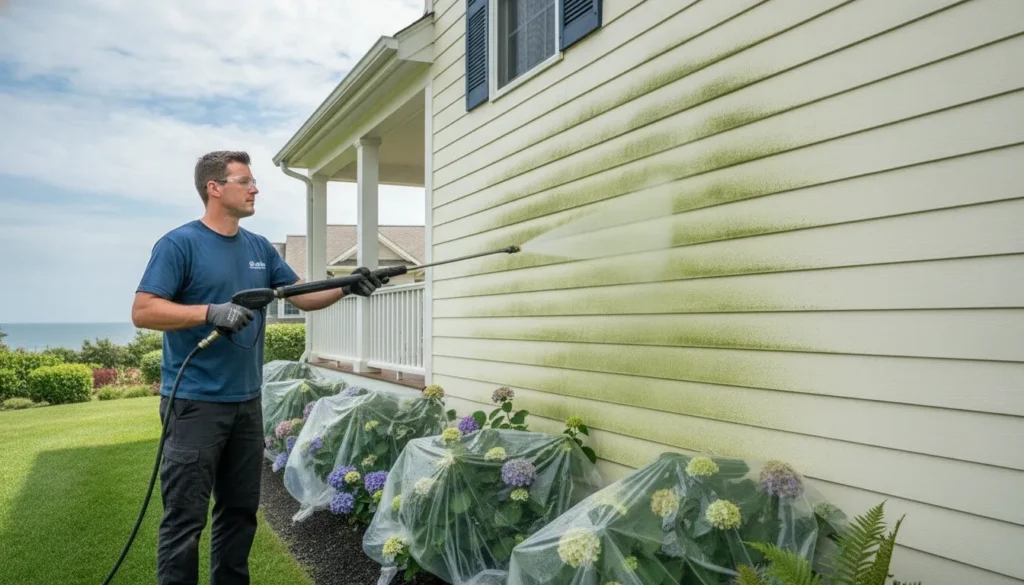
- Protect plants and belongings. Move or cover furniture, grills, decorations, and other vulnerable items. Protect nearby plants and rinse them during preparation and cleanup.
- Apply at controlled low pressure. Gulf2Bay uses biodegradable cleaning solutions and low-pressure application, generally under 100 PSI, rather than blasting siding. See soft washing versus pressure washing for the method difference.
- Control dwell time. The solution needs time to loosen organic contamination. It should not dry on siding or landscaping.
- Rinse with low pressure. Remove residue while respecting seams, trim, caulk, window seals, and painted finishes.
- Inspect the result. Final checks should look for remaining buildup, missed edges, runoff concerns, oxidation, and damaged siding that cleaning cannot correct.
This sequence combines diagnosis, protection, measured application, and verification. It cleans the home without treating the siding or landscape as disposable.
What a thorough rinse should include
Rinsing is not a quick pass at the end of a cleaning job. It should remove loosened growth and remaining solution from siding profiles, seams, trim, windows, and nearby hardscape.
Check the edges and low points
Residue can collect beneath laps, around corners, and below windows. Plants and soil along the foundation may also receive runoff. Work in sections and inspect the lower edge before moving to the next area.
After rinsing, look for streaks, missed growth, and areas that dried too soon. A final check is especially important on light-colored siding, where uneven residue shows quickly.
What should you not clean vinyl siding with?
Vinyl siding can handle routine cleaning, but the method matters. Dirt, mold, and mildew collect in shaded areas, so more force is not automatically a better solution. Consider concentration, dwell time, pressure, rinsing, and runoff before choosing a method.
Common choices that create avoidable risk
Do not start with undiluted bleach or an overly concentrated cleaner. Repeated misuse may contribute to fading, yellowing, or material breakdown. High pressure is another poor substitute for surface diagnosis. Abrasive brushes can create marks, while uncontrolled runoff can expose plants and nearby surfaces.
| Approach | Why it can cause trouble | Better approach |
|---|---|---|
| Undiluted or overly concentrated bleach | May increase fading, yellowing, surface breakdown, and plant exposure when misused. | Use a material-appropriate plan, controlled dwell time, and a thorough rinse. |
| High-pressure blasting | Can drive water into seams, damage nearby finishes, and clean unevenly. | Use low-pressure application and rinsing matched to the siding. |
| Abrasive brushes | May scratch or mark the surface while spreading loosened grime. | Choose a soft, non-abrasive method and let the cleaner do the work. |
| Uncontrolled runoff | Can expose landscaping and adjacent materials to cleaning residue. | Protect surrounding property, manage flow, and rinse affected areas. |
A surface-specific soft-washing process uses low pressure, biodegradable solutions, controlled dwell time, and a low-pressure rinse. Gulf2Bay describes that approach in its house washing process.
When Long Island homeowners should skip DIY siding cleaning
DIY cleaning can make sense for a small, accessible area with light dirt and clearly identified siding. It becomes a poor fit when the job involves height, delicate finishes, heavy growth, or runoff that is difficult to control.
Warning signs that the job needs a careful method
Multi-story walls and steep grades create access problems. A ladder also makes consistent spray distance, solution coverage, and rinsing harder. Upper gables, dormers, and hard-to-reach elevations need a method that accounts for the entire exterior.
Weathered or chalky siding deserves caution. That powdery film may be oxidation, not ordinary dirt. Aggressive brushing or pressure can disturb the finish and leave uneven clean-and-dark areas. Test an inconspicuous area or have the condition evaluated first.
Persistent green growth, black spotting, or recurring mildew is another reason to stop treating siding like a one-time rinse. Coastal exposure adds salt and windblown soil. It also brings faster moisture changes, especially near the South Shore, Nassau County, Suffolk County, and the Hamptons.
Protect nearby landscaping before cleaning begins. If you cannot identify the siding material, do not guess about cleaner or pressure. Gulf2Bay’s residential exterior cleaning services are built around surface-specific evaluation.
Frequently Asked Questions
Does bleach damage vinyl siding?
It can. Strong or poorly controlled bleach solutions may discolor siding, affect nearby plants, and damage surrounding finishes if sprayed carelessly or left on too long. Vinyl siding still needs a cleaner selected for the surface, controlled application, and a thorough low-pressure rinse.
What is safer than using bleach on vinyl siding?
A surface-specific soft-washing process is safer for many Long Island homes. The technician identifies the siding and contamination, protects nearby property, applies a biodegradable cleaning solution at low pressure, allows appropriate dwell time, and rinses without aggressive blasting.
Can pressure washing damage vinyl siding?
Yes, excessive pressure or poor technique can force water behind panels, damage the surface, or leave uneven results. Gulf2Bay’s documented process uses application pressure under 100 PSI, followed by a low-pressure rinse. Settings should still match the material and condition.
Does bleach remove oxidation from vinyl siding?
Usually not. Bleach may help remove organic growth sitting on the surface, but white chalking and oxidation are weathering issues. Repeated chemical washing or harder scrubbing may worsen an uneven appearance. Test the condition before choosing treatment.
Should I clean vinyl siding myself or hire a professional?
DIY cleaning may be reasonable for a small, accessible area with light dirt and known siding. A professional assessment is more useful for multiple stories, heavy growth, delicate landscaping, coastal exposure, or uncertain siding condition.
Ready to plan safer vinyl siding cleaning?
Bleach and aggressive pressure can create avoidable risks. The method must match the siding and the growth on it. A qualified assessment helps identify the surface, review its condition, and select an appropriate approach for your Long Island home.
Request a qualified exterior-cleaning assessment for clear next steps.