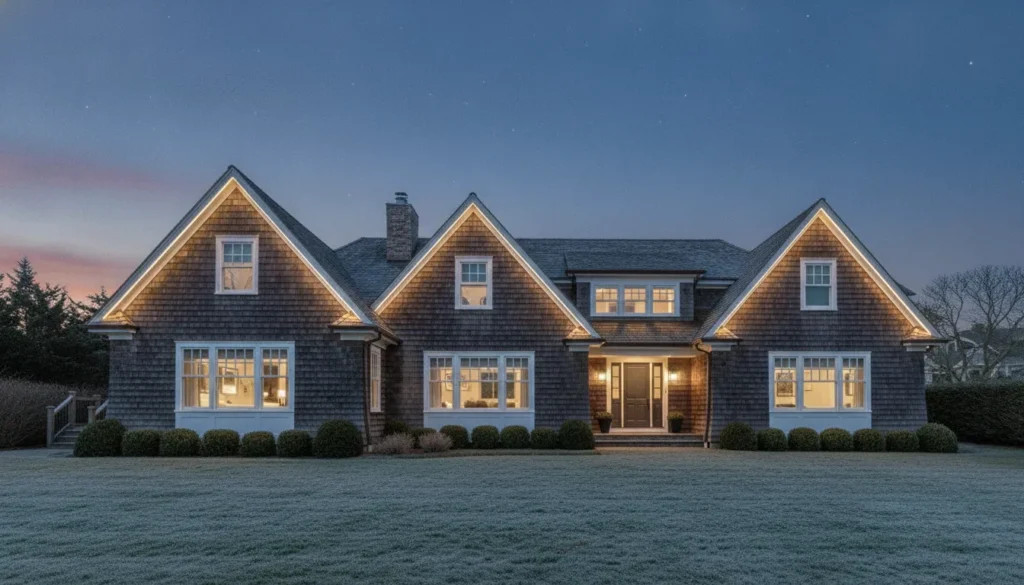
Tall Hamptons rooflines can turn a simple holiday decorating project into a ladder, roof, gutter, and weather assessment. Before carrying a light strand outside, inspect the height, pitch, access point, and surface condition. Check overhead lines and the forecast, too. If any part of that checklist is uncertain, stop before you climb.
Good holiday lighting safety hamptons practice means keeping feet on stable ground whenever possible and inspecting cords and connections. Protect shingles and gutters with suitable clips. Postpone the job in wet, icy, or windy conditions. For tall or steep rooflines, a professional installation with seasonal removal and storage is the safer route.
Use this checklist to decide whether the roofline is accessible and whether the home can support a careful installation. It also shows when professional help makes more sense. Request a free on-site assessment if you want the access and installation plan handled before the season begins.
Can You Safely Reach a Tall Hamptons Roofline?
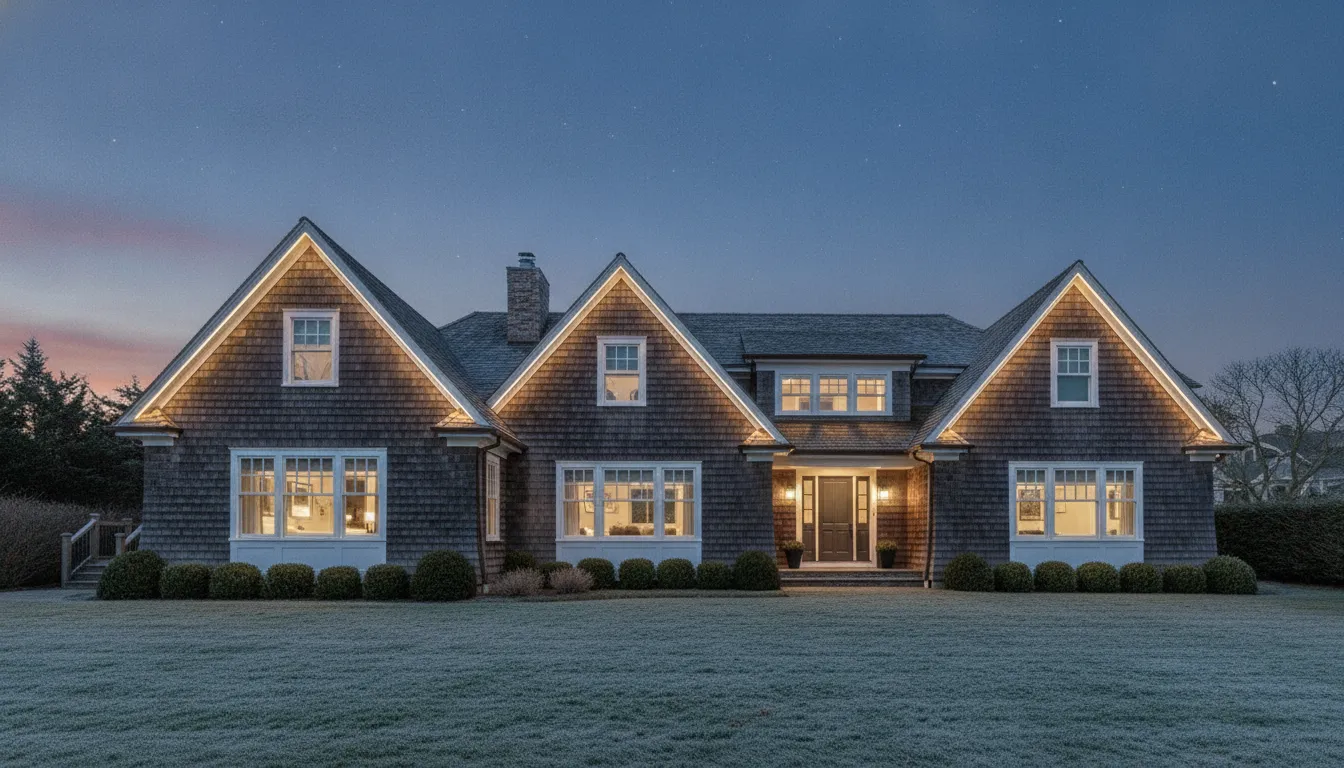
Start with the access decision, not the light layout. A tall Hamptons roofline may combine steep pitches, narrow planting beds, uneven ground, exposed gutters, and coastal weather. If you cannot keep stable footing and maintain control of the ladder, stop and use a different installation plan.
Inspect the route before setting a ladder
Walk the full approach in daylight. Check the roof height, pitch, gutter condition, ground slope, wet leaves, ice, and any surface that could shift under a ladder foot. Look up for overhead power lines before carrying equipment into position. OSHA notes that power lines create electrocution, burn, and fall hazards. Stay at least 10 feet away and treat every line as energized. OSHA ladder guidance also advises using a non-conductive fiberglass or wood ladder when working near lines.
Do not use a loose gutter, decorative railing, planter, or stacked material as a ladder base. Extension ladders need stable, level ground and a roughly 4:1 setup angle. If stepping onto a roof, the ladder should extend at least three feet above the edge. Keep three points of contact while climbing, and never carry lights in a way that forces you to lean or reach sideways.
Know when conditions make the answer no
Rain, frost, snow, ice, strong wind, and a wet roof change the risk before the first clip is installed. So does a roofline above two full stories, a pitch steeper than 8:12, deteriorated fascia, or a gutter that moves when touched. A balance issue or medical condition is another reason not to climb.
Those conditions call for a controlled alternative, not a higher ladder. A Long Island holiday lighting service can assess access and plan installation from safer working positions. It can also coordinate removal when weather is no longer suitable. The same checklist applies whether you are planning a DIY job or comparing professional options for holiday lighting safety in the Hamptons.
How Do You Protect Shingles, Gutters, and Fascia?
Start with the roof materials and drainage system, not the lights. Cedar shingles, asphalt shingles, fascia boards, and gutters each need a fastening method that holds the display. It must not puncture, crush, or block the surface.
Match the clip to the surface
Use roof-rated clips designed for the specific run. Shingle clips belong in the natural overlap zone, where the lower edge of one shingle meets the face of the next. Slide them into place without forcing or flexing the shingles. Fascia clips attach to the trim board. Gutter clips are designed for K-style or half-round gutters. Ridge clips can handle peak runs when the roofline requires them. These distinctions are practical, not cosmetic. Improper clips can crack shingle granules or gradually dislodge shingles. The risk increases when clips are forced, overtightened, or left installed year-round. See the roofline clip guidance.
Do not use staples, tape, nails, or general-purpose hardware as substitutes for roof-rated clips. They can puncture materials, trap moisture, damage protective coatings, or leave adhesive and fastener marks behind. Seasonal lighting should come down when the season ends, rather than becoming permanent weight on the roof edge.
Keep gutters carrying water
Inspect the gutter line before installation. Loose, sagging, or deteriorated gutters should not support lights. Clean the channel first, then position clips and cable so they do not obstruct water flow. A cable that sags into the channel can collect water, stress the clips, and interfere with drainage. If the gutter needs gutter cleaning and brightening or repair before lighting, handle that first.
Clip spacing depends on the light strand, roofline, surface, wind exposure, and the manufacturer’s instructions. Some installation guidance uses roughly 12 to 18 inches on shingle or fascia runs. Heavier strands may need tighter spacing. Treat those numbers as a planning reference, not a universal law. The goal is a supported, straight run that does not sag, pool water, or pull against the fascia.
Account for coastal exposure
Hamptons rooflines face wind and salt air, particularly on exposed South Fork properties. Secure steep shingle gables so the display does not work loose in a storm, while avoiding excessive tension that transfers force to the shingles, clips, gutters, or fascia. An on-site assessment should identify the surface materials and conditions before any installation begins.
Holiday Lighting Safety Hamptons Homeowners Need for Cords and Weather
Start with the light strings and cords
Check every light string before it goes onto the roofline. Look for intact insulation, secure plugs, and connections that are not loose, split, or crushed. Replace worn cords instead of covering damage and putting them back into service. OSHA notes that damaged extension cords can expose internal wires or loosen the plug connection.
Choose factory-assembled, three-wire cord sets and extension cords with strain relief. For seasonal lighting products, the CPSC identifies minimum wire size, sufficient strain relief, and overcurrent protection as observable safety characteristics. Use products intended for the installation, and follow the manufacturer’s instructions rather than combining strings or adapters by guesswork.
Keep outdoor connections above standing water
Use extension cords rated for outdoor use. Protect exterior outlet connections with an outdoor in-use cover, and keep each connection off the ground where practical. At connection points, use weather-sealed connectors or a compatible self-sealing product. Route the cable so water does not collect at the junction. A small drip loop before the connection lets water run away from the plug instead of tracking into it.
Inspect the route after installation. A cord lying across a walkway can become a trip hazard. A cord pinched beneath a door, caught against sharp metal, or stretched tightly around a gutter can fail even if it looked sound during setup.
Account for wind and salt on exposed properties
Hamptons homes near the coast face more than a calm-weather installation. Wind can work loose a poorly supported run, pull against connectors, and move tree-mounted lights. Salt air can accelerate corrosion on exposed hardware and connection points. Secure roofline runs with hardware suited to the surface, leave appropriate slack where trees move, and inspect connectors after strong weather.
Do not treat a lighting load as a simple bulb-count exercise. The actual load depends on the products, their ratings, and what else shares the circuit. Avoid overloading a circuit, daisy-chaining cords without clear manufacturer guidance, or changing electrical wiring as part of a decorating project. If the display needs new outlets, hardwiring, troubleshooting beyond a plug-in connection, or uncertain circuit work, stop and bring in a qualified electrical professional.
When Should You Stop a DIY Installation?
Stop before you climb if the installation exceeds your comfort, equipment, or access limits. A holiday display is not worth forcing a ladder onto unstable ground, working around a damaged roof edge, or improvising an electrical connection.
Use this stop-work checklist
| Condition | Safer decision |
|---|---|
| Two or more stories or a steep pitch | Stop climbing and arrange a controlled access plan. |
| Wet, icy, windy, or unstable conditions | Postpone the work until the access route is safe. |
| Loose gutters, fascia, or damaged roof materials | Inspect and repair the surface before attaching lights. |
| Overhead lines or electrical changes | Keep clear and use a qualified electrical professional when needed. |
- More than two stories: Tall Hamptons rooflines require a different access plan than a one-story eave. Do not stretch from a ladder or step onto a roof you cannot reach and leave safely.
- Steep pitch: A roof steeper than 8:12, roughly 34 degrees, is a clear reason to stop. A safety guide also advises considering fall protection above that pitch and never working alone at height. Review the roofline safety guidance before deciding whether access is reasonable.
- Loose or deteriorated gutters and fascia: Do not use damaged gutters, loose trim, or questionable fascia as light supports. The surface needs inspection before any clips or cable are attached.
- Snow, ice, rain, or unstable ground: Wet or icy ladders, slick roof surfaces, and soft, sloped, or uneven ground can turn a simple reach into a fall. Wait for suitable conditions instead of trying to finish on schedule.
- Balance or mobility limitations: If balance, exertion, or reaching is already a concern, stay on the ground and arrange a safer installation plan.
- Overhead lines: Stop if a ladder, person, light string, or other equipment could approach a power line. OSHA advises staying at least 10 feet away and treating overhead lines as energized. Read OSHA’s power-line safety guidance.
- Electrical work beyond plugging in: Keep the homeowner scope to connecting suitable outdoor lighting to an existing protected outdoor outlet. New wiring, circuit changes, repairs, or other electrical work belongs with an appropriately qualified electrical professional.
Choose controlled access instead
A professional alternative starts with an on-site assessment of the roofline, gutters, fascia, ground conditions, and surfaces. The installation can then be planned around specialized equipment and controlled access, with seasonal removal and storage handled as part of a recurring service. Gulf2Bay’s process is designed for homeowners with tall or steep rooflines and complex exterior surfaces. See permanent holiday lighting Hamptons as a related option, but keep the first decision simple: if any checklist item applies, stop the DIY work and arrange an assessment.
What Does a Safer Professional Installation Include?
It starts before anyone climbs a ladder
A safer process begins with an on-site assessment, not a box of lights and a ladder. The installer reviews the roofline, gutters, fascia, windows, entry areas, trees, access points, and the condition of the surfaces that will support the display. Gulf2Bay’s quality-control process identifies surface materials and conditions before work begins, then uses that information to plan the service. See the professional holiday lighting option for a service built around that kind of planning.
That review should identify conditions that make a run unsafe or unsuitable. Tall or steep Hamptons rooflines, deteriorated gutters, wet surfaces, restricted access, overhead lines, and exposed coastal weather all change the installation plan. A responsible installer does not treat every roof edge as interchangeable.
Protection and controlled installation matter
Property protection is part of the work, not an afterthought. The installation should use a layout suited to the home and fastening methods appropriate for the surface. Gutters must remain structurally sound. Clips and cables should not obstruct drainage. Shingles, fascia, cedar, masonry, landscaping, and other exterior features need review before lights are placed.
Work should proceed systematically, with checks during installation rather than one inspection at the end. That means controlling cords and connections, keeping exterior electrical points dry, securing runs against movement, and checking the display from the ground as sections are completed. The goal is a clean installation that does not create new access, drainage, surface, or trip hazards.
Support continues after installation
In-season support is another safety advantage. If wind, weather, or a failed connection changes the display, the issue can be assessed without sending the homeowner back onto a ladder. The service may include repair visits, depending on the agreed plan. This is useful for second-home owners who are away when the property is occupied or the weather changes.
At the end of the season, removal should be deliberate. Lights, clips, and cords are taken down without pulling against roof materials or gutters. They are then inspected and stored for the next season. Gulf2Bay describes its residential holiday-lighting service as including installation and removal. Its professional alternative covers installation, removal, and storage. A safer process ends when the equipment is off the property and the exterior is ready for winter.
How Should Second-Home Owners Plan Holiday Lighting?
Plan the work around property access, roofline conditions, and the dates when the home will actually be occupied. A second home does not need to sit empty while lighting is installed, checked, removed, and stored. It does need a clear access plan and a service schedule that does not depend on the owner being present for every visit.
Coordinate access before the installation visit
Share the entry instructions, alarm requirements, parking details, electrical access points, and any areas that should remain closed. A professional assessment can identify the roofline, gutters, fascia, trees, and other surfaces involved before installation begins. Gulf2Bay’s process starts with an on-site assessment and surface review. It then uses property protection, systematic work, quality checks, and a final walkthrough.
That approach matters on coastal properties with tall or steep rooflines. It keeps the plan tied to the actual home rather than a generic display package. If a section goes out during the season, an agreed access plan makes a repair visit possible without waiting for the owner to return.
Use a recurring seasonal schedule
- Confirm the home’s access instructions and alarm requirements.
- Review the roofline, gutters, surfaces, and electrical access before installation.
- Set the removal and off-season storage plan before the display goes up.
Holiday lighting works best as a recurring service. Installation is handled before the display is needed, while removal follows the season and storage keeps the materials together for the next cycle. Gulf2Bay’s residential service includes installation and removal, with the professional alternative covering installation, removal, and off-season storage.
No unsupported booking deadline is necessary. Start with the property’s access and roofline requirements, then coordinate timing around your travel schedule and the service area’s availability. Gulf2Bay serves Hamptons communities from Hampton Bays through Montauk. See the Hamptons service area before arranging the visit.
Frequently Asked Questions
How do coastal winds affect holiday lighting on Hamptons homes?
Wind can loosen roofline clips, strain connections, and pull against lights on trees. Use surface-appropriate clips, secure exposed runs, and leave controlled slack where branches move. Inspect the display after a major storm, especially on open waterfront or bayfront properties.
When should I stop a DIY installation and call for help?
Stop when the roofline is above two full stories, the roof is steep, gutters or fascia feel loose. Snow or ice is present, or the work requires more than plugging into an existing outdoor receptacle. Do not trade a finished display for a fall or damaged roof surface.
How can I check whether holiday lights and cords are safe to use?
Replace any cord with exposed wires, loose plugs, or damaged insulation. Choose products with adequate wire size, strain relief, and overcurrent protection, which the U.S. Consumer Product Safety Commission identifies as observable safety characteristics for seasonal lighting products: CPSC seasonal-lighting guidance.
Can someone manage the lighting if I am away from my Hamptons home?
Yes. A professional seasonal service can coordinate access, install the display, handle service visits, remove the lights after the season, and store the materials for the next installation. Confirm the access plan, maintenance expectations, and removal date before work begins.
How far should a ladder stay from overhead power lines?
Keep the ladder and materials at least 10 feet from overhead power lines and treat the lines as energized. OSHA also advises using a non-conductive wood or fiberglass ladder near power lines. If the route cannot maintain that clearance, stop and use a qualified professional: OSHA ladder and power-line guidance.
Ready to Plan Safer Holiday Lighting?
Tall or steep Hamptons rooflines can make ladder access, weather, and surface protection harder to manage than they appear from the ground. A property-specific assessment helps identify the safest installation approach before work begins, including how to protect the roofline and coordinate service around your schedule.
Request a free on-site assessment and custom holiday lighting quote for your Hamptons or Long Island home.