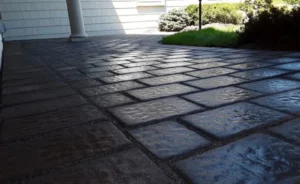
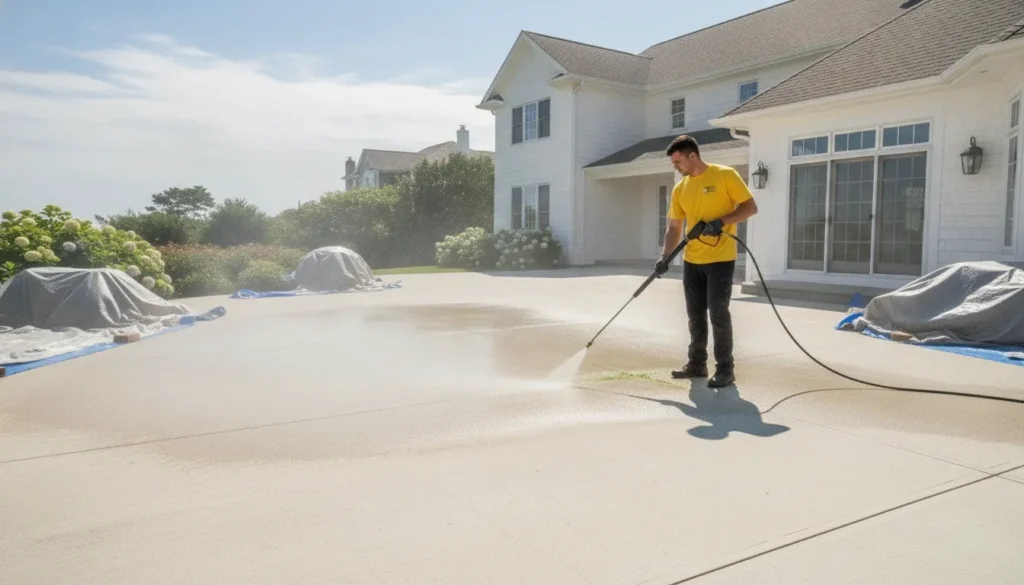
Green film on a concrete patio is more than a cosmetic problem. On shaded Long Island properties, damp weather, coastal moisture, and slow-drying surfaces can leave algae slick underfoot and ready to spread.
To remove green algae from concrete patio surfaces safely, loosen the growth with a surface-appropriate cleaner, protect nearby plants, rinse with controlled low pressure, and test a small area before treating the full patio. High pressure alone can etch concrete, drive water into joints, and scatter contaminated runoff.
Contact Gulf2Bay Softwash for a concrete patio cleaning assessment.
The right treatment starts with the patio’s exposure, drainage, finish, and surrounding landscaping. Once those conditions are clear, the cause of the algae points to the safest cleaning method and the prevention steps that help keep the surface cleaner longer.
Why Green Algae Forms on Concrete Patios
Green algae needs the same basic conditions found around many Long Island homes: moisture, limited sunlight, and a surface where organic debris can collect. Concrete patios are especially vulnerable when water remains on the slab or nearby landscaping keeps the area shaded.
Shade and moisture create the right conditions
Algae growth is encouraged by damp conditions and a lack of sunlight on hardscape surfaces. A patio beneath mature trees, beside a tall hedge, or close to the north side of a home may dry slowly after rain, washing, or regular irrigation. Outdoor furniture and planters can create smaller shaded pockets where moisture lingers even after the open areas look dry.
That pattern is common on premium Hamptons properties with dense landscaping and carefully designed outdoor living areas. Shade is not a defect, but it changes the maintenance needs of the concrete. If the slab stays damp for long periods, green film can return soon after a surface-only cleaning.
Poor drainage leaves the slab damp
Standing water makes the problem more persistent. Low spots, settled sections, blocked drainage paths, and soil or mulch pressed against the patio edge can slow runoff. Permeable paving guidance from the U.S. Environmental Protection Agency notes that sediment and debris can impede infiltration and support algae growth. The same practical lesson applies to patio areas: when water and debris cannot move away, biological growth has a better place to establish.
Check where water travels after a storm. Look for puddles near steps, along the foundation, below downspouts, or at the edge of a planting bed. A patio can appear clean in dry weather while still holding enough moisture in these locations to encourage regrowth.
Coastal exposure adds humidity and salt air
In the Hamptons, humidity and salty air create a coastal microclimate that is favorable to algae on hardscape surfaces. Coastal exposure does not create algae by itself, but it can compound shade, dampness, and slow drying. Wind also moves leaves, pollen, and other debris onto the patio, giving moisture more opportunity to remain against the concrete.
Routine debris removal helps discourage biological development, but it does not replace thorough treatment when growth is established. For long-term control, professional soft washing is designed to remove existing growth and neutralize the spores beneath it. It does more than strip visible green film from the surface.
How to Remove Green Algae from Concrete Patio Surfaces Safely
Safe algae removal starts with treating the patio as a porous surface, not a stain that can be blasted away. Concrete can be etched by excessive pressure, leaving grooves and increased porosity where dirt, mold, and algae collect more easily. The objective is controlled biological cleaning, followed by a thorough rinse and an honest assessment of whether sealing is appropriate.
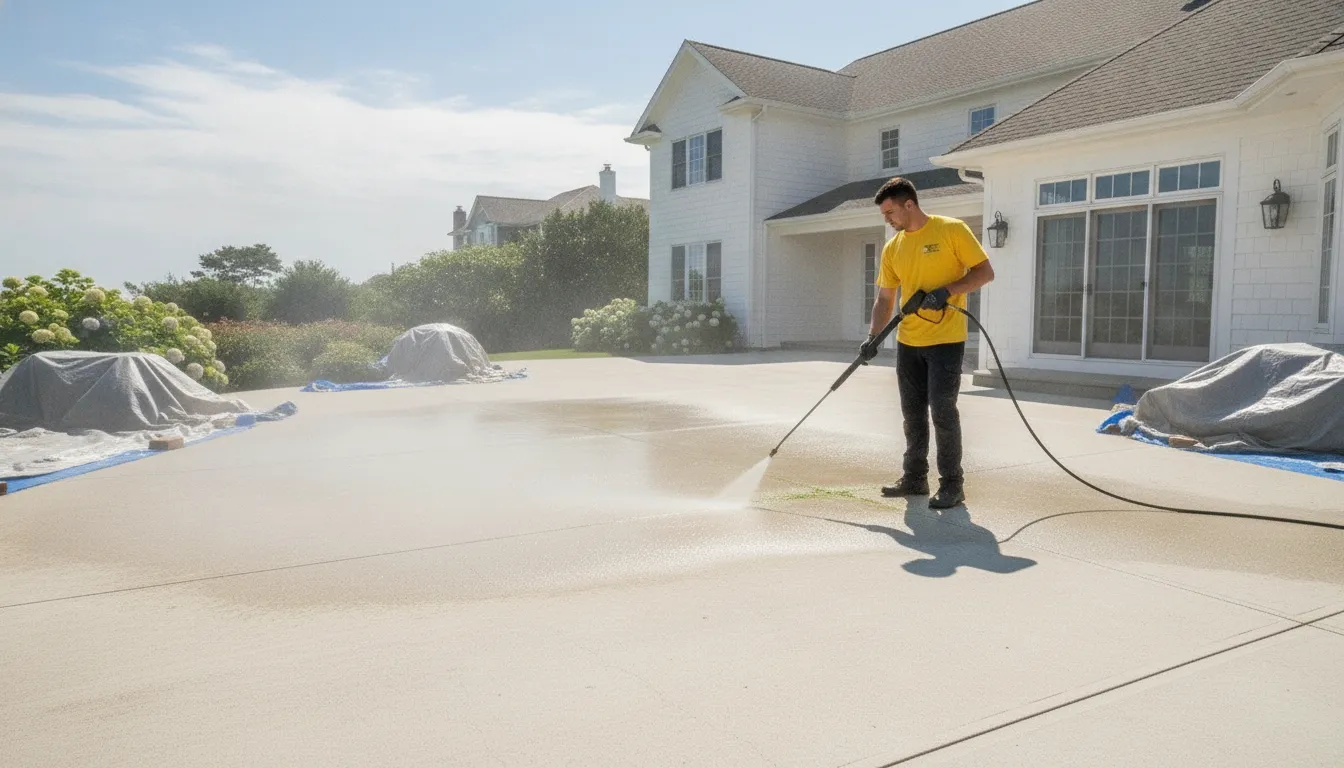
Use this process to remove green algae from concrete patio areas without spreading damage to nearby plants, furnishings, or decorative finishes.
A controlled cleaning sequence
- Inspect the entire surface. Look for algae film, standing water, cracks, flaking, old coatings, exposed aggregate, decorative color, and areas that stay shaded. Check corners beneath furniture and near planters. The cleaning method should account for the condition and finish of the concrete, not just the color of the growth.
- Clear and protect the work area. Move patio furniture, rugs, toys, and planters where possible. Cover or wet nearby plants, and identify drains, downspouts, and low points where runoff may travel. Keep people and pets away from the treatment area until the work and rinse are complete. Protecting the landscape is part of the job, not an afterthought.
- Choose a suitable, labeled cleaner. Select a product labeled for the surface and the intended cleaning use. Read the label for application, personal protective equipment, dwell time, ventilation, plant protection, and disposal instructions. Never combine cleaners, and do not rely on an internet recipe with an improvised chemical ratio. EPA’s Safer Choice program can help identify products formulated with ingredients considered safer for human health and the environment, but the label remains the controlling instruction for use.
- Test a small area first. Apply the selected solution to an inconspicuous section and observe the concrete after the stated dwell period and rinse. A test patch can reveal discoloration, coating failure, or an unexpected reaction before the whole patio is treated. Custom-colored, textured, or inlaid concrete needs particular caution.
- Allow the cleaner to work. Apply evenly and keep the surface wet for the label-specified dwell time. Soft washing is chemically focused, using a low-pressure application of specialized cleaning solutions to address algae rather than depending on force alone. Do not let the solution dry on the concrete or nearby surfaces.
- Agitate only as needed. Use controlled, surface-appropriate agitation for residue that remains after the cleaner has had time to work. Avoid holding a high-pressure tip close to the slab. Excessive pressure can etch concrete, increase its porosity, and create new recesses for contaminants.
- Rinse thoroughly and inspect. Rinse the patio methodically, directing runoff away from protected landscaping and sensitive areas. Remove loosened residue from joints, edges, and drainage paths. Inspect the finish in good light. If algae remains in a textured or intricate area, repeat only the appropriate treatment rather than automatically increasing pressure.
- Consider the next protection step. Concrete care may involve deep cleaning followed by a professional-grade sealant, but sealing is not automatic. The slab must be clean, sound, and suitable for the product selected. A sealant can help repel moisture and dirt, while drainage, shade, and runoff conditions still need attention.
For a surface-conscious assessment, a concrete cleaning service can match the cleaning method to the patio’s finish, drainage, surrounding landscaping, and level of biological growth.
Is Pressure Washing Safe for an Algae-Covered Patio?
Pressure can remove visible algae from concrete, but the result depends on how the equipment is used. A concentrated stream held too close can scar or etch the surface. It can also drive dirty water toward siding, doors, planting beds, pool equipment, or neighboring hardscape. The goal is not simply to make the patio look clean while the rest of the property absorbs the mess.
What changes the risk?
Nozzle distance, angle, movement, and dwell time all matter. A technician should keep the spray moving, work from a controlled distance, and watch where runoff travels. Concrete is porous, and aggressive mechanical cleaning may leave a rougher surface that holds more moisture and contaminants. That creates another opportunity for algae to return.
Drainage matters before cleaning as well as during it. Standing water is a major contributor to persistent green algae problems, so runoff should be directed away from structures and managed without overwhelming low points. Nearby plants and decorative surfaces also need protection from overspray and displaced residue.
| Consideration | High-pressure washing | Soft washing |
|---|---|---|
| Primary action | Uses mechanical force to dislodge surface growth and soil. | Uses low-pressure application of specialized cleaning solutions to address algae with less mechanical force. |
| Surface risk | Too much force, or a nozzle held too close, can etch concrete and affect its texture. | Reduces the need for aggressive impact, while still requiring surface testing and careful application. |
| Property protection | Spray and runoff require close control around landscaping, walls, doors, and adjacent surfaces. | Biodegradable cleaning agents are used with attention to surrounding gardens and landscaping. |
| Where it fits | May be useful for specific hard-surface conditions when properly controlled. | Can be used on concrete patios, walkways, pool decks, and stone surfaces. |
For homeowners deciding how to remove green algae from concrete patio surfaces, soft washing is usually the more surface-conscious starting point. Gulf2Bay uses a chemically focused, low-pressure approach rather than treating every patio like a generic blast-cleaning job. Read more about soft washing versus pressure washing before choosing a method for a patio with custom texture, nearby plantings, or difficult drainage.
How to Keep Algae from Growing Back
Removal is only half the job. Green algae returns when the patio stays damp and shaded long enough for biological growth to establish again. On a coastal property, prevention starts with changing those conditions wherever the landscape allows it.
Make the patio less damp and shaded
Improve sunlight across the concrete by trimming back branches, shrubs, or other foliage that blocks the surface. Do not remove healthy landscaping simply to expose every inch of the patio. Focus on the shaded edges and corners where growth keeps returning.
Look for water that remains after rain or routine cleaning. A low spot, blocked drain, or poorly directed downspout can leave moisture sitting against the concrete. Correct the drainage issue rather than repeatedly cleaning the same symptom. Proper drainage helps prevent standing water, one of the conditions associated with persistent algae growth.
Irrigation is another common source of excess moisture. Adjust sprinkler heads that spray across the patio, walkways, walls, or furniture. Check the area after the irrigation cycle runs. If the concrete is being soaked unnecessarily, correct the direction or coverage before the next cleaning.
Keep shaded edges and surface details clear
Remove leaves, pine needles, soil, and other organic debris before they stay wet against the concrete. Pay special attention beneath furniture, beside planters, and along garden borders. These areas receive less sun and can hold moisture longer than the open center of the patio.
Concrete is porous. Without appropriate sealing, it can absorb water and create a more favorable environment for algae and moss. If the patio has been cleaned but continues to darken quickly, ask whether its condition and finish are suitable for a professional-grade sealant. The surface must be clean and properly prepared first.
Do not treat prevention as a reason to apply stronger chemicals or pressure on your own. A surface-specific soft wash addresses existing growth and the spores beneath it, while careful low-pressure treatment helps reach intricate designs and inlays without unnecessary mechanical force. Keep landscaping protected, follow product labels, and use a small test area when a treatment is appropriate.
Walk the patio occasionally after wet weather and inspect the shaded perimeter first. Early green film is easier to address than growth that has settled into damp, debris-filled joints and textured areas.
When to Call a Professional for Concrete Patio Algae
Some patio algae can be addressed with careful routine cleaning. Call for a professional assessment when the growth covers a large area or the surface is slick underfoot. Professional help is also wise when the patio sits beside delicate landscaping, a pool, or a drainage path. Those conditions turn a simple cleaning job into a surface-care and runoff-control problem.
Large or slippery patios need more than spot treatment
A few green patches are easy to overlook until moisture spreads the growth across the walking surface. On a large patio, inconsistent treatment can leave visible bands between cleaned and untreated areas. It can also leave biological growth in joints, edges, shaded corners, and areas beneath furniture. Routine inspection helps identify early growth before it becomes a deeper-set cleaning problem.
Professional soft washing is chemically focused rather than mechanically focused. The method is intended to kill algae at the root, instead of merely scraping color from the top of the concrete. That distinction matters when the goal is to remove green algae from concrete patio surfaces and reduce rapid regrowth.
Protect landscaping, finishes, and custom concrete
Pause the DIY approach when lawn fertilizer or pesticide runoff reaches the patio. Excess nutrients can accelerate algae growth on adjacent concrete, so repeatedly cleaning the surface without addressing the runoff may not solve the underlying issue. A professional can assess the direction of water movement and plan the work around nearby planting beds.
Decorative concrete, custom colors, textured finishes, and intricate inlays deserve particular caution. Improper chemical use can permanently alter color or texture. The same applies when the surface condition is uncertain, such as older concrete, previous coatings, visible pitting, or areas that already show wear. A test area and surface-specific plan are safer than applying an unverified cleaner across the entire patio.
That care is especially relevant for Long Island and Hamptons homeowners maintaining premium hardscape around coastal homes. Salt air, humidity, landscaping, and complex outdoor layouts can create several algae-prone zones at once. For a broader property assessment, review Gulf2Bay’s residential exterior cleaning services.
Before work begins, confirm how runoff will be managed, which plants need protection, and whether the concrete requires cleaning only or cleaning followed by sealing. Those answers determine the safest way to restore the patio without trading one problem for another.
A Practical Long Island Patio Maintenance Routine
Use the same inspection sequence each season
Long Island patios need observation as much as cleaning. Humidity, shade, salt air, and wet debris can create small problem areas before the whole surface looks green. Walk the patio at the start and end of each season, then repeat the checks after unusually wet weather.
- Check the surface in full daylight. Look for green film, darkened joints, slippery areas, and growth beneath furniture or beside planters. Note whether the problem is limited to a shaded corner or spreading across the patio. Early inspections make it easier to address growth before it becomes a deeper cleaning problem.
- Watch shade and drainage. Identify places that stay damp, receive little sun, or collect water after rain. Confirm that drains, channels, and low edges are not blocked. Regular removal of sediment and debris helps preserve infiltration on permeable sections and reduces conditions that support algae growth. EPA guidance on permeable pavement maintenance also emphasizes keeping debris from impeding drainage.
- Clear debris before it stays wet. Sweep away leaves, pine needles, soil, and organic material. Move patio furniture and planters often enough to inspect the concrete beneath them. Do not let piles of debris sit against the surface, especially in shaded areas.
- Adjust irrigation and runoff. Check whether sprinklers are wetting the patio, walls, or nearby furniture. Redirect overspray where practical. Keep lawn fertilizers and pesticides from washing onto the concrete, since nutrient-rich runoff can accelerate algae growth.
- Separate routine care from surface treatment. Do not improvise chemical mixtures or aggressive pressure washing when growth returns. Concrete is porous, and custom textures or inlays can be damaged by improper cleaning. For intricate designs, persistent slick growth, or a broad return of algae, schedule a professional assessment. A surface-specific soft-wash plan can address the affected areas without treating the patio like a generic driveway.
Keep a simple note of where growth appears and what conditions were present. That record helps identify whether shade, standing water, irrigation, or runoff is driving the recurrence, so the next cleaning addresses the cause as well as the visible film.
Frequently Asked Questions
Why does green algae keep returning to my concrete patio?
Algae returns when the patio stays damp and shaded. Standing water, clogged drainage paths, leaf debris, and runoff from nearby lawn treatments can keep feeding the problem. Hamptons properties also face humid coastal conditions and salt air that can make hardscape growth more persistent. Clear debris, improve drainage where possible, and inspect shaded corners regularly.
Can I use a pressure washer to remove algae from concrete?
Pressure washing can remove visible growth, but excessive pressure may etch concrete, increase its porosity, and leave grooves where dirt and algae collect. A low-pressure soft wash uses a surface-appropriate cleaning solution with controlled application, followed by thorough rinsing. Protect nearby plants, furniture, and drainage areas, and test a small inconspicuous section before treating the full patio.
Should I seal concrete after removing green algae?
Sealing can help slow the return of algae by reducing water absorption, but the concrete must be clean and sufficiently dry first. The sealer should match the concrete finish and site conditions. It is not a substitute for correcting standing water, removing debris, or improving sunlight and airflow.
When should a professional clean an algae-covered patio?
Call for an assessment when the patio is slippery, heavily shaded, custom-colored, textured, or difficult to drain. Professional care is especially useful when the surface is next to valuable landscaping or when runoff must be carefully controlled. A surface-specific low-pressure treatment can address the growth without treating decorative concrete like ordinary flat pavement.
Contact Gulf2Bay Softwash About Your Patio
Algae removal works better when the cleaning method accounts for the concrete surface, nearby landscaping, and conditions that encourage regrowth. A focused assessment can help identify the safest next step for your Long Island patio.
Contact Gulf2Bay Softwash for a concrete patio cleaning assessment