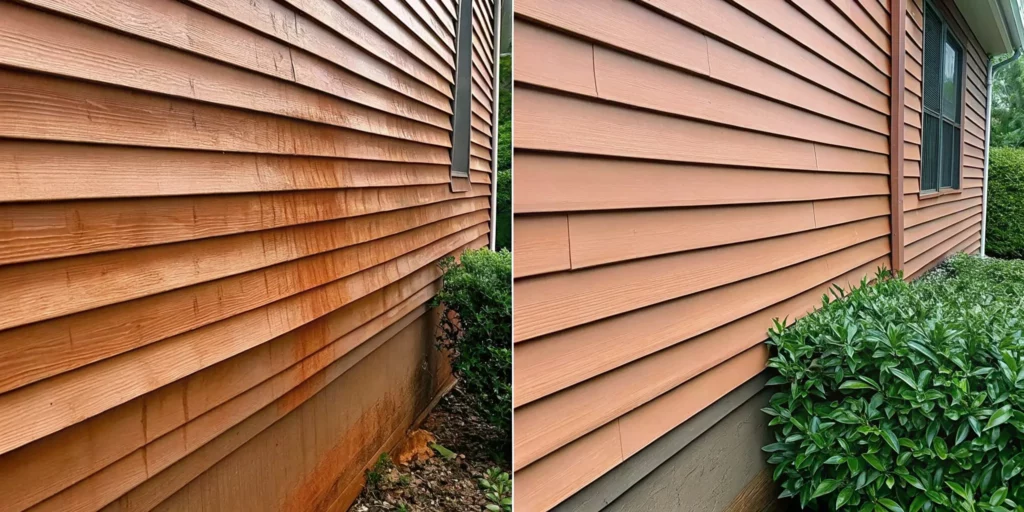
Dirty vinyl usually washes clean; oxidized vinyl leaves a chalky warning behind. For Long Island homeowners, spotting that difference early helps prevent the wrong treatment from making a weathered surface look worse.
Request a siding assessment from Gulf2Bay Softwash.
Vinyl siding oxidation vs dirt comes down to whether the discoloration sits on the surface or shows the vinyl itself has weathered during inspection. Dirt and organic growth often appear as gray grime, green algae, or dark spotting, and proper soft washing can safely remove them without harsh pressure. Oxidation usually appears as an even, faded haze or white chalky residue that may transfer to your fingers near sun-exposed areas. It needs a separate oxidation-removal process because ordinary soft washing targets growth and grime, not degraded surface material on the siding. Avoid power washing as a test; CertainTeed warns that it can cause moisture intrusion, damage, or discoloration on vinyl and polymer siding.
A quick rub test can narrow the cause, but a careful inspection should guide the final treatment choice. Next, “Vinyl siding oxidation vs dirt at a glance” shows the visual clues, likely causes, and safest response for each condition. Here’s how.
Vinyl siding oxidation vs dirt at a glance
Vinyl siding oxidation usually looks like a pale, chalky film spread across exposed panels. Dirt tends to sit on top as a dull gray or brown layer. Green or dark patches often point to organic growth rather than either condition.
Visual and touch clues
Start with the pattern, color, and feel before choosing a cleaning method. Oxidation often covers broad, sun-exposed areas and may make the original color look faded. Researchers also recognize surface chalking from PVC weathering, so the residue may be part of the siding surface itself.
| Clue. | Oxidation. | Ordinary dirt. | Organic growth. |
|---|---|---|---|
| Appearance. | Pale, chalky, or faded film. | Gray, tan, or brown grime. | Green, dark, or blotchy patches. |
| Feel. | Dry powder may rub onto a hand. | Loose grit or smudged soil. | Slick, damp, or stained surface. |
| Common location. | Broad exposed sections. | Near roads, soil, ledges, or splash zones. | Shaded or damp sections. |
| Likely approach. | Careful inspection and specialized treatment. | Routine low-pressure cleaning. | Soft washing for the growth. |
The dry-hand wipe test
Choose a small, dry, hidden spot and wipe it once with a clean hand or dark cloth. A light chalk-like powder supports an oxidation diagnosis. Loose grit or a muddy smudge points more toward ordinary soil.
This check is useful, but it is not final proof. Dirt can sit over oxidized siding, and weathered panels may have uneven patches. Do not scrub hard, apply a cleaner, or test a large visible area before the surface is assessed.
Matching the cleaning approach
Routine dirt and organic growth are surface problems, while oxidation involves a changed or weathered surface. That difference matters. Gulf2Bay notes that soft washing targets grime, mold, and algae, while oxidation may need treatment beyond a standard wash.
A property check can separate mixed buildup before cleaning starts. It also helps avoid treating faded, chalky siding as simple dirt. For unclear marks, a professional vinyl siding assessment begins with an inspection and a plan suited to the surface.
Avoid using strong pressure as a diagnostic shortcut. It may change the surface before the cause is clear. Review safe soft washing for vinyl siding when the buildup appears limited to soil or organic growth.
Why Long Island vinyl siding changes appearance
Long Island siding rarely faces just one source of discoloration. Sun, moisture, shade, airborne soil, and coastal conditions can leave different marks across the same home. That mix makes the vinyl siding oxidation vs dirt question harder than it first appears.
Sun exposure and surface weathering
Sun-facing vinyl often looks different from siding protected by trees, rooflines, or nearby homes. Over time, weathering can change the outer surface and produce a pale, chalk-like film. Research on PVC describes surface chalking linked to weathering, which helps explain why a bright wall may lose its even color.
This change does not always cover an entire wall. A roof overhang may shield the upper panels while the lower panels receive more direct sun. Trim, shutters, and other fixed features can also create sharp lines between exposed and protected areas.
Moisture, shade, and airborne buildup
Shaded areas may stay damp longer after rain, morning dew, or sprinkler use. Those areas can collect visible organic growth and grime while sunny sections look dry and faded. Dirt may also settle unevenly near roads, gardens, vents, and busy outdoor spaces.
Coastal air and wind add another layer to the pattern. Fine soil, dust, and other airborne material may land on one side of a home more than another. Regular Long Island vinyl siding cleaning starts with checking these location-based clues before choosing a treatment.
Several conditions on one wall
A single wall can show chalking, surface dirt, damp shaded patches, and streaks below fixtures. These conditions may overlap instead of forming neat sections. For example, loose soil can settle over weathered vinyl and hide the chalky surface beneath it.
- Upper panels may look faded where they receive steady sun.
- Lower panels may hold soil splashed from nearby beds or pavement.
- Areas behind shrubs may look darker because they receive less sun and airflow.
- Sections below vents, gutters, or trim may develop narrow streaks.
Appearance alone can point to likely causes, but it does not always reveal the full mix. Comparing several spots on each wall gives a clearer picture. A surface check should note texture, residue, shade, nearby plants, and the direction each wall faces.
How can you tell what is on your siding?
A careful test can help you sort out vinyl siding oxidation vs dirt before cleaning. Start with your eyes, then use gentle test patches. Stop if the surface changes color, feels rough, or shows damage. This sequence limits guesswork and helps protect the siding.
A safe five-step check
Choose an easy-to-reach area away from wires, fixtures, and damaged panels. Wear gloves, and never lean from a ladder to inspect a stain. Use the same small test area through the steps so you can compare each result.
-
Inspect the siding in shade. Look across several panels without direct glare. Note whether the mark is a loose film, a streak, a patch, or an even haze.
-
Check it again in daylight. View the same wall from another angle. A broad faded look may point to surface wear, while dirt often follows splash zones or ledges.
-
Study the pattern and direction. Look for marks below gutters, vents, trees, and roof edges. Also compare sunny walls with shaded walls to see whether exposure tracks the change.
-
Dry wipe a hidden spot. Rub a small, inconspicuous area once with a clean white cloth. Chalky material on the cloth can suggest surface chalking, while loose soil may look brown or gray.
-
Try a damp test patch. Wipe a nearby spot with clean water and a soft cloth. If the mark stays or the finish looks uneven, stop before using stronger cleaners or pressure.
After each test, let the patch dry before judging the result. Wet vinyl often looks darker, which can hide a faint film or color change. Take a photo from the same angle before and after testing. These notes make it easier to compare walls and explain the issue if you request an inspection.
What the test results may mean
Oxidation often leaves a pale, chalk-like film and may appear more evenly across exposed panels. Weathering and light can cause surface chalking on PVC. Dirt and organic buildup tend to collect in patterns tied to water, shade, soil, or nearby plants.
A wipe test is a useful clue, not a final diagnosis. Mixed stains are common, and cleaning one layer may reveal another beneath it. When the result is unclear, a provider of siding cleaning tailored to the surface can inspect the finish before choosing a method.
When to stop testing
Stop if a gentle wipe removes color, leaves a shiny patch, or makes the surface feel rough. Do not scrub harder to prove whether the mark is dirt. Avoid high pressure, since it can force water behind panels and harm the finish. Damaged, loose, or brittle siding also needs inspection before cleaning.
When is soft washing the right treatment?
Organic growth and surface soil
Soft washing is well suited to algae, mold, grime, and ordinary soil on a home’s exterior. It uses a planned cleaning mix and low pressure instead of relying on water force alone. The mix treats the growth, while a gentle rinse clears away loose residue.
Correct assessment still matters before any cleaner touches the siding. A technician should note the siding type, nearby plants, stain pattern, drainage, and any damaged areas. Gulf2Bay’s house washing service explains how soft washing addresses common organic growth and grime.
Low pressure for vinyl siding
Low pressure gives the cleaning mix time to work without forcing a harsh spray against vinyl panels. That matters around seams, vents, trim, and other points where water may enter. A siding maker’s vinyl cleaning guidance warns that power washing can cause moisture intrusion, damage, or discoloration.
High force can also disturb loose panels or leave uneven marks on a weathered surface. Soft washing shifts the work from spray force to the cleaning process. This makes it a sound option for routine exterior soil after the surface has been checked.
Oxidation needs a different plan
The key question in vinyl siding oxidation vs dirt is whether the mark sits on the surface or comes from the surface itself. Dirt and organic growth are deposits that a suitable wash may remove. Oxidation is weathered material, which often appears as a pale, chalky film.
Chalking is a known effect of weathering on PVC surfaces, as described in published research on PVC surface chalking. Standard soft washing may clean soil around oxidation without correcting the changed finish. Treating both conditions as dirt can lead to patchy results.
A small inspection area can help show which condition is present before work starts. If the residue is organic soil, safe soft washing may be the right treatment. If chalky residue remains or color looks uneven, the siding may need a separate oxidation treatment and closer assessment.
Ask Gulf2Bay Softwash to identify the discoloration before choosing a treatment.
Why oxidation removal needs a different approach
Weathered surface versus removable soil
In the vinyl siding oxidation vs dirt question, the key issue is where the change sits. Dirt, pollen, and organic growth collect on top of the siding. Oxidation is weathering within the exposed surface, so washing away soil may not restore an even color.
A chalky film is a common sign of weathered vinyl. Research on PVC also recognizes surface chalking linked to weathering. Because this change affects the material itself, it calls for a different plan than routine cleaning.
Standard soft washing targets grime and organic growth. Once those layers are gone, faded areas or uneven bands may become easier to see. The wash did not create the oxidation; the cleaner surface simply made the existing weathering more noticeable.
The role of a test patch
A careful evaluation should come before any oxidation work. The technician looks at siding age, color, sun exposure, chalk transfer, and existing damage. That review helps separate removable buildup from a worn surface that may react in an uneven way.
A small test patch then shows what the full wall may look like. It can reveal whether the surface responds evenly or keeps a dull, chalky tone. This step also helps set a realistic target before work begins.
- Choose a discreet area with the same exposure as the affected wall.
- Compare the patch only after it is clean and fully dry.
- Check for color change, streaks, exposed damage, and uneven sheen.
Homeowners seeking professional help identifying siding discoloration should expect this inspection when oxidation is suspected. No shortcuts, no guesswork. A test patch protects the siding and gives everyone a clear view of the likely result.
Restoration limits and next steps
Oxidation removal is a restoration task, not an add-on to ordinary house washing. It may need a separate process, extra care, and close checks as work moves across the wall. An unverified product or aggressive method can leave permanent marks.
Some siding is too weathered, brittle, or uneven for a sound cosmetic result. In that case, replacement may be more practical than repeated attempts to restore it. The siding maker’s guidance should also shape the decision.
For example, CertainTeed advises against power washing vinyl or polymer siding because it may cause moisture intrusion, damage, or discoloration. Following the manufacturer’s cleaning guidance helps avoid trading a cosmetic concern for a larger repair.
Mistakes that can make uneven siding more noticeable
Common siding-cleaning mistakes usually come from treating every discoloration as removable dirt. Strong pressure, aggressive scrubbing, and broad testing can disturb a weathered finish or create contrast between cleaned and untreated areas. Gulf2Bay Softwash recommends identifying the surface condition first, then matching the treatment to it.
When siding looks patchy, the first response can change how visible the problem becomes. A calm inspection helps separate vinyl siding oxidation vs dirt before any cleaning begins.
Treating every mark as dirt
Dirt, algae, and other surface buildup can often come off during a standard wash. Oxidation and fading involve changes at the siding surface, so cleaning alone may not restore an even color.
Chalky residue is an important clue because surface chalking in weathered PVC is a recognized process. Still, appearance alone may not reveal the full cause. Shade, sun exposure, repairs, and past cleaning can create several tones on one wall.
Assuming each dull area is dirt may lead to repeat cleaning on material that has already faded. A closer inspection through vinyl siding care for Long Island homes can help identify the surface condition before treatment.
Using too much force
High pressure may leave clean-looking streaks beside dull or oxidized areas. It can also force water behind the panels or disturb a weakened surface. Aggressive scrubbing creates a similar risk because the brush may change the sheen in one spot.
More force does not always produce a more even finish. When residue resists light contact, stop and reassess instead of raising pressure or using a rough pad.
- Do not aim a strong stream at seams, laps, or panel edges.
- Avoid stiff brushes and repeated rubbing on one small area.
- Let the siding dry before judging its final tone.
Skipping a test patch
Applying a product across the whole wall without a test patch can make uneven color harder to correct. A small, low-visibility area shows how the siding and residue respond before treatment reaches broad sections.
Use the same method, contact time, and rinse approach planned for the larger area. Then allow the patch to dry fully. Wet siding can hide tone changes that become clear later.
A standard wash targets dirt and organic growth, not every form of fading or oxidation. Homeowners should set that expectation before choosing safe soft washing for vinyl siding. Testing first helps prevent a clean wall from looking more patchy than it did before.
What to ask before scheduling siding cleaning
Before booking siding cleaning, give the contractor a clear picture of what you see. A few useful details can make the first assessment more accurate and focused. They also help the contractor explain likely results before work begins.
Photos and observations to share
Photograph each wall in even daylight, then take close views of stained, faded, or chalky spots. Include corners, shaded areas, and sections below gutters or near plants. Note whether the marks look green, black, brown, white, or simply dull.
- Label each photo by wall direction, such as north, south, east, or west.
- Point out which areas receive strong sun and which stay damp or shaded.
- Describe whether the marks wipe away, smear, or leave chalk on a clean cloth.
- Share the date, method, and known products from the last siding cleaning.
Tell the contractor where you see a powdery film or uneven fading. Surface chalking is a known result of PVC weathering and photodegradation, as shown in research on weathered PVC. That context helps separate a surface change from loose soil or organic growth.
What the assessment should cover
Ask how the contractor will distinguish vinyl siding oxidation vs dirt before choosing a cleaning method. A careful assessment should compare several walls because sun, shade, moisture, and runoff can create different patterns. It should also check the siding condition, nearby surfaces, windows, plants, and access points.
Ask whether a small test area will be used and what that test can reveal. The contractor should explain whether standard washing can address the marks or whether oxidation needs separate treatment. A provider offering a surface-specific siding cleaning plan should also explain how fragile or weathered areas will be handled.
Expectations before work begins
Request a written scope that names the surfaces, planned treatment, exclusions, and expected finish. It should state whether the goal is to remove dirt, organic growth, oxidation, or a mix. This prevents a basic wash from being mistaken for full oxidation removal.
Ask what changes may remain after cleaning, especially on faded or weathered panels. Confirm how the crew will protect nearby plants and avoid methods that may harm vinyl. A clear house washing service scope should set these limits before the visit, not after the siding dries.
Frequently Asked Questions
What is the difference between vinyl siding oxidation and dirt?
Ordinary dirt sits on top of vinyl and usually lifts during proper washing. Organic growth may appear green, black, or streaky and also responds to soft washing. Oxidation is weather-related surface breakdown that often leaves a pale, chalky film. Wipe a dry, hidden area with a dark cloth. A powdery transfer suggests oxidation rather than loose dirt.
How do I tell if my vinyl siding has oxidation?
Check a small, dry section away from obvious mud or algae. Gently rub it with a clean, dark cloth or gloved finger. A white or color-tinted powder that transfers to the cloth is a strong sign of oxidation. Dirt usually smears or brushes away, while organic growth often looks green, black, or blotchy. Test several walls because sun exposure varies.
Can soft washing remove oxidation from vinyl siding?
Standard soft washing is designed to remove dirt, grime, mold, and algae without harsh pressure. It can clean contaminants that sit over oxidized siding, but it usually does not reverse the weathered, chalky surface beneath them. Oxidation often needs a separate assessment and specialized treatment. Avoid using more pressure to chase the remaining haze because CertainTeed warns that power washing may cause moisture intrusion, damage, or discoloration.
Why does vinyl siding get oxidized?
Vinyl siding oxidizes as sunlight, moisture, heat, and time weather its outer surface. The process can fade color and create a chalky residue, especially on walls that receive stronger sun exposure. Research from NIST examines how weathering affects vinyl siding materials. Because exposure differs around a home, oxidation may look uneven from one side to another.
Ready to Choose the Right Siding Treatment?
Ignoring an unidentified siding stain can leave your home looking neglected and may send you toward a cleaning method that does not fit the problem. Starting with a careful assessment now helps separate oxidation, organic growth, and ordinary dirt before the wrong treatment adds cost or delays improvement. A clear diagnosis gives you a practical plan for the discoloration and helps avoid wasted time, repeated cleaning, and unnecessary worry about your siding.
Ready to protect your siding with a treatment chosen for the actual problem? Request a quote for a siding assessment to get clear next steps from Gulf2Bay Softwash and schedule service at a convenient time. Contact our team today so you can move forward with confidence before discoloration becomes harder to address.