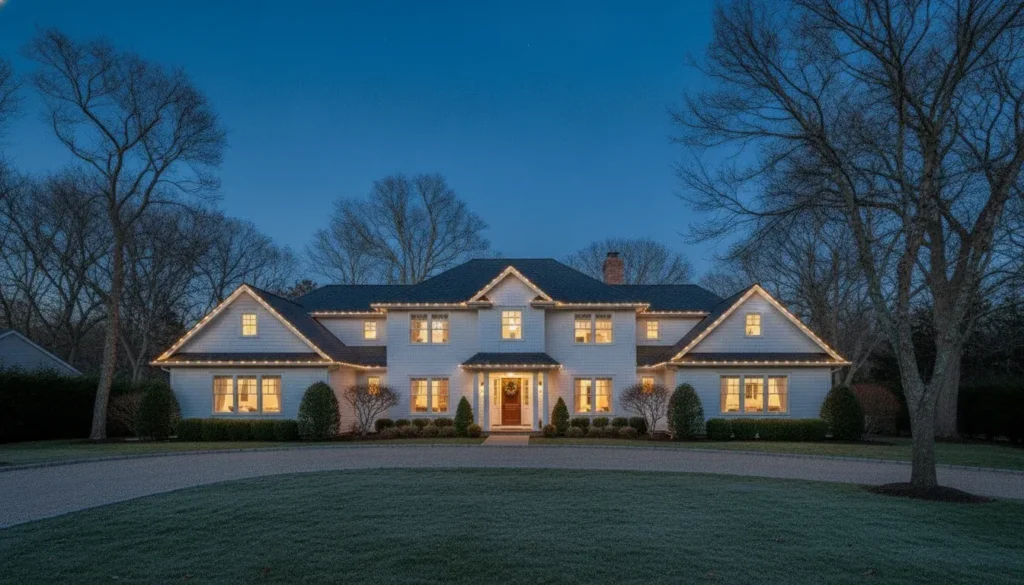
For a multi-story Hamptons home, permanent christmas light installation cost typically starts at about $15 to $30 per linear foot, or roughly $1,500 to $3,000 for 100 feet of roofline. A complete project often lands between $2,000 and $5,000, while complex rooflines can cost more.
Request a design consultation for your Long Island holiday lighting
Roof height, steep pitches, long rooflines, discreet mounting, and safe access all affect the quote. The key is to separate the one-time installed track system from recurring seasonal installation, removal, and storage.
What Permanent Christmas Light Installation Cost Really Looks Like
For a professional system, permanent christmas light installation cost is commonly estimated at $15 to $30 per linear foot. A 100-foot roofline therefore starts around $1,500 to $3,000 before unusual access, electrical, or design requirements.
That price covers more than bulbs. Commercial-grade UL-rated lights on a permanent track are designed for a clean appearance without exposed wires, while professional labor accounts for the roofline, electrical setup, and mounting details. DIY kits may look cheaper, but they shift the ladder work, installation time, and failure risk to you.
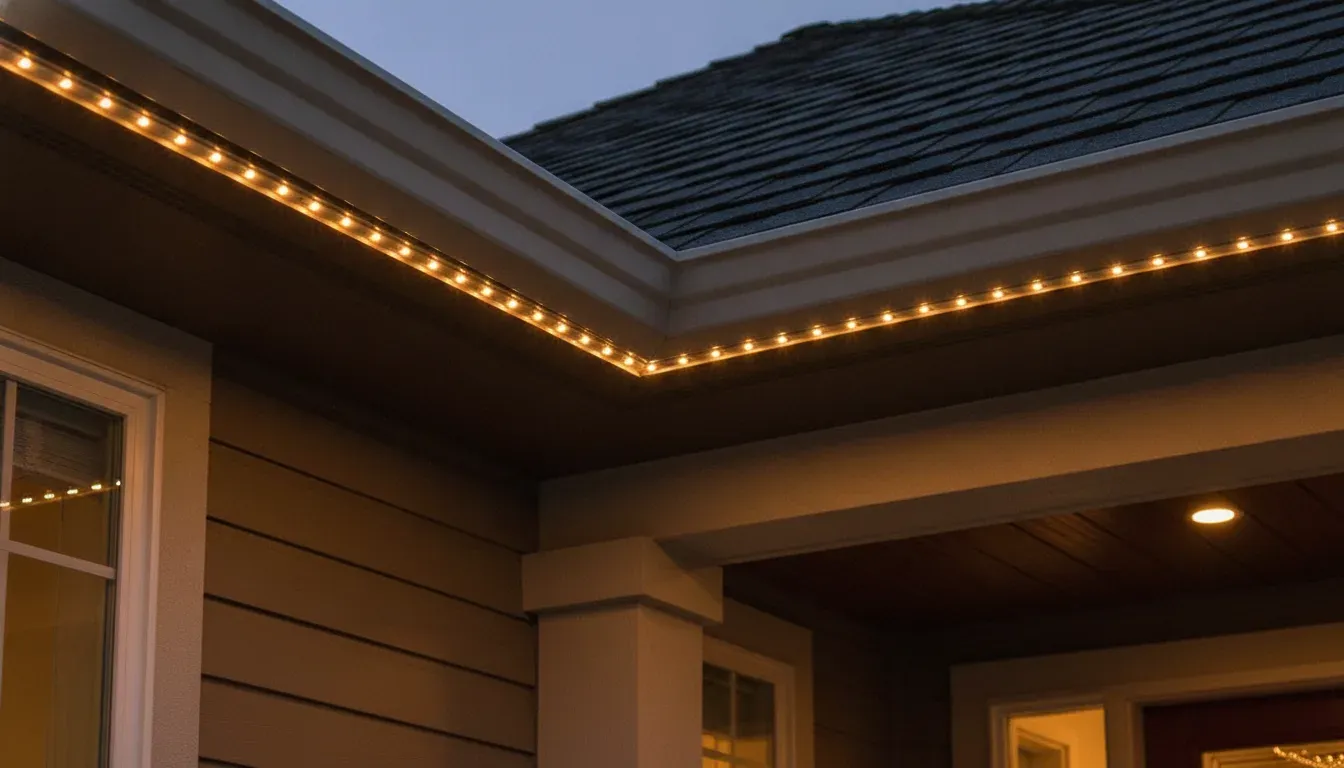
Professional permanent Christmas light installation cost usually falls between $15 and $30 per linear foot. That puts a 100-foot installation at roughly $1,500 to $3,000 before unusual roof access, electrical work, or extra design complexity changes the quote.
The final project total depends on how much of the property is covered and how difficult the installation is. Larger luxury homes, multi-story layouts, steep rooflines, and detailed coverage require more track, access work, and design time. The right comparison is not the price of the lights alone. It is the cost of a fitted system, safe installation, clean finish, and dependable seasonal use.
Per-foot pricing shows the starting point
Linear footage refers to the length of roofline, architectural edge, or other area receiving the track and lights. A simple 100-foot front elevation is easier to price than a home with several roof sections, dormers, peaks, and transitions. The footage may be similar, but the labor is not.
Professional pricing also reflects the components behind the visible lights. A permanent system may include a custom-fit mounting track, commercial-grade LED lighting, power supplies, controls, installation labor, and recurring seasonal service. Those details are why a professional installation costs more than buying lights alone.
One distinction matters: the upfront cost covers the installed track system, while a recurring annual service covers seasonal install, removal, and off-season storage. The two are priced and billed differently, so ask which one a quote includes.
Ask whether a quote includes the complete system. A low number that covers only material can leave you budgeting separately for lifts, electrical connections, track installation, programming, repairs, or removal.
Total project ranges for Long Island homes
A small, straightforward roofline may stay near the lower end of the per-foot range. A Hamptons property with multiple stories, long rooflines, difficult access, or carefully concealed track work requires a site-specific budget because the labor and equipment needs are different.
You do not have to light every edge of the house. Many homeowners start with the front or street-facing elevations, then expand coverage later. That approach keeps the first project focused while preserving a consistent system for future additions.
For a property-specific layout and quote, review holiday lighting on Long Island. The site and roofline determine the final number, so an accurate estimate should account for both linear footage and installation conditions.
What Drives Permanent Christmas Light Installation Cost on a Luxury Home?
Two homes can have similar square footage and very different permanent christmas light installation cost. The quote follows the roofline, the access conditions, the electrical plan, and the finish you expect after the lights disappear into the architecture.
Roofline, height, and access
Total linear footage is the starting point. A simple front roofline takes less material and labor than a home with multiple gables, dormers, hips, valleys, and separate runs around porches or detached structures. Measure the areas you actually want lit, not just the width of the house.
Roof complexity matters just as much as length. Steep pitches and difficult transitions require careful layout and specialized installation methods. A two-story Hamptons home also takes more time to access than a single-story ranch. Tall rooflines create additional ladder and equipment demands, which is one reason professional installation is especially relevant for coastal homes with complex elevations. The safety concern is practical, not theoretical: temporary holiday lighting can involve unsafe ladder work on multi-story properties.
You do not have to light every roof edge. Many homeowners start with the front-facing elevation, entry, and the architectural lines visible from the street. That can produce a finished look while keeping the project focused. Add secondary elevations later if the initial design leaves room in the budget.
Track design, power, and fixture quality
Permanent systems use a discrete mounting track, such as Cliplight, Dynamic Mesh, or a similar architectural system. The track is selected and fitted around trim, fascia, and other details so the installation looks intentional in daylight. Custom integration takes more design and fitting work than attaching retail string lights with temporary clips. The benefit is a clean line with no loose wires competing with the home’s exterior.
Power is another cost driver. The installer must plan transformer capacity, outlet locations, cable routes, and the distance between the power source and each lighting zone. Longer or more complicated runs can require additional labor and infrastructure. Professional projects commonly use low-voltage LED components, but efficient fixtures still need a properly planned power layout.
Finally, the fixture itself changes the quote. Commercial-grade, UL-rated lights are built for a more consistent architectural appearance than basic big-box kits. Color temperature, brightness, spacing, controls, and the number of separately controlled zones all affect the final specification. Ask for those details in writing when comparing professional holiday lighting installation proposals. A lower number may reflect fewer linear feet, simpler access, lower-grade fixtures, or no custom track and power work.
Permanent Track Lights vs. Big-Box String Lights
Big-box kits look inexpensive because the receipt shows materials first. A retail kit may cover only the lights and temporary attachment hardware, leaving the homeowner to handle measurement, access, installation, troubleshooting, removal, and storage. The full DIY cost is the time and risk required to complete those steps safely.
The lower sticker price is not the whole DIY cost
That full day of work is often spent measuring, fastening, troubleshooting, and moving ladders. On a tall or steep coastal home, the labor is not the only concern. Temporary clips and exposed cords can create an uneven display, visible wiring, and weak points where wind or weather causes failures. Reaching upper rooflines also turns a decorative project into a ladder job. That risk matters more than the kit price.
What the professional system includes
A professional permanent system is designed around the architecture of the home. Commercial-grade, UL-rated lights are installed on a discrete mounting track, such as a Cliplight or Dynamic Mesh-style system. The track keeps the layout consistent and conceals the wiring when the lights are not in use. The result is a clean roofline without the loose cords and improvised attachment points common with retail string lights.
Professional installation averages about $15 to $30 per linear foot. For 100 linear feet, that puts installation around $1,500 to $3,000 before unusual access, electrical, or architectural requirements. The wider project range reflects more than the lights themselves. It covers planning, secure mounting, equipment, labor, and system integration.
| Factor. | DIY big-box string lights. | Professional permanent track system. |
|---|---|---|
| Typical cost. | Materials-only retail purchase. Total cost depends on the homeowner’s time and equipment. | $15-$30 per foot installed. 100 feet is commonly $1,500-$3,000. |
| Time and access. | Homeowner handles measuring, setup, and repeated ladder work. | Professional crew handles measuring, mounting, access, and setup. |
| Appearance. | Visible wires, clips, and inconsistent spacing are common. | Discrete track, concealed wiring, and a consistent roofline. |
| Equipment. | Retail-grade strings and temporary attachment hardware. | Commercial-grade UL-rated lights and permanent mounting hardware. |
| After installation. | Homeowner handles failures, removal, storage, and replacement. | Recurring service can cover seasonal installation, removal, and off-season storage. |
For a Hamptons second home, the service difference is practical. Install, removal, off-season storage, and maintenance can be managed without scheduling a seasonal ladder project yourself. Compare the full scope, not just the box price, when reviewing professional holiday lighting installation options.
Why Recurring Install, Remove, and Storage Makes Sense for Second Homes
A second home should not require a separate holiday-lighting project every year. A recurring annual service covers the complete cycle: professional installation before the season, removal afterward, and protected off-season storage between visits.
No seasonal ladder work while you are away
Hamptons homes often have steep rooflines, multiple stories, and architectural details that are difficult to reach safely. With an annual service, your household does not need to coordinate ladders, climb onto the roof, or ask a local caretaker to manage a complicated installation. The lighting team handles the work on schedule, whether you are at the property or away for the season.
That matters for second-home owners. You can arrive to a finished display instead of arriving early to spend a weekend untangling retail string lights and checking every connection. Professional installation also keeps the work consistent from year to year, rather than leaving the appearance to whoever is available that season.
Storage protects the system between seasons
Removal is not the end of the service. Commercial-grade UL-rated lights and their components need to be handled, organized, and stored properly after the holidays. Off-season storage keeps the equipment together and reduces the exposure to unnecessary handling, moisture, and damage before the next installation. The result is a more predictable setup when the season returns.
A consistent premium look every year
Permanent mounting tracks, such as Cliplight or Dynamic Mesh systems, are designed to keep the display clean and integrated. The track conceals wires and supports a consistent layout, so the roofline looks intentional rather than covered in visible cords. The same installation team can reproduce the design each year and make adjustments when the property or lighting plan changes.
Price the work as property care, not just a one-time light purchase. The annual contract combines labor, seasonal timing, removal, and storage into one plan. For an owner who values a polished exterior without being on site to manage it, that convenience is a practical part of the permanent christmas light installation cost. Learn more about how complete exterior care protects a coastal property through Gulf2Bay’s soft washing versus pressure washing guide.
How Should Long Island Homeowners Budget for Permanent Holiday Lighting?
A reliable budget starts with the roofline, not a package price. Permanent christmas light installation cost depends on how much trim you want illuminated, how the system connects to power, and how much access the home requires. A professional installation commonly runs about $15 to $30 per linear foot, so a 100-foot project may land around $1,500 to $3,000 before unusual requirements change the quote.
Use a scope-first planning sequence
- Measure the linear roofline footage. Note the front eaves, side elevations, dormers, gables, peaks, and any detached areas you want outlined. A front-only plan can be substantially different from wrapping every roofline. If exact measurements are not available, provide photos and approximate dimensions so the installer can prepare a site-specific estimate.
- Choose the scope before comparing quotes. Decide whether the goal is a polished street-facing display or a full-property design. Front-facing rooflines are a practical starting point for many homeowners. On a Hamptons property, you may also want to identify architectural lines where discrete track-mounted, commercial-grade lights will look intentional rather than simply adding more bulbs.
- Request an itemized quote. The proposal should separate the track system, fixtures, power supplies or other electrical work, installation labor, service terms, and any maintenance. Ask whether the price includes annual removal and off-season storage. A recurring service can be valuable for a second home because the system is handled without relying on a seasonal ladder visit or an owner being on Long Island. Compare the scope, not just the bottom-line number.
- Confirm the power plan early. Whether the home has an accessible outlet near each run, spare transformer capacity, and a sensible cable route affects both the labor and the final price. Identifying these details before the quote avoids surprises on installation day.
- Schedule before the holiday rush. Measure and request the quote well before November and December demand peaks. Early planning gives the installer time to resolve power questions, confirm the track layout, order components, and reserve safe access for a steep or multi-story roofline. Review the available holiday lighting services and start the conversation before your preferred installation window disappears.
That process turns a vague cost question into a defined project. You will know exactly which rooflines are included, what the installation covers, and whether recurring storage belongs in the annual budget.
Are Permanent Holiday Lights Worth It for Hamptons Homes?
For a Hamptons home with a tall facade, steep rooflines, or several roof sections, permanent holiday lights usually justify the investment. The value is not just the light output. It is the elimination of repeated ladder work, temporary wiring, seasonal storage, and last-minute troubleshooting.
The answer depends on what you are paying to avoid
DIY retail kits may look cheaper at the checkout. They also leave you responsible for measuring every run, carrying equipment up ladders, securing strings around architectural details, and correcting failures when weather arrives. On a multi-story coastal property, that work is not a minor weekend project. The risk increases with height, roof pitch, wind exposure, and difficult access.
Why the system looks better on a luxury home
A permanent system uses commercial-grade UL-rated lights mounted to a discrete track, such as Cliplight or Dynamic Mesh. The track follows the roofline and keeps the installation visually controlled. When the lights are off, the system is designed to blend with the home’s trim instead of leaving visible wires and loose clips across the facade.
That distinction matters on cedar-shingle homes, large waterfront properties, and carefully designed exterior elevations. A consistent line of light reinforces the architecture. A collection of retail strings can interrupt it with sagging sections, exposed cords, and uneven spacing. For owners focused on the full exterior, pairing the lighting with cedar shingle roof care keeps the whole property consistent.
Convenience has a real financial value
Permanent holiday lighting is especially practical for second-home owners. A recurring service can cover installation, removal, and off-season storage, so the property does not depend on an owner being present for every seasonal change. Proper storage also keeps the light strings and components protected between seasons.
Commercial-grade components and professional installation can reduce the cycle of replacing failed retail strings and rehanging the system each year. The right question is not simply, “What is the permanent christmas light installation cost?” Compare the quote with the labor, equipment, risk, storage, and repeated service involved in the temporary alternative.
For a Hamptons property where safety, clean architectural lines, and reliable seasonal care matter, permanent lights are often worth it. Start with the rooflines that create the most visual impact, then review the rest of the home’s maintenance needs through Gulf2Bay’s residential exterior services.
Request an itemized quote for permanent holiday lighting in the Hamptons
Frequently Asked Questions
How much does a professional permanent Christmas light installation cost?
Professional systems are commonly estimated at $15 to $30 per linear foot. The final quote depends on the roofline, access, track design, electrical requirements, and how much of the home you want illuminated.
What is the cost per linear foot for permanent holiday lights?
Professional systems commonly run about $15 to $30 per linear foot. A DIY kit can appear cheaper because it usually covers materials only, not custom fitting, roof access, installation labor, or the risk involved on a tall or steep Hamptons home.
What factors influence the total cost of permanent outdoor lights?
Start with total linear footage, then account for the number of stories, roof pitch, dormers, peaks, transitions, and access points. Electrical capacity and power-supply placement also matter. A clean front roofline costs less than a complex multi-story layout that requires additional track sections, wiring, and careful high-access work.
Can I light only the front of my home?
Yes. Many homeowners begin with the street-facing elevations, entry roofline, porch, and other architectural focal points rather than lighting every edge. This creates a finished presentation while keeping the project aligned with your budget. A site assessment can identify which sections deliver the strongest visual result from the road.
Are permanent holiday lights worth it for a luxury coastal home?
For a multi-story or second home, the value is not limited to the lights. A discrete track avoids visible wires, professional installation eliminates seasonal ladder work, and recurring removal and storage means you do not have to coordinate the project each year. That combination is especially practical for Hamptons properties with steep rooflines and coastal exposure.