A paver walkway can fail for reasons that have nothing to do with the first day it looks finished. Poor base preparation, mismatched mortar, weak joints, and the wrong cleaning method can turn a costly project into a recurring repair.
Choose a masonry contractor in New York by checking insurance, masonry-specific experience, material knowledge. Past work, references, and a written scope that explains preparation, installation, drainage, joints, sealing, and cleanup.
Schedule a consultation for paver or brick restoration.
Do not compare estimates until you know what each contractor is actually qualified to build, repair, or restore. The right evaluation starts with the crew’s methods, documentation, and understanding of the surfaces around your home.
What a Masonry Contractor in New York Should Bring to the Table
Brick, stone, and pavers are not forgiving materials. The work depends on understanding substrate, drainage, mortar, joint profiles, surface movement, and how weather affects the installation. A clean-looking repair can still fail if the underlying problem is ignored.
Know the difference between a handyman and a mason
A handyman may be useful for small repairs around the house. That does not make him qualified to rebuild a brick step, repoint a chimney, reset settled pavers, or repair a stone wall. Those jobs require more than a bucket of mortar and a good eye.
A general contractor may coordinate a larger renovation and hire the right trades for portions of the work. That can be appropriate when masonry is one small item in a broad construction project. It is not proof that the contractor personally understands brick or stone installation.
As a homeowner, ask who will actually perform the masonry work. Do not accept a general license or a polished estimate as a substitute for masonry-specific experience. Masonry requires specialized knowledge, and not every general contractor or handyman has the skill needed for high-quality brick or stone work. Review the supporting guidance on masonry-specific qualifications.
Look for surface-specific judgment
A real masonry specialist starts with the existing surface and the failure pattern. Is the joint deteriorating, or is water entering behind the veneer? Are pavers sinking because of the bedding layer, or has a nearby drain failed? Is the stone stained, damaged, or simply covered with years of buildup?
The answer determines the repair. On Long Island homes, that judgment matters because brick, natural stone, limestone, concrete, and pavers each respond differently to cleaning, pressure, chemicals, mortar, and sealing. The right contractor should explain the method before discussing the price.
For restoration work, insist on a plan that protects the material instead of treating every surface like a concrete driveway. That is the standard a masonry contractor in New York should bring to your property: accurate diagnosis. Appropriate materials, skilled application, and a clear explanation of what will happen next.
Licensing and Insurance: The First Two Checks
Do not let a polished estimate replace basic verification. Before discussing brick, stone, pavers, or a repair schedule, confirm that the contractor is licensed, insured, and experienced specifically in masonry.
What proof of insurance to ask for
Ask the contractor to provide a current certificate of insurance, not just a verbal assurance that coverage exists. Check that the certificate identifies the business you are hiring and that the policy is active for the planned work.
Ask what the coverage includes and whether it applies to residential masonry work. You do not need to become an insurance specialist, but you do need a clear answer about liability if a worker is injured. A neighboring surface is damaged, or equipment causes damage to your property.
Proof of insurance protects you from being left with liability after an accident. The contractor should be comfortable supplying the documentation and explaining it in plain language. If the answer is evasive, move on.
The source guidance for homeowners is direct: verify that a contractor is licensed and insured, then ask for proof of insurance before hiring. Read the source guidance on contractor vetting.
Confirm masonry experience, not just a general contractor license
A license or registration by itself does not show that someone understands masonry. Ask how much of the company’s work involves brick, natural stone, limestone, concrete, or paver systems. Request photographs of completed projects that resemble yours, and ask which repairs were restoration rather than new installation.
Masonry has specialized skills and knowledge. A general contractor or handyman may be capable in other areas without having the experience needed for high-quality brick or stone work. Look for answers that address the actual material, the source of the failure, and the method proposed to correct it.
For example, a cracked paver walkway, loose brick, and deteriorated mortar are not the same problem. A qualified contractor should inspect before prescribing a repair. They should also explain what will be removed, what will be matched, and how water will be managed afterward.
Get the license information and insurance certificate before you compare prices. Then compare the contractor’s masonry-specific experience against the scope of work. That order prevents a low number from becoming the deciding factor before you know whether the person can safely perform the job.
Material Expertise on Premium Long Island Surfaces
Brick and Stone Do Not Clean or Restore the Same Way
Brick, natural stone, limestone, brownstone, and concrete pavers may all form part of a Long Island property’s exterior. But they do not respond to the same cleaning pressure, chemical mix, joint treatment, or repair method. A method that lifts algae from a durable paver can etch softer limestone. Aggressive pressure can open mortar joints, drive water behind masonry, or remove the weathered surface that gives older brick its character.
Start with identification. Is the surface fired brick, cast concrete, bluestone, limestone, brownstone, or a combination of materials installed at different times? How porous is it? Are the joints sound? Has a sealer failed, or is the discoloration embedded in the material? Those answers determine whether the right next step is low-pressure washing, controlled stain treatment, repointing, sealing, or a more careful restoration plan.
Why Limestone and Brownstone Need Judgment
Limestone and brownstone are especially unforgiving when treated like ordinary concrete. Their color, texture, porosity, and existing wear all affect the work plan. Cleaning too aggressively can create a visible patch that stands out across a facade, while the wrong product can leave a surface lighter, darker, or chemically damaged.
The U.S. General Services Administration makes the same point in its technical procedure for installing new limestone to match existing specifications: masonry procedures require project-specific editing and professional judgment for the particular building. Project, or location. That is a useful standard for homeowners, even when the immediate need is cleaning or restoration rather than new installation. There is no universal setting that belongs on every premium surface. Review the GSA guidance on project-specific limestone work before approving a generic treatment plan.
Brownstone also demands restraint. Its softer composition and historic appearance make test patches, controlled application, and careful rinsing more important than speed. A qualified contractor should explain what will be tested, what results are realistic, and which areas should not be disturbed.
Pavers Require More Than a Surface Wash
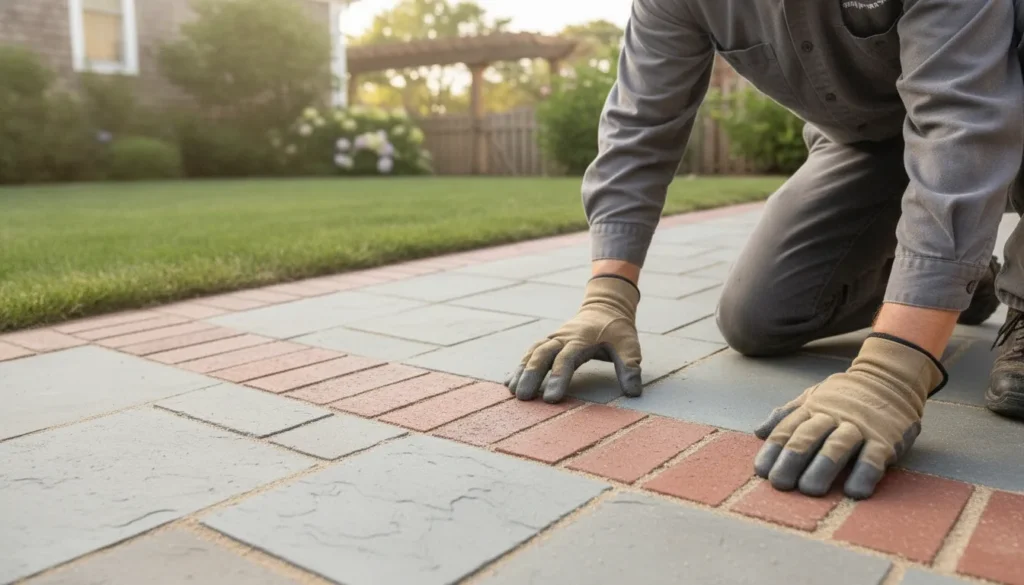
Paver work often involves the surface and the joints together. Organic growth, embedded soil, efflorescence, failed sealer, and washed-out joint material each point to a different solution. Cleaning may be followed by color restoration, joint stabilization, or sealing, but those steps should be selected after inspecting the paver type and its condition.
That material-first approach is where Gulf2Bay fits the Long Island homeowner’s needs. The work is focused on restoring and maintaining premium residential exteriors, including brick, stone, limestone, brownstone, and paver surfaces. A masonry contractor in New York should be able to discuss the material in front of you, not just offer a standard pressure-washing package.
Ask for the proposed method in plain language: pressure level, products, test area, joint protection, rinse plan, and final finish. If the answer is the same for every surface, keep looking.
What a Cheap Bid Really Costs You
The number on the proposal is not the whole price
A masonry bid that comes in far below the others deserves a closer look. The difference may come from a smaller scope, cheaper materials, less preparation, or labor that is not properly supervised. Selecting a contractor solely on the lowest price can lead to cut corners, inferior materials, and structural failures, according to the homeowner guidance summarized in this masonry contractor reference.
That does not mean the highest bid automatically wins. It means you need to compare what each contractor is actually promising to install, repair, or protect. Ask whether demolition, base preparation, drainage, joint work, cleanup, and final sealing are included. A short proposal can hide a long list of exclusions.
Compare the work behind the price
| Category | Low Bid | Qualified Contractor |
|---|---|---|
| Materials | May rely on inferior or mismatched brick, stone, mortar, pavers, or sealers to reduce the initial price. | Names the proposed materials, explains compatibility, and accounts for the surface and site conditions. |
| Labor | May use inexperienced labor or allow too little time for careful removal, preparation, and installation. | Budgets skilled masonry labor and enough time for substrate preparation, alignment, joints, curing, and cleanup. |
| Warranty | May offer vague coverage, limited terms, or no clear remedy if the work fails. | Provides written warranty terms that explain what is covered, for how long, and what maintenance is required. |
| Long-term cost | A repair or replacement may arrive sooner if the base, joints, drainage, or materials were not handled correctly. | Spends more attention on the causes of failure, reducing the chance that the same problem returns quickly. |
| Supervision | The person who gives the estimate may not inspect the work or manage the crew each day. | Defines who is responsible for the crew, quality control, changes, and final walkthrough. |
Use the range as context, not a promise
Masonry projects vary sharply by material, access, design, demolition, site preparation, and the condition of the existing surface. As a broad planning reference, standard work may fall around $15 to $30 per square foot. While complex work may range from roughly $50 to $150 per square foot. These are background ranges, not a guaranteed quote for your property.
A masonry contractor in New York should inspect the site before putting a firm number on the job. A cracked walkway, settled paver area, failing retaining wall, or damaged brick facade can look straightforward from the street while requiring very different repairs underneath. Get the scope in writing, compare material and labor assumptions, and ask what happens if concealed damage appears after removal.
Pay for a sound plan, not just a low number. The cheapest proposal can become the most expensive option when the work has to be dismantled and done again.
Questions to Ask Before You Hire
Put the answers in writing
Do not hire from a short phone call and a low number scribbled on a card. Ask these questions before you compare proposals. The quality of the answers will tell you whether the contractor understands masonry work or is simply selling a general construction service.
- Who will perform the actual masonry work? Ask whether the person bidding the project will be on site, whether employees or subcontractors will do the work, and who will supervise it. A general contractor may coordinate several trades without having masonry expertise in-house. Masonry requires specialized skills, and not every handyman or general contractor is qualified for brick or stone work. Review the masonry-specific vetting guidance before you sign.
- Are you licensed and insured for this type of work? Ask what license applies to the project in your municipality and request current proof of insurance. Confirm that the coverage is active and appropriate for the crew and work being proposed. Licensing alone does not prove masonry skill, so treat it as one check, not the complete answer.
- Can you show me masonry projects similar to mine? Request recent examples involving the same material and a comparable repair, installation, or restoration method. Look for work that matches your brick, stone, pavers, limestone, or other surface. A gallery of unrelated exterior projects is not enough.
- What material do you recommend, and why? Ask the contractor to explain the material choice, color, texture, thickness, mortar, joint treatment, and expected maintenance. The answer should connect to the existing surface and the conditions at your property, not just to whatever product is currently in the truck.
- How will you prepare the base and handle drainage? Ask what will be removed, excavated, compacted, graded, and installed beneath the finished masonry. Ask where water will go after the work is complete. A beautiful surface can still fail when the base is unstable or water is trapped against it.
- What exactly is included in the written scope? The proposal should identify demolition, disposal, preparation, materials, installation, cleanup, protection of nearby surfaces, and any allowance or exclusion. Ask how changes will be priced. Vague phrases such as “repair masonry as needed” leave too much room for disagreement.
- What is the schedule, and who do I contact if it changes? Get an expected start window, estimated duration, weather contingencies, and the name of the person responsible for updates. Do not accept a promise that the crew will “fit you in” without a clear communication plan.
- What warranty do you provide? Ask what the warranty covers, how long it lasts, and what conditions void it. Clarify whether it covers labor, materials, settlement, joint failure, or water-related problems. Get the warranty terms with the proposal, not only in a verbal conversation.
- May I speak with recent customers? Contact the references yourself. Ask whether the work met the agreed deadline, whether the finished result matched the proposal, and how quickly the contractor responded when questions or concerns came up. Checking past work and references is a practical way to test reliability, not a formality. Use these reference-check questions when you make the calls.
Compare the substance of the answers, not just the total at the bottom. If a contractor will not provide documentation, explain preparation, or identify who is responsible for the work, keep looking.
How to Check References Like a Contractor
A polished photo gallery is not enough. Photos show the finished surface under ideal conditions, but they do not tell you whether the contractor communicated clearly, protected the property, or returned to correct a problem.
Ask for Comparable, Recent Work
Request two or three projects completed recently and similar to yours. If you need a limestone walkway, ask to see limestone work. If the project involves brick repointing, pavers, a retaining wall, or a drainage-sensitive hardscape, the reference should show that type of work rather than a completely different job.
Look at the age of the installation. A new wall can look perfect before the first freeze-thaw cycle, heavy rain, or settling. Recent work is useful, but a project that has been in service for a season or longer can reveal more about joint stability, water management, and finish quality.
Call the Previous Clients
Call the references yourself. Ask direct questions:
- Did the contractor meet the agreed deadlines?
- Did the crew arrive when promised and communicate changes?
- Was the work completed to your satisfaction?
- How did the contractor respond when you raised a concern?
- Were the final costs consistent with the written scope?
These are not small details. Guidance on masonry project vetting recommends contacting previous clients and asking whether deadlines were met, whether the work was satisfactory, and whether the contractor responded to concerns. Review the reference-check guidance before you make the calls.
Inspect the Work in Person
When possible, drive past a completed installation with the owner’s permission. Do not stand at the curb and judge only the color. Examine whether joints look consistent, transitions are clean, edges are properly finished, and water has a clear path away from the house. Poor drainage can undermine otherwise attractive masonry.
For restoration work, ask what was repaired, replaced, or left undisturbed. The U.S. General Services Administration notes that procedures such as installing limestone to match existing specifications require project-specific editing and professional judgment. That is the standard to look for: a contractor who evaluates the actual building and materials instead of forcing every property into the same recipe.
References should confirm more than appearance. They should confirm judgment, follow-through, and work that holds up after the crew leaves.
Restoration and Cleaning: The Gulf2Bay Angle
Installation Is Only the First Job
A well-built patio, walkway, retaining wall, or entry does not stay finished by itself. Long Island weather brings salt air, freeze-thaw cycles, runoff, algae, and traffic across the surface. Brick, natural stone, limestone, and concrete pavers each respond differently to moisture, cleaners, pressure, and sealers.
That is why the contractor conversation should continue after installation. Ask who will protect the surface once the work is complete, what maintenance it needs, and which products are safe for the material. Masonry restoration is project-specific. Limestone and older brick, in particular, can be damaged by the wrong pressure or an overly aggressive chemical.
Gulf2Bay approaches premium residential masonry as a surface-care problem, not a one-setting pressure-washing job. The process starts with identifying the material and its condition. From there, the treatment can address organic growth, embedded grime, fading, failing joint sand, or a tired sealer without treating every surface the same way.
Cleaning, Color, and Joint Protection
For brick and stone, professional masonry cleaning can remove buildup while preserving the character of the surface. Faded or weathered pavers may need brick paver restoration rather than a simple rinse. The goal is to clean before applying a compatible protective product, not to seal dirt into the pavement.
On paver installations, loose or washed-out joints can allow movement and weed growth. A properly selected sealer may support paver joint stabilization, but the joints and surface must be prepared first. Skipping that preparation creates a cosmetic shortcut, not durable maintenance.
This is the distinction between hiring a masonry contractor in New York for construction and choosing a specialist to care for the finished work. Gulf2Bay handles residential restoration, cleaning, sealing, and related masonry work across Long Island, including premium properties in the Hamptons and Bay Shore.
When the surface needs more than routine washing, review the masonry restoration service and describe the material, age, symptoms, and previous treatments. That information helps determine whether the next step is cleaning, repair, color restoration, sealing, or a combination.
Contact Gulf2Bay to plan the right restoration and cleaning approach for your masonry.
Frequently Asked Questions
How do I compare masonry contractors before hiring one?
Compare masonry-specific experience, recent work on similar brick, stone, or paver surfaces, written scope, materials, schedule, and references. Call previous clients and ask whether the contractor met deadlines, completed the work satisfactorily, and responded promptly when concerns came up. A general contractor’s experience alone does not prove specialized masonry skill.
Should a masonry contractor provide proof of insurance?
Yes. Verify licensing where required, confirm that the contractor carries insurance, and request current proof before work begins. The contractor should also be able to explain who handles permits, site protection, and damage caused during the project. These checks help separate a qualified masonry specialist from a handyman or contractor who rarely performs brick and stone work. Homeowner guidance supports verifying licensing, insurance, and masonry-specific experience.
Why should I avoid choosing the lowest masonry bid?
A much lower quote may reflect omitted preparation, inferior materials, or limited masonry experience. It can also lead to premature deterioration or structural problems. Ask each contractor to price the same scope, including demolition, substrate repairs, joint work, drainage details, cleanup, and warranty terms. Then compare what is included, not just the final number.
Can one contractor handle both masonry installation and restoration?
Sometimes, but verify the exact experience. Installation, repair, cleaning, and sealing require different methods, and existing limestone or other historic materials may need project-specific professional judgment rather than a one-size-fits-all procedure. Ask to see completed examples that match your surface and goal before assigning both phases to one company. GSA guidance notes that masonry procedures require project-specific editing and professional judgment.
Ready to Protect Your Masonry Investment?
Good masonry work deserves a maintenance plan that matches the brick, pavers, stone, or hardscape on your property. Gulf2Bay Softwash can discuss the condition of your existing surfaces and the right restoration or protection approach. Request a consultation about your paver, brick, or hardscape project, or call 844-422-9274 to speak with the team.