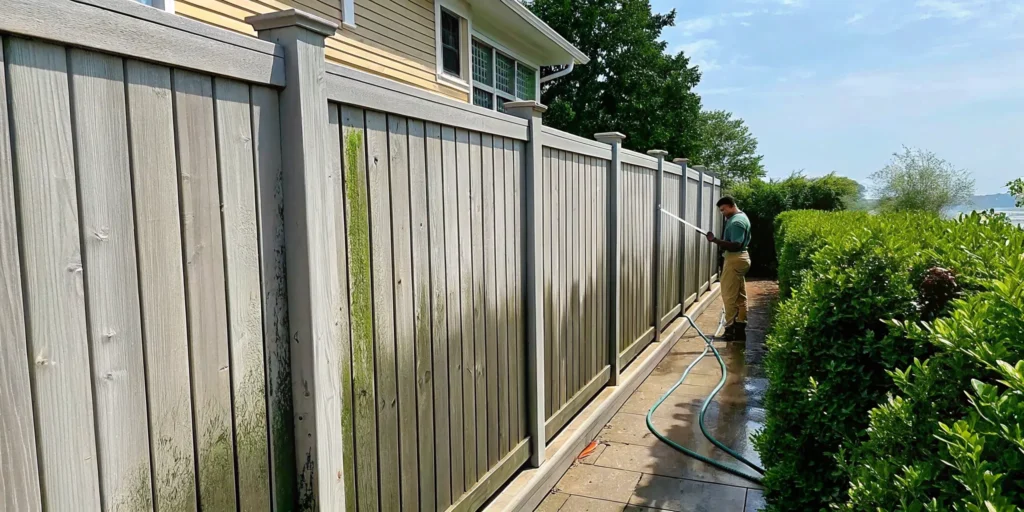
Long Island salt air and humidity turn clean fences into gray, moldy eyesores. This organic buildup does more than look bad; it rots wood and stains vinyl.
Expert fence cleaning on Long Island is the surest way to shield your yard fences from mold, algae, and weather damage. Using soft washing instead of high-pressure blasts lets you safely clear green mold and salt grime from wood, vinyl, or metal. This gentle cleaning method uses only one-third of the water of a standard power washer. It relies on safe, mild soaps that kill mold and algae down to the root. Because it kills the spores instead of just blasting them, your clean look will last four to six times longer. Most of all, it works without stripping wood fibers, cracking vinyl, or peeling tough coatings. Getting a pro to wash your fence restores its look. It also saves you from the cost of a new fence.
Picking the best wash method is the first step toward keeping a beautiful and long-lasting fence on your property. To protect your wood or vinyl from damage, you need to understand Why Soft Washing Beats Pressure Washing for Your Long Island Fence. Here is why.
Fence Cleaning Long Island: Why Soft Washing Beats Pressure Washing for Your Long Island Fence
Fences on Long Island face harsh coastal weather. Dirt, mold, and algae build up fast on wood and vinyl surfaces. Many homeowners turn to a pressure washer to clean them, but high pressure can ruin your fence. Soft washing is a much safer way to clean and restore these surfaces.
| Factor | Soft washing | Pressure washing |
|---|---|---|
| Water pressure | 50-150 PSI | 1,500-3,000+ PSI |
| Cleaning method | Biodegradable chemicals kill mold at the root. | High-pressure water blasts the surface only. |
| Water usage | 1/3 of pressure washing | 3x more water |
| Result longevity | 4-6x longer (kills spores) | Returns in months (surface only) |
| Wood safety | Safe, no fiber damage | Causes furring and splintering. |
| Vinyl safety | Safe, no cracks | Can crack panels and strip color. |
| Metal safety | Preserves protective coatings. | Can peel paint and dent metal. |
| Environmental impact | Biodegradable, pre-wets plants | Can release CCA toxins from pre-2004 wood |
The difference is clear. Soft washing protects your fence while pressure washing risks permanent damage. For Long Island homeowners with premium fences, soft washing is the only safe choice.
High pressure and wood damage
High-pressure water splits and tears wood fibers, causing wood furring that leaves a rough, splintered surface. If your wood fence was built before 2004, pressure washing is also a big health risk. This older wood is often treated with copper, chromium, and arsenic. A University of Florida study shows that pressure washing this wood releases harmful chemicals into your soil.
Eco-friendly soaps and water savings
Instead of raw force, soft washing uses mild, eco-friendly soaps to break down dirt. These green soaps are safe for your lawn and break down in twenty days. I pre-wet your grass and plants to keep them safe during the clean. This method also uses only one-third of the water that pressure washing needs.
For vinyl fences, a light one to two percent sodium hypochlorite mix wipes out stubborn mold without bending the plastic panels. This gentle mix cleans the fence safely and keeps the surface bright.
Root-level cleaning and results
Soft washing kills mold, mildew, and algae at the root. Pressure washing only blasts off the top layer, which means the green stains will return in a few months. Soft washing results last four to six times longer because the root is gone.
At Gulf2Bay Softwash, I clean premium Long Island homes with this precise, gentle care. You can learn more about our process by reading about wood versus vinyl fence cleaning to keep your property looking its best.
Wood Fence Restoration: Cleaning, Brightening, Sealing, and Oiling
Wood fences need more than a simple wash. Restoring them brings back the deep, rich look that salt air and summer sun strip away. Here is how professional restoration works on Long Island.
Restoration steps
- Inspect for rot and damage before any cleaning. Check for loose pickets, rotten posts, or cracked rails. If the wood crumbles when poked, replacement is the answer. The restoration process only works on structurally sound wood.
- Apply a low-pressure chemical clean. I never pressure wash wood fences. High pressure rips the soft wood fibers and creates a rough surface called furring. Instead, I use a biodegradable cleaning solution that breaks down mold and algae without damaging the wood. This is especially important for fences built before 2004, which may contain CCA-treated wood. A University of Florida study found that pressure washing old treated wood releases arsenic and chromium into your yard.
- Brighten the wood surface after cleaning. The wood often looks dull or gray. A mild wood brightener restores the natural color. This step prepares the surface for the protective finish that follows. Brighteners also neutralize any leftover cleaner. This helps the oil or stain bond well.
- Seal with oil or stain. Outdoor wood finishes protect against moisture, UV radiation, and biological decay as shown in research from North Carolina State University. For premium Long Island homes, I use Brazilian Rosewood Oil or similar wood sealers. These oils soak deep into the grain and protect the fence for two to three years.
- Maintain with yearly care. Plan a professional cleaning and oiling every 12 to 18 months. This keeps the wood from graying and extends the fence life by years. Pair this service with deck restoration for a full yard refresh.
How to Clean a Vinyl Fence on Long Island Without Causing Damage
Risk of high pressure
Vinyl fences are tough, but high pressure ruins them. A standard pressure washer can crack plastic panels and strip their color. On Long Island, salt air and damp weather create green mold and dark dirt on your fence. Do not blast it with high-pressure water. Once a vinyl panel cracks from the pressure, the entire section needs replacement.
Soft wash method for vinyl
Instead, use soft washing. I use this safe method to clear away mold and grime. A soft wash uses low pressure and biodegradable cleaning soaps to kill mold at the root. A CDC mold clean up guide suggests using bleach to stop organic spores. We mix a mild liquid of one to two percent sodium hypochlorite with a surfactant soap. This soap helps the liquid stick to the upright vinyl slats. It removes organic growth without scratches or leaks. The soft wash solution penetrates the mold pores, unlike high-pressure water that just bounces off. Before you choose your fence type, read about wood versus vinyl fence cleaning to see how care methods differ.
Rinse and maintenance schedule
After the wash sits for ten minutes, rinse it with a wide spray. Use clean, low-pressure water to wash away the dead mold and old soap. At Gulf2Bay, I use the exact same soft wash systems on vinyl fences that I use for house siding. This keeps your home looking neat and clean. Rinsing from top to bottom prevents soap residue from streaking across clean panels.
How often should you wash your fence? Clean your vinyl fence once a year to keep dirt from building up. On the South Shore or in the Hamptons, salt and wind can make things dirty fast. A quick yearly wash keeps the plastic white and bright for a long time. Homeowners who skip yearly cleaning find mold stains set into the surface. Those stains need much stronger treatment later.
Metal and Chain-Link Fence Cleaning: Aluminum, Wrought Iron, and More
Aluminum fences
Aluminum is a common choice for Long Island properties because it resists rust. But salt air still leaves a chalky white oxidation on the surface. Soft washing removes this buildup without scratching the powder coating. The low-pressure rinse pushes dirt out of hollow rails and posts where it tends to collect. Aluminum is also prone to pitting when salt and moisture sit on the surface for months at a time. A yearly soft wash stops this pitting before it becomes permanent.
Wrought iron fences
Wrought iron is strong and elegant, but it needs regular care to stay rust-free. Soft washing clears dirt and debris that trap moisture against the metal. Once the iron is clean and dry, I inspect for any chipped paint or rust spots. Catching these early prevents expensive welding repairs later. A clean metal fence is also easier to repaint if the previous coating has worn thin. Wrought iron fences near the coast need extra attention because salt spray accelerates rust formation faster than inland properties.
Chain-link fences
Chain-link collects vines, leaves, and ground-level grime faster than any other fence type. The woven steel mesh traps organic debris that stays damp and promotes rust. Soft washing blasts out this debris without bending the wire or loosening the tension. The biodegradable soaps also kill the mold spores that grow on chain-link in shaded yards. After cleaning, chain-link looks brighter and the property feels more open and maintained.
Professional soft washing keeps metal coatings intact, which helps your fence resist corrosion for years. Soft wash results last four to six times longer than a simple hose down because the cleaning kills the biological growth at the root. For more details on process and pricing, see our fence cleaning services page.
When to Call a Pro for Fence Cleaning on Long Island
Signs you need professional cleaning
Green mold, black mildew, and gray discoloration mean your fence needs service. If a quick rinse from the garden hose does not remove the stains, soft wash cleaning is the next step. Wood that has turned gray needs restoration, not a simple wash.
Before you rent a pressure washer, know the risk. A pressure washer can cost $50 to $100 a day to rent. It can also release toxic chemicals from older wood fences. One wrong angle at full pressure and you have ruined a section of fence that costs hundreds to replace.
When to replace instead of clean
Not every dirty fence can be saved. Replace wood fence sections if the wood is soft, rotted, or pulling away from the posts. Replace metal sections if rust has eaten through the metal. Clean only repairs that make economic sense; a mid-range fence replacement on Long Island can run $2,000 to $5,000.
Best timing for fence cleaning
Spring is the best time for fence cleaning on Long Island. Winter leaves behind moisture and salt that have fed mold all season. An early spring clean preps the fence for summer gatherings and curb appeal. Late fall is the second best window, clearing away summer grime before the wet winter season.
Bundle with other services
Fence cleaning pairs naturally with house washing and deck restoration. Booking multiple services in one visit saves time and money. A full exterior clean also makes your entire property look well-maintained, which matters if you are planning to sell. See our fence cleaning services page to learn how bundling works.
Frequently Asked Questions
How much does fence cleaning cost on Long Island?
Professional fence cleaning costs on Long Island vary by size and material. Local rates typically range from $1.50 to $5.00 per linear foot, with a standard job minimum of about $250. According to pricing data from Platinum Power Washing, some companies charge about $5 per side for each fence section. For a standard backyard fence, homeowners can expect to pay between $125 and $350. The price depends on how dirty the surface is.
Is pressure washing safe for wood and vinyl fences?
High-pressure washing can easily gouge soft wood fibers or crack thin vinyl panels. To prevent this damage, professional teams use low-pressure soft washing methods. This approach uses mild soaps to kill mold and algae before rinsing the fence clean with safe water pressure. Experts at Pequa Power Washing advise that this method is best for PVC, vinyl, and wood. It cleans the fence safely. It will not scar the surface or strip away protective coatings.
How often should Long Island homeowners clean their fences?
Most fences on Long Island need a professional cleaning every one to two years. Coastal salt air, heavy humidity, and shade speed up the growth of green mold and dark mildew on outdoor surfaces. Cleaning your fence on this regular schedule keeps stains from sinking deep into the wood or vinyl. According to property maintenance tips on Beyond Maids, regular washing also stops permanent discoloration and extends the life of your fence panels.
Ready to Restore Your Fence?
Your fence protects your yard and frames your home. A clean, well-maintained fence adds curb appeal and saves you the high cost of early replacement. I serve homeowners across Nassau and Suffolk Counties, including the Hamptons and Bay Shore. Every fence gets the same careful soft wash process. I use this process on premium Long Island properties.
Call me at 844-422-9274 to schedule your free fence cleaning assessment. I will walk your property, inspect the fence material, and give you a clear quote. No pressure, just honest advice on what your fence needs.