Long Island’s humidity and coastal exposure give algae, mold, and mildew plenty of opportunities to settle into siding, cedar, roofs, and stone. A rented pressure washer may look like a bargain, but the wrong pressure or chemical mix can turn a cleaning project into surface damage or a ladder injury.
DIY vs professional soft washing long island comes down to more than the first invoice. DIY may cost $100 to $400 in equipment and supplies. While a trained soft wash uses under 90 PSI and the right treatment to remove organic growth without blasting delicate surfaces.
Small, ground-level work can be reasonable when you understand the surface and follow chemical safety rules. Multi-story homes, cedar, asphalt shingles, stucco, and full exterior cleanings require tighter control. Start with the real cost comparison, including equipment, time, and the risk of repairing avoidable damage.
DIY vs Professional Soft Washing Long Island: The Cost of DIY vs Professional Soft Washing on Long Island
DIY house washing looks cheaper at first. The equipment and supplies typically run between $100 and $400, depending on whether you rent a pressure washer or purchase one for future projects. That figure is an upfront estimate, not the complete cost of getting the job done safely.
What the DIY price actually covers
A rental may cover the machine for one day, but the job can require additional nozzles, hoses, cleaning solution, protective equipment, ladder access, and transportation. If the first pass leaves streaks or organic growth behind, another rental or more supplies increases the total. The typical DIY range of $100 to $400 is documented by this cost comparison.
| Cost factor | DIY approach | Professional service |
|---|---|---|
| Upfront expense | Typically $100-$400 for equipment and supplies | Service fee based on the home’s size, surfaces, access, and scope |
| Equipment | Consumer-grade pressure washer rental or purchase, plus accessories | Commercial-grade soft-wash equipment selected for the surface |
| Cleaning agents | Purchased separately, with dilution and application left to the homeowner | Commercial-grade cleaning chemicals and controlled application included |
| Labor and setup | Your time for transport, setup, washing, rinsing, and cleanup | Labor, setup, surface protection, and cleanup included in the service |
| Method | Pressure can damage siding, shingles, pavers, and other delicate surfaces | Low-pressure cleaning is matched to the home’s materials and condition |
Compare the result, not only the receipt
Professional soft washing is not simply a machine rental with someone else holding the wand. The service combines commercial-grade equipment, appropriate chemicals, and trained labor. The goal is to treat organic growth rather than rely on force alone. A professional cleaning solution helps release growth from the surface, followed by a controlled rinse.
For a Long Island home with cedar, painted siding, shingles, pavers, or multiple stories. The lower DIY price can disappear quickly if equipment causes damage or the work has to be repeated. Compare the full investment: supplies, time, access, surface risk, and the value of a finished result.
The Hidden Risks of DIY Soft Washing
Soft washing is not simply pressure washing with less force. On a Long Island home, the wrong pressure, chemical ratio, or rinse pattern can turn routine maintenance into an expensive repair.
Injury risk rises with pressure and elevation
Pressure washers can cause serious lacerations and eye injuries. The U.S. Consumer Product Safety Commission estimates that pressure washers cause about 6,057 injuries annually. CPSC injury data is a useful reminder that equipment designed to remove stubborn buildup can injure skin quickly when handled carelessly.
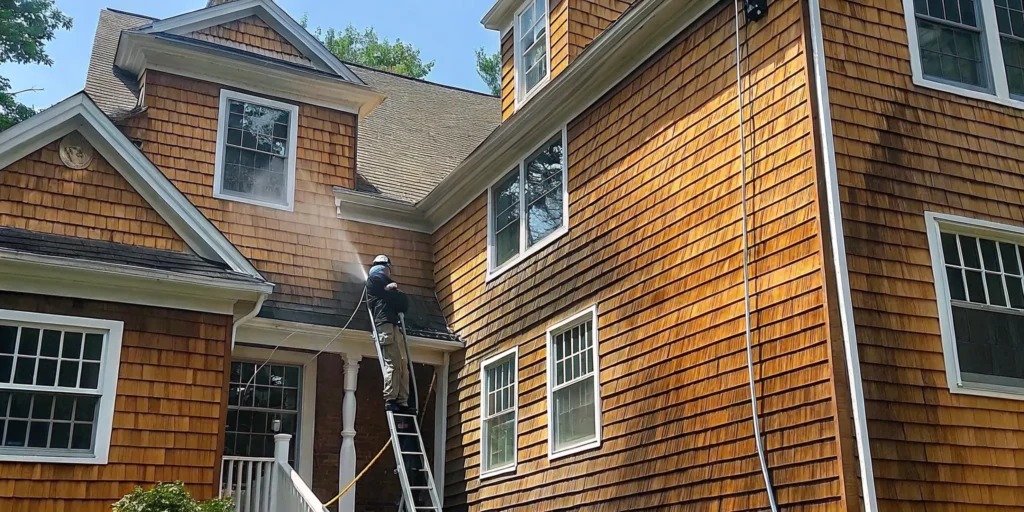
That risk increases when the work involves a two- or three-story home, steep rooflines, dormers, or wet ladders. Balancing a hose and spray wand while reaching around eaves is not a controlled cleaning method. A slip can damage the person, the siding, the landscaping, or all three.
High pressure can damage the surface you meant to clean
Vinyl siding, cedar, asphalt shingles, painted trim, and pavers do not respond like a concrete driveway. Excessive pressure can force water behind siding, strip protective coatings, scar soft materials, dislodge granules from shingles, or etch pavers. High pressure can also spread contamination instead of treating the organic growth at its source.
Read more about the dangers of high pressure washing before putting a rental machine against a roof or exterior wall.
Chemicals require control, not guesswork
Soft washing commonly uses diluted sodium hypochlorite with a surfactant. The solution must match the surface and the level of organic growth, then be applied and rinsed with care. A mixture that is too strong can discolor finishes, burn vegetation, or corrode nearby metal. A weak mixture may leave mold and algae behind, encouraging a quick return.
Professionals use the correct ratio and rinse appropriately. In that process, sodium hypochlorite breaks down rapidly and does not leave harmful residues that threaten landscaping. That result depends on application control, not simply buying the same chemical.
Mold and warranty concerns
Long Island’s moist coastal conditions support mold and biological growth. The EPA advises removing mold promptly, but aggressive cleaning is not the answer. Improper treatment can drive water into assemblies or leave growth in seams and shaded areas.
Roofing and siding manufacturers may exclude damage caused by improper cleaning or unauthorized methods. Check the warranty terms before starting, and document the cleaning approach. When the surface is elevated, delicate, or covered by a warranty, call for a controlled assessment instead of experimenting.
What Professional Soft Washing Delivers That DIY Can’t
The equipment is only part of the difference. Professional soft washing combines controlled pressure, the right chemistry, and surface-specific application so the cleaning removes the cause of the staining without roughing up the material underneath.
Low pressure with a chemical solution
Soft washing uses pressure under 90 PSI, not the high-force blast commonly associated with a rental pressure washer. The cleaning solution typically combines diluted sodium hypochlorite with a surfactant. The surfactant helps the solution cling to the surface, while the sodium hypochlorite attacks algae, mold, and mildew where they are established.
That sequence matters. A pressure wand can strip away the visible film while leaving organic growth embedded in pores, seams, and shaded areas. Professional application kills the root of the growth first. A controlled rinse then removes the loosened material without forcing water behind siding, under shingles, or into delicate wood fibers. This is the core of the soft washing techniques used for Long Island homes.
Commercial equipment and trained application
Commercial soft wash systems give technicians control over flow, reach, dilution, and rinse pressure. That control is important on cedar, vinyl siding, asphalt shingles, painted trim, masonry, and pavers, because each surface responds differently to water and chemistry.
Training also changes the preparation. A technician protects or wets nearby plants, manages runoff, identifies vulnerable surfaces, and adjusts the application instead of treating every part of the property like concrete. The goal is not maximum pressure. The goal is a clean surface with no unnecessary force.
Safer chemistry when handled correctly
Professional does not mean chemical-free. It means the mix is selected, applied, and rinsed with control. Sodium hypochlorite breaks down rapidly when used in the correct ratio and rinsed appropriately, without leaving harmful residues that threaten landscaping. The biodegradable solutions used by responsible operators are designed for effective cleaning with a smaller impact than repeated aggressive blasting.
There is also a liability difference. A legitimate contractor should carry insurance and liability coverage, use trained technicians, and follow procedures for ladders, roof access, plants, windows, and neighboring property. That matters when a job involves a steep roofline, a second-story facade, or expensive cedar and stone.
Because the organic growth is killed instead of merely displaced, professional soft washing typically keeps surfaces clean four to six times longer than surface blasting alone. Fewer repeat cleanings mean less wear, less disruption, and a better long-term result for a Long Island home.
Time Investment and Long-Term Results
A DIY exterior wash is rarely a Saturday-morning chore. Plan for a full weekend to research the right process, rent or buy equipment, purchase chemicals, protect plants and delicate surfaces, do the cleaning, and handle cleanup. A mistake on a ladder or cedar surface can add even more time.
What the weekend really includes
Equipment pickup and return are only part of the work. You also need to mix and apply chemicals consistently, manage runoff, move hoses around the property, rinse thoroughly, and inspect the finish from multiple angles. On a large Hamptons property, steep rooflines, multiple elevations, stonework, and coastal buildup make the job slower and harder to control.
Hours of work, not days of disruption
A trained crew can typically complete the cleaning in hours rather than consuming an entire weekend. The process is planned around the surfaces being treated, with low pressure used to reduce the risk of damage to siding, cedar, shingles, and pavers. Soft washing also uses about one-third the water of pressure washing, which means less runoff and less time spent rinsing.
Results that hold up longer
Pressure washing can make a surface look clean by blasting away visible growth. It does not necessarily address the organic growth at its root. Soft washing applies a cleaning solution that kills algae, mold, and mildew before a controlled rinse removes the loosened material. That difference matters in Long Island’s humid, coastal conditions.
When performed correctly, professional soft washing can last four to six times longer than a DIY pressure-washing result. Fewer repeat cleanings protect your schedule, reduce water use, and help preserve the curb appeal of a luxury home instead of repeatedly stressing its exterior surfaces.
For a property with cedar, stone, pavers, or multiple stories, the value is not just the hours recovered. It is a cleaner finish that stays cleaner longer.
When DIY Makes Sense (And When to Call a Pro)
DIY exterior cleaning is reasonable when the job is small, reachable, and forgiving. A homeowner can usually handle a lightly soiled patio or a limited section of single-story vinyl siding with the right product. Careful application, and a way to protect nearby plants.
Good candidates for a DIY wash
Stay at ground level. Work on one manageable surface rather than trying to clean the entire property in a weekend. Read the product label, test an inconspicuous area, use the recommended dilution, and rinse thoroughly. Stop if the surface changes color, the solution runs into landscaping, or the result becomes uneven.
That last point matters. DIY cleaning often produces visible overlap marks when one area receives more solution or dwell time than another. On a small patio, the correction may be inconvenient. Across a full exterior, it can leave a patchy finish that requires another cleaning.
Where the risk rises quickly
Call a professional when the work involves multiple stories, ladders, steep access, or a large area. The same applies to cedar siding, stucco, Brazilian hardwood decks, older masonry, and other surfaces that can be damaged by excessive pressure or the wrong chemical strength.
Soft washing is not simply a matter of adding cleaner to a pump sprayer. A mix that is too strong can discolor surfaces or harm plants. A mix that is too weak may leave organic growth behind. Pressure that is too high can strip coatings, force water behind siding, or scar a delicate surface. The goal is controlled chemical application and low pressure, not surface blasting.
Account for Long Island’s coastal conditions
Long Island’s coastal humidity gives mold, mildew, and algae favorable conditions for returning, especially on shaded siding, decks, stone, and pavers. A quick rinse may improve appearance without addressing the organic growth that keeps coming back. Professional service is the smarter choice when the project covers the whole exterior or when uneven regrowth would be costly to correct.
This section addresses general exterior surfaces, not the separate safety and access issues involved in roof moss removal. For broader property maintenance, start with the criteria for hiring a professional soft washing company. Choose DIY for a contained, ground-level task. Call for an assessment when the surface, height, chemistry, or scale leaves little room for error.
Frequently Asked Questions
Is soft washing safe for cedar roofs?
Yes, when the cleaning solution and rinse pressure are matched to the cedar. Soft washing relies on low pressure and a controlled solution rather than forceful blasting, which helps reduce the risk of lifting fibers or damaging weathered wood. A professional should inspect the roof first and protect nearby landscaping.
What chemicals are used in professional soft washing?
The usual mix includes diluted sodium hypochlorite and a surfactant. The solution treats algae, mold, and mildew at the root before the surface is rinsed. When applied in the correct ratio and rinsed properly, sodium hypochlorite breaks down rapidly and does not leave harmful residues that threaten landscaping.
Can I rent soft washing equipment on Long Island?
Equipment may be available through rental providers, but a rental does not supply the surface assessment, chemical-mixing judgment, ladder safety, or plant protection needed for a complete job. The risk is higher on multi-story homes, steep roofs, cedar, stucco, and other delicate surfaces. Ground-level vinyl or concrete is a more reasonable setting for a careful DIY project.
Why does professional soft washing last longer than pressure washing?
Pressure alone can remove visible staining without treating the organic growth causing it. Professional soft washing applies the cleaning solution first, killing the growth at its root, then uses a controlled rinse to remove the loosened material. That approach addresses the source instead of simply blasting the surface clean.
Ready to Compare Your Soft Washing Options?
The right approach depends on your home’s surfaces, height, and the type of organic growth present. A quick assessment can help you weigh the equipment, safety, and results before starting a DIY project.
Call for a free estimate at 844-422-9274. Get a clear recommendation for your Long Island property and the next practical step.