Long Island’s coastal humidity gives organic growth plenty of opportunity to settle on siding, especially where shade, damp air, and poor drainage overlap. A dark stain is not automatically dirt, and a pale patch is not automatically harmless.
When comparing mildew vs algae on house siding Long Island homeowners should look at texture and color. Algae usually creates dark green, gray, or black streaks, while mildew tends to look light, fuzzy, or powdery. Soft washing is the effective treatment for both because low pressure and biodegradable cleaning solutions remove visible growth while treating the source without roughening siding.
Start with the stain’s appearance, then check where it forms and whether moisture is feeding it. The difference becomes easier to see when you know the patterns algae leaves behind.
Mildew Vs Algae On House Siding Long Island: What Does Algae Look Like on Your Siding?
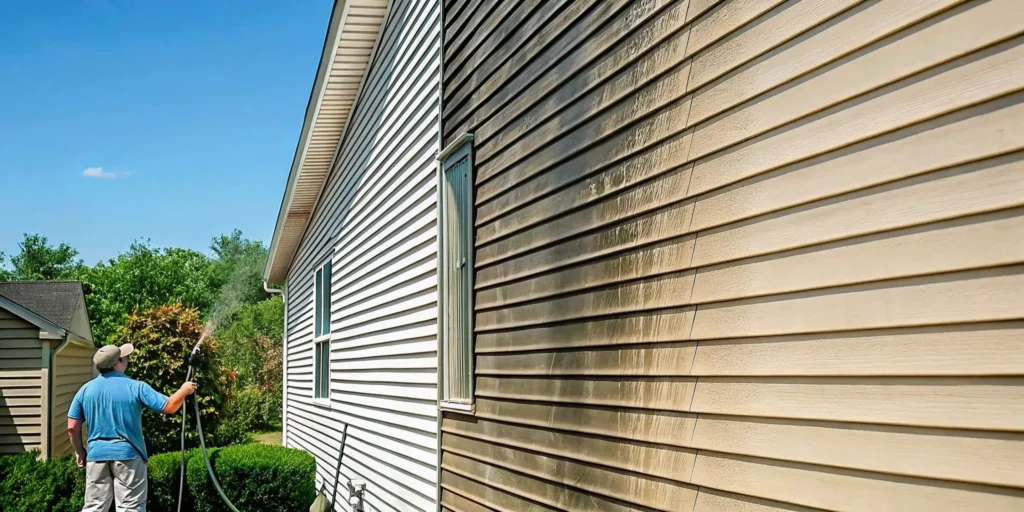
Algae on siding usually appears as dark, black, or greenish discoloration. It may start as a few narrow streaks beneath roof edges, then spread into broad patches across the wall. From the driveway, it often looks like ordinary dirt or weather staining. A closer look may show an uneven film that follows the siding profile instead of a uniform layer of dust.
One common culprit is Gloeocapsa magma, a type of algae associated with dark biological staining on exterior building surfaces. Research describes algae as a colonizer of facades and other exposed materials, and dark discoloration is frequently mistaken for dirt when it is actually biological growth. The academic research on algae growth and research on biological surface discoloration support that distinction.
Where Algae Thrives on Long Island Homes
Start your inspection on north-facing walls. These surfaces receive less direct sunlight and often stay damp longer after rain, dew, or coastal fog. Algae also favors siding beneath trees, beside dense shrubs, and along sections shielded from wind.
Long Island’s coastal humidity creates favorable conditions for algae growth on residential exteriors. That is why one wall may look clean while the shaded side of the same house develops green-black streaks. The pattern matters. Staining concentrated on a shaded elevation points toward biological growth more than a single dusty weather event.
Check around window trim, under eaves, behind downspouts, and near landscaping. These areas can hold moisture and collect organic debris. Greenish film does not always mean the entire siding surface is affected, either. Growth may be limited to a few damp zones.
Do not scrub aggressively just because the stain resembles dirt. Mechanical cleaning can spread residue or wear the siding surface without addressing the biological source. Identify the growth first, then match the cleaning method to the siding material and the location of the staining.
How to Spot Mildew on Long Island Home Exteriors
Mildew usually looks different from the dark stains associated with algae. Check the siding, trim, soffits, and shaded walls for a light-colored growth with a fuzzy, powdery, or slightly dusty appearance. It may look white, gray, pale green, or tan, depending on the surface and how long it has been present.
That distinction matters when you are comparing mildew vs algae on house siding Long Island properties. Algae often creates dark, black, or greenish staining, while mildew and mold are more likely to appear light and textured. A surface that looks dirty from the ground may reveal a biological growth pattern when viewed closely.
Where Mildew Commonly Appears
Start with areas that stay damp longer than the rest of the exterior. Inspect north-facing walls, shaded elevations, siding below roof valleys, and spots near downspouts. Long Island’s coastal humidity can keep exterior materials moist, making mildew more likely on homes near the water and in neighborhoods with limited sun exposure.
Look for uneven patches rather than a uniform change in color. Mildew may gather around siding seams, window trim, porch ceilings, and other protected surfaces. If the growth returns quickly after cleaning, the visible patch may be a symptom of an ongoing moisture problem rather than a one-time surface stain.
Why Mildew Is More Than a Cosmetic Problem
Mildew and mold often point to localized moisture issues. Clogged gutters, poor drainage, standing water, inadequate airflow, and persistent shade can all leave exterior surfaces damp. Check the gutter line and downspouts near the affected area before treating the stain.
Unchecked biological growth can also contribute to damage in damp building materials. Research associates fungi in damp buildings with potential structural damage, so recurring mildew should not be dismissed as a color issue alone. Review the research on mold and damp-building damage, and address the moisture source along with the visible growth.
When the color or texture is unclear, do not scrape aggressively or blast the siding. Identify the growth, inspect the drainage around it, and choose a cleaning method suited to the exterior material.
Mildew vs Algae on House Siding: Key Differences
Color and texture provide the fastest first check, but siding stains can overlap. Algae, including Gloeocapsa magma, commonly appears as dark, black, or greenish discoloration. Mildew and mold are more often light-colored, fuzzy, or powdery. These visual differences are documented in building-surface and mold research, but a close inspection still matters before treatment.
Quick Visual Guide to Siding Stains
| Feature | Algae | Mildew |
|---|---|---|
| Color | Dark, black, or greenish staining | Light-colored, powdery patches |
| Texture | Slimy when wet or stain-like when dry | Fuzzy or dusty-looking growth |
| Growth conditions | Sunlight combined with surface moisture | Dark, damp, poorly ventilated areas |
| Damage risk | Usually creates surface staining and discoloration | Can contribute to structural damage when damp growth is left unchecked |
| Treatment | Soft washing neutralizes growth at the root | Soft washing neutralizes growth at the root |
Algae is often mistaken for ordinary dirt, especially on shaded or weathered siding. Mildew, meanwhile, frequently points to a moisture problem nearby, such as clogged gutters, poor drainage, or a wall that receives little sunlight. Correct identification helps you address the cause instead of repeatedly removing the visible mark.
For a documented overview of algae on building surfaces and its dark or greenish appearance, see the published building-surface research. If a stain has spread into seams, remains after cleaning, or is accompanied by damp materials, have the siding assessed before choosing a cleaning method.
Why Soft Washing Is the Best Treatment for Both
Algae and mildew do not simply sit on the surface of Long Island siding. They establish biological growth in damp, shaded areas, then return when the visible stain is removed without treating the underlying organism. The right cleaning method must remove the discoloration and address the source of the growth.
Soft Washing vs. Pressure Washing for Siding
Soft washing combines controlled water flow with biodegradable cleaning chemicals. The method typically works at 60 to 500 PSI, far below conventional pressure washing. Surfactants help the solution cling to the siding, while the treatment neutralizes mold and algae at the root level instead of relying on force alone.
That distinction matters when you are dealing with professional soft wash treatments for vinyl, painted surfaces, cedar, or other siding materials. The cleaning solution does the biological work. Water then rinses away the dead growth and loosened residue without forcing high-pressure spray behind siding panels or into vulnerable seams.
Pressure washing commonly operates between 1,500 and 4,000 PSI or higher. That mechanical force can strip surface coatings, scar wood fibers, and damage vinyl siding when the nozzle is too close or the pressure is poorly controlled. It may make a wall look cleaner for a short time, but it does not provide the same root-level treatment for algae and mildew. The result can be a faster return of dark staining, fuzzy growth, or both.
Soft washing is not the same as using a stronger spray at a greater distance. It is a treatment process built around the correct chemical solution, dwell time, application technique, and rinse pressure for the surface. That approach is especially important on coastal homes, where humidity can keep siding damp and create favorable conditions for recurring growth.
Root-level treatment is the reason properly performed soft washing can prevent regrowth for four to six times longer than surface-only cleaning. The exact interval depends on shade, moisture, nearby vegetation, drainage, and the siding material, but removing the biological source gives the surface a longer clean window.
The same principle applies beyond house siding. Gulf2Bay’s guidance on root-level mold and algae removal shows why low-pressure chemical cleaning is better suited to exterior materials than aggressive blasting. Treat the growth, not just the stain.
Preventing Algae and Mildew on Your Long Island Home
Long Island’s coastal humidity creates favorable conditions for algae and mildew to return quickly, especially on exterior surfaces that stay damp after rain or morning condensation. Prevention starts by reducing the moisture and shade that biological growth needs.
Seasonal Maintenance Tips for Long Island Homes
Walk the exterior each spring and fall. Give extra attention to north-facing walls, shaded siding, porch ceilings, and areas beneath dense tree cover. These zones dry more slowly and should be checked before dark streaks or fuzzy patches spread.
- Trim trees and shrubs. Cut back branches that block sunlight or touch the siding. Better airflow helps walls dry after coastal rain and reduces the damp, shaded conditions algae and mildew prefer.
- Clean the gutters. Remove leaves and sediment before the spring and fall rainy periods. Clogged gutters can overflow against siding, keeping specific wall sections wet and creating a recurring growth pattern.
- Improve drainage. Confirm that downspouts discharge away from the foundation and that water is not pooling beside the house. Persistent dampness around one wall is a moisture warning, not simply a cosmetic cleaning problem.
- Schedule annual soft washing. A planned low-pressure treatment removes biological growth before it becomes heavily established. It also gives you a professional look at vulnerable siding, roof edges, gutters, and shaded elevations.
Mildew and mold are often connected to localized moisture from clogged gutters, poor drainage, or limited sunlight, according to the Environmental Protection Agency. Correcting that source matters more than repeatedly washing the same stain.
Do not wait until every elevation looks dirty. In Hamptons and other Long Island homes exposed to coastal moisture. Treating priority zones on a regular schedule is more effective than allowing growth to become thick and widespread.
Frequently Asked Questions
How can I tell the difference between mildew and algae on siding?
Algae usually appears as dark, black, green, or sometimes brown discoloration spread across exposed siding. Mildew is more often light-colored, fuzzy, or powdery, especially in shaded, damp areas. A stain that looks like ordinary dirt may be biological growth instead. When the appearance is unclear, check the wall’s moisture, shade, and drainage conditions before choosing a cleaner.
What does algae on siding look like?
Algae commonly forms broad greenish or dark stains on siding, roofs, and other exterior surfaces. On Long Island, coastal humidity can make growth return quickly on walls that stay damp or receive limited airflow. Do not assume a dark patch is only dirt. A surface-safe treatment should address the biological growth rather than simply rinse the discoloration away.
How do I get rid of algae and mildew on house siding?
Soft washing applies a siding-appropriate biodegradable cleaning solution and low water pressure to neutralize organic growth without relying on force. The method is better suited to delicate exterior materials than aggressive pressure washing, which can strip finishes or drive water behind siding. Protect nearby plants, windows, and fixtures, then rinse thoroughly after the solution has worked.
Why does algae keep coming back on my Long Island home?
Recurring growth usually means the conditions that support it are still present. Coastal humidity, shaded walls, clogged gutters, poor drainage, and limited sunlight can keep siding damp. Correct the moisture source where possible, keep gutters flowing, and schedule surface-specific cleaning when buildup returns. That combination lasts longer than repeatedly rinsing the same stain.
Ready to Treat Those Exterior Stains?
Correctly identifying mildew or algae is the first step toward choosing the right treatment for your siding. Soft washing addresses both without the unnecessary force of high-pressure cleaning. Call 844-422-9274 to schedule a free soft wash estimate for your Long Island home.

About the Author
David JarettFounder & Owner, Gulf2Bay Softwash
David Jarett was born and raised in East Hampton, NY, into a multi-generational construction family. His father was one of the original Hamptons custom home builders servicing West Hampton to Montauk. Starting on job sites at just 9 years old, David developed a lifelong passion for craftsmanship and customer care. Today he leads Gulf2Bay Softwash — a SoftWash Systems certified company — serving the Hamptons and Gold Coast with premium soft washing, roof cleaning, Brazilian hardwood restoration, and exterior cleaning services.