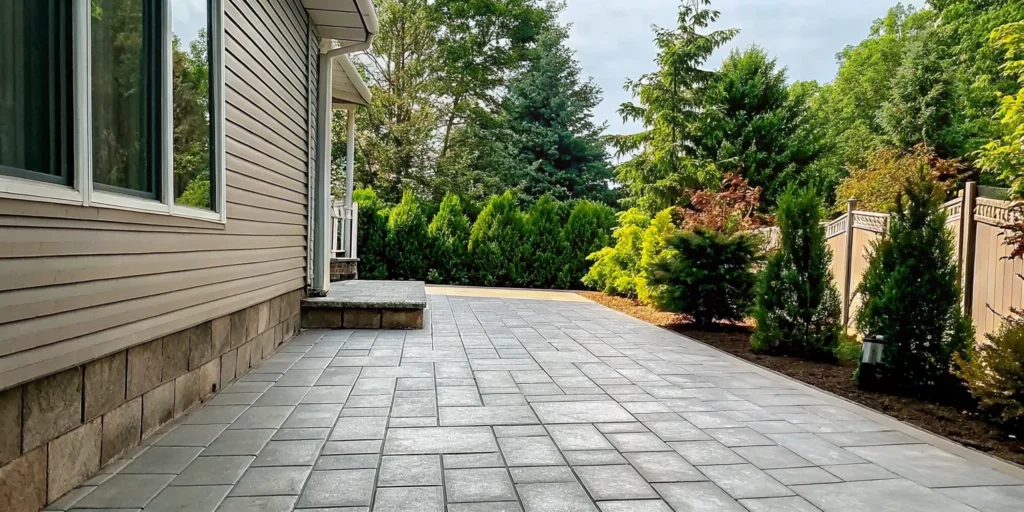
Long Island pavers take more abuse than a dry-climate patio. Rain moves through the joints, shade slows evaporation, and winter freeze-thaw cycles work on every weak spot. The wrong joint treatment can leave a patio vulnerable to washout, weeds, and shifting sand.
For many wet, shady, or poorly drained hardscapes. A paver joint stabilizing sealer Long Island homeowners choose with ASTM C144 angular joint sand provides more dependable joint protection than polymeric sand alone. The sealer locks the sand’s interlocking structure in place, while products such as Trident add Fungal Guard against mold, algae, and moss.
That does not make polymeric sand useless. Its polymer binders can help joints expand and contract through freeze-thaw conditions, but installation and activation must be precise. Start by understanding what a joint stabilizing sealer actually does, then compare its performance with the conditions around your patio, walkway, driveway, or pool deck.
What Is a Paver Joint Stabilizing Sealer?
It starts with the right joint sand
Paver restoration begins below the surface. After the pavers are cleaned and the old, contaminated sand is removed, the joints are filled with angular sand that conforms to ASTM C144. The fractured particles come in different sizes, creating mechanical interlock between the pavers instead of leaving loose, rounded grains that wash away easily.
That sand provides the structure. The stabilizing sealer locks it in place.
ASTM C144 joint sand is designed to interlock within the joint system, according to industry guidance on joint stabilizing sealers. Correct installation matters. If the joints are not clean, full, and dry, the sealer cannot produce a consistent result.
How the liquid sealer stabilizes the joint
A liquid joint stabilizing sealer is applied after the angular sand has been placed. The product penetrates into the sand, then cures into a flexible, permeable barrier. It holds the joint material together while allowing the hardscape system to manage normal moisture movement and seasonal expansion and contraction.
This is not the same as coating the top of every paver. Surface paver sealing focuses on appearance and protection against stains, UV exposure, and wear. Joint stabilization focuses on the spaces between the pavers, where rain can erode sand, weeds can take hold, and ants can tunnel. The two services can be combined, but they solve different problems.
For a closer look at the process and material choices, see this paver joint stabilizing sealer guide. If white mineral deposits are already visible, address them first with a proper method to remove efflorescence before sealing.
Trident protection for damp, shaded hardscapes
Gulf2Bay uses the Trident product line for paver joint stabilization. Trident includes Fungal Guard to help prevent mold, algae, and moss in the joint system. A useful feature for shaded patios, covered areas, and hardscapes that stay damp after rain. Joint stabilizing sealers are particularly well suited to wet or slow-draining areas where surfaces take longer to dry.
Choose the formulation based on the surface and the desired finish. Trident penetrating sealers can last approximately 5 to 10 years, while film-forming formulations generally last about 2 to 4 years. The correct choice depends on the paver material, condition, exposure, and whether the goal is a natural finish or more visible surface enhancement.
The Problem with Polymeric Sand on Long Island
Polymeric sand is not automatically a bad product. It uses ASTM C144 sand mixed with polymer binders, allowing the joints to expand and contract through heat, cold, and freeze-thaw cycles. The trouble starts when the installation, drainage, or exposure does not suit the material.
Heavy rain can expose weak joints
Polymeric sand must be activated with water and then allowed to dry completely so the binders can cure. Too much water during installation can wash those binders out before they set. The same vulnerability shows up later when intense rain moves through poorly drained areas or across sloped patios.
Once joint material washes away, the pavers lose part of the interlocking structure that keeps the surface stable. Open joints also create room for weeds to take hold and ants to tunnel beneath the pavers. Replacing the visible sand without correcting the drainage or application problem only resets the failure.
Shade and dampness are hard on polymeric sand
Long Island patios under decks, beside foundation walls, and beneath dense landscaping can stay damp long after rainfall. Shaded surfaces dry slowly, which makes curing and long-term performance more difficult. Polymeric sand can harden unevenly, crack, or break down when moisture remains trapped in the joints.
Technical guidance from SEK identifies joint stabilizing sealer as the better choice for areas prone to wet conditions, shade, slow drying, or substantial drainage. That includes many residential hardscapes across Suffolk, Nassau, and the Hamptons. The recommendation is based on exposure, not a blanket claim that one product fits every paver.
Choose the binder for the site
A paver joint stabilizing sealer Long Island homeowners use should be selected after examining slope, runoff, shade, joint condition, and the surrounding surfaces. ASTM C144 angular sand still provides the joint structure, while the sealer locks that sand in place and helps reduce migration from wind and rain. In some situations, compatible polymeric sand and a specialty sealer can work together, but the products must be tested for compatibility and installed precisely.
Do not treat recurring washout, cracks, weeds, or ant activity as a cosmetic issue. They are signals that the joint system and the property’s moisture conditions are not working together.
Source: SEK technical bulletin on joint stabilizing sealer and polymeric sand.
How a Paver Joint Stabilizing Sealer on Long Island Compares to Polymeric Sand
How the two joint systems differ
Both systems begin with properly graded, fractured angular sand that conforms to ASTM C144. That sand creates the physical interlock between the pavers. The difference is the binder system added afterward: a joint stabilizing sealer locks the installed sand in place, while polymeric sand contains polymer binders within the sand itself. The right choice depends on drainage, installation conditions, and how the area is used.
| Factor | Joint stabilizing sealer plus ASTM C144 sand | Polymeric sand |
|---|---|---|
| Joint durability | Hardens the installed sand and helps limit migration when the surface is cleaned, dry, and prepared correctly. | Forms a bound joint when swept in and activated correctly. Incorrect installation can leave weak or incomplete joints. |
| Rain and water resistance | Well suited to wet, shady areas and locations with slow drainage after the surface has dried before application. | Can perform well when properly activated, but wet areas and installation water can contribute to washout or incomplete curing. |
| Weeds and ants | Stabilized, filled joints help reduce openings used by weeds and ants. | Bound joints also help limit weed growth and ant tunnels, provided the joints remain filled. |
| Freeze-thaw cycling | Provides a stabilized joint while the paver system accommodates seasonal movement. | Polymer binders allow joints to expand and contract through heat, cold, and freeze-thaw cycles. |
| Installation time | Sand and sealer can often be installed in one day after cleaning, once the surface has dried for 24 hours. | Requires careful sweeping, activation, and drying. Over-watering can wash binder from the joints before curing. |
| Reseal frequency | Depends on the sealer type, exposure, and traffic. Penetrating products generally last longer than film-forming products. | Joint performance depends on the sand product, joint condition, drainage, and weather exposure. Reapplication is needed when joints erode or lose material. |
| Surface protection | Sealing can provide stain and UV protection while helping preserve color and appearance. | Polymeric sand stabilizes the joints. A compatible specialty sealer may be added for broader stain and UV protection. |
| Best use case | Patios, walkways, and driveways where wet conditions, shade, drainage, or a faster installation window matter. | Projects where the installer can precisely activate the product and the joint system needs polymer-supported freeze-thaw flexibility. |
Choose based on the pavers, joint condition, drainage, and weather window, not on the product name alone. In a damp or slow-drying Long Island location, joint stabilizing sealer is often the more practical option. Polymeric sand can make sense when its installation requirements and joint-width specifications fit the project. Review the paver sealing guide for the preparation and protection steps that apply to Nassau County hardscapes.
Why Long Island’s Climate Demands Better Joint Protection
Freeze-thaw cycles do not leave paver joints alone
Long Island pavers face a wider range of stress than a hardscape in a consistently dry climate. Winter freeze-thaw cycles make moisture in and around the joints expand and contract. Over time, that movement can loosen joint material, create gaps, and allow water to travel farther beneath the pavers. Northern-climate hardscapes need joint protection that accommodates this seasonal movement instead of treating the joints as static seams.
Polymeric sand is designed to expand and contract with heat, cold, and freeze-thaw conditions. However, performance still depends on correct installation and complete curing. Once joint material begins to migrate, the paver system loses part of the interlock that helps hold it together. A joint stabilizing sealer locks properly installed angular sand in place while preserving a degree of flexibility.
Humidity, shade, and rain create a second failure pattern
Long Island’s coastal environment adds persistent moisture to the problem. Humid air, salt exposure, shaded patios, and slow-draining areas give surfaces more time to stay damp. Industry guidance identifies wet, shady areas and locations with heavy drainage as conditions where joint stabilizing sealer is particularly well suited. Those are common conditions beneath decks, along foundation edges, and on north-facing patios.
Heavy rain can wash loose or poorly bonded joint material from the surface. Damp joints also create favorable conditions for algae, mold, and moss. Trident joint stabilizing sealer includes Fungal Guard to help resist that organic growth, giving it an important role in Long Island’s humid coastal climate. The goal is not to trap water beneath the hardscape. A properly selected system creates a flexible, permeable barrier that helps stabilize the joints while allowing appropriate moisture movement.
Before choosing a treatment, inspect drainage, shade, joint condition, and the age of the pavers. Then compare the expected work with the paver sealing cost for your property. Matching the sealer and sand system to the site matters more than choosing a product by label alone.
Maintenance and Resealing: Keeping Long Island Paver Joints in Top Shape
Use this four-step maintenance cycle
Long Island pavers take weather, moisture, salt, and seasonal temperature changes. A sound maintenance cycle keeps joint material in place and gives the surface a better chance of staying clean and stable.
- Wait at least one year before sealing new pavers. Let newly installed concrete pavers cure through a complete four-season weather cycle before applying sealer. Sealing too soon can interfere with the surface as it settles and cures. This one-year recommendation is also noted in Long Island paver maintenance guidance.
- Clean the pavers and remove the old sand. Start with a thorough cleaning that breaks down dirt, algae, and organic growth using eco-friendly solutions. Remove loose or failing joint sand so the replacement material has a stable base. Do not seal over weeds, sediment, or damaged joint material.
- Install ASTM C144 angular joint sand. Use properly graded, fractured angular sand that meets ASTM C144. The different particle sizes interlock inside the joints and help hold the paver system together. Sweep it fully into the joints and bring the fill to the correct level before sealing.
- Apply the right joint stabilizing sealer. A penetrating sealer typically lasts 5 to 10 years, while a film-forming sealer generally lasts 2 to 4 years. The right choice depends on the paver surface, desired appearance, exposure, and condition of the joints. For a more involved restoration, review the paver patio repair process before work begins.
Inspect the joints between reseals
Rinse the pavers periodically to clear away dirt and salt buildup. Spot-treat weeds before roots spread through the joint material, and inspect after heavy rain, winter freeze-thaw cycles, or drainage events. Avoid aggressive rinsing that can remove sand.
When joints look low, gaps become visible, or sand repeatedly washes out, the surface needs more than a quick rinse. Call for an inspection before loose pavers shift or water begins working beneath the installation.
Frequently Asked Questions
What is the difference between joint stabilizing sealer and polymeric sand?
Polymeric sand contains polymer binders that help the joint material expand and contract through freeze-thaw cycles. A joint stabilizing sealer locks ASTM C144 angular sand in place and adds surface protection against staining, UV exposure, and washout. The better choice depends on drainage, joint condition, desired finish, and product compatibility.
Can you apply joint stabilizing sealer over old polymeric sand?
Do not seal over loose, cracked, contaminated, or failing polymeric sand. The joints need to be inspected, cleaned, and corrected first. If polymeric sand remains sound, a compatible sealer may be possible, but the products must be tested and applied according to the sand manufacturer’s instructions. Otherwise, remove the old material and rebuild the joints with fresh angular sand before sealing.
How often should Long Island paver joints be resealed?
Resealing depends on the product, exposure, drainage, and traffic. Trident penetrating sealers typically last 5 to 10 years, while film-forming sealers generally last 2 to 4 years. Inspect the joints after harsh winters and periods of heavy rain. Reseal when water no longer beads, color fades, or sand begins washing from the joints.
Will a joint stabilizing sealer stop weeds and ants?
It can reduce weed growth and ant tunneling by stabilizing and filling the joints, but it is not a permanent pest-control treatment. Results depend on removing existing growth, cleaning the pavers, filling joints to the proper depth, and correcting drainage or washout problems. In damp or shady areas, choose a system suited to slow-drying conditions.
Call to Plan the Right Paver Treatment
Long Island pavers need joint protection matched to their drainage, shade, traffic, and freeze-thaw exposure. A consultation helps identify whether joint stabilizing sealer, polymeric sand, or a compatible combination fits the hardscape before materials are applied.
Contact us at gulf2baysoftwash.com/contact for a free paver consultation. We can discuss the condition of your paver joints and the next practical step.