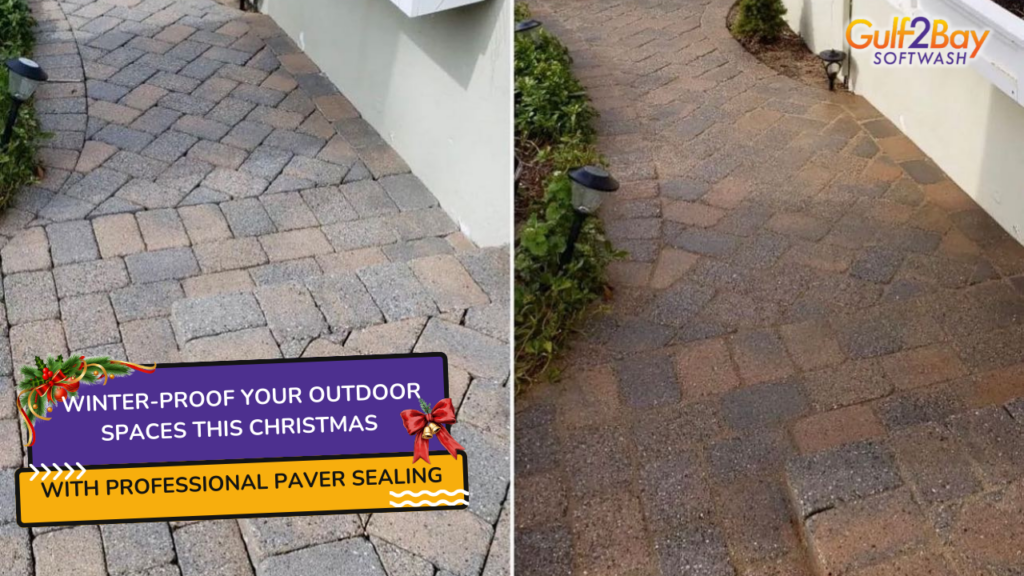
Winter-Proof Your Outdoor Spaces This Christmas with Professional Paver Sealing
Winter-proofing pavers means preparing and protecting your outdoor hardscapes so they resist freeze-thaw damage, salt and snow-melt exposure, and biological growth during the cold months, which is especially urgent when hosting Christmas gatherings. This guide shows Long Island homeowners how professional paver sealing prevents joint loss, reduces cracking, and keeps patios and walkways safe and attractive through winter. You will learn the specific winter risks for Long Island pavers, the cleaning and sealing process used by trained technicians, and simple holiday-timing tips to get patios photo-ready before guests arrive.
The article explains the mechanics of freeze-thaw cycles, advantages of eco-friendly soft wash cleaning, why a joint-stabilizing sealer matters in Suffolk and Nassau County winters, and a step-by-step how-to for professional paver cleaning and sealing. Practical checklists and comparison tables make it easy to decide when to schedule service and what to expect from a quality paver sealing job. Throughout, the focus is on actionable homeowner guidance with brief references to local professional options for paver sealing in Long Island.
Why Is Winter Paver Protection Essential for Long Island Homeowners?
Winter paver protection is the proactive application of cleaning, joint stabilization, and sealer to hardscapes so they withstand freeze-thaw cycles and deicing salts common in Long Island. Water that soaks into joints or beneath paver surfaces expands when it freezes, dislodging sand and weakening interlock; repeated cycles accelerate joint loss and surface cracking while salt and snow melt exacerbate staining and material breakdown. Proper winter-proofing reduces long-term repair costs and prevents slip hazards when temperatures fluctuate around freezing. Gulf2Bay Softwash, a Long Island exterior cleaning company, brings local climate experience and targeted paver sealing services that address these specific risks without heavy-handed pressure washing.
Research further emphasizes how critical it is to address fluid absorption at joints and the impact of deicing salts on concrete, which directly contributes to freeze-thaw damage.
Concrete Pavement Joint Deterioration & Sealing
While some have attributed this damage to insufficient air void systems, poor mixture design, or chemical reaction between the salt and the paste, it is the hypothesis of this work that a component of this damage can be attributed to fluid absorption at the joints. This report begins by discussing the importance of the level of concrete saturation on freeze-thaw damage. Second, this report describes the influence of deicing salt solutions on drying and wetting of concrete.
An overview of joint deterioration in concrete pavement: Mechanisms, solution properties, and sealers, Y Farnam, 2013
The following list highlights primary homeowner benefits and sets expectations before we explore damage mechanics and seasonal planning.
This list outlines the top homeowner benefits of winter-proof paver protection and why each matters.
- Protection from cracking and joint washout: Sealing and joint stabilization lock sand and reduce freeze-related displacement.
- Reduced maintenance and repair costs: Preventing small failures lowers the need for patching or paver replacement.
- Improved safety and slip resistance: Stabilized joints and correct sealer choice reduce trip hazards and slippery surfaces.
These benefits combine to preserve curb appeal and minimize holiday-season interruptions, which leads into the detailed mechanics of freeze-thaw damage.
How Do Freeze-Thaw Cycles Damage Pavers in Long Island?
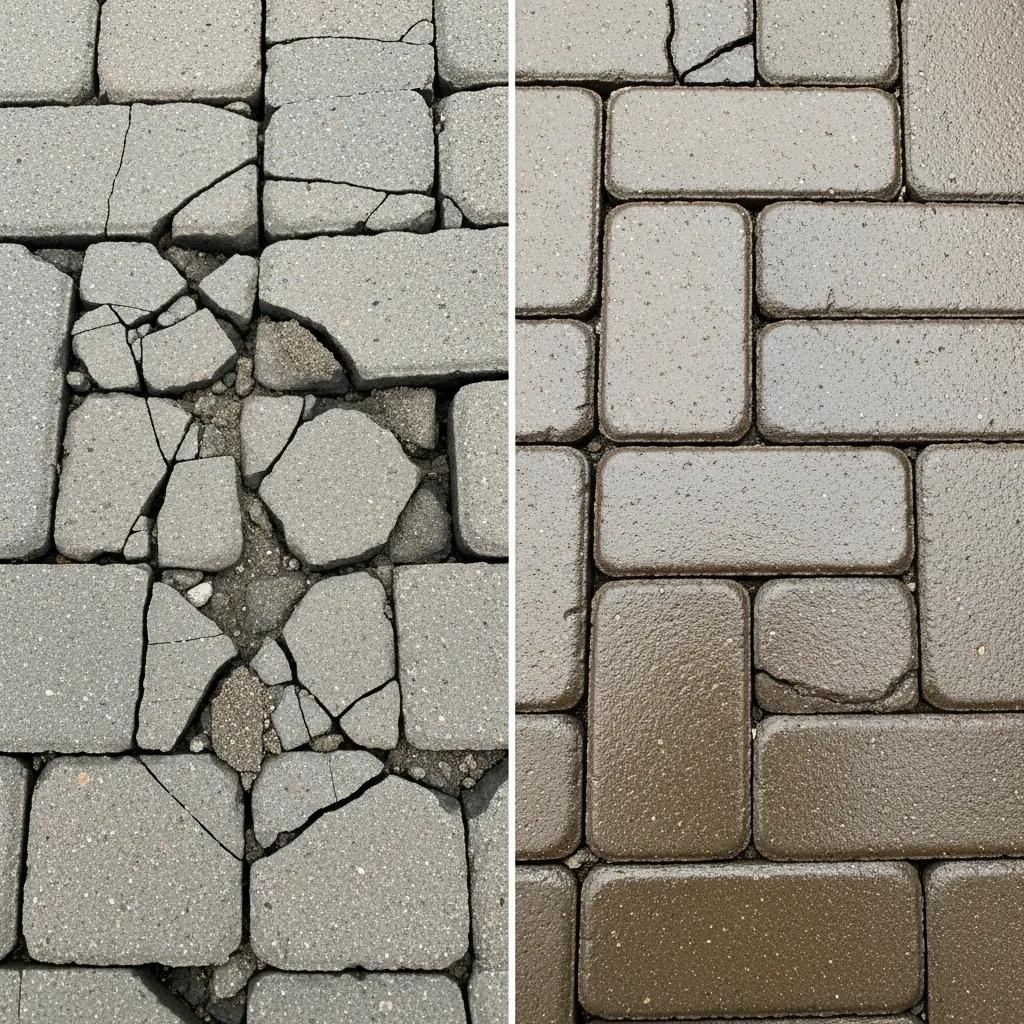
Freeze-thaw damage begins when rain, snow, or melted ice penetrates paver joints or capillaries in the bedding layer, and then freezes, expanding roughly 9% and exerting outward pressure on paver edges and joint sand. Over repeated cycles this expansion forces sand from joints, loosens pavers, and can create hairline or larger cracks in surface units, particularly where water pools or drainage is poor. Homeowners often notice uneven settling, shifting patterns, or mortar loss along edges—early signs that joint stabilization and sealing are needed. Recognizing these symptoms early allows targeted cleaning and joint repair before winter worsens the damage, which naturally leads to considering the protective benefits sealing provides.
What Are the Benefits of Winter-Proofing Your Outdoor Spaces?
Winter-proofing yields measurable homeowner outcomes: it reduces the frequency of seasonal repairs, preserves paved surfaces’ visual character, and lowers safety risks during holiday foot traffic. Treated pavers resist sand loss and retain interlock strength longer, meaning patios and walkways remain even and load-bearing through freeze cycles. A properly selected sealer can also inhibit salt penetration and biological regrowth, making post-holiday cleanup faster and reducing staining from salts and organic debris. These preserved conditions help homeowners enjoy festive gatherings without worrying about slipping or unsightly wear, and they set the stage for choosing the right professional methods for cleaning and sealing.
What Makes Gulf2Bay Softwash’s Professional Paver Sealing Unique in Long Island?
Gulf2Bay Softwash differentiates its paver sealing service through an eco-friendly soft wash cleaning approach, the use of Trident Products Joint Stabilizing Sealer, and technicians with deep local experience familiar with Suffolk and Nassau County winter stresses. Their process prioritizes low-impact biological removal, careful joint work, and a polymeric stabilization step that reduces sand washout and improves freeze-thaw resilience. The company positions this method as a professional alternative to high-pressure washing, aiming to protect paver faces and joint integrity while delivering long-lasting winter protection.
Below is a compact comparison of core products and techniques and why each matters in Long Island winters.
| Product / Technique | Benefit | Why it matters in Long Island winters |
|---|---|---|
| Eco-friendly soft washing | Gentle biological removal | Removes moss and algae without eroding joints or surfaces during wet, cool seasons |
| Trident Products Joint Stabilizing Sealer | Locks joint materials | Prevents sand washout from freeze-thaw and heavy melt runoff |
| Targeted joint repair & polymeric sand | Improved interlock | Reduces paver movement and the chance of cracking in freeze cycles |
This comparison shows how combining gentle cleaning with joint stabilization and a quality sealer addresses Long Island-specific winter threats and preserves outdoor living areas.
How Does Eco-Friendly Soft Washing Protect Your Pavers?

Eco-friendly soft washing uses low-pressure application of biodegradable cleaning solutions that remove moss, algae, and organic stains without blasting away joint sand or roughening paver surfaces. The method reduces pore enlargement and preserves the original texture and color of pavers while eliminating biological growth that holds moisture and accelerates freeze-thaw damage. Compared with high-pressure washing, soft washing lowers the risk of dislodging joint sand or etching softer materials, which directly supports longer-lasting sealer adhesion. Understanding this gentler cleaning approach helps homeowners choose treatments that prepare surfaces for effective joint stabilization and sealing.
Why Use Trident Products Joint Stabilizing Sealer for Long Island Winters?
Trident Products Joint Stabilizing Sealer is formulated to bind joint materials and resist moisture penetration, creating a semi-flexible bond that endures freeze-thaw movement and limits sand washout during snowmelt. Its performance attributes include strong adhesion to polymeric sands and compatibility with both penetrating and film-forming sealers, offering durable protection against salt intrusion and moisture cycles. For Long Island homeowners, that translates to fewer callbacks, reduced seasonal sanding, and maintained interlock through winter traffic and holiday activity. Choosing a recognized joint stabilizer aligns with a prevention-first strategy that minimizes mid-winter repairs and preserves curb appeal.
| Product / Technique | Attribute | Value |
|---|---|---|
| Trident joint stabilizing sealer | Joint locking | Minimizes sand loss during melt events |
| Polymeric sand | Rapid set & lock | Reduces susceptibility to washout and freeze displacement |
| Film-forming vs penetrating sealer | Surface vs depth protection | Balances appearance enhancement with moisture resistance |
This table clarifies how each technique contributes to measurable winter resilience and why combining them improves paver longevity in coastal climates.
What Is the Step-by-Step Process for Professional Paver Cleaning and Sealing?
Professional paver cleaning and sealing follows a logical sequence: assess and prep, soft wash cleaning for biological and surface stains, joint cleaning and stabilization, sealer selection and application, and appropriate curing/aftercare to achieve durable protection before winter. Each stage addresses a specific failure mode—biological buildup, sand loss, salt penetration—that otherwise leads to cracking or staining, and timing matters because sealer adhesion requires dry, mild conditions. The numbered steps below provide concise timing and what homeowners can expect during each phase, with typical weather and time windows noted for Long Island service planning.
- Inspection & prep: 1–2 hours to assess drainage, locate stains, and protect plants; best in dry conditions.
- Soft wash cleaning & stain treatment: 1–3 hours depending on biology and oil stains; requires dwell time and rinsing.
- Joint cleaning, polymeric sand replacement, and Trident joint stabilization: 1–2 hours for joint prep and locking.
- Sealer application and cure: 1–2 coats over 1 day with 24–48 hours curing in dry, mild weather.
These steps set clear homeowner expectations for scheduling and illustrate why sequencing cleaning before joint work and sealing matters for long-term winter performance. For residents wanting professional help, Gulf2Bay Softwash uses soft wash first, targeted cleaning, polymeric sand/joint stabilization, and Trident Products Joint Stabilizing Sealer in their process; request a free estimate or quote to confirm timing for your property.
| Process Stage | Method | Typical Outcome |
|---|---|---|
| Cleaning | Eco-friendly soft wash + spot treatments | Removes algae, moss, and stains without joint erosion |
| Joint Prep | Vacuuming, polymeric sand replacement | Restores interlock and drainage stability |
| Stabilization & Sealer | Trident joint stabilizer + sealer coats | Locks joints and repels moisture for winter durability |
The table demonstrates how each phase contributes to a predictable, durable winter-proofing result and helps homeowners plan around holiday timelines.
How Is Paver Cleaning Performed Before Sealing?
Paver cleaning begins with an assessment and pre-rinse, followed by application of eco-friendly soft wash solutions that dissolve organic matter and loosen grime without mechanical abrasion. Technicians allow appropriate dwell time for biological removal and perform focused spot treatments for oil or tannin stains, using targeted agitation or poultices where necessary. After rinsing, joints are vacuumed and inspected; damaged or eroded joints receive polymeric sand replacement or repair before any stabilizer is applied to ensure adhesion and interlock. Proper cleaning and joint prep maximize sealer performance and reduce the chance of trapped moisture undermining winter protection.
What Are the Key Steps in Applying Paver Sealer for Winter Protection?
Sealer application requires dry substrate conditions, moderate temperatures, and low humidity to ensure proper film formation or penetration, depending on the sealer type chosen; technicians typically apply one or two thin coats with controlled equipment for uniform coverage. When using joint-stabilizing systems, the stabilizer is set into polymeric sand and allowed to cure before a compatible sealer is applied to the paver faces and edges, preventing migration and ensuring long-term bond. Homeowners should expect 24–48 hours of curing time in suitable weather and be advised to postpone heavy use until the sealer has fully set. Proper technique and environmental timing are critical to achieving the moisture resistance and durability needed for Long Island winters.
How Can You Prepare Your Outdoor Spaces for Christmas with Paver Sealing?
Preparing outdoor spaces for Christmas involves timing sealing and cleaning so surfaces look their best and remain safe during gatherings, typically scheduling service at least two to three weeks before major events to allow joint and sealer curing. Early-season sealing prevents fresh snow or salt from marring newly treated surfaces and gives homeowners time to add decorations without tracking debris into stabilized joints. A short checklist helps prioritize actions — cleaning, joint stabilization, sealer application, and final inspection — so patios and walkways are holiday-ready and resilient to winter weather. The following checklist-style steps and a small table connect common holiday concerns to sealing benefits and homeowner actions.
- Clean and remove organic debris at least 3 weeks before an event to allow treatments to settle.
- Complete joint stabilization and sealer application 2–3 weeks before gatherings to permit full cure.
- Delay heavy decorating or furniture placement until the sealer has cured (typically 24–48 hours in good weather).
These three steps make outdoor areas safer and more attractive for family gatherings and still allow time for last-minute touch-ups.
| Holiday Concern | Sealing Benefit | Practical Homeowner Action |
|---|---|---|
| Slippery walkways | Improved slip resistance | Schedule stabilization and sealer 2–3 weeks ahead |
| Dull, faded pavers | Color and sheen enhancement | Clean and apply sealer to refresh appearance |
| Stain risk from food/decor | Easier cleaning | Use penetrating or film-forming sealer suited to your paver type |
This table ties common Christmas-time worries to sealing advantages and clear, timed actions homeowners can take to ensure safe, photo-ready outdoor spaces. For a free estimate or consult to confirm timing for holiday preparation, homeowners can contact Gulf2Bay Softwash to discuss paver cleaning and sealing options tailored to Long Island winter conditions.