The coastal air that makes the Hamptons beautiful also carries salt particles that eat away at your home. This salt environment requires a specialized strategy.
Coastal home maintenance means cleaning and protecting exterior surfaces three to four times more often than inland properties. Salt particles from ocean air settle on siding, roofs, and decks. They trap moisture and speed up mold, rot, and corrosion. Hamptons homeowners need a seasonal plan with soft washing every one to three years and fresh water rinses to remove salt buildup before permanent damage sets in.
Call (631) 557-5484 for a free exterior cleaning estimate and protect your Hamptons home from salt damage.
How Does Salt Air Damage Your Hamptons Home’s Exterior?
Coastal living in the Hamptons brings beauty but also a hidden threat to your house. Tiny salt bits drift through the air and land on every outer surface. These salt crystals act like magnets for water from our humid air. They create a thin, damp layer that never truly dries out. This layer stays on your siding, windows, and roof, which causes damage to start from the moment it lands.
The science of salt and humid air
Salt pulls water from the air. When salt lands on your home, it traps water against the wood or stone. This keeps your home wet for much longer than an inland house. Steady dampness leads to fast rot in wood and helps mold grow. A Hamptons second home exterior cleaning plan stops salt buildup before it eats into your siding.
Why coastal wood fails fast
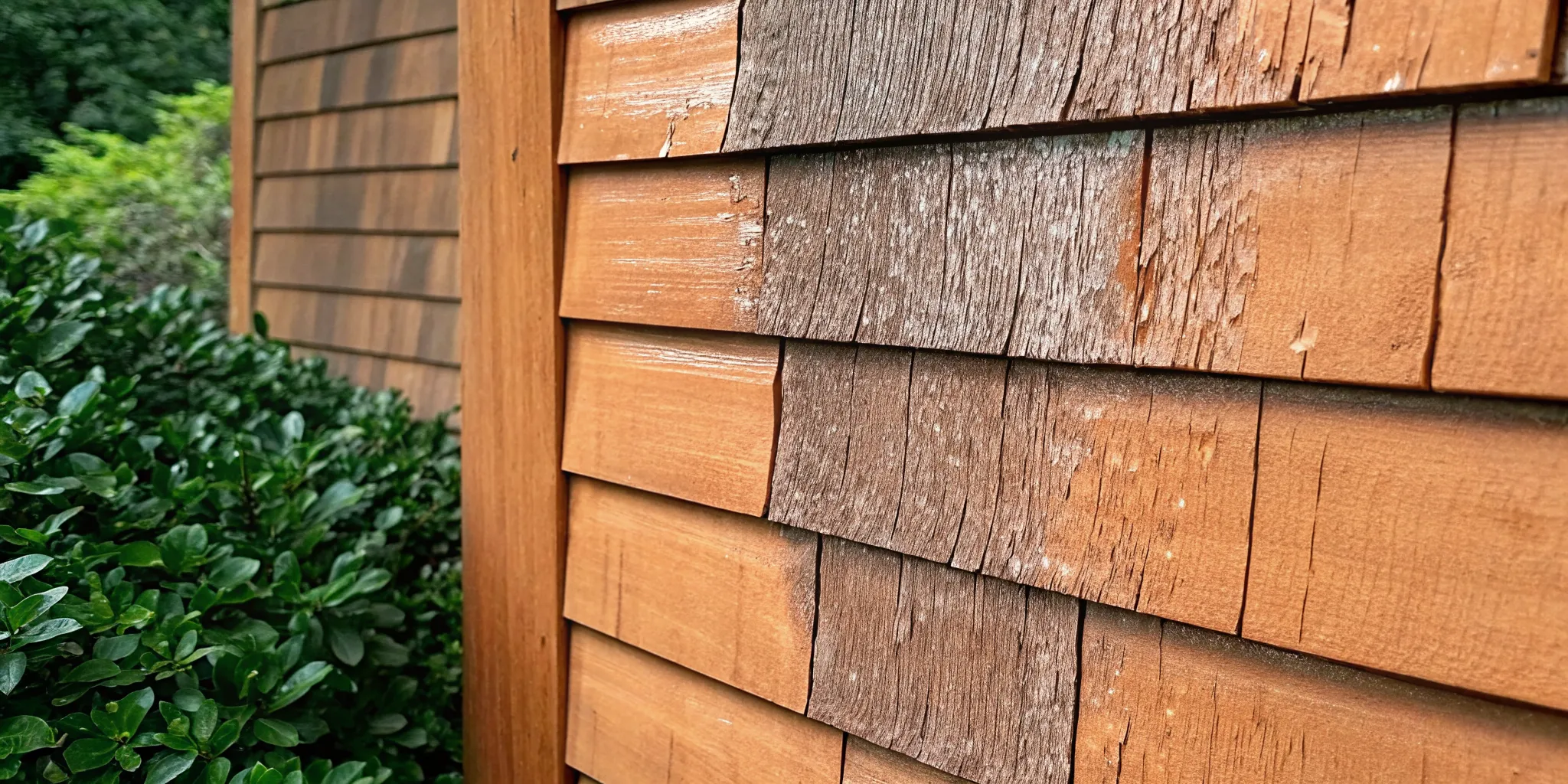
Cedar siding and IPE decks are famous for their beauty, but salt air is their worst enemy. Salt crystals can get deep into the fibers of wood. Once inside, they grow and shrink as moisture levels change. This stress cracks the wood and breaks down its finish. Cedar siding in coastal zones often needs care every 2-3 years, while inland homes can wait much longer. See our guide on cedar siding restoration for coastal homes on Long Island.
Metal rust and stone damage
Salt does not just hurt wood. It also causes metal to rust and stone to crumble. Salt air within 500 feet of the shore can corrode metal fixtures and HVAC units very fast. On stone surfaces, salt can cause white marks that show up as a chalky film. This happens when salt bits move through the stone and stay on the surface. These forces combine with our freeze-thaw cycles and strong UV rays to age your home much faster than you might expect.
Which Building Materials Are Most Vulnerable to Coastal Salt?
Every home in the Hamptons faces a constant battle with the ocean air. While all exteriors age over time, some building materials fail much faster when salt is present. Salt air joins with high humidity and strong sun to create a harsh place for your house. Knowing which parts of your home are at risk is the first step in a good coastal home maintenance plan.
Cedar siding and luxury hardwoods
Cedar siding is famous for its natural beauty, but it is very weak against salt. In coastal areas, it needs care every 2-3 years to stay healthy. This is much faster than inland homes. Those houses can often wait for 7 years before they need work. Salt air can dry out the wood and cause it to crack or turn gray too soon. To keep your siding in top shape, you should look into cedar siding restoration for coastal homes on Long Island.
Exotic hardwoods like Ipe also face special tests near the shore. These woods are very dense and resist rot well, but salt air still takes a toll on the surface. The salt layer breaks down the oils that give these woods their rich color and smooth feel. Decks can lose their finish in as little as 6 to 12 months. Using a plan for IPE deck maintenance for coastal homes helps the wood fibers hold onto their natural oils for a longer time.
Metal fixtures and stone surfaces
Metal is another material that salt air ruins very quickly. If your home is within 500 feet of the ocean, salt can eat through your gutters, flashing, and window frames. It can also cause rust on HVAC units and outdoor lights. Homeowners should follow FEMA guidelines for using tough parts to protect their home from these forces.
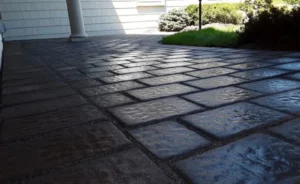
Stone and masonry are not safe from salt either. You might see a white, chalky film on your stone walls or patios. This is called efflorescence, and it happens when salt moves through the stone and dries on the surface. Over time, this salt buildup can cause the stone to flake or crumble. This process, called spalling, can ruin the look and strength of your stone work. Salt also eats away at the mortar between bricks, which can let moisture leak into your home.
Asphalt roofs and climate cycles
Roofing materials also trap salt and moisture, which leads to early failure. Asphalt shingles can catch salt bits in their rough surface. This creates a perfect place for algae, moss, and lichen to grow. These growths hold even more water against your roof, which speeds up the aging process. Most coastal roofs need a deep clean every 1-3 years to stop this damage before it starts. The roots of these plants can lift the shingles and cause leaks.
The climate in the Hamptons is very tough on all these materials. We have a mix of salt-laden wind, high humidity, and strong UV rays. Our winter freeze-thaw cycles also add stress to your siding and stone work. These forces work together to age your home much faster than houses located just a few miles inland. Regular cleaning is the only way to remove these harmful elements and extend the life of your coastal home.
A Seasonal Coastal Home Maintenance Schedule for the Hamptons
Living near the sea in the Hamptons brings great beauty, but it also means your home faces constant stress from salt air and high humidity. To protect your house, you need a plan that moves with the seasons. A steady Hamptons second home exterior cleaning habit helps stop salt before it causes deep harm to your cedar siding or stone walks.
Here is a breakdown of what each season demands for coastal home maintenance:
Spring salt removal and check
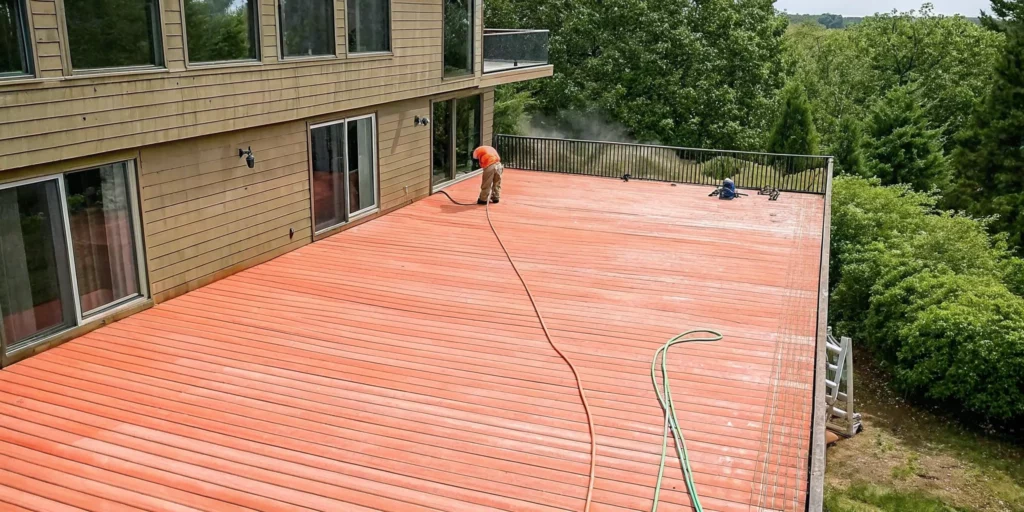
Spring is the most vital time for coastal home maintenance. Winter storms leave a thick crust of salt on every spot. This salt layer traps wetness against your siding and trim. This can lead to wood rot or paint loss if left alone. Schedule a full soft wash for all outer areas as soon as the freeze risk ends to clear this buildup and reset your home for the year.
While washing, check the house for any signs of winter wear. Look at your window seals and door frames for cracked caulk or peeling paint. Finding these small gaps in the spring lets you fix them before summer dampness drives wetness deep into your walls.
Summer deck care and sun safety
Summer in the Hamptons brings strong sun rays that can bake salt into your deck boards. This can make wood turn weak. If you have an Ipe or cedar deck, this is the time to re-seal or add fresh oils. Coastal salt air breaks down these coats much faster than inland air. A fresh coat helps keep the wood from graying or cracking during the hot season.
Watch shaded parts of your home during the damp summer months. Mold and mildew love the warm, wet air of the coast and can spread fast on North-facing walls. Rinse your home with fresh water every few months.
Fall sealing and gutter cleaning
As the air cools, your goal shifts to sealing the home against winter storms. Fall is the best time to caulk any gaps you found during your spring check. Clear your gutters of all trash. Salt-heavy air within 500 feet of the coast can harm metal gutters fast if they stay wet and full of leaves and salt-soaked dirt.
Winter watch and storm checks
Coastal winters are harsh on Long Island, with high winds and cold salt spray. During these months, check your home after any big storm for signs of ice harm or loose siding. Keeping an eye on the house during the off-season ensures that small problems do not turn into big fixes by the time spring returns.
Year-round coastal maintenance checklist
- Remove winter salt: Schedule a soft wash in the early spring to clear salt crust from cedar, stone, and glass.
- Inspect for damage: Check caulk, paint, and siding for gaps or cracks that could let moisture enter your home.
- Seal and stain: Apply fresh oils to Ipe and cedar decks before summer heat and UV rays cause fading.
- Rinse surfaces: Use fresh water to rinse siding and windows every few months to stop salt from building up.
- Clean gutters: Make sure gutters are clear in the fall so salt-heavy water can flow away from your roof.
- Check for rot: Inspect wood trim and deck joints where moisture and salt tend to collect.
- Caulk openings: Seal gaps around doors and windows in the fall to keep winter moisture and salt spray out.
Signs of Salt Damage Every Hamptons Homeowner Should Watch For
Salt air is a constant force in the Hamptons. It drifts from the ocean and lands on your house. This creates a thin, damp layer on every part of the outside. Over time, this layer traps water and starts to rot your wood and trim. You must find these signs early to keep up with your coastal home maintenance.
Surface film and cedar changes
The first sign of salt damage is a white, dusty film on glass and dark paint. It looks like white streaks or a light haze. If you let it stay, it will ruin the finish on your home. This film is dried salt that pulls water from the air. This layer can build up in just a few weeks of ocean breeze.
Cedar siding shows damage by changing color and feel. In beach areas, cedar turns a dark gray or black very fast. You may also notice the wood feels rough or fuzzy. This means the salt has started to break down the wood fibers. Beach cedar often needs a cedar siding restoration every two to three years. Without care, the wood will warp and split.
Peeling paint and metal rust
Salt air also ruins paint and stain. Look for small bubbles or peeling spots on your trim. This is a sign that salt has trapped water under the paint. Once the paint peels, the raw wood is open to rot. This damage moves fast in the damp Hamptons air. You may see paint start to fail in less than a year on the side of the house facing the sea.
Metal parts are also at high risk. Check your gutters and light fixtures for orange stains. Salt air can eat through these metals in just one year. If you see pits or stains on metal, the rust has already begun. Even stainless steel can pit and stain if you do not rinse it often.
Stone issues and roof streaks
Salt damage does not stop at wood and metal. Brick and stone can also get hurt. You may see a white, crusty layer on your patio or chimney. This is called efflorescence. It happens when salt and minerals come out of the stone. If you do not clean it, the salt can cause the stone to crack or flake off. This crust shows that moisture is moving deep into your masonry.
On your roof, watch for dark, black streaks. This is often a sign of algae on siding in coastal climates that has moved to the roof. The salt and damp air create a perfect spot for this growth. It can eat your shingles and make your roof fail early.
Why Soft Washing Is the Right Approach for Coastal Properties
Coastal homes face a constant battle against salt and moisture. This mix leads to mold and algae that eat away at your house. Standard power washing often makes things worse. High pressure can force salt deeper into wood fibers or strip away soft grains. Soft washing is the better way to clean homes near the water.
Soft washing vs pressure washing
The main difference is force. Power washing uses a high-pressure stream to blast dirt away. This can be as high as 3,000 PSI. On a cedar home, that much power can tear the wood or blow out caulk. Soft washing uses less than 100 PSI. It relies on safe soaps to do the hard work.
Our method uses about one-third of the water that power washers need. It is also safer for the air around your home. We use EPA compliant soaps that are biodegradable. These cleaners break down in about 20 days. They are safe for your plants and the local coast. This approach ensures your property stays clean without hurting the local environment.
| Feature | Soft Washing | Pressure Washing |
|---|---|---|
| Pressure Level | Under 100 PSI | 3,000+ PSI |
| Cleaning Agent | Safe soaps and biodegradable chemicals | Water only |
| Root Kill | Kills mold at the root | Surface only |
| Surface Safety | Safe for cedar and stone | Can damage soft wood |
| Result Life | Lasts 4 to 6 times longer | Quick regrowth |
Protecting coastal surfaces
Salt air carries moisture that feeds mold and mildew. Pressure washing only removes the top layer of this growth. It leaves the roots behind in the pores of your siding or roof. This is why you might see green spots return just weeks after a blast. The salt acts like a magnet for new mold spores in the humid air.
Soft washing kills the growth at the source. It soaks into the pores and stops the algae from coming back. This means your home stays clean much longer. Check your how often to soft wash in coastal areas guide to see the best schedule for your home. Most homes near the water need a wash every one to three years.
Safety for cedar and stone
Many Hamptons homes use natural stone and cedar. These materials are soft and porous. High pressure can cause spalling in stone or fuzzing in wood. Once you damage the wood fibers, they rot faster. Soft washing preserves the surface while removing the salt. This is vital for long-term coastal home maintenance and care.
I am a SoftWash Systems Authorized Professional. This means I use the best gear and training in the field. We do not just wash your house. We protect your investment. Most companies give you a one-year promise. I offer a five-year warranty on our work that stays with the house if you sell it.
Coastal roofs need extra care to avoid salt rot. Our roof cleaning schedule for coastal homes helps you keep your tiles in top shape. By killing mold at the root, we save you money on repairs.
How Gulf2Bay Softwash Protects Your Hamptons Investment
A Hamptons home is more than just a house. It is a major asset that faces a harsh shore environment every day. Salt air, high humidity, and intense sun can damage your property fast. Gulf2Bay Softwash specializes in coastal home maintenance to stop this decay before it starts.
Deep local roots and expertise
David Jarett, our founder, grew up in East Hampton. He comes from a family with a long history in local building. Since 1998, we have used our SoftWash Systems certificate to give the best care for high-end homes. We have washed 4,258 houses and know the unique needs of Hamptons style. Our team is the only exterior cleaning company on Long Island that also offers building services.
Care for every surface
We give over 12 special services to keep your home in top shape. This includes expert cedar siding restoration for coastal homes and IPE deck care. We use low-pressure ways to clean roofs and siding without harm. Our soft wash process uses less than 100 PSI. This is safe for soft wood and stone. Based on Gulf2Bay Softwash data, this way kills mold at the root. It lasts 4 to 6 times longer than old power washing.
Protection you can trust
We stand behind our work with a 5-year warranty. This promise gives you long-term value and protects your home if you sell. We know how salt can enter wood and metal within 500 feet of the coast. Our cleaning removes these salts to stop rot and rust. You can keep your home bright all year by using one team for your full maintenance plan.
Frequently Asked Questions
How often should I wash my coastal home’s exterior?
You should soft wash your coastal home every one to three years. Salt air builds up fast on your siding and traps moisture against the walls. This leads to rot and mold growth. Regular cleaning removes these salt grains before they sink into the wood. A clean home stays strong against the harsh ocean air.
What is the best way to protect cedar siding from salt air?
Clean and seal your cedar siding every two to three years. Soft washing kills mold at the root without hurting the wood fibers. Then apply a strong finish to block the salt. Regular maintenance keeps cedar from turning gray and rotting.
Can pressure washing damage a coastal home?
Yes. Pressure washing at 3,000+ PSI can force salt deeper into wood fibers and strip protective finishes. It can also damage soft materials like cedar and stone. Soft washing at under 100 PSI with biodegradable chemicals cleans without harm.
How does salt air affect Ipe and hardwood decks?
Salt air breaks down the natural oils in Ipe and other hardwoods. This causes the wood to lose its rich color and develop a gray, weathered look. Decks near the ocean often need re-oiling every 6 to 12 months instead of the typical 2-3 year cycle for inland decks.
Does Gulf2Bay Softwash offer a warranty on coastal home cleaning?
Yes. Gulf2Bay Softwash provides a 5-year transferable warranty on all soft washing work. This covers your investment even if you sell your home. Most competitors only offer a one-year guarantee.
Ready to protect your Hamptons home from salt damage?
Salt air does not stop. Every day it lands on your siding, deck, and roof. The longer it sits, the more damage it does to your Hamptons home. Regular coastal home maintenance is the only way to stop it.
Call (631) 557-5484 to schedule your free exterior cleaning estimate. Gulf2Bay Softwash serves the Hamptons, Bay Shore, and all of Long Island with certified soft washing and surface restoration.