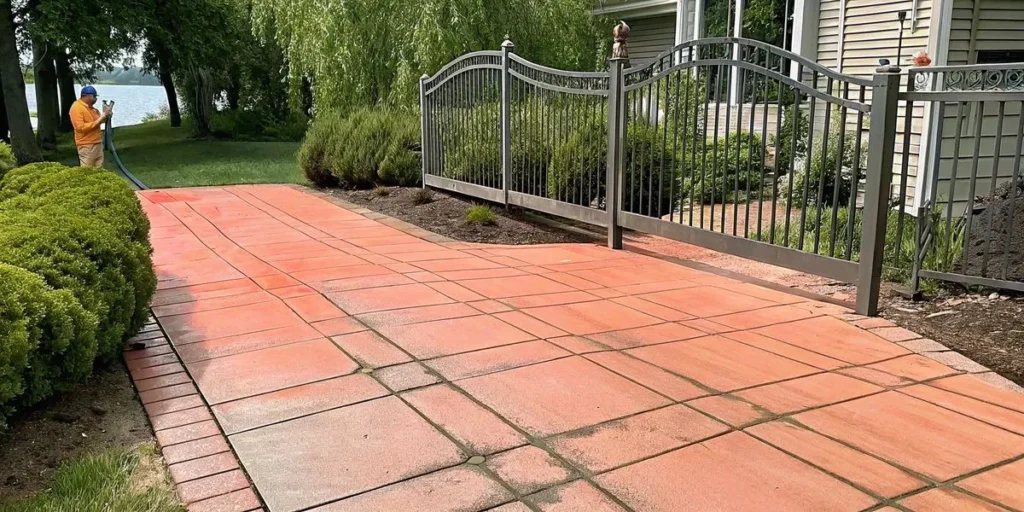
Orange marks beneath an iron gate, rust-colored arcs around sprinkler heads, and reddish drips below patio furniture are common on Long Island concrete and pavers. Near the coast, salt-laden air and moisture accelerate oxidation, while iron-rich well water, fertilizer runoff, and weathering metal add fresh iron to the surface.
Professional rust stain removal concrete Long Island services use low-pressure soft washing chemistry, targeted rust treatments, and controlled rinsing to lift oxidation without etching concrete or damaging pavers.
That distinction matters on premium coastal properties. Rust can bond deeply with porous concrete, so blasting the surface or applying the wrong acid may leave etching, discoloration, or a stain that returns. The first step is identifying where the iron comes from and how the coastal environment is helping it spread. Chloride-induced corrosion is a recognized durability concern for concrete, which explains why these marks deserve more than routine surface cleaning.
Rust Stain Removal Concrete Long Island: Why Rust Stains Form on Concrete and Pavers Near the Coast
Rust on a Long Island driveway or patio usually has a source above, beside, or beneath the surface. Iron-bearing water, corroding metal, and coastal moisture combine to leave bright orange or reddish-brown marks in porous concrete and pavers. Cleaning the color without finding the source is a temporary fix.
The Role of Salt Air in Accelerating Oxidation
Salt air does not create iron, but it makes corrosion happen faster. Chlorides carried by sea spray settle on metal and concrete, then combine with humidity to create an electrolyte that supports oxidation. The EPA identifies chloride-induced steel corrosion as a major durability concern for concrete structures.
That matters on exposed properties in the Hamptons, Bay Shore, and other coastal parts of Nassau and Suffolk Counties. Research on marine atmospheric conditions found that higher chloride deposition was associated with concrete service-life reductions of 30% to 60%, depending on exposure. Read more about coastal exterior maintenance for the broader effect of salt on residential surfaces.
Once a metal component begins to oxidize, rain and irrigation can carry dissolved iron onto the hardscape. The iron settles into the pores, where ordinary surface rinsing will not remove it completely.
Common Iron Sources Around Long Island Homes
- Sprinkler heads and irrigation systems: Iron-rich well water can leave repeated orange spotting wherever overspray reaches a walkway, driveway, or paver edge.
- Metal gates and railings: Coastal humidity and salt deposits accelerate corrosion at hinges, fasteners, welds, and lower rails. Runoff can create a concentrated stain beneath the gate.
- Patio furniture: Uncoated steel legs and feet can rust directly against the surface, especially where water remains trapped after rain.
- Fertilizer runoff: Lawn and landscape treatments can carry iron and other staining material onto adjacent concrete when irrigation or rain moves across the property.
Rust that returns in the same shape or location is a diagnostic clue. Check irrigation spray patterns, furniture feet, gate hardware, and drainage before treating the stain. On premium pavers, use the mildest effective chemistry and low pressure rather than forcing the deposit deeper into the surface with aggressive cleaning.
Why Soft Washing Beats Pressure Washing for Rust Removal
Rust is a chemical stain, not loose dirt. Blasting the surface with high pressure may brighten the surrounding concrete while leaving the oxidation embedded in the pores. Worse, aggressive spray can etch the cement paste, roughen pavers, and force contaminated water and rust particles farther into the surface.
The better approach is to use the right chemistry first, then rinse with controlled pressure. Gulf2Bay applies biodegradable, EPA/VOC compliant solutions at under 90 PSI. That keeps the cleaning action on the stain instead of making the concrete absorb the abuse.
How Chelating Agents Lift Rust Stains
Rust removal products work differently from general-purpose cleaners. Chelating agents bind to the iron compounds that create the orange or reddish-brown mark, helping separate the oxidation from the masonry. Oxalic-acid-based biodegradable rust dissolvers are one professional option, while other specialized treatments use phosphoric acid or related chemistry. The product must match the surface and the stain.
Application starts with a small test area. Once the cleaner is confirmed as appropriate, it is spread over the affected concrete or pavers and allowed to work. A professional rust treatment such as F9 BARC may be applied full strength or diluted 1:1, with a typical dwell time of 5 to 15 minutes. That dwell time gives the chemistry a chance to break down the stain instead of relying on force.
Do not confuse this with leaving acid on a surface indefinitely. Dwell time is controlled, the area is monitored, and the treatment is rinsed thoroughly. For a broader explanation of the method, see our guide to professional soft washing.
Why Low Pressure Matters for Concrete and Pavers
Concrete is porous, and many pavers have a finished face that can be damaged by an overly aggressive nozzle. High pressure can etch concrete, strip the surface binder, disturb joint sand, and leave a visibly different texture where the spray passed. On older or weathered masonry, the damage may not show until the surface dries.
Low pressure protects the substrate while the rust-specific cleaner does the work. This is especially important around decorative pavers, pool decks, brick, and masonry where a uniform finish matters. The safest process identifies the stain, tests the cleaner, uses the mildest effective treatment, and rinses without overworking the surface.
If rust has spread across a driveway, walkway, patio, or masonry feature, Gulf2Bay can coordinate masonry and concrete stain removal with the surface-specific care the material requires.
DIY Rust Removal vs. Professional Soft Washing: What Works
Rust is not a surface dust that pressure alone can whisk away. It bonds deeply with porous concrete, which is why it ranks among the hardest concrete stains to remove. The right treatment starts by identifying the mark. Bright orange or reddish-brown staining may indicate rust, but oil, fertilizer residue, efflorescence, and organic growth need different chemistry. A wrong diagnosis can damage the surface while leaving the stain behind.
| Method | Effectiveness. | Surface Risk. | Typical Cost. | Lasting Results. |
|---|---|---|---|---|
| DIY store-bought rust remover | Weak on deeply bonded stains. | Can etch concrete or pavers. | $15-$50. | Temporary. |
| DIY pressure washing | May not remove the stain. | Can etch or scar the surface. | $0 if equipment is owned. | Temporary. |
| Professional soft washing | Strong lifting with specialized chemistry. | Low risk when applied under 90 PSI. | $250-$600. | Long-lasting when the iron source is addressed and sealing is recommended. |
Professional treatment is not simply stronger spraying. It combines stain identification, surface testing, manual agitation, and a rust-specific chemical treatment. Chelating or acid-based products can lift oxidation, but they must be selected and controlled to avoid etching. Products such as F9 BARC are commonly applied at full strength or diluted 1:1, with a reported dwell time of 5 to 15 minutes before rinsing. Gulf2Bay uses low-pressure soft washing, typically under 90 PSI, rather than relying on force.
When DIY Makes Rust Stains Worse
Household acids and aggressive scrubbing can strip the cement paste from concrete or roughen a paver’s finish. Excess pressure can etch the surface, creating a texture that traps more dirt and makes future staining harder to remove. The safest approach is to identify the stain, test a small area, and use the mildest effective cleaner. For homeowners comparing options, specialized paver cleaning follows the same surface-first principle.
Cleaning also cannot solve an active iron source. A rusty furniture leg, iron-rich irrigation water, sprinkler overspray, or fertilizer runoff can recreate the mark after treatment. Remove or correct that source first, then clean the concrete or pavers. Otherwise, even a successful DIY job may only be temporary.
What the Professional Rust Removal Process Looks Like
Rust removal starts with diagnosis, not a stronger blast of water. On Long Island, the mark may come from iron-rich irrigation water, fertilizer runoff, or oxidized metal near a patio. Each source and surface requires a controlled treatment.
-
Step 1: Surface Assessment and Stain Identification
The technician clears loose debris, rinses the area, and inspects the stain in good light. Bright orange or reddish-brown marks commonly indicate surface rust. Brown staining can be older oxidation or mixed with soil, while black marks may point to a different contaminant altogether. Concrete, clay pavers, natural stone, and sealed surfaces also react differently, so a small test area comes first.
-
Step 2: Chemical Selection and Preparation
The cleaner is matched to the stain and the material. Depending on the surface, the treatment may use oxalic acid, F9 BARC, or another suitable chelating agent. The goal is to break the bond between the iron oxide and the porous surface without etching the finish. Gulf2Bay uses biodegradable, EPA/VOC compliant solutions and protects nearby landscaping during preparation.
-
Step 3: Low-Pressure Application and Dwell Time
The solution is applied evenly, not fired into the concrete. F9 BARC applications may use the product at full strength or a 1:1 dilution, with a typical dwell time of 5 to 15 minutes. That dwell period gives the chemistry time to work. The treatment must stay wet. Never let rust-removal chemicals dry on concrete or pavers. F9 BARC dwell-time guidance provides useful context for this controlled stage.
-
Step 4: Gentle Agitation and Rinse
A soft brush loosens the lifted oxidation where needed. The rinse is thorough and controlled, with all work performed under 90 PSI to prevent surface damage. That low pressure matters on older concrete, joints, textured pavers, and premium masonry where aggressive water can remove more than the stain.
-
Step 5: Sealing to Prevent Future Stains
Cleaning removes the visible mark, but prevention requires attention to the source. Move or repair rusty furniture, correct irrigation overspray, and address recurring iron deposits. After the surface is clean and dry, paver sealing can reduce absorption and simplify future maintenance. Read the guide to protect concrete and pavers before choosing a sealer for your property.
Frequently Asked Questions
How do you remove rust stains from concrete?
First, identify the stain and its source. A technician tests a small area, applies a surface-appropriate rust dissolver or chelating solution, allows controlled dwell time, then rinses with low pressure. This lifts oxidation without treating the concrete like a generic dirt stain.
What is the cost of rust stain removal on concrete in Long Island?
There is no responsible flat rate. Cost depends on the stained area, depth, access, surface type, and whether an irrigation or metal source must be corrected. Published professional pricing commonly ranges from about $75 for a small spot to $600 or more for larger, severe areas. See the professional rust-removal pricing context.
Is rust removal safe for all concrete and paver surfaces?
It can be safe when the cleaner is matched to the surface and tested first. Concrete, pavers, patios, driveways, and pool decks each have different porosity and finish characteristics. Low-pressure application and careful rinsing reduce the risk of etching, discoloration, or damage to nearby masonry.
Can I remove rust stains from concrete myself?
Small, fresh spots may respond to a carefully selected product, but harsh acids, aggressive scrubbing, and untested pressure can leave a larger defect than the original stain. Professional treatment is the safer choice when the rust is deep, widespread, near delicate pavers, or returning after cleaning.
Why do rust stains form on concrete near the coast?
Salt-laden air and humidity accelerate oxidation around iron sources such as sprinkler water, metal furniture, gates, and fertilizer runoff. If that source remains, the stain can return after cleaning. Correct the source and consider sealing the surface after removal.
Ready to Schedule a Free Estimate?
Rust stains can keep returning when the source is not identified and the surface is treated with the wrong method. A proper assessment helps match the cleaning solution to your concrete or pavers. Schedule your free estimate online.