Dark vertical streaks on otherwise clean gutters are not leaves waiting to be scooped out. They are usually oxidation and organic staining on the gutter’s exterior face, often called tiger stripes. A bucket, gloves, and ladder can clear the trough, but they will not restore that visible surface.
For gutter brightening vs cleaning Long Island, the practical difference is simple: DIY cleaning handles debris and water flow. Professional brightening uses controlled chemical agents and low-pressure application to remove exterior stains and discoloration. Choose based on whether the priority is gutter function, curb appeal, or both.
That distinction matters on Long Island homes, where two-story elevations, coastal exposure, and second-home maintenance can turn a basic chore into a surface-care decision. Start by separating what cleaning accomplishes inside the gutter from what brightening changes on the outside.
Gutter Brightening vs. Cleaning on Long Island: What Homeowners Should Know
Two services, two different jobs
These services are often grouped together, but they solve different problems. Cleaning protects how the gutter system works. Brightening restores how the outside of the system looks. A home can need one, the other, or both.
| Service | Purpose | What it removes | Method | Outcome | When to book |
|---|---|---|---|---|---|
| Gutter cleaning | Keep rainwater moving through the system. | Leaves, dirt, pine needles, and blockages inside the gutters. | Manual debris removal, flushing, and flow checks as needed. | Fewer clogs, overflows, and moisture problems around the home. | At least twice a year, usually spring and fall; more often under heavy tree cover. |
| Gutter brightening | Restore the appearance of the gutter exterior. | Exterior stains, discoloration, oxidation, organic staining, and tiger stripes. | Low-pressure chemical application and soft-wash cleaning, never pressure washing. | A cleaner, more uniform gutter finish and stronger curb appeal. | When tiger stripes and dark streaks remain after the gutters are functionally clean. |
Gutter cleaning addresses the material inside the channel. That debris can restrict flow and contribute to overflow or water damage. Regular cleaning also helps limit corrosion and the risk of gutters pulling loose from their mountings. The goal is function, not cosmetic restoration. West Virginia University Extension explains the protective role of properly maintained gutters.
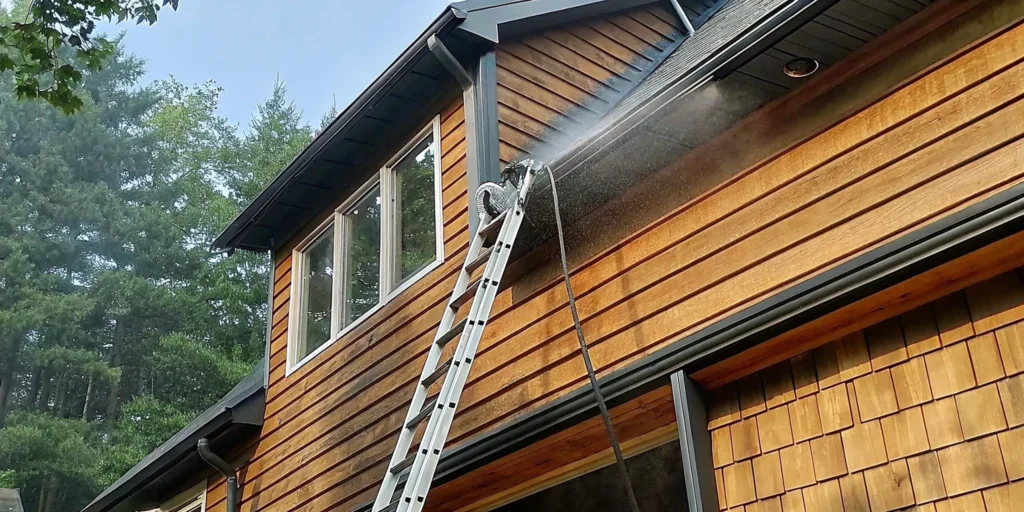
Brightening addresses the visible face of the gutter. Those vertical tiger stripes are stains and discoloration on the exterior, so scooping out leaves will not remove them. The treatment must be designed for the gutter finish and applied with controlled, low-pressure chemical or soft-wash methods. High pressure is not the answer and can damage surfaces or force water where it should not go.
When Long Island homeowners need both
Many Long Island homes need the two services during the same maintenance visit. First, remove the debris and confirm that downspouts carry water away correctly. Then evaluate the exterior. If the gutter face still shows dark striping or oxidation, schedule gutter brightening on Long Island as the separate restoration step.
Think of it simply: cleaning keeps the system working, while brightening brings the visible exterior back into shape.
What DIY Gutter Cleaning Actually Accomplishes
It restores the basic water path
Homeowner debris removal has a clear and worthwhile job: it clears leaves, dirt, pine needles, and other blockages from the inside channel. When water can move through the gutter and downspout, it is less likely to spill over the roof edge and collect beside the house.
That matters because gutters are part of the home’s moisture-control system. They collect rainwater and direct it away from the foundation, walls, doors, and windows. The West Virginia University Extension gutter safety guidance identifies these surfaces as the areas gutters help protect.
Cleaning also supports the hardware itself. Debris and trapped moisture can contribute to corrosion and may cause gutters to pull loose from their mountings. Clearing the channel is not cosmetic work when the goal is to keep the drainage system attached and functional.
Cleaning needs to be part of a maintenance cycle
Do not treat one debris removal as a permanent fix. Gutters should be cleaned, inspected, and repaired regularly, as recommended by North Carolina State Extension’s gutter management guidance. Look for separated seams, loose hangers, damaged downspouts, and water that is not being carried away from the structure.
For most Long Island homes, a practical baseline is twice a year, in spring and fall. Properties surrounded by heavy trees or pine needles may need quarterly cleaning. The right timing depends on what is landing on the roof and how quickly the channels fill. Use this guide to review when to clean gutters before storm season.
The honest limit of DIY cleaning
DIY work clears the inside channel. It does not remove the dark vertical stains, oxidation, or organic discoloration on the gutter’s exterior face. Those tiger stripes remain visible even when rainwater flows correctly. In other words, cleaning protects function, but it does not brighten the finish or restore the gutter’s street-facing appearance.
What Professional Gutter Brightening Does That Cleaning Can’t
Cleaning clears the trough. Brightening treats the face.
Gutter cleaning handles the working part of the system: leaves, dirt, and blockages inside the trough. That helps water move toward the downspouts. It does not restore the exterior face that everyone sees from the driveway.
Those vertical black streaks are commonly called tiger stripes. On Long Island homes, the gutter face can also collect mold, algae, organic staining, and oxidation. A rinse or debris removal may leave those marks exactly where they were. The gutters function, but they still look worn and neglected.
Why the chemical treatment matters
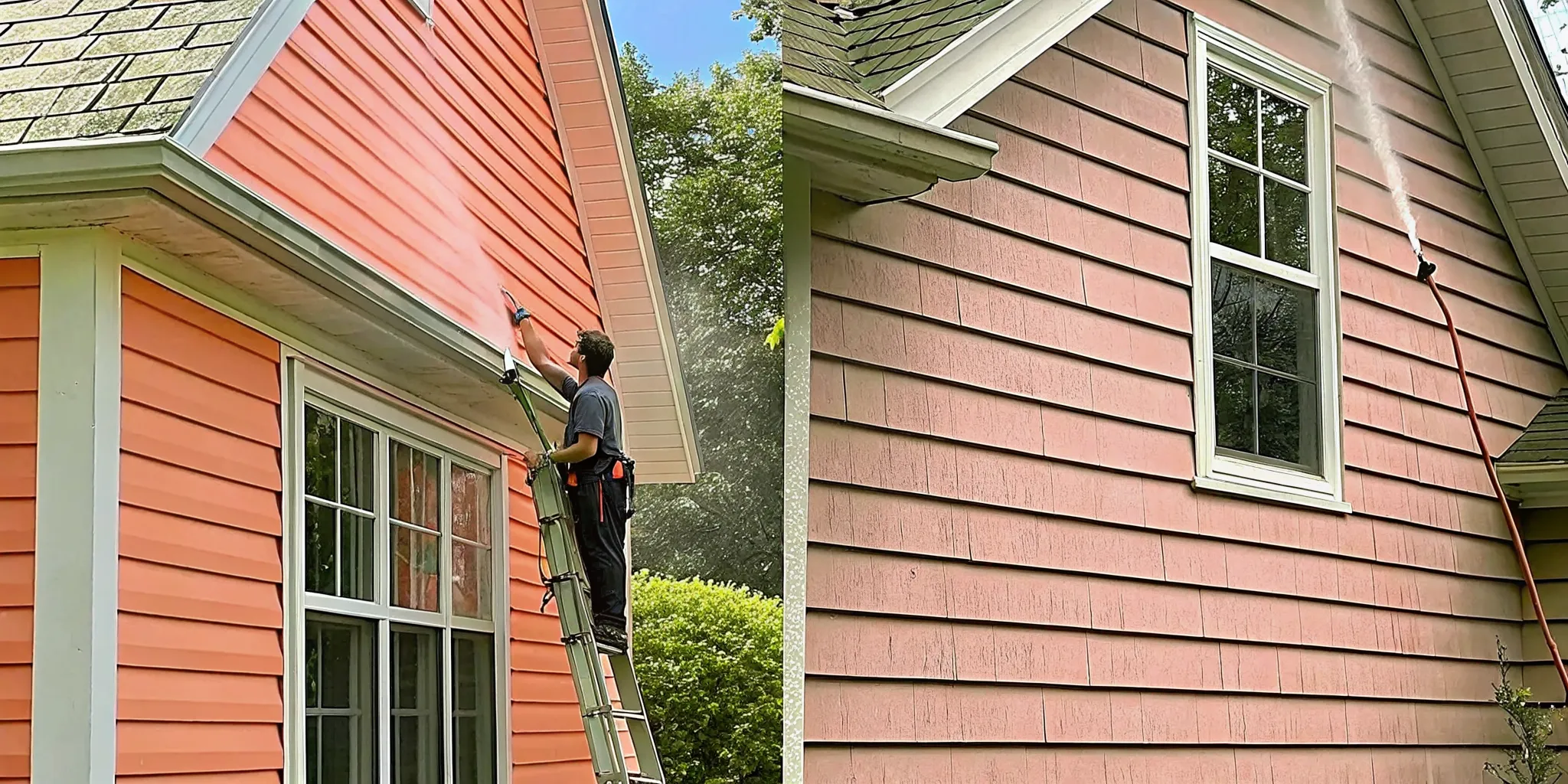
Professional brightening uses selected chemical agents to break down oxidation and tiger striping on the painted exterior surface. The treatment is applied with a low-pressure soft-wash method, then rinsed carefully. This is surface-specific work, not a stronger version of gutter cleaning.
High pressure is the wrong tool for this finish. It can dent thin gutter metal, scratch the coating, force water behind trim, or strip paint from the exterior face. Low pressure gives the cleaning solution time to do the work without using a mechanical blast to attack the surface.
The same approach addresses the discoloration that makes white or light-colored gutters look gray and streaked. Mold and algae are treated as surface contamination, while oxidation and tiger stripes receive the chemical attention needed to loosen their bond. Results depend on the condition and finish of the gutters, but the goal is clear: a cleaner, more uniform exterior appearance.
The curb-view difference
Brightened gutters should look consistent from the curb, not merely empty from above. That matters on a large coastal home where the gutter line runs across multiple elevations and remains visible against clean siding, cedar, stone, or roofing.
For a closer look at the process, see how professional gutter brightening works. The distinction is simple: cleaning restores drainage function, while brightening restores the visible gutter surface. When both are needed, combining them produces a finished result instead of solving only half the problem.
Ladder Safety on Two-Story Long Island Homes
DIY gutter work changes quickly when the house is two stories tall. An extension ladder has to reach standing gutter height while resting on ground that may be damp, uneven, or softened by coastal weather. The job also puts your body close to the roof edge, where a small shift in footing can become a serious problem.
Wet ground makes ladder placement harder
Long Island properties often have grass, mulch beds, pavers, or sloped ground below the gutter line. Wet coastal ground can reduce traction at the ladder feet. A ladder that looks stable at setup may shift when you climb, especially if one side is lower than the other. Do not place an extension ladder on loose soil, wet mulch, stacked materials, or improvised blocks to gain height.
Two-story work also creates a reach problem. Standing on a ladder and leaning over the roof edge to scoop debris places your center of gravity outside the ladder rails. Stretching sideways to reach a distant section adds another point of instability. Climb down and reposition the ladder instead of working beyond a comfortable reach.
Protect yourself from gutter debris
Height is not the only hazard. Gutters can contain sharp metal edges, screws, compacted organic debris, and insects. The West Virginia University Extension Service recommends heavy-duty gloves to protect hands and safety glasses or goggles to protect eyes from flying debris. Review the gutter safety guidance from WVU Extension before attempting the work.
Even with proper protective equipment, a homeowner still has to carry tools, manage an extension ladder, clear debris, and inspect the system from an awkward position. That combination is demanding on a tall home, and it becomes less practical when the gutters run above delicate landscaping, stonework, or sloped hardscape.
Before choosing a DIY approach, compare the full job, not just the debris removal. This DIY vs professional soft washing on Long Island guide explains where homeowner cleaning ends and specialized exterior work begins.
Why Hamptons Curb Appeal Makes Gutter Brightening Worth It
On a Hamptons or Gold Coast property, the street-facing roofline sets the tone before anyone sees the front door. Clean siding, trimmed landscaping, and a carefully maintained roof can still look neglected when the gutters are marked with dark vertical tiger stripes.
The roofline is part of the home’s first impression
Tiger stripes are not leaves sitting inside the gutter. They are exterior stains and discoloration on the visible gutter face, which is why clearing the trough does not restore the appearance from the curb. Gutter brightening addresses that visible surface and brings back a cleaner, more uniform finish.
That distinction matters on large coastal homes where the gutters run across prominent dormers, porches, and long street-facing elevations. A spotless interior does not offset a roofline that looks weathered. Brightening helps the exterior read as maintained from the road, driveway, and neighboring properties.
Coastal exposure makes staining harder to ignore
Salt air and changing coastal weather can accelerate oxidation and staining on exposed exterior surfaces. On white or light-colored gutters, the contrast is especially obvious. The result is a roofline that looks older than the rest of the property, even when the underlying gutter system still functions correctly.
Professional brightening uses the appropriate chemical agents and low-pressure application to address oxidation and organic staining without treating the work like a high-pressure surface-cleaning job. The goal is not simply to make the gutters wet. It is to improve the visible finish without creating unnecessary risk for adjacent siding, trim, roofing, or landscaping.
Second homes benefit between visits
A second home may sit unattended for weeks while salt, pollen, moisture, and seasonal residue continue to affect the exterior. By the time the owners return, tiger stripes can be one of the first defects they notice from the driveway. Scheduled exterior maintenance keeps that first arrival from becoming a list of immediate cleanup projects.
Use the Hamptons second-home exterior cleaning checklist to coordinate gutter appearance with the rest of the property. Brightening is most valuable when it supports a consistent exterior, not when it is treated as an isolated cosmetic fix.
How Often to Clean Gutters and When to Brighten Them
Gutter maintenance has two separate schedules. The first protects water flow and the second keeps the exterior looking finished. Treating them as the same job is how homeowners end up with clean gutters that still show dark stripes from the street.
Clean and inspect on a seasonal schedule
For most Long Island homes, schedule gutter cleaning at least twice a year: once in spring and again in fall. That timing clears winter debris before spring storms and removes leaves before the heaviest late-year rainfall. Homes beneath dense tree cover, especially with pine needles, may need quarterly cleaning instead.
- Clear leaves, pine needles, and compacted debris from the channel and downspouts.
- Flush the system and confirm water reaches the downspout outlet without overflow.
- Inspect joints, hangers, and fasteners for looseness or separation.
- Check the discharge point so rainwater exits at least 10 feet from the foundation.
Do not stop at scooping out leaves. Gutters should be cleaned, inspected, and repaired regularly so the system continues managing moisture effectively. Check for separated joints, loose fasteners, sagging sections, and blocked downspouts. A gutter that looks clear but drains slowly still needs attention.
Downspouts also need a functional discharge point. Rainwater should be directed at least 10 feet away from the foundation, according to North Carolina State University Extension guidance. Short or damaged extensions can put water back against the house even after the gutter channel has been cleaned.
Brighten when stains become visible
Brightening follows a different trigger. Schedule it when tiger stripes, black streaks, or oxidation are visible from the curb. These marks sit on the exterior face of the gutter, so debris removal alone will not address them. On many homes, brightening makes sense every few years or alongside a full exterior refresh. But the right timing depends on exposure, surface condition, and the standard you want the property to maintain.
Coastal air, mature trees, and a prominent street-facing roofline can make discoloration noticeable sooner. Second-home owners may prefer to pair brightening with seasonal exterior service before arriving guests or listing photography. For a clear comparison of the two maintenance jobs, review DIY vs professional soft washing on Long Island.
Use the curb as your inspection point. If the gutter system is flowing properly but the exterior looks striped, it is time for brightening, not another debris-only cleaning.
Frequently Asked Questions
What is the difference between gutter cleaning and gutter brightening?
Gutter cleaning removes leaves, dirt, and blockages from inside the gutter and downspouts so water can flow. Gutter brightening treats the exterior face, removing oxidation, organic staining, and black tiger stripes that debris removal cannot touch. You may need both services, because clean gutters can still look stained from the ground.
How often should Long Island homeowners clean their gutters?
Schedule gutter cleaning at least twice a year, usually in spring and after the autumn leaves fall. Homes beneath heavy tree cover or surrounded by pine needles may need quarterly service. Regular cleaning, inspection, and repair help the system manage moisture effectively, according to North Carolina State University Extension: gutter management guidance.
Can high-pressure washing damage aluminum gutters?
Yes. High pressure can dent or scratch aluminum and may strip its finish. Brightening should use the appropriate chemical cleaner with a low-pressure application, followed by a controlled rinse. That approach targets the stain without treating the gutter like concrete.
Will gutter brightening remove every black streak?
It removes oxidation and many organic stains, including the tiger striping commonly seen on aluminum gutters. It cannot reverse failed paint, deep corrosion, or permanent surface damage. A proper assessment should distinguish removable staining from damage before any treatment begins.
Is gutter brightening worth doing after a DIY cleaning?
It can be, if the gutters function properly but still make the home look neglected. DIY cleaning handles the debris and clog risk. Brightening addresses the visible exterior staining, which matters on prominent two-story homes, coastal properties, and second homes where curb appeal is part of the maintenance standard.
Ready to Schedule Your Gutter Brightening Estimate?
Clean gutters help move rainwater away from your home, but brightening addresses the exterior staining that DIY debris removal leaves behind. If tiger stripes or buildup are affecting your Long Island home’s appearance, schedule a free gutter brightening estimate by calling 844-422-9274 or requesting a free estimate on the contact page.