Polymeric sand is designed to lock paver joints together, but a pressure washer can undo that work in seconds. The risk is higher on Long Island patios and driveways, where mildew, algae, moss, and salt buildup make aggressive cleaning tempting.
Yes, can you pressure wash pavers with polymeric sand, but only with controlled pressure and the right technique. Most pavers tolerate roughly 500 to 1,500 PSI, while 2,500 PSI or more can wash sand and binder out of the joints. A wide fan tip, an angled spray, and enough distance help reduce damage.
The condition of the joints matters as much as the machine setting. Worn or partially bonded sand can escape even under moderate pressure, leaving gaps that invite weeds, ants, and shifting. Start by checking the joints, then match the cleaning method to the surface before you reach for the trigger.
Can You Pressure Wash Pavers With Polymeric Sand?
Yes, but only with controlled pressure and the right spray technique. Most pavers tolerate roughly 500 to 1,500 PSI, while 2,500 PSI or more creates a serious washout risk. On Long Island patios and driveways, where mildew, algae, moss, and salt exposure build up quickly, the goal is to clean the surface without stripping the joints.
What polymeric sand does
Polymeric sand fills the gaps between pavers and locks the units together. When activated with water, the polymer binder hardens inside the joint. A properly filled joint helps resist weeds, ants, and erosion, but it works only when the sand reaches the needed depth and remains bonded.
That is why the joint matters as much as the paver face. A clean-looking patio with hollow or shallow joints is not fully restored. If the sand is already worn, cracked, or missing, even a careful wash can expose weak areas that need preparation and new material.
The washout risk
High pressure can remove both the sand and its polymer binder. The spray may leave visible channels between the pavers, loose joint edges, and bare sections where weeds and water can enter. Replacing sand on top of damaged material does not solve the problem. The joint needs to be properly prepared, re-sanded, and re-activated before sealing.
Never aim a narrow, forceful stream directly into the joints. That approach may move grime quickly, but it also moves the material holding the installation together.
The forgiving range and technique
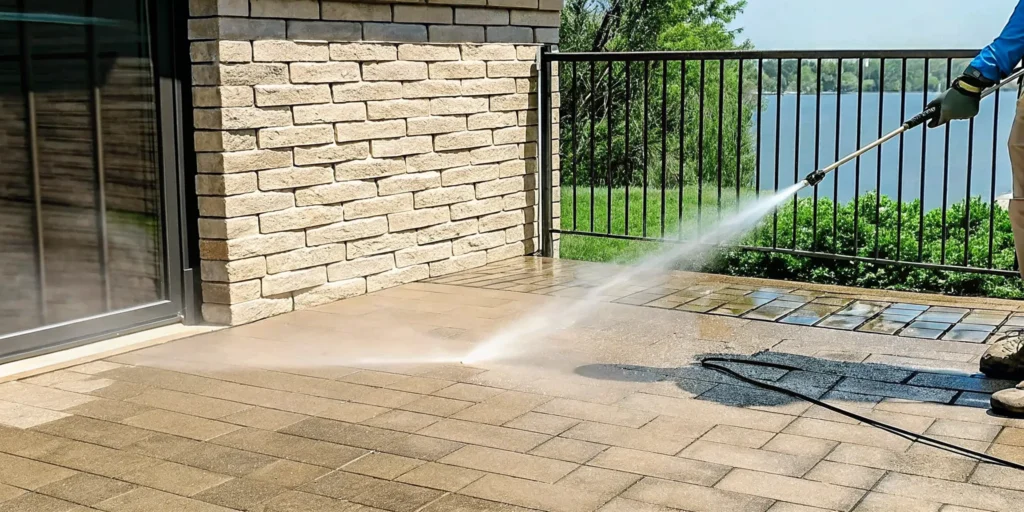
For most residential pavers, 1,000 to 1,500 PSI is a practical working range, provided the surface and joint condition support it. Use a wide 25- to 40-degree fan tip and hold the wand about 8 to 12 inches from the surface. Keep the spray at roughly a 45-degree angle rather than driving water straight into the joints.
For delicate, weathered, or heavily soiled pavers, low-pressure chemical cleaning, or soft washing, is the safer choice. After cleaning, inspect the joints before applying any sealer. Top off and re-activate areas that lost sand. Gulf2Bay provides paver cleaning and sealing for Long Island and Hamptons homes using surface-matched methods instead of generic power washing.
What PSI Is Safe for Pavers Filled With Polymeric Sand?
The safe PSI range
Most pavers can be cleaned between 500 and 1,500 PSI when the operator uses the correct tip, distance, and spray pattern. For pavers filled with polymeric sand, 1,000 to 1,500 PSI is the practical sweet spot for removing surface grime without aggressively disturbing the joints.
Pressure alone does not determine whether the wash is safe. Worn joints, older pavers, and previously damaged polymeric sand need a lighter approach. At 2,500 PSI and above, the risk changes sharply. The spray can pull sand and polymer binder from the joints, leaving gaps that collect water and debris.
| Setting | Safer approach | Unsafe approach |
|---|---|---|
| PSI | 500-1,500 PSI, usually 1,000-1,500 PSI | 2,500+ PSI, especially on old or soft pavers |
| Nozzle | Wide 25-40 degree fan tip | Narrow, concentrated tip |
| Distance | Keep the tip 8-12 inches above the surface | Holding the tip close to the paver or joint |
| Angle | Spray at approximately 45 degrees across the joints | Driving the spray directly into the joints |
| Main risk | Controlled cleaning with minimal joint disturbance | Washout of sand and polymer binder |
Technique matters as much as PSI
Polymeric sand locks the joints between pavers after activation with water. That joint material helps resist weeds, ants, and erosion, so do not treat it like loose dirt. Use a wide fan spray, keep the wand moving, and work across the joints rather than straight into them. Test a small, inconspicuous area first, especially where the sand looks low or uneven.
Long Island patios and driveways face added exposure from coastal moisture, algae, mildew, moss, and salt spray. Low-pressure chemical cleaning, or soft washing, often removes that buildup with less force on the joints. After cleaning, inspect the joints before sealing. Any washout should be re-sanded and re-activated first. For surface-matched paver cleaning and sealing, use a method selected for the paver and joint condition, not a one-setting-fits-all power wash.
Why High-Pressure Washing Washes Out Polymeric Sand
Polymeric sand is part of the joint system
Polymeric sand is not loose filler swept across the surface. It fills the gaps between pavers, locks the units together, and hardens when activated with water. When the joint is filled to its proper depth, the sand and polymer binder help resist weeds, ants, and erosion. That joint material also helps keep each paver from moving under foot traffic, furniture, and vehicle loads.
High PSI strips out sand and binder
A concentrated pressure-washer stream can cut into the joints instead of simply cleaning the paver faces. The water pulls polymer binder and sand out of the joint, a failure commonly called washout. The higher the pressure and the closer the nozzle, the more aggressively the spray attacks the joint edge. A narrow tip aimed directly into a seam can cause damage even when the pavers themselves look intact.
That is why a high-pressure approach is a poor answer for Long Island patios and driveways. Coastal exposure already leaves hardscapes dealing with mildew, algae, moss, and salt spray. Removing the joint material to chase surface grime trades one problem for a structural one.
What washout looks like
Early washout may appear as shallow, uneven joints, exposed gaps, or a line of sand collecting along the edge of the patio. Run a hand across the seams and the joint may feel hollow or loose rather than firmly packed. Areas beneath downspouts, along borders, and where the spray overlapped are often affected first.
Loose joints invite bigger repairs
Once the sand is gone, weeds and ants have an open path into the joints. Water can move more easily between the pavers, and the units may begin to shift, settle, or spread apart. Re-sanding is then required, and the damaged joint must be prepared rather than simply covered with a fresh layer. New polymeric sand needs to bond through the joint and be re-activated correctly; adding it over loose, damaged material produces a weak repair.
For this reason, surface-matched cleaning matters more than maximum pressure. Low-pressure chemical cleaning and a controlled fan spray remove organic growth while protecting the joints. Afterward, inspect the seams, top off any washout, and re-activate the sand before sealing. For Hamptons and Long Island properties, paver cleaning and sealing should begin with the condition of the joints, not a generic power-washing setting.
How Long Island Homeowners Should Clean Paver Patios
Start with a dry inspection
-
Clear and inspect the surface. Remove furniture, planters, leaves, and loose debris. Look closely at the joints before adding water. If the polymeric sand is already low, cracked, or missing, aggressive cleaning can widen the problem. Coastal Long Island patios collect mildew, algae, moss, and salt residue faster than inland hardscapes, so identify the growth and the condition of the joint sand separately.
-
Choose low pressure and the right cleaner. Soft washing combines low-pressure application with a surface-appropriate cleaning solution. It removes organic growth without directing a concentrated blast into the joints. For a light DIY treatment, a 1:1 mixture of vinegar and water can help with moss and mildew. Test any solution in an inconspicuous area first, protect nearby plants, and rinse according to the product instructions.
-
Use a wide fan if rinsing requires pressure. A paver-safe range is generally 500 to 1,500 PSI, but the machine setting alone does not make the work safe. Use a 25- to 40-degree tip, keep it 8 to 12 inches from the surface, and hold the spray at roughly a 45-degree angle to the joints. Keep the wand moving. Never use a narrow tip or linger over one joint. Pressure above 2,500 PSI creates a serious washout risk.
-
Rinse growth and residue away from the joints. Work in manageable sections and direct runoff away from the cleaned area. The goal is to lift algae, mildew, and grime, not excavate the sand between every paver. For broader surfaces or delicate edges, review these professional soft washing considerations before renting equipment.
-
Let the joints settle, then check them. Allow the patio to dry fully before judging the result. Polymeric sand locks the pavers together after activation, but water can remove sand and binder when the joints are weak or the spray is too forceful. Check the full patio, especially low spots and edges, and top up any washout with compatible polymeric sand. Prepare damaged joints properly rather than simply covering loose material.
-
Reseal only when the surface is ready. Do not seal over damp pavers, active organic growth, or underfilled joints. Once the surface is clean, dry, and the joints are full and re-activated, choose a sealer suited to the paver type and exposure. Gulf2Bay’s paver cleaning and sealing service matches the cleaning and sealing process to Long Island patios, driveways, and walkways.
When to Call a Professional for Paver Cleaning
DIY cleaning becomes a poor trade when the pavers, joints, or surrounding property already show signs of failure. Polymeric sand is not just filler. It locks the joints and helps resist weeds, ants, and erosion. Once high pressure washes out the sand and binder, the repair involves joint preparation, re-sanding, reactivation, and possibly sealing.
The joints are already washing out
Look for low or empty joints, loose sand collecting at the edge of the patio, and pavers that shift underfoot. Do not keep spraying to chase away the remaining dirt. More pressure can enlarge the washout and leave the joint too unstable for a simple top-off. A professional can determine whether the joints need cleaning, preparation, re-sanding, or a full reset before water reaches the surface again.
The patio or driveway is too large to control
Large driveways, pool decks, and expansive patios make consistent pressure and chemical coverage difficult. A nozzle held too close in one area can etch the paver face or strip joint material while another area remains dark with algae. That inconsistency is especially visible across luxury hardscapes. Equipment, application rate, runoff control, and rinse technique all need to match the surface.
You need sealing or the surface is damaged
Cracked pavers, faded sealer, efflorescence, deep organic staining, and damaged edges require more than a quick wash. Sealer should not trap dirt or moisture, and it should not be applied over depleted or contaminated joints. Review the safe paver cleaning guidance before treating white mineral deposits, then have the surface assessed if the damage is widespread.
Coastal exposure has allowed neglect to compound
Long Island’s coastal exposure accelerates mildew, algae, moss, and salt buildup on patios and driveways. That is a bigger concern at Hamptons second homes, where seasonal neglect can let growth spread between visits. Gulf2Bay Softwash serves Long Island, the Hamptons, Nassau and Suffolk County, and Bay Shore with low-pressure, application-matched cleaning rather than generic power washing. When the hardscape needs both cleaning and protection, review the paver cleaning and sealing service. For a property-specific assessment, call 844-422-9274.
Frequently Asked Questions
Can you pressure wash pavers filled with polymeric sand?
Yes, but only with controlled pressure, the right nozzle, and careful technique. High pressure can strip sand and binder from the joints. For many pavers, industry guidance places the workable range around 500 to 1500 PSI, while 2500 PSI or more creates a serious washout risk, especially on older pavers.
How do you safely clean pavers with polymeric sand?
Start with a wide fan spray, keep the nozzle about 8 to 12 inches from the surface. And work at roughly a 45-degree angle so water does not drive directly into the joints. Low-pressure soft washing is often the safer choice because the cleaning solution does the work without aggressively disturbing the sand.
What happens if polymeric sand is washed out during pressure washing?
Empty or shallow joints lose the material that locks the pavers together and helps resist weeds, ants, and erosion. The surface may develop loose joints, weed growth, or movement. Re-sand the affected joints and re-activate the new polymeric sand before applying more water or sealer.
Can you re-apply polymeric sand over old sand?
Only when the existing joints are properly prepared. Damaged or loose sand should be removed or cleaned out first so the replacement material can fill the joint to a proper depth and form a solid bond. Simply spreading new sand over compromised material can leave a weak repair.
How can you tell if polymeric sand is damaged on a patio?
Look for joints that are visibly low, hollow, loose, or missing sand after cleaning. Sand collecting on the paver surface, recurring weeds, and pavers that shift underfoot are also warning signs. Stop using high pressure and have the joints assessed before sealing.
Schedule Your Paver Cleaning Consultation
Proper cleaning helps protect the polymeric sand joints that keep a Long Island patio or driveway stable and finished. Schedule a paver cleaning and sealing consultation for your property. Contact Gulf2Bay Softwash to discuss the surface, the condition of the joints, and the right cleaning approach.