A roof-cleaning warranty sounds straightforward until you ask what it actually promises. On Long Island, homeowners may be dealing with algae, moss, lichen, salt air, steep pitches, and several different roofing materials. The cleaning method matters, but the written terms matter just as much.
A roof cleaning warranty long island homeowners can rely on should clearly state what the contractor will address, how long the promise lasts, what exclusions apply, and what remedy is available. That service warranty is separate from the roof-material manufacturer’s warranty, which has its own requirements for approved cleaning methods and maintenance.
Do not assume that a warranty covers roof damage, prevents every future stain, or applies identically to asphalt shingles, cedar, slate, and tile. Start by separating the contractor’s service promise from the roof system’s original warranty, then check the details before work begins.
Request a Long Island roof cleaning assessment
What Does a Roof Cleaning Warranty on Long Island Cover?
Start with the written promise.
A roof-cleaning warranty should explain the contractor’s service promise in specific terms. It may address the condition the cleaning is intended to treat and the work included. It should also state the remedy available if the stated result does not hold during the warranty period. It is not automatically a guarantee that algae, moss, or dark staining will never return.
For a homeowner comparing a roof cleaning warranty Long Island contractors offer, the first question is simple: what exactly is covered? Look for a description of the covered condition, such as the return of a specified stain or growth, along with clear exclusions. A document that only says “satisfaction guaranteed” leaves important details open to interpretation.
The warranty should also state when coverage begins and how long it lasts. The start date could relate to the service date, completion of the work, or another clearly stated event. Do not assume that an advertisement, invoice, or verbal statement uses the same time period as the written warranty.
Next, check the remedy. A service warranty might provide a return visit, additional treatment, correction of a defined issue, or another remedy. The document should identify what the contractor will provide, rather than leaving the response entirely undefined.
Claim instructions matter just as much. A useful warranty explains how to report a concern, who may make the claim, which person or company handles it, and whether photographs or an inspection are required. Keep the service record and the final warranty together so you can follow the stated process if a question comes up.
Consumer-warranty disclosure rules can describe the kinds of information a written warranty should make clear, including coverage, exclusions, duration, remedy, claim steps, contact information, and any dispute process. Those disclosure requirements should not be read as a promise that every roof-cleaning contractor offers a particular warranty or length of coverage.
Finally, separate the cleaning service from the roof system itself. A roof-cleaning warranty does not replace the shingle manufacturer’s warranty. It should not be presented as a promise to repair roofing materials, leaks, installation defects, or storm damage unless those terms are expressly written. Ask for the exact document before work begins, then confirm every verbal assurance appears in it.
How Is a Cleaning Warranty Different from a Roof Warranty?
A roof cleaning warranty and a roof warranty address different work. The cleaning-service warranty is a contractor’s promise about the service performed, such as correcting a covered cleaning-related issue under stated terms. A roof warranty comes from the manufacturer or roofing installer and concerns the roof system, installation, materials, or specified defects.
Three warranty documents can be involved
Start by identifying who made the promise. A cleaning company may provide written coverage for its treatment or workmanship. The shingle or roofing-material manufacturer may provide separate coverage for the product, subject to its installation and maintenance requirements. The roofing installer may provide another promise covering installation work.
These documents are not interchangeable. A cleaning-service warranty does not automatically extend the manufacturer’s coverage, repair a defective roof system, or guarantee that algae will never return. Likewise, a manufacturer’s warranty is not a promise that a contractor will repeat a cleaning service whenever discoloration reappears. Read the specific exclusions, remedy, duration, and claim instructions instead of relying on the word “warranty” alone.
For a generic documented example, one Northwestern University roofing specification lists a manufacturer’s warranty separately from an installer’s warranty. In that particular project specification, the manufacturer coverage addresses specified roof-system performance, while the installer coverage addresses warranty work involving labor and materials. It also gives different warranty periods, 20 years for the manufacturer warranty and two years for the installer warranty. Those figures are project-specific and are not Gulf2Bay’s residential policy or a standard for Long Island homes.
Before scheduling the low-pressure roof cleaning method, ask which document governs the service and whether the roof manufacturer has published cleaning instructions. Keep the cleaning receipt, product information, roof records, and written warranty together. If the roof is still under manufacturer or installer coverage, contact the responsible party before approving an unfamiliar chemical, tool, or method.
What Can Void or Limit Coverage?
A roof-cleaning warranty is not a blanket promise that covers every future stain, roof defect, or maintenance decision. The written service terms control. Your roof’s material, the condition documented before cleaning, the method used. And any instructions from the shingle manufacturer can all affect what happens if you need to make a claim.
Method matters, but terms still control
Start with the roof manufacturer’s guidance, especially for asphalt shingles. The Asphalt Roofing Manufacturers Association recommends consulting the shingle manufacturer about the effects of moss and the appropriate removal method. It also states that cleaning chemicals and methods should not be used without manufacturer approval when approval is required. Read ARMA’s roof algae guidance before treating an unfamiliar roof system.
That does not mean one cleaning method automatically voids every roofing warranty. It means you should identify the roof material and compare the proposed process with the applicable manufacturer instructions before work begins. Ask the contractor to document the method, solution, pressure range, and any material-specific precautions in the service agreement.
For asphalt roofing, ARMA specifically warns against power washing and against using brushes or brooms to remove algae. High-pressure washing is likely to damage asphalt roofing, while scrubbing can loosen and remove shingle granules. Granule loss, visible damage, or a process that conflicts with manufacturer instructions may create a coverage dispute, even when the contractor’s document uses the word “warranty.”
Safety is part of the coverage conversation too. Cleaning can make shingles slippery, which is why ARMA encourages professional help. Homeowners who climb onto the roof, scrub stains, apply an unapproved chemical. Or hire another provider after the original service should check the warranty’s maintenance and claim conditions first. Do not assume those actions cancel coverage automatically; ask the warrantor what the written terms actually say.
Before hiring, compare the proposed process with your existing roof records and keep the agreement, photos, invoices, and manufacturer information together. For more context on the risks of handling growth yourself, review this guide to roof moss removal warranty risks.
What Should Long Island Homeowners Ask Before Hiring?
Questions worth putting in writing
A roof-cleaning quote should explain more than the total price. On Long Island, the roof material, pitch, stain level, and access can change the equipment, solution, and safety plan. Ask the contractor to assess those conditions before promising a result or warranty.
- What material and condition are you treating? Ask the cleaner to identify whether the roof is asphalt shingle, cedar, metal, slate, tile. Or another material, and to note visible algae, moss, lichen, granule loss, damaged areas, or fragile surfaces. If the diagnosis is uncertain, ask what should be confirmed with the roof manufacturer.
- What method and pressure will you use? For asphalt shingles, ARMA warns against power washing, brushes, and brooms because high pressure can damage the roofing and scrubbing can loosen granules. Ask for the planned low-pressure process, solution, dwell time, and rinse method in plain language. Use this guide to choose a Long Island cleaner that can explain the work instead of simply advertising pressure washing.
- How will pitch, access, and slippery conditions be handled? Roof cleaning can make shingles slippery, and steep pitches, limited access, nearby landscaping, and multi-story sections affect the safety plan. Ask whether the crew will work from the roof, ladders, lifts, or other access points, and what protections will be used.
- What exactly does the written warranty cover? Ask whether the promise covers the cleaning service, stain recurrence, retreatment, damage, or something else. Confirm the start date, duration, exclusions, eligible roof materials, remedy, claim process, and whether the warranty applies to the property owner or another party. Do not assume a cleaning warranty replaces or changes the roof-material manufacturer’s warranty.
- Who will perform the work and who handles a claim? Get the contractor’s legal or business name, contact method, and written instructions for reporting a concern. If a warranty depends on approved products, methods, or future maintenance, those conditions should appear in the agreement before work begins.
A clear answer to each question gives you something concrete to compare between contractors. It also makes the phrase “roof cleaning warranty Long Island” meaningful: the protection comes from the specific written terms, not from a headline claim alone.
How Long Should Roof Cleaning Results Last?
Recurrence is not automatically a service failure
There is no universal number of years that a clean roof will remain free of algae, moss, or dark streaks. Long Island sits along the Eastern Seaboard, where roof algae discoloration is widespread. Algae travels through the air and can collect on roofing and other outdoor surfaces, so recurrence depends on exposure, moisture, shade, roof material, and surrounding vegetation.
The Asphalt Roofing Manufacturers Association notes that roof-cleaning results can be temporary and that discoloration may recur. That does not automatically mean the original cleaning was ineffective. It means the treatment addresses existing growth, while the roof remains exposed to the conditions that support new growth. Light-colored roofs may also show returning discoloration sooner because algae staining is more visible against a pale surface.
Gulf2Bay’s stated guidance is to assess a roof every 3 to 5 years and consider cleaning every 1 to 3 years, depending on the environment. Treat that as a service recommendation, not a universal rule or a promise of a fixed result. A shaded roof beneath trees may need attention sooner than a more exposed roof, while the roof’s material, pitch, stain level, and access can affect the appropriate plan.
When reviewing a Long Island roof cleaning schedule, ask what the contractor’s written warranty actually covers. A cleaning warranty may address a specified retreatment or service promise, but it does not necessarily guarantee that algae will never return or replace the roof manufacturer’s terms. The duration, exclusions, and remedy should be stated in writing before work begins.
What Should Be in Your Written Warranty?
A warranty review checklist
Do not judge a roof cleaning warranty by its length alone. Read the actual document and confirm what it promises, who can use it, and what happens if the stated service result does not hold.
The Federal Trade Commission’s written-warranty disclosure rules provide a useful checklist for clear terms. They call for coverage, exclusions, remedies, timing, claim instructions, responsible parties, contact information, and any applicable informal dispute process in simple language. These rules are a framework for reviewing a document, not a Gulf2Bay-specific warranty or a substitute for legal advice.
| Item to verify | Question to ask | Why it matters |
|---|---|---|
| Parties and eligibility | Who is covered, and can the warranty transfer with the property? | Coverage may be limited to a named customer or another defined class of owner. |
| Coverage and exclusions | What condition or service result is covered, and what is specifically excluded? | Clear boundaries prevent assumptions about stains, regrowth, damage, or unrelated roof problems. |
| Remedy | What will the warrantor do if a covered issue occurs? | The document should identify the promised service, repair, replacement, or other remedy. |
| Start date and duration | When does coverage begin, and when does it end? | A defined commencement event and duration make the warranty measurable. |
| Claim steps | How must a homeowner report a claim, and within what time? | Step-by-step instructions reduce disputes over notice and documentation. |
| Authorized performers | Who is allowed to perform warranty work? | Using an unauthorized person may affect whether the stated remedy is available. |
| Contact and disputes | What contact should be used, and is an informal dispute process offered? | A usable contact and stated process give the homeowner a clear path forward. |
Keep the signed warranty with the proposal, invoice, and service record. If a term is vague, ask for clarification in writing before the roof cleaning begins.
How Gulf2Bay Approaches Roof Cleaning on Long Island
Surface-specific, low-pressure care
Gulf2Bay Softwash serves residential homeowners across Long Island, including Nassau County, Suffolk County, and the Hamptons. The starting point is the roof itself: its material, pitch, size, staining level, and accessibility all affect the cleaning requirements.
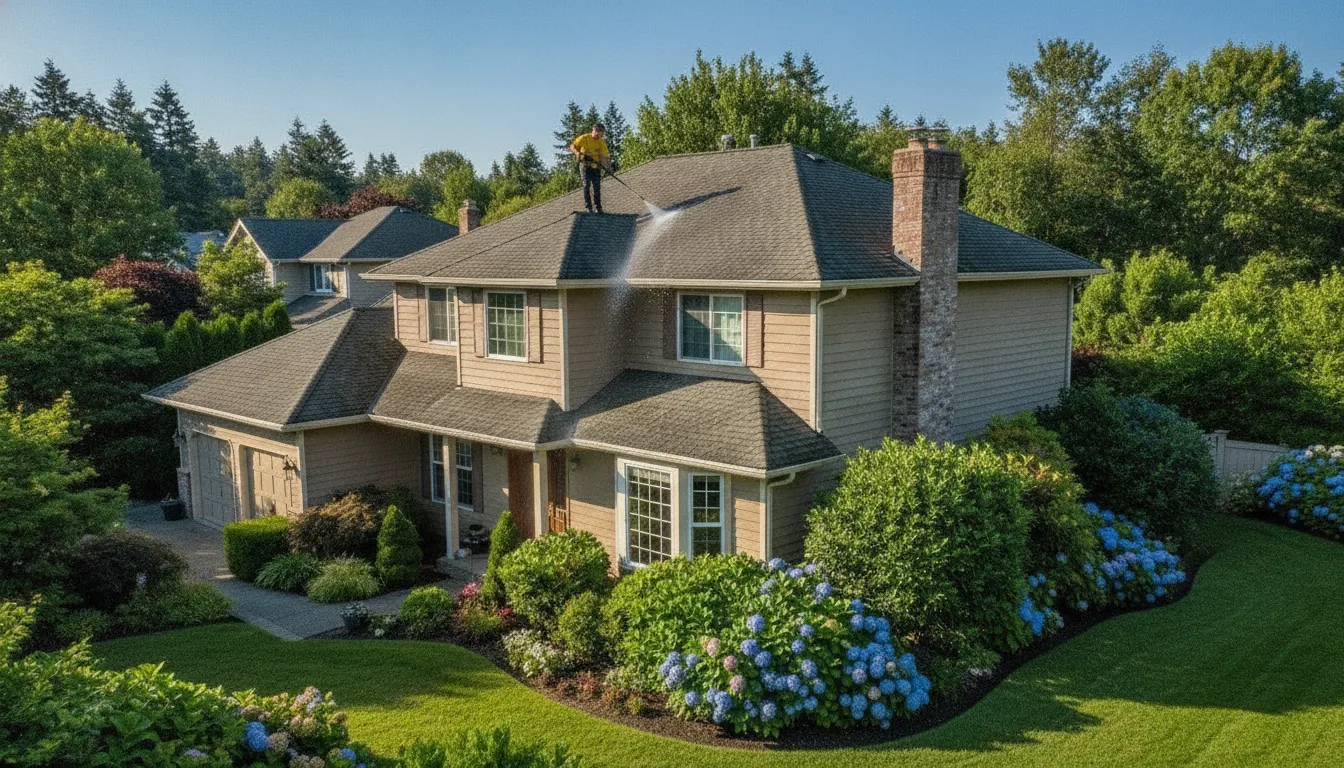
The service uses a low-pressure soft-wash method rather than aggressive power washing. The documented offering specifies pressure of no more than 90 PSI and biodegradable cleaning solutions. That approach is designed for controlled treatment of organic growth, including algae, moss, lichen, and Gloeocapsa magma, the organism commonly associated with dark roof streaks.
Material identification matters. Gulf2Bay lists service for asphalt shingles, cedar and wood shake, metal, stone-coated steel, EPDM flat roofing, slate, clay tile, concrete tile, rubber slate, aluminum, and solar tiles. Different surfaces can have different care requirements, so a method that is acceptable for one roof should not automatically be applied to another.
Gulf2Bay is identified as a SoftWash Systems Authorized Professional. That status supports the company’s specialized soft-washing position, but it does not replace the written terms of a cleaning-service warranty or a roof-material manufacturer’s warranty. Homeowners should ask which roof materials are eligible, what the service warranty covers, and what exclusions or follow-up conditions apply before work begins.
For the documented service scope and a roof-specific assessment, review Gulf2Bay’s residential roof cleaning service.
Ask Gulf2Bay about your written roof-cleaning warranty terms
Frequently Asked Questions
Does a roof cleaning warranty cover the roof itself?
Usually, a cleaning warranty covers the contractor’s stated service promise, not every part of the roofing system. A roof manufacturer’s warranty and a cleaning-service warranty are separate documents. Ask which condition is covered, what remedy is provided, and whether the written terms apply to your specific roof material.
How long is Gulf2Bay’s roof cleaning warranty?
Gulf2Bay’s service information documents a five-year warranty on roof cleanings. Confirm the complete roof-specific terms, exclusions, eligibility conditions, and claim procedure in the written agreement before work begins. Do not assume a general warranty program has identical terms for every service or roof type.
Can pressure washing affect my roof warranty?
High-pressure washing can damage asphalt roofing, and the Asphalt Roofing Manufacturers Association advises against using a power washer, brush, or broom on the roof surface. Manufacturer guidance can vary, so check your shingle documentation and confirm the proposed cleaning method before hiring. ARMA’s roof-cleaning guidance explains these precautions.
Will a warranty stop roof stains from coming back?
Not necessarily. Algae discoloration is widespread along the Eastern Seaboard, and ARMA states that the effect of cleaning is temporary, so discoloration may recur. A written warranty may address a defined retreatment or service condition, but it should not be treated as a permanent guarantee against future algae, moss, or lichen growth. ARMA notes that algae stains may recur after cleaning.
Ready to Discuss Your Roof Cleaning?
Every roof has its own material, pitch, access conditions, and cleaning needs. A roof assessment helps you ask the right warranty questions and understand the recommended next step before work begins. To request a Long Island roof cleaning assessment or quote, contact Gulf2Bay Softwash through the contact page.