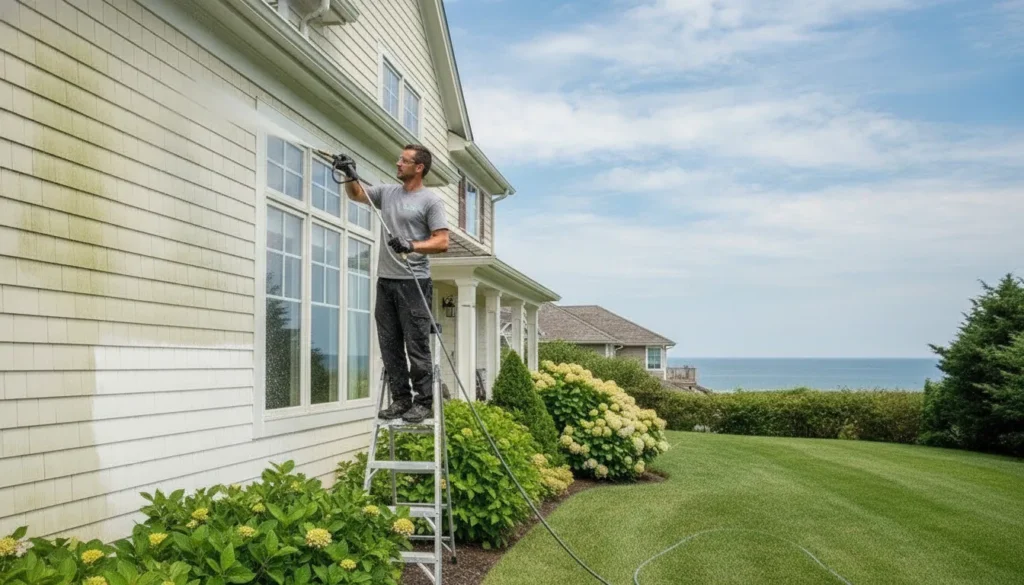
Yes. Pressure washing can damage vinyl siding when the spray is too forceful or held too close. It can also cause trouble when aimed behind overlapping panels or used on siding that is already loose or weathered. The result may be more than a surface mark. Water can reach vulnerable seams, panels can loosen, and the finish can look rough or faded.
For most Long Island homes, the safer question is not simply whether a machine can clean vinyl. It is whether the method matches the siding, the stains, the home height, and the condition of the panels. Soft washing uses cleaning solution and controlled low-pressure rinsing so the solution does more of the cleaning work.
Request a vinyl siding cleaning quote from Gulf2Bay Softwash before putting a pressure wand against the panels.
Here is where pressure creates risk, how soft washing differs, and what homeowners can do without turning a routine wash into a siding repair.
Can Pressure Washing Damage Vinyl Siding?
The short answer is yes, depending on the method
Vinyl siding is durable, but durable does not mean it is designed for a concentrated blast at any angle. The Vinyl Siding Institute’s care guidance favors ordinary water, a hose, and a soft-bristled brush for routine cleaning. CertainTeed also states that power washing vinyl or polymer siding can cause moisture intrusion, damage, or discoloration. Those recommendations matter because siding is a layered exterior system, not a concrete driveway.
Pressure can damage the finish first. A narrow spray held too close can roughen or fade the surface. The cleaned section may then look different from the surrounding panels. Stiff brushes and abrasive cleaners can create a similar splotchy appearance, even without a pressure washer.
Mechanical damage is another concern. A concentrated blast can crack or chip a panel, pop it loose from its nailing strip, or disturb trim around windows and corners. Older siding, brittle panels, loose pieces, and areas with existing cracks deserve extra caution.
Pressure can also push water where it does not belong. If the wand is aimed upward or into a seam, water can move behind overlapping panels. Trapped moisture may affect the wall cavity, sheathing, framing, or insulation. That is why the safest cleaning plan starts with an inspection rather than a machine setting.
For homeowners searching can pressure washing damage vinyl siding, the practical answer is clear: it can. A hose, soft brush, or professionally controlled soft wash is usually a better starting point than high-pressure rinsing.
Where Vinyl Siding Damage Starts
Seams, trim, finish, and weak panels need different care
Vinyl siding damage rarely comes from the word pressure alone. It comes from pressure applied to a weak point. Before cleaning, look at the areas where panels overlap, where trim meets the siding, and where the siding meets windows, doors, vents, and rooflines.
Seams and overlaps: A spray directed upward can work against the siding’s overlap. Water may travel behind a panel instead of flowing down the face. Keep the rinse controlled and respect the direction in which the panels shed water.
Trim and openings: Corners, J-channels, window trim, vents, and utility penetrations can have small gaps. High-pressure rinsing around these areas raises the chance of moisture intrusion. Shield fixtures and avoid spraying into openings.
Surface finish: A close nozzle concentrates force in a small area. Even when the panel does not crack, the finish can become rough, faded, or visibly different. Test any cleaning approach in an inconspicuous area first.
Loose or brittle panels: A panel that is already unhooked, cracked, warped, or brittle is not a pressure-washing test surface. Cleaning may reveal a repair need, but it should not be used to force the panel back into place.
These risks are why a lower-pressure technique is not a license to spray carelessly. Distance, angle, nozzle choice, dwell time, rinse direction, and the condition of the siding all matter. When in doubt, stop and inspect rather than increasing pressure to chase one stubborn mark.
Pressure Washing vs. Soft Washing for Vinyl
Choose the process that matches the surface
Pressure washing uses water force as the main cleaning tool. Soft washing uses a cleaning solution and controlled low-pressure water so the solution can loosen organic growth before the rinse. The distinction is useful, but neither label replaces a surface inspection or careful application.
| Method | What does the work | Main vinyl-siding concern | Best fit |
|---|---|---|---|
| High-pressure washing | Concentrated water force | Cracks, finish damage, loose panels, and water behind overlaps | Hard surfaces designed for the method. |
| Garden hose and soft brush | Light agitation and water | Abrasive brushes or cleaners can change the sheen | Light dirt on accessible, sound siding. |
| Professional soft washing | Surface-appropriate solution plus controlled rinse | Incorrect chemical handling or poor protection of plants and fixtures | Organic growth, taller homes, or delicate surfaces. |
The Vinyl Siding Institute recommends a soft-bristled car-washing brush attached to a hose for manual cleaning.
Manufacturer guidance also cautions against prolonged or high-pressure rinsing of open, ventilated siding areas. These are reasons to favor controlled cleaning, not reasons to promise that every stain can be removed by one method.
For the underlying care guidance, review the Vinyl Siding Institute installation manual and Iowa State Extension’s siding-cleaning guidance. A city-hosted vinyl siding manual also repeats the recommendation to use a hose and soft brush for routine care.
Gulf2Bay’s house-washing process is built around surface-specific care: inspect the property, apply a cleaning solution, allow appropriate dwell time, rinse at low pressure, and inspect the result. For homeowners comparing soft washing versus pressure washing, the important question is what protects the siding while removing the actual soil or growth.
How to Clean Vinyl Siding More Safely
A careful homeowner process starts with less force
For light dirt on sound, reachable siding, the Vinyl Siding Institute’s basic approach is simple. Use water first. If more cleaning power is needed, use a soft brush and a product whose label is suitable for the surface. Do not improvise a stronger mixture because the siding looks stubborn.
- Inspect before washing. Look for cracked, loose, warped, brittle, or oxidized panels. Check trim, seams, vents, windows, and doors. Repair or flag weak areas before applying water.
- Protect the work area. Move or cover items that should not get wet. Protect shrubs and nearby plants from cleaning agents. Keep solution off fixtures and surfaces that are not part of the wash.
- Start with the gentlest effective method. Try a garden hose and a soft-bristled brush for ordinary dirt. Do not use stiff bristles or abrasive cleaners because they can change the gloss and leave siding looking splotchy.
- Follow the product label. Read precautions and warnings. Never combine bleach with a cleaner that contains ammonia. Test a small, inconspicuous area before treating a large section.
- Work in manageable sections. Apply the solution as directed, allow the appropriate dwell time, and keep the surface from drying if the label requires it. Work from the bottom upward when the cleaning guidance calls for it to reduce streaking.
- Rinse completely and deliberately. Rinse after washing. Keep the spray controlled, avoid forcing water behind overlaps, and do not use pressure to compensate for inadequate dwell time.
- Inspect the result. Look for remaining growth, streaks, loosened panels, or finish changes. Do not keep escalating pressure on a mark that may be oxidation, embedded material, or a surface defect.
For a multi-story home, widespread mildew, or difficult access, a professional process is safer than balancing a ladder while handling a hose, cleaner, and spray wand.
Why Long Island Homes Need Surface-Specific Care
Shade, moisture, and coastal exposure change the cleaning plan
Long Island homes do not all collect the same kind of soil. A shaded north-facing wall, a home near dense landscaping, and a coastal property can develop different cleaning needs. Mold and mildew favor damp, shaded areas with limited air circulation. Trees and plants close to the house can keep siding shaded and slow drying.
Organic growth often shows up as darkening or discoloration. That does not mean every dark mark should be attacked with more pressure. It may be mildew, algae, surface dirt, artillery fungus, or vinyl oxidation. Each condition calls for a different response. Oxidation can leave a chalky residue, and ordinary washing should not be represented as a guaranteed oxidation-removal treatment.
Coastal exposure adds another reason to avoid a commodity approach. Salt, wind-driven moisture, shade, and nearby vegetation can affect how quickly a surface becomes dirty. The right plan considers the siding type, existing finish, drainage, plantings, and access before choosing a rinse method.
Routine maintenance can be more useful than aggressive correction. Gulf2Bay’s documented house-washing guidance places the interval at roughly every 1 to 3 years depending on shade, nearby water bodies, and climate exposure. That is a planning range, not a promise. Inspect the home and adjust the schedule when growth or exposure changes.
Pay attention after storms and during periods of heavy humidity. Look for new dark areas, streaks below fixtures, or growth concentrated under eaves. Early inspection helps separate a cleaning need from a drainage, trim, or siding-repair issue. It also prevents a homeowner from treating one visible mark as a reason to increase pressure across the entire wall.
For related guidance, homeowners can review how to identify growth on house siding before choosing a cleaning method.
When Should You Hire a Soft-Wash Professional?
Use a trained process when the risk is bigger than the stain
Call for professional help when the home is tall, the siding is difficult to reach. Panels are loose or brittle, growth is widespread, or the cleaning solution needs careful handling. A large or multi-story house introduces fall risk and makes it harder to control spray direction from the ground.
Professional service should begin with a property inspection. The operator should identify the siding material, note vulnerable openings, protect landscaping, select an appropriate solution, allow it to work, and rinse without driving water behind the panels. The goal is controlled cleaning, not the highest possible force.
Good preparation also protects the rest of the property. Windows, doors, outdoor fixtures, plantings, and nearby surfaces should be considered before the solution is applied. Rinsing should be thorough, and the crew should check the result rather than leaving residue to dry on the siding.
Ask how the company handles vinyl siding, trim, windows, plants, and pre-existing damage. Ask whether the process distinguishes dirt from oxidation and whether the quote includes an inspection. A responsible answer will explain the method instead of offering one pressure number as a universal guarantee.
Gulf2Bay Softwash serves residential properties across Long Island, including Nassau County, Suffolk County, and Hamptons communities. Its documented house-washing sequence is pre-service inspection, cleaning-solution application, dwell time, low-pressure rinse, and post-service inspection. That surface-specific approach is the useful alternative when a pressure washer could create more risk than value.
Before service, walk the property with the technician and point out areas that have leaked, been repaired, or shown chalky residue. Photos can help document existing loose panels or trim. This keeps a pre-existing defect from being mistaken for cleaning damage and gives the crew a clear limit around sensitive areas.
See the full range of exterior cleaning services or Long Island service areas to see whether the work fits your property.
Contact Gulf2Bay Softwash for a surface-specific vinyl siding cleaning quote.
Frequently Asked Questions
What PSI will damage vinyl siding?
There is no single PSI number that makes every vinyl siding job safe. Damage also depends on nozzle type, distance, spray angle, exposure time, panel condition, and whether water is forced behind overlaps. Start with the gentlest effective method and follow the siding manufacturer’s care guidance.
Is it safer to pressure wash or soft wash vinyl siding?
Soft washing is often the safer choice for residential vinyl siding because a cleaning solution does more of the work and the rinse can be controlled at low pressure. The property still needs an inspection, correct product handling, plant protection, and a deliberate rinse.
What should you not clean vinyl siding with?
Avoid stiff-bristle brushes, abrasive cleaners, and any chemical mixture that conflicts with the product label. Never combine bleach with a cleaner containing ammonia. Do not use a concentrated spray to chase a stain that may be oxidation or a pre-existing surface defect.
What do professionals use to clean vinyl siding?
Professionals typically match the cleaning solution, dwell time, water pressure, rinse direction, and access plan to the siding and the soil. Gulf2Bay’s documented house-washing sequence includes inspection, solution application, dwell time, low-pressure rinse, and a final inspection.
Vinyl siding should look clean without being treated like concrete. If you are seeing mildew, algae, dark staining, chalky oxidation, or loose panels, identify the condition before reaching for more pressure.
Request a quote from Gulf2Bay Softwash for careful Long Island house washing.