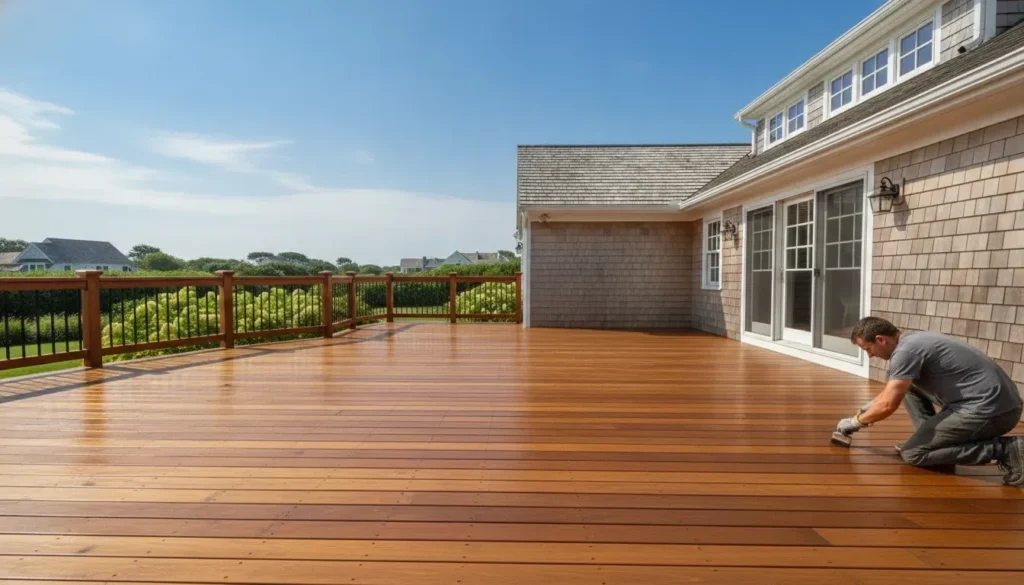
The best oil for an Ipe deck after cleaning is a penetrating exterior hardwood oil made for dense Brazilian hardwood, not a thick film-forming stain. For Gulf2Bay Softwash projects, Brazilian Rosewood Oil is the treatment used after low-pressure chemical cleaning and surface preparation. The right product can deepen Ipe’s brown color and help it resist visible UV graying, but only when the deck is clean, fully dry, and free of excess oil.
Short answer: Choose a penetrating oil formulated for Ipe and other dense exterior hardwoods. Clean and brighten the boards first, let them dry completely, test a small area, apply a thin coat along the grain, and wipe away oil the wood does not absorb. If the deck has uneven weathering or embedded growth, correct the surface before choosing a finish.
Request a Gulf2Bay Ipe deck assessment before applying a finish to a weathered or uneven surface.
What Kind of Oil Works Best on Ipe?
Use a penetrating hardwood oil
Ipe is dense, heavy, and naturally durable. That density is one reason it performs well outdoors, but it also limits how readily a coating enters the wood. A penetrating hardwood oil is designed to soak into the surface instead of forming a thick layer on top.
Look for a finish labeled for exterior hardwoods, exotic hardwoods, or Ipe. A suitable oil should be intended for outdoor exposure and should address the appearance goal you actually have. Most homeowners choose oil to bring back a warmer brown tone and slow the look of UV graying. Oil is not required for Ipe’s basic outdoor durability, so leaving a clean deck to weather silver-gray is also a valid choice.
Why a standard deck stain can be the wrong choice
Generic deck stain is not automatically compatible with Ipe. A heavy, film-forming product can sit on the surface rather than penetrate evenly. That can leave a blotchy appearance, peeling, or a difficult recoat when the finish begins to fail.
Do not select a finish because it worked on a softwood deck nearby. Pine, cedar, and Ipe absorb products differently. The finish must match the wood, the condition of the surface, the desired color, and the exposure of the property.
What Should You Do Before Oiling an Ipe Deck?
Clean without damaging the grain
Remove leaves, furniture, loose debris, dirt, algae, and deteriorated finish before applying oil. Ipe can be damaged by aggressive pressure washing, which may leave streaks, raise the grain, or create a rough texture. A controlled, low-pressure chemical cleaning method is safer for a premium hardwood surface.
Cleaning is not the same as restoration. A lightly soiled deck may need routine care. A deck with heavy gray weathering, dark organic buildup, uneven previous coatings, or surface damage needs a more careful restoration assessment before any oil goes down.
Brighten and neutralize the surface
After cleaning, a hardwood-safe brightening step can help remove remaining discoloration and return the surface to a more even condition. Brightening also helps address tannin-related staining and prepares the wood to accept a finish more consistently.
Do not use oil to hide dirt, mildew, gray oxidation, or dark marks. Those conditions can show through the finish and make the deck look less even. The oil should be the final appearance step, not a shortcut around preparation.
Wait until the boards are fully dry
Drying time depends on sun, shade, humidity, board density, airflow, and how much water the cleaning process introduced. A manufacturer may specify a minimum drying window, but the surface condition still matters. Boards should not feel damp, look wet in the gaps, or hold moisture beneath furniture and planters.
Applying oil too soon can interfere with absorption and create a finish that looks uneven. On a coastal Long Island property, shaded sections and areas close to the home may dry more slowly than an open section in direct sun.
How Do You Apply Oil After Cleaning?
Test the appearance first
Apply the chosen oil to a small, inconspicuous area before treating the entire deck. This shows how the finish changes the color of the particular boards after cleaning. Ipe can vary in tone, and one section may have weathered differently from another.
Let the test area reach the appearance you expect before proceeding. A test also helps identify whether a previous coating, contamination, or uneven preparation will prevent consistent absorption.
Spread a thin, even coat
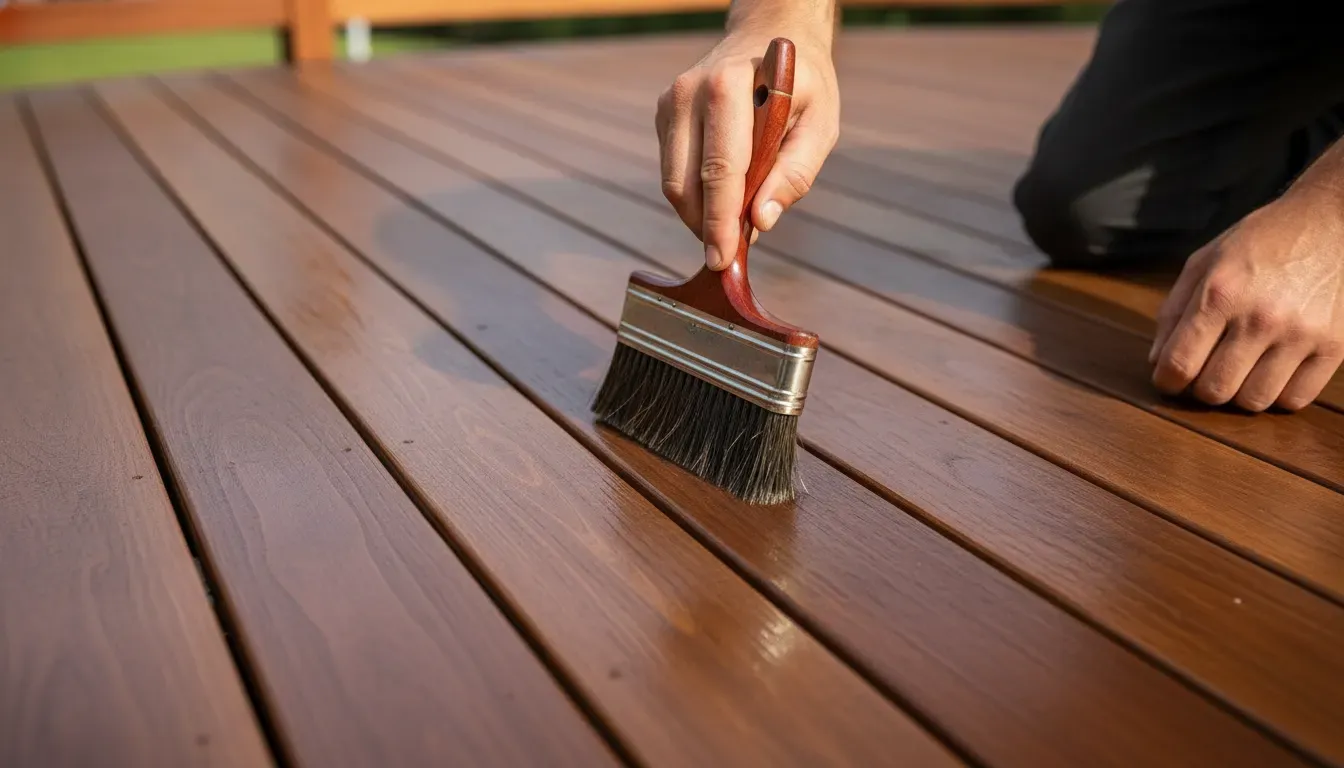
Work with the grain and keep a wet edge so the application does not stop in the middle of a board. Use enough product to wet the wood evenly, but do not flood the surface. Dense hardwood does not need a thick layer to look protected.
Break the work into manageable sections. Watch how quickly the oil absorbs in sunny and shaded areas. If one section remains glossy while another turns matte, the glossy section likely has excess product or different surface preparation.
Wipe off what the wood does not absorb
Excess oil is one of the most common causes of a tacky, shiny, or streaked Ipe deck. Follow the product directions for working time, then wipe away pooling and surface residue with clean materials. The finished boards should not look wet or have visible ridges of oil.
Oil-soaked rags can create a fire risk if discarded carelessly. Follow the product’s disposal instructions and local requirements. Do not leave used rags in a pile beside the home, in a garage, or in a covered trash bin.
When Is the Best Time to Oil an Ipe Deck?
Choose a moderate, dry weather window
Apply oil when the boards are clean, dry, and not hot to the touch. Avoid a forecast that brings rain before the finish has had time to settle. Direct afternoon sun can make one portion of the deck dry or absorb faster than another, so a shaded or moderate-temperature work window often produces a more even result.
Long Island decks near the water also face salt air, wind, and fast changes in exposure. Check the entire deck rather than relying on one sunny board as the drying indicator.
Do not oil over moisture or a failing coating
Moisture trapped in board gaps, under rugs, or beside the house can lead to inconsistent absorption. A previous finish that is peeling, glossy, or heavily built up may need to weather or be removed according to the product system before a new oil can be applied.
If you cannot tell whether the boards are ready, pause. Applying another layer to solve an uneven finish usually makes the problem harder to correct.
How Often Should an Ipe Deck Be Oiled?
Inspect the finish instead of following a rigid calendar
Inspect the deck in spring and fall, and look at high-sun or coastal sections more closely. Recoating depends on color preference, exposure, foot traffic, surface cleanliness, and how the previous finish wore. A sheltered deck may hold its appearance longer than an open deck facing strong afternoon sun.
Oil is mainly an appearance and surface-care choice. Ipe will naturally move toward a silver-gray patina when left unfinished. If you prefer that color, keep the deck clean and maintain drainage without repeatedly applying oil.
Use the maintenance cycle to catch larger problems
Regular cleaning and inspection can reveal raised fasteners, loose boards, damaged edges, blocked gaps, slippery organic growth, or moisture that stays against the structure. Those issues should be addressed separately from the finish.
Gulf2Bay’s Ipe deck maintenance guide for Long Island explains how seasonal exposure changes the care schedule. For a broader restoration process, see the Ipe deck restoration guide.
What Does Gulf2Bay Use on Ipe Decks?
Surface-specific preparation and Brazilian Rosewood Oil
Gulf2Bay Softwash restores existing Ipe and other Brazilian hardwood decks. The process uses low-pressure chemical cleaning, surface preparation, and Brazilian Rosewood Oil rather than high-pressure washing or deck construction.
The finish decision follows the condition of the wood. A clean, evenly weathered deck may be ready for treatment after it dries. A deck with heavy buildup, uneven color, or a failing previous finish needs additional preparation before oil is applied.
The goal is not to make every deck look identical. It is to protect the character of the hardwood, improve color consistency, and choose a care level that fits the home’s coastal exposure.
Contact Gulf2Bay Softwash for an Ipe deck restoration assessment before cleaning, brightening, or oiling a weathered deck.
Ipe Deck Oil Questions
Can I oil an Ipe deck immediately after cleaning?
No. Let the boards dry completely and confirm that the surface is evenly prepared before applying oil. The exact drying period depends on weather and the product directions, but damp boards are not ready for a finish.
Does Ipe need oil to last outdoors?
No. Ipe can weather naturally to a silver-gray color. Oil is typically chosen to retain or restore a warmer brown appearance and to support the desired maintenance approach.
Can I use a regular stain on an Ipe deck?
Do not assume that a regular stain is suitable. Ipe is dense and may not accept a thick, film-forming product evenly. Choose a finish made for exterior hardwoods and test it on a small area first.
What happens if I leave too much oil on the surface?
Excess oil can leave the deck glossy, tacky, streaked, or slow to dry. Wipe away oil that the boards do not absorb according to the product directions.