
Clogged gutters turn a Long Island downpour into water spilling where it should not. A sensible cleaning schedule protects the roofline, siding, and foundation before storm season exposes a blockage.
Get a quote for Long Island gutter cleaning and brightening.
The right schedule depends on your trees, recent weather, and the condition of the gutter exterior, not just a calendar reminder. Here is how to set a practical cleaning rhythm for your home.
How often clean gutters Long Island homeowners should schedule
For most Long Island homes, plan gutter cleaning twice each year: once around spring and again after fall leaf drop. Check the gutters after major weather events, and schedule added service if trees or repeat clogs create faster buildup.
A seasonal baseline
Twice a year is a useful starting schedule, rather than a rule for every property. Fall matters on Long Island because leaf drop can load a gutter before winter. A spring visit helps clear the buildup that may remain before warm-weather rainfall.
Clean, open gutters carry rainwater away from the home. They help protect doors, windows, and foundation-adjacent ground from unwanted runoff, as explained by West Virginia University Extension. The schedule is about managing moisture, not just removing visible leaves.
Weather checks between cleanings
A calendar alone cannot catch every blockage. After a major weather event, look for overflowing sections, sagging runs, debris at downspout openings, or water pooling close to the home. North Carolina State Extension advises homeowners to inspect gutters yearly and after major weather events.
A quick check does not always mean another full cleaning is due. If water moves freely and no debris is packed in the channel, keep the next planned visit. If flow is blocked, move the cleaning forward instead of waiting for the next season.
Homes that need a tighter schedule
Tree cover changes the schedule first. A home with branches near the roof can collect leaves, seed pods, and twigs sooner than an open-lot property. Check tree-heavy rooflines more often, especially during leaf drop and after windy weather.
Gutter shape and nearby growth also affect how fast debris returns. Homeowners comparing materials and maintenance needs can read Gulf2Bay’s guide to cleaning different types of gutters. Start with the seasonal baseline, then adjust it to what your gutters show.
What is the best seasonal gutter cleaning calendar?
Use three checkpoints: a spring check, a late fall cleaning window, and an extra inspection after a major storm. Clean when the check reveals leaves, clogged outlets, overflow marks, or poor downspout flow.
A three-checkpoint schedule
A calendar sets regular times to look; it does not mean every check ends with cleaning. Spring, late fall, and post-storm checks create a plan homeowners can remember. They also allow you to catch a new blockage after wind or heavy rain.
| Time or event. | What to check. | Who may need cleaning. |
|---|---|---|
| Spring check. | Channels, outlets, downspout flow. | Homes with debris left after winter. |
| Late fall visit. | Leaves, clogged outlets, overflow marks. | Homes near leaf-shedding trees. |
| After a major storm. | New clogs, loose areas, poor drainage. | Homes hit by wind-blown debris. |
Signs that cleaning is due
Begin with a ground-level visual check when conditions are safe. Look for leaves near outlets, water spilling over gutter edges, or downspouts that do not drain well. If debris blocks the route water should take, cleaning should not wait for the next season.
For another seasonal maintenance perspective, see these seasonal gutter cleaning tips. Use them alongside your observations, rather than relying only on a preset date.
Fall timing and storm checks
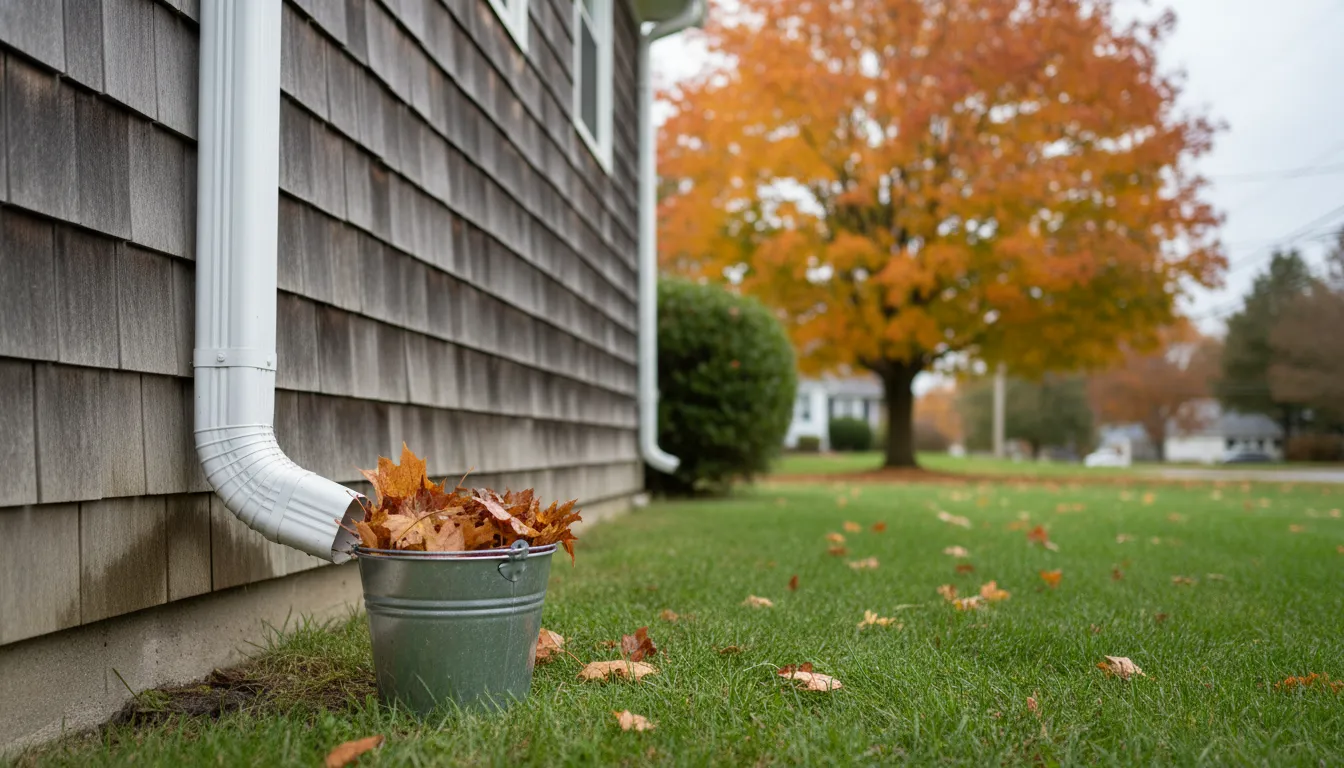
Late fall is a useful checkpoint before cold weather, after fresh leaves may collect in the system. Gulf2Bay identifies fall as a high-priority time for gutter maintenance. At this visit, check channels, outlets, and downspout elbows before deciding whether cleaning is due.
After a major storm, do not wait for the next date on your calendar. Check once the weather is safe, then address blocked drainage or visible damage. This event-based step is practical for homes across Nassau County, Suffolk County, and the Hamptons.
Why do trees and coastal storms change gutter frequency?
Canopy debris and quicker buildup
Tree cover changes what enters a gutter between cleanings. Branches above a roof can shed leaves, needles, twigs, bark, and seed pods into the same narrow channels. A shaded gutter may hold damp debris longer, turning a small pile into a packed blockage.
Broad leaves often arrive in visible batches, while pine needles can settle into corners and downspout openings. Seed pods and small twigs can catch finer material. The mix can slow water flow sooner than the calendar suggests.
Storm checks between routine visits
Coastal weather does not follow a cleaning calendar. Wind and heavy rain can move leaves and small debris onto a roof. Runoff can carry it into gutters. Even if a gutter looked clear last week, a storm may change how it drains.
For that reason, a routine schedule should include weather-based checks. NC State Extension advises homeowners to inspect gutters yearly and after major weather events. Wait for safe weather before checking from the ground or arranging service.
A schedule based on what you see
There is no single interval that fits every property. A home below dense canopy may fill faster than a home with few nearby branches. After a windy storm, a check may be useful sooner than planned.
Start with a routine plan, then adjust it to your property. Look for debris at downspout openings or water spilling over the edge. If buildup keeps returning, schedule professional gutter cleaning service sooner instead of relying on a fixed calendar.
What damage can clogged gutters cause?
Clogged gutters can let rainwater spill over instead of moving through downspouts and away from the home. That overflow may wet siding, soffits, roof-edge trim, landscaping, and soil near the foundation.
Overflow at the roof edge
A gutter filled with leaves or roof grit may not carry water as planned during rain. Water can cross the gutter lip and run along fascia or soffit areas. It may also splash against siding below. These signs call for a check, not panic.
Gutters are part of a moisture-control system, not just a trim detail. North Carolina State Extension says gutters should be cleaned, inspected, and repaired regularly in its gutter management guidance. A timely look after heavy weather can show whether water is flowing toward the downspout.
Water near the foundation
When an outlet or downspout is blocked, water may spill close to the house instead of draining away. Wet soil beside the foundation can be a sign that the system needs attention. Check for pooling, washed-out mulch, or splash marks near downspout exits.
The goal is steady drainage away from doors, windows, siding, and foundation-adjacent areas. When blocked gutters and stained siding occur together, Gulf2Bay’s broader exterior cleaning services may help you plan one coordinated visit.
Early signs worth checking
Look during or just after rain, while staying safely on the ground. A stream over the front edge, damp soffits, staining on siding, or water gathering near the house can point to a blockage. Gutters that sag or pull loose also need attention.
- Check whether downspout outlets release water without backing up.
- Watch for overflow above entries, planting beds, and foundation edges.
- Schedule a closer gutter check when repeated overflow appears.
A practical Long Island gutter maintenance checklist
A ground-level check helps you spot gutter concerns without taking on risky work. Weather and leaf drop can change what you see between planned cleanings. Use this checklist after harsh weather and as part of seasonal home care.
When should you check gutters?
Homeowners should inspect gutters each year and after major weather events. If you are deciding how often to clean gutters on Long Island, start with safe observations. Request service when the system shows poor flow or visible buildup.
-
Observe after a storm. Wait until weather has cleared. From the ground, note leaves, twigs, or other material near gutter lines.
-
Scan for visible debris. Walk around the home on firm ground. Look for leaves above the gutter edge, without reaching up or using a ladder.
-
Watch for overflow. During later rainfall, watch from indoors or a sheltered ground-level spot. Record water spilling over an edge.
-
Note stains and splash marks. Look at siding, soffit areas, and the ground below the gutter. Record dark streaks, splash marks, or pooled water.
-
Check downspout discharge. View each downspout end from the ground. Note water collecting near the foundation or washing out soil.
-
Set the next check date. Write down the date and each sign you saw. Set a reminder after the next storm or leaf drop.
Signs to document for service
Visible overflow, stain lines, lodged debris, and poor downspout flow help a professional plan an inspection. If exterior streaks remain, read about removing black stains from gutters before asking which service fits.
Do not climb onto the roof or use a ladder for this checklist. A clear ground-level record gives you details to share safely with a service provider.
Your maintenance record
Keep a simple note with the observation date, weather event, visible signs, and any service date. Add photos taken from the ground if they show an overflow point or stain.
Over time, this log shows whether your home needs attention sooner after storms or heavy leaf fall. It also helps you state what changed and when during your next service call.
When should gutter brightening be added?
Gutter cleaning and gutter brightening solve two different problems. Clearing leaves, twigs, and packed debris helps a gutter channel move rainwater through downspouts. Brightening addresses stains left on the visible outer gutter face.
Flow first, appearance second
If gutters contain debris, clearing the channel comes first. The main goal is working drainage, so rainwater moves away from the house. A gutter can drain after cleaning and still have black streaks along its front surface.
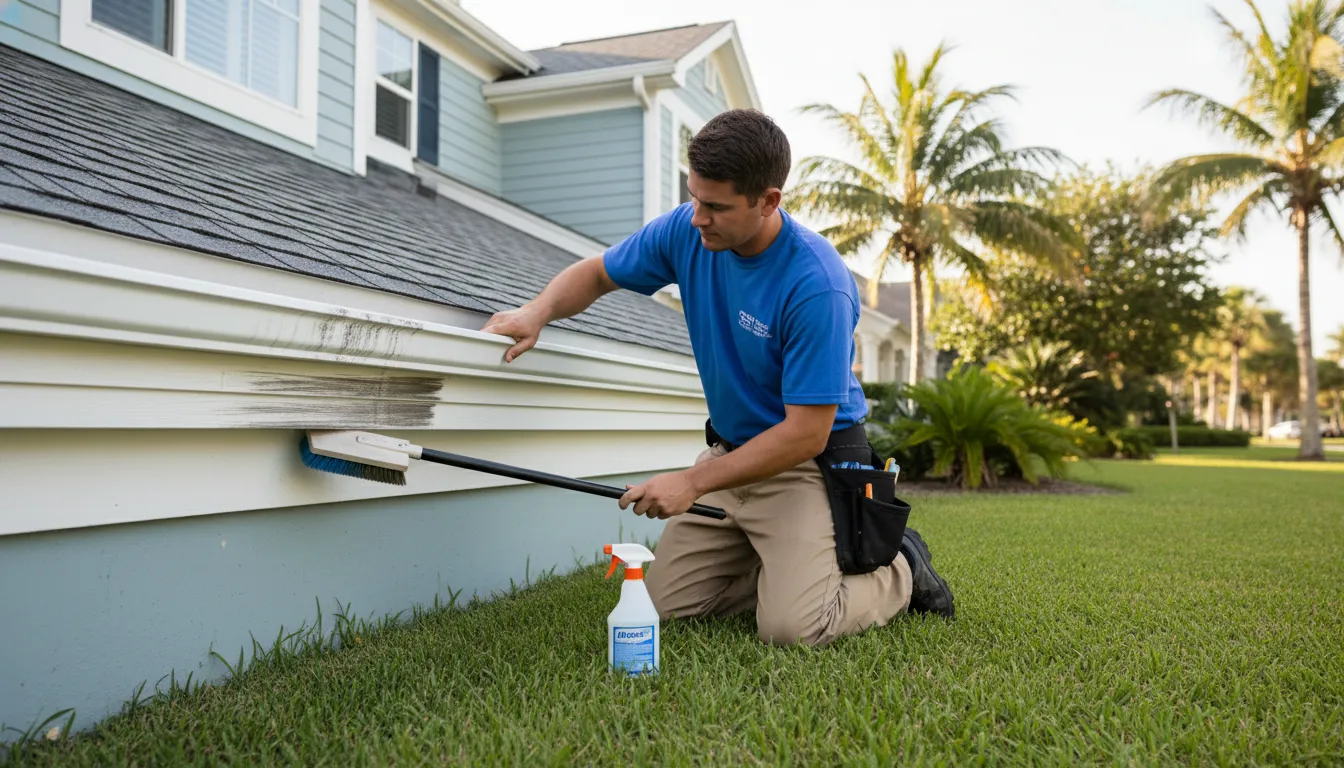
Add brightening when tiger striping, mold, algae, or moss remains on visible gutter faces after debris is removed. Cleaning supports flow; brightening restores a cleaner appearance where staining remains.
Signs that brightening fits the visit
Staining is easy to notice on gutters facing the street, driveway, patio, or main entry. It may stand out after siding or trim has been cleaned. In those cases, brightening can give the gutter face a more even look while gutter cleaning handles flow.
- Choose debris clearing when leaves or buildup may block the channel or downspout.
- Add brightening when dark striping stays visible on the gutter exterior.
- Consider brightening before photos or a home sale, when curb appeal matters.
A clear service request
Before a visit, look at both the gutter path and its outer face. Ask for cleaning if you see debris or poor flow. Ask about brightening if visible black streaks or staining is the concern.
This distinction keeps the work tied to the condition of your home. It also avoids treating brightening as required at every gutter visit.
When is professional gutter cleaning the safer choice?
Safe access limits
Some gutter tasks are less about timing and more about safe access. If reaching debris means climbing above a stable, easy-to-reach section, a professional visit is the safer choice. High rooflines, steep roof sections, and awkward downspout runs increase risk.
Do not clean gutters from a ladder during a storm or when ice or rain may make footing unsafe. West Virginia University Extension provides gutter safety guidance for ladder and roof work. After heavy weather passes, check from the ground for overflow or blocked outlets.
Signs that call for help
Professional help is also sensible when the issue keeps returning. Request service when a ground-level check suggests any of these conditions:
- Water pours over the gutter edge during rain after past cleanings.
- A gutter line sags, pulls away, or appears unable to drain toward its outlet.
- Storm debris sits above safe reach or near a steep roof section.
- You want debris clearing paired with exterior gutter brightening.
Planning a service visit
For homeowners asking how often clean gutters Long Island homes need, safe access is part of the schedule. If a tall roof, steep pitch, or repeat overflow makes the next cleaning unsafe, schedule help rather than delaying through another rain.
To discuss timing, gutter cleaning, and optional brightening, request a Gulf2Bay quote. A planned visit helps address access concerns while keeping the larger exterior maintenance list in view.
Frequently Asked Questions
How often should my gutters be cleaned on Long Island?
Most Long Island homes can start with cleaning twice each year, usually in spring and again after fall leaf drop. Heavy tree cover or new storm debris can make an extra check or cleaning sensible.
Why do Long Island gutters need regular cleaning?
Gutters help carry roof runoff away from siding and foundation-adjacent areas. When debris blocks that path, water may overflow in the wrong location. Routine inspection helps identify clogs before repeated wetting causes concern.
Should I inspect gutters after a coastal storm?
Yes. Once weather conditions are safe, look from the ground for overflow, visible debris, sagging, or blocked outlets. An extra storm check helps you decide whether cleaning should happen before the next planned visit.
When should I add gutter brightening?
Add brightening when black streaks, algae, or other stains remain on the visible gutter exterior. Brightening addresses appearance, while gutter cleaning and downspout clearing address water flow.
Ready to Keep Long Island Gutters Flowing?
Clogged gutters can leave rainfall with nowhere to drain, bringing avoidable worry to the roofline, siding, and areas near your foundation. Starting now helps you plan service before the next storm and decide whether gutter brightening belongs with your cleaning.
Ready to schedule needed care before more buildup collects? Talk with Gulf2Bay Softwash about timing for your Long Island home, gutter cleaning, and optional brightening. Call (844) 422-9274 to request your quote.