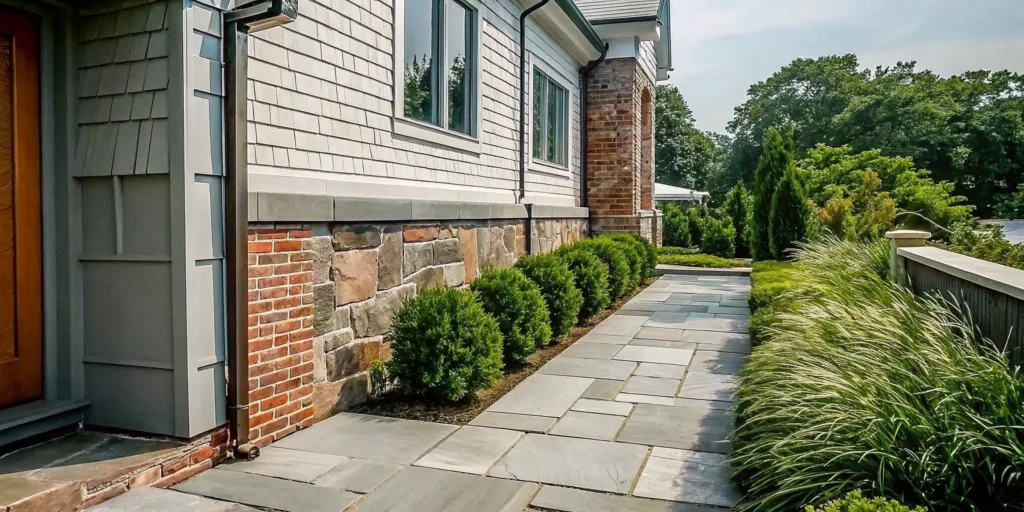
White salt stains on your brick patio are not a normal part of winter aging. Coastal salt air and freeze-thaw cycles destroy Long Island masonry if left alone. You must clean and seal these surfaces to stop permanent structural damage.
Routine masonry cleaning Long Island homes need is the primary method to prevent salt air, mold, and freeze-thaw cycles from cracking brick and stone. Exterior surfaces on coastal properties constantly absorb moisture that carries salt deep into the masonry joints, leading to crumbling mortar over time. When winter temperatures drop, this trapped water freezes and expands, which easily cracks brick and splits stone joints on your home’s exterior. Instead of using high-pressure power washing that damages soft stone and washes away old mortar, professionals use safe, low-pressure soft washing. This gentle process dissolves tough salt stains, kills mold spores, and prepares the clean brickwork for a breathable protective sealer that repels water.
Need your brick or stone surfaces cleaned safely? Get a free estimate online or call me directly at 844-422-9274.
If you want to keep your brick patio or stone walkway looking brand new, you must first understand the local threats. Homeowners need to know exactly what elements destroy their hardscapes over time. To help you protect your investment, we must look at Why Long Island Masonry Deteriorates Faster, and the path begins with.
Masonry Cleaning Long Island: Why Long Island Masonry Deteriorates Faster
Long Island homes face harsh coastal weather that breaks down outer stone and brick. Salt air, wet wind, and heavy rains work together to damage your walls. You must watch for early signs of decay to avoid major repair bills. Keeping these surfaces clean is the first step in saving your home.
The Danger of Porous Brick and Mortar
Brick and mortar are porous and act like sponges. In coastal towns like Bay Shore and the Hamptons, they always absorb damp salt air. This trapped moisture weakens the walls from the inside out. Over time, the soft mortar joints start to crumble and sandy grit falls away.
The Freeze-Thaw Cycle
Winter brings deep cold that turns trapped water into ice. When water freezes, it expands by about nine percent and puts immense pressure on the brick. This cycle of freezing and thawing cracks the masonry and causes the face of the brick to pop off. Once the hard outer glaze is gone, the soft inner brick degrades even faster.
Efflorescence and Salt Deposits
As water moves through the walls, it carries minerals to the surface. When the water dries, it leaves behind a white, powdery film. The National Park Service defines efflorescence as soluble salt deposits left by water migration. According to federal rules, gentle cleaning with a mild acid wash dissolves these salts safely. To stop this cycle, I use specialized soft washing techniques that clean without stripping the stone. Getting expert masonry cleaning Long Island owners can trust keeps your brick strong and prevents salt from eating away at the joints.
Soft Washing vs. Pressure Washing for Brick and Stone
Cleaning brick and stone on Long Island requires a gentle touch. Many homeowners think that high pressure is the best way to wash masonry. But blasting old stone with water can cause severe, lasting damage. Our local paver cleaning and sealing work keeps your stone safe while we remove deep dirt.
Risks of high-pressure washing
High-pressure washing often does more harm than good on brick. Water shot at high speed can strip the outer glaze from historic brick. This leaves the clay porous and open to water damage. According to National Park Service preservation guidelines, abrasive washing is not safe. It can erode soft mortar joints and damage brick faces.
The soft washing alternative
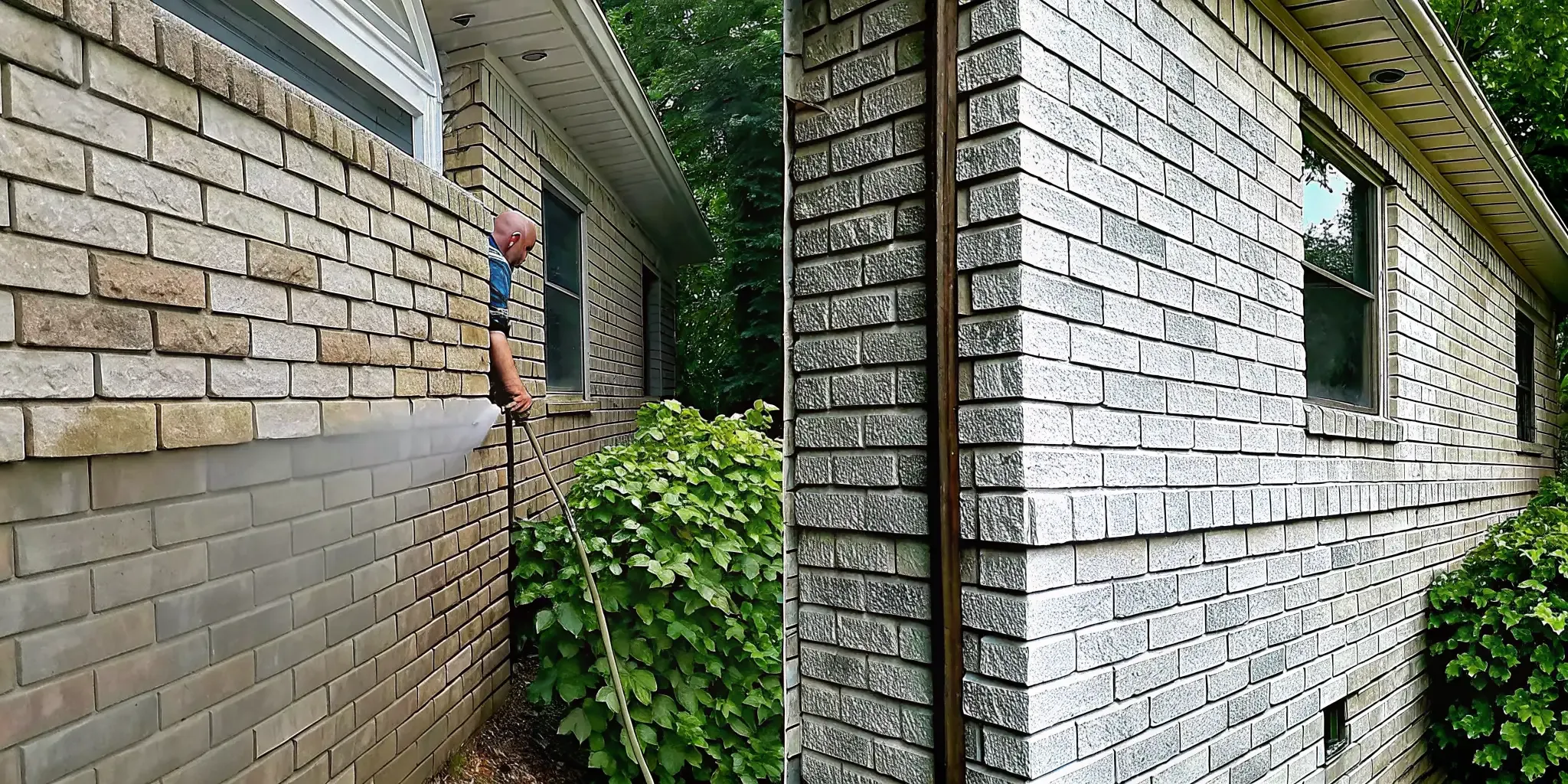
Soft washing is a much safer way to clean soft brick and stone. Instead of raw force, this method uses safe detergents to break down dirt. We spray these mild solutions on the walls at a low pressure under 90 PSI. University standards, like the Duke University masonry cleaning guidelines, suggest nonmetal bristle brushes. They also suggest using diluted detergents to clean masonry surfaces safely. This safe process removes mold, mildew, and salt stains without cracking the stone.
Long Island masonry cleaning needs
Homeowners on Long Island deal with damp air and coastal salt. This wet weather causes mold, algae, and salt buildup on brick. Standard power washing only blasts away the surface layer. But our custom soft washing methods kill the roots of the growth. This keeps your home looking clean and protects your brick for years.
| Method | PSI Range | Safe for Brick/Stone? | Effectiveness on Efflorescence | Lasting Results |
|---|---|---|---|---|
| Pressure Washing | 1,500 – 4,000 PSI | No, erodes soft mortar and brick faces | Low, can push salts deeper | Short-term, organic growth returns quickly |
| Soft Washing | Under 90 PSI | Yes, safe for delicate brick and mortar | Medium to High, dissolves mineral salts | Long-term, lasts 4 to 6 times longer |
| Chemical Cleaning | Low pressure with nonmetal brushes | Yes, when using safe, non-acidic products | High, breaks down salt deposits safely | Long-term, prevents structural damage |
How I Restore Masonry Without Damaging It
Safe chemical solutions for brick and stone
To get the best masonry cleaning long island homes need, you must use safe methods. High pressure can crack old brick and blast away mortar. Instead, I use a gentle chemical process to clean and restore brick, stone, and concrete. I start with weak mixes made for each surface. Mild alkaline mixes break down deep soot and organic stains. Mild acidic cleaners dissolve salt crusts, known as efflorescence, without etching the stone. This matches the GSA masonry cleaning standards for safe care. Each mix works to lift dirt without wearing down the building material.
Nonmetal brushes and plant protection
Some cleaners scrape masonry with wire brushes or harsh tools. This leaves deep marks and ruins the surface. I only use manual scrubbing with soft, non-metal bristle brushes to lift loose dirt. This gentle touch keeps the stone face intact. When working near coastal plants, I use non-toxic, plant-safe mixes. These products prevent chemical runoff into root zones, meeting the Duke University masonry cleaning standards for plant safety. We make sure your grass, shrubs, and soil stay healthy while we clean.
Prevent regrowth with joint sealers
Once the stone is clean, it must stay that way. Organics like moss, mold, and weeds love to grow back in the joints. To stop this, I use expert joint sealers. These sealers bind the sand and protect the stone from water. For this step, I choose Trident joint stabilizing sealers.
These sealers contain Fungal Guard to stop mold and algae from growing back. This keeps your patio looking fresh for years. Routine sealing is a key part of the concrete and masonry cleaning process. It locks out damp salt air and stops weed seeds from taking root. With this double layer of care, your brick and stone will stand up to the tough coastal weather.
Ready to restore your brick and stone? Request your masonry cleaning service today and bundle with other exterior services for a 10% discount on three or more.
Joint and Mortar Repair: The Structural Side of Masonry Cleaning
Why sound mortar matters
A deep wash does more than make your home look good. When I perform masonry cleaning on Long Island, I check the basic strength of your walls. Mortar joints hold your bricks together and keep water out. Over time, salt air and cold winter freezes cause these joints to crack, crumble, or wear away.
Preparing joints with gentle washing
Harsh washing methods can ruin old brick. Government briefs show that sandblasting and wire brushes damage brick and soft stone. These rough tools strip away the hard outer face of the clay. This leaves the soft inner core open to rapid decay and leaks. Instead, a gentle soft wash cleans the face while keeping the sound mortar safe.
Tuckpointing and repair services
To repair damaged joints, we must first clear out all dirt, mold, and loose debris. New mortar cannot bond to a dirty surface. Washing the brick first reveals the true state of the wall. This shows where the joints are weak and where you need new mortar. Once the stone is dry and clean, the new mortar can bond tight to the old joints.
If your mortar is crumbling, washing alone will not save the wall. You need to repair the joints to prevent water from getting behind the brick. Our masonry contracting team provides professional masonry services to help with these repair needs. We can tuckpoint your worn joints and swap out cracked bricks. This two-step approach of clean and repair will keep your home dry and solid for years to come.
Sealing Brick and Stone for Long Island’s Coastal Climate
The Threat of Coastal Moisture
Salt air and freezing winters on Long Island cause severe stress to outdoor brick and stone. If you skip sealing after a deep masonry cleaning Long Island winters and salt air will quickly damage the raw stone.
Proper cleaning and sealing restores faded surfaces, but leaving masonry bare invites deep water damage. If you do not seal the brick, rain and salt water will seep deep into the stone. Over time, this water breaks down the mortar joints.
The Power of Breathable Sealers
Some cheap sealers form an acrylic film that blocks moisture from leaving the stone. This trapped water freezes in winter, which breaks the face of the brick and causes spalling. According to National Park Service guidelines, a sealer must let water vapor escape to prevent surface spalling.
I avoid this issue by using breathable silane or siloxane sealers. These sealers block liquid water from getting in but let water vapor escape safely. My work extends to vertical masonry, and my paver cleaning and sealing services keep both walls and paths dry and stable.
Stop Algae with Fungal Guard
Joint stabilizing sealers do more than just protect the stone itself. For patios and walks, I use premium sealers with Fungal Guard to prevent moss and algae in the joints.
This treatment locks down joint sand and starves weeds of the moisture they need to sprout. Here is what I do: I clean the stone, sand the joints, and seal the surface. This process keeps your stone looking clean for much longer, which extends the time you can go between washes.
Why Long Island Homeowners Hire a Professional Masonry Contractor
One Call Does It All
Most pressure washing companies in Nassau and Suffolk County clean your brick and walk away. That service is a bandage, not a fix. If your mortar joints are already cracked or your stone veneer is loose, you need someone who understands both cleaning AND structural repair.
The Hidden Damage Problem
Salt air and coastal weather do not just stain your brick. They erode the joints that hold your walls together. When you hire a general pressure washer to blast the dirt off, you pay for a cosmetic result while the structural problem gets worse. The water they force into open joints accelerates the decay. You end up needing a full repair a year sooner than if you had done nothing at all.
Diagnosis Before Cleaning
Sound mortar does not crumble or flake when you touch it. I check every joint before I spray a single drop of cleaner. If the mortar is solid, I clean it gently with soft wash methods that preserve the bond. If it is failing, I flag the issue and explain exactly what needs to be repaired. This is what sets masonry and stone restoration apart from a simple driveway spray-down.
Better Curb Appeal Means Higher Property Value
Clean, well-maintained brick and natural stone elevate the look of any Long Island home. Realtors and property appraisals both reflect the condition of exterior hardscapes. A home with crumbling mortar, mossy brick, or efflorescence stains signals neglect. A home with restored masonry and clean joints signals care. Professional masonry cleaning and repair is one of the most cost-effective ways to boost curb appeal before listing.
Integrated Service Saves You Time and Money
I offer both cleaning and masonry contracting under one roof. You do not need to coordinate a separate cleaner and a separate mason. I clean the brick, assess the mortar, make the repairs, and seal the finished surface. That integrated approach saves you scheduling headaches and often cuts the total cost because there is no double truck roll or markup between subcontractors. Book three or more services together and you save 10 percent across the board.
If you are a Long Island homeowner with brick, stone, or block surfaces that need more than a quick rinse, call me. I will walk your property, show you what is happening to your masonry, and give you a straight answer on what it takes to bring it back.
Frequently Asked Questions
Can you pressure wash efflorescence off brick?
No. Pressure washing drives water deeper into the brick, which brings more soluble salts to the surface once the water dries. You end up with more efflorescence, not less. The correct approach is a mild acidic or alkaline wash at low pressure, followed by a clean water rinse and a breathable sealer.
How often should Long Island masonry be cleaned?
Most brick and stone surfaces on Long Island benefit from professional cleaning every two to three years. Homes in coastal areas like the Hamptons or along the South Shore may need it annually because salt air accelerates biological growth and mineral buildup. Sealing after each cleaning extends the window between services.
Will masonry cleaner kill my grass and shrubs?
Not if the cleaner is applied correctly. Professional masonry cleaning uses non-toxic, non-herbicidal chemicals that are safe around vegetation. I pre-wet surrounding plants before applying any solution and rinse thoroughly to prevent runoff from reaching root zones. This is standard practice and part of the Duke University masonry cleaning protocol for sensitive sites.
What is the difference between tuckpointing and repointing?
Tuckpointing is a decorative method that uses two colors of mortar to create the look of fine joints. Repointing is a structural repair that removes deteriorated mortar and fills the joints with fresh material to restore the wall’s integrity. On Long Island, most historic and coastal homes need repointing, not tuckpointing, because the joints have weathered and lost their bond.
How long does masonry restoration take?
A standard residential cleaning and sealing project takes one to two days depending on square footage and stain severity. If repointing or brick replacement is needed, add another one to three days. I give you a specific timeline after I inspect the surfaces in person and test the mortar condition.
Ready To Restore Your Masonry?
You do not need to live with stained brick, crumbling mortar, or mossy stone walls. I have cleaned and restored hundreds of Long Island homes, from Bay Shore to the Hamptons. Every job starts with a free, no-pressure walkthrough where I show you exactly what your masonry needs and what it will cost.
Call me at 844-422-9274 to schedule your estimate.
Or request a free estimate online and I will get back to you the same business day.